
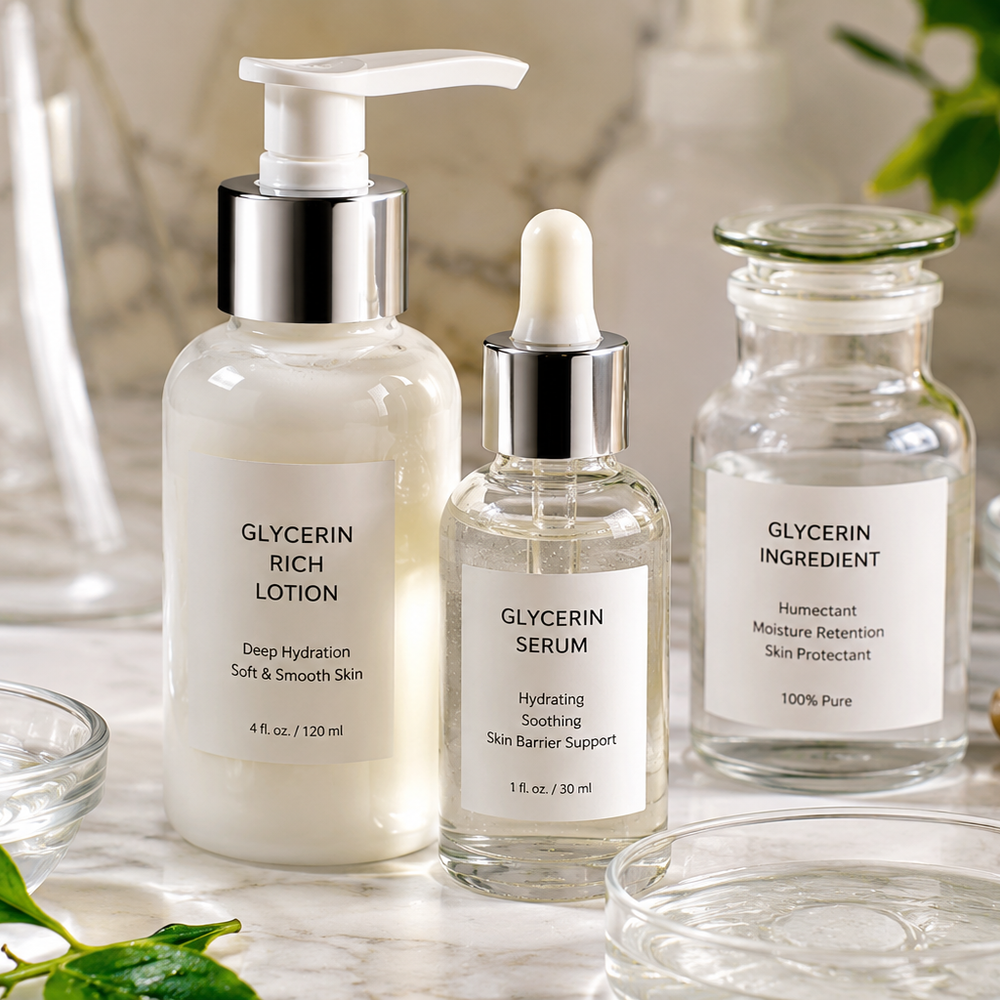
Introduction: The Unsung Hero on Your Ingredient List
Ever flip over a face wash or lotion and see glycerin again… and again… and again? Yep. It shows up in cleansers, creams, serums, makeup, and even some setting sprays. A lot of shoppers still feel lost reading ingredient labels, and that makes sense. Some lists look like a chemistry quiz nobody studied for.
So what is glycerin, really? It’s also called glycerol, and in cosmetics it does way more than just add moisture. It helps skin hold water, supports a softer feel, and even helps formulas stay smooth and usable. That’s why glycerine benefits for skin go beyond basic hydration.
Glycerine is one of those quiet ingredients that does a ton of heavy lifting. In this guide, we’ll break down glycerin in skincare, explain how to use glycerine the right way, and look at why makers keep putting it in everything from simple moisturizers to more advanced beauty formulas. We’ll also touch on vegetable glycerine, glycerin in cosmetics, and where it fits in modern product making.
And if you’re building your own beauty line, this one matters. Ingredients like rose water and pure botanicals often pair well with glycerine in formulas, especially when you want a gentle, skin-friendly feel. Let’s get into it.
1. What is Glycerine (Glycerol) and Where Does It Come From?
You know that one ingredient you keep spotting on labels? The one that sounds a little fancy, but also kind of plain? That’s glycerine.
Glycerine, also called glycerol, is a clear, odorless, thick liquid that’s found in many fats and oils. It’s a natural sugar alcohol, and in simple terms, it helps formulas hold water and feel smoother on skin. That’s a big deal in glycerin in skincare, because a lotion or cleanser that feels dry and draggy usually won’t win many fans.
Most modern cosmetic glycerine comes from plants. Think soy, coconut, and palm oils. That’s why you’ll often see the term vegetable glycerine on ingredient lists. It can also come from animal fats or be made through synthetic processes from petroleum. But in beauty products, plant-based glycerine is the one you’ll see most often, especially in clean beauty and natural formulas.
And here’s the neat part. Glycerine is water-soluble, so it blends into formulas without much fuss. It also has a thick, syrup-like feel, which helps give creams, serums, and cleansers a nice texture. Not too watery. Not too heavy. Just easy to work with.
A lot of shoppers still ask, what is glycerin doing in so many products? The answer is pretty simple. It’s useful, cheap to source, and it plays well with lots of other ingredients. You’ll find glycerine in face washes, moisturizers, foundations, and even setting sprays. That’s why it keeps popping up again and again.
For brands, that versatility matters. If you’re making skincare or personal care products, glycerine can help with skin hydration, texture, and formula stability all at once. And if you’re sourcing natural bases like rose water or plant extracts, glycerine often fits right in.
2. The Science of Skin Hydration: Why Glycerine is a Gold-Standard Humectant
You know that tight, thirsty feeling after washing your face? That dry, squeaky thing is skin asking for water. And glycerine is one of the best helpers we’ve got.
Glycerine is a humectant, which is just a simple way of saying it pulls water toward the skin. It draws moisture from the air and from the deeper layers of skin into the outer layer, called the stratum corneum. That’s the top layer you see and feel every day. So instead of sitting on the surface like a heavy coat, glycerine helps skin hold water where it matters most.
That matters a lot for skin hydration. When the outer layer has more water, skin tends to feel softer, smoother, and less cranky. Less flaking too. Plus, glycerine doesn’t just help with water. It also supports the skin barrier, which is the little shield that helps keep good moisture in and unwanted stuff out. Research on glycerine skincare points to its role in helping skin cells mature the right way and in keeping the lipid matrix in better shape, which means the barrier can do its job more cleanly.
Here’s the part that gets a little nerdy, but stay with me. Glycerine also works with aquaporin-3, a water channel in skin cells. Think of aquaporins like tiny doorways for water and glycerol. When those pathways are working well, skin can move water around more smoothly, and that often shows up as better bounce and suppleness. Not magic. Just smart biology.
And if you’ve ever wondered why glycerine keeps showing up in so many products, that’s a big clue. It plays nicely in cleansers, moisturizers, serums, and even makeup. You’ll find it in things like Cetaphil Gentle Skin Cleanser, L’Oréal Revitalift 1.5% Pure Hyaluronic Acid Serum, and MAC Fix+ Setting Spray. Same ingredient, different jobs. Pretty wild, right?
A few quick takeaways:
| What glycerine does | What that means for skin |
| Pulls in water | Helps skin stay hydrated |
| Supports the barrier | Helps skin feel less dry and stressed |
| Works with aquaporins | Helps water move through skin cells |
| Improves texture | Can make products feel smoother and less harsh |
A lot of folks ask, what is glycerin doing that other humectants don’t? Honestly, it’s the mix of things. It works well, it’s gentle for many skin types, and it’s been trusted for a long time in glycerin in skincare and glycerin in cosmetics. That’s why formulators keep reaching for it.
If you’re making products, this is where glycerine gets really handy. It can fit into water-based formulas, pair with rose water, and help boost the feel of botanical blends without making them heavy. For brands that want clean, skin-friendly textures, it’s a very practical choice.
And if you’re shopping, look for it in moisturizers, face washes, and hydrating sprays. It’s not flashy. But it works.## 3. Beyond Hydration: Glycerine’s Multifaceted Roles in Cosmetic Formulations
You know that one ingredient you keep spotting on labels? The one that sounds a little fancy, but also kind of plain? That’s glycerine.
And no, it’s not just there to help skin feel less dry. Glycerine does a bunch of quiet jobs behind the scenes, which is probably why it shows up in so many formulas.
First, it works as a solvent. That means it can help pull plant goodies out of herbs and flowers, then keep them mixed into the formula. These are often called glycerites. Think green tea, chamomile, calendula, lavender, and aloe vera. Because glycerine doesn’t have the drying punch of alcohol, it gives makers a softer base for botanical extracts. Nice, right?
It also helps with texture. Glycerine is thick and smooth, so it can give a lotion more body and stop it from feeling thin or runny. That little bit of slip matters a lot in real life. Nobody wants a serum that splashes like water or a cream that feels stingy on the skin. Glycerine helps products spread better and feel more pleasant from the first swipe.
But wait, there’s another job people miss. Glycerine can help other preservatives work better. In simple terms, it lowers water activity in a formula, which makes life harder for microbes. At higher levels, around 20 to 30 percent, it can even help a formula stay more protected on its own. In lower amounts, it still helps preservative systems do more with less. That can be handy for formulators who want to keep things simple.
Here’s a quick look at how it works in different products:
| Formulation role | What glycerine does | Why it matters |
| Solvent | Helps make glycerites and botanical extracts | Supports plant-based formulas |
| Texture booster | Adds body and smooth slip | Makes products feel better on skin |
| Preservative helper | Lowers water activity | Helps protect the formula |
You’ll also see glycerine in all kinds of products, from cleansers to makeup. Cetaphil Gentle Skin Cleanser, L’Oréal Revitalift 1.5% Pure Hyaluronic Acid Serum, and MAC Fix+ Setting Spray all use it. So if you’ve been asking what is glycerin doing in so many bottles, that’s the answer. A lot, actually.
For brands, this is where glycerine becomes extra useful. If you’re working with rose water, essential oils, or other natural bases, it can help bind the whole thing together without making the formula feel heavy. And if you’re shopping for products, it’s a good sign when glycerine shows up near the top of the list. It usually means the formula is aiming for skin comfort, not just a fancy label.
If you’re building a beauty line, pairing glycerine with pure rose water or lab-tested essential oils can give you a cleaner, softer product feel. That’s the kind of detail customers notice. Even if they can’t name it.
4. From Cleansers to Concealers: How Glycerine is Used Across Product Categories
You know that feeling when a cleanser leaves your face tight and weird? Yeah, nobody wants that. And yet, people still buy products like that all the time because the label looks friendly and the bottle sounds fancy. Funny how that works.
Glycerine helps fix that problem in a lot of different product types. It shows up in face washes, serums, shampoos, foundations, and primers because it does a lot without being loud about it. Over 70% of shoppers say ingredient labels feel confusing or overwhelming, so seeing glycerine again and again can feel like a small mystery. But once you know what it does, it starts to make sense.
In cleansers and soaps
In rinse-off products, glycerine helps soften the feel of surfactants, which are the cleaning parts that can strip skin. Instead of that squeaky-clean feeling, skin can feel a little calmer and less dried out. That’s why you’ll often spot glycerine in gentle cleansers like Cetaphil Gentle Skin Cleanser, where it sits near the top of the list.
In serums and moisturizers
In leave-on products, glycerine often does the heavy lifting as the main humectant. It pulls water toward the skin, then works best when paired with oils, butters, or other occlusives that help keep that moisture from slipping away. So you get skin hydration from one side and a little seal on the other. Pretty simple. Pretty smart.
A lot of formulas use it at around 3% to 8% in serums, and 2% to 5% in creams and lotions. That’s why products like L’Oréal Revitalift 1.5% Pure Hyaluronic Acid Serum include it. It helps the whole formula feel smoother and less sticky.
In hair care
Glycerine isn’t just for skin. In shampoos and conditioners, it can help the hair shaft hold onto moisture too. That can mean less frizz, better slip, and hair that feels a bit more flexible. Especially in dry weather, that little boost can matter more than you’d think.
In makeup
In makeup, glycerine helps give foundations and primers that soft, dewy finish people keep asking for. It can stop products from drying out too fast on skin and makes blending easier. MAC Fix+ Setting Spray is a good example of a glycerine-containing product that helps makeup sit better and look less flat.
Here’s a quick cheat sheet:
| Product category | What glycerine does | What you notice |
| Cleansers and soaps | Softens the drying feel of surfactants | Skin feels less tight |
| Serums and moisturizers | Pulls in water and supports skin hydration | Skin feels plumper and smoother |
| Hair care | Helps hair hold moisture | Less frizz, more softness |
| Makeup | Adds slip and a dewy finish | Easier blending, less cakey look |
And if you’re making products, glycerine is a nice fit for formulas with rose water, botanical extracts, or pure essential oils. It helps keep things skin-friendly without making the product feel heavy. If you’re sourcing ingredients for your own line, Aroma Monk’s lab-tested rose water and natural oils can pair well with glycerine-based formulas, especially when you want a clean, gentle feel that still works.
How to use glycerine depends on the product, but the big idea stays the same. Use it where you want comfort, moisture, and a better skin feel. It’s not flashy. But it pulls its weight.
Get a quote from Aroma Monk.
Essential Oil Supplier – Bulk pricing • Samples • Fast response
5. Vegetable vs. Synthetic Glycerine: Does the Source Really Matter?
You know that moment when a label says “vegetable glycerine” and you feel a little better about it, even before you check the rest of the bottle? Yep. We’ve all done that.
Here’s the funny part. From a skin point of view, pure glycerine is pure glycerine. Whether it comes from plant oils, animal fats, or a lab-made source, the molecule is the same. Same glycerol. Same humectant job. Same skin hydration support. So if you’re asking, “Does vegetable glycerine work better than synthetic glycerine?” the honest answer is no, not in any real way on skin.
But the source still matters for other reasons. A lot.
For shoppers, “vegetable glycerine” sounds cleaner and more natural. It fits the plant-based story many people want in cosmetics and personal care. For brands, that can be a big deal on the shelf. It’s also why you’ll often see vegetable glycerine highlighted on packaging, even though the skin feel won’t change because of the source.
There are also ethical and environmental questions. Vegetable glycerine often comes from palm, soy, or coconut oil. That can raise supply chain concerns, especially around palm oil and forest loss if the source is not managed well. Synthetic glycerine, on the other hand, is usually made from petrochemical routes, which brings fossil fuel worries instead. So the real debate is less about skin performance and more about sourcing, values, and traceability.
And here’s another thing. Lower-grade glycerine can carry more leftover bits from the making process. That’s why cosmetics usually use USP or cosmetic-grade material, not industrial stuff. Purity matters more than the source name on its own. A clean, well-made glycerine is what brands want, no matter where it starts.
So if you’re building a product line, think beyond the label. Pick glycerine for its performance, then choose the source that fits your brand story, quality needs, and supply goals. If you want a formula with a more plant-forward feel, vegetable glycerine makes sense. If you want consistency and certified purity, ask for the grade and the testing, not just the origin.
Quick side-by-side:
| Type | Skin performance | Main difference |
| Vegetable glycerine | Same as other pure glycerine | Plant-based marketing appeal |
| Synthetic glycerine | Same as other pure glycerine | Fossil-fuel sourcing concerns |
| Lower-grade glycerine | Can be less reliable | More chance of impurities |
For brands like Aroma Monk, this is where ingredient choice gets real. If your line leans natural, pair plant-derived glycerine with pure rose water, essential oils, or fragrance oils that match your quality standards. That way, your formulas feel good, your label story stays honest, and your buyers know what they’re getting.
6. How to Use Glycerine Safely and Effectively in Your Routine
Ever put on a product and thought, “Why does this feel sticky?” That usually isn’t glycerine’s fault. It’s often just too much of it.
Glycerine works best in small amounts. In leave-on products like serums and lotions, the sweet spot is usually 2% to 5%. Once a formula goes much over 10%, it can start to feel tacky on skin. Not broken. Not bad. Just too much for comfort.
And here’s the part DIY makers sometimes miss: glycerine should be mixed into a water-based base. Think distilled water, rose water, or a hydrosol. It needs that watery phase to spread well and do its humectant job. If you’re building a face mist or serum, this is where a good base matters. Aroma Monk’s lab-tested rose water can be a nice fit here, especially if you want a gentle, skin-friendly feel.
But don’t slap pure glycerine straight on dry skin. Really. In a very dry room or winter air, it can pull moisture from your skin if there’s not enough water in the air to grab onto. That’s the reverse osmosis problem people talk about. Weird, right? The fix is simple: dilute it, then pair it with something that helps seal moisture in, like jojoba oil or shea butter.
Here’s a quick guide:
| Product type | Usual glycerine range | Best practice |
| Leave-on serums | 2% to 5% | Mix into water or hydrosol |
| Lotions and creams | 2% to 5% | Add to the water phase |
| Cleansers | 1% to 5% | Keep it low to avoid stickiness |
| DIY spot use | Not recommended neat | Always dilute first |
A few easy rules help a lot:
- Start low. You can always add more next batch.
- Mix it into water first.
- Don’t use pure glycerine by itself.
- In dry weather, use an oil or cream on top.
I’ve seen people get amazing results from glycerine in skincare once they stop overdoing it. Skin feels softer. Products glide better. And the formula just behaves.
So if you’re wondering how to use glycerine, the short answer is this: keep it diluted, keep it balanced, and let it work with the rest of the formula. That’s where glycerine benefits for skin really show up.
Conclusion: Glycerine – The Hardest-Working Ingredient in Your Cabinet
Glycerine might not be the flashiest name on a label. But wow, it pulls a lot of weight.
It helps skin hold water, supports the skin barrier, and makes formulas feel smoother and kinder on skin. It also works as a humectant, a texture helper, and a smart base for plant extracts. That’s a lot for one clear little liquid.
And if you’ve ever looked at a bottle and thought, what is glycerin doing in here?, now you know. It’s not filler. It’s a sign the product was made with skin comfort in mind. In fact, glycerin in skincare shows up in all kinds of top-selling items, from cleansers to serums to setting sprays, because it just works. Research and expert views also keep placing glycerine near the top as a benchmark ingredient for skin hydration and barrier support, with one review noting that over 70% of shoppers find ingredient labels confusing or overwhelming Paula’s Choice guide to glycerin in skincare.
So the next time you spot glycerine, don’t skip past it. Look a little closer. It might be one of the best clues that the product inside was built to do its job well.
If you’re shopping, make glycerine a green flag. If you’re building a beauty line, it’s a ingredient worth keeping close. Especially when paired with rose water, botanical oils, and other gentle bases from trusted suppliers like Aroma Monk.
Get a quote from Aroma Monk.
Essential Oil Supplier – Bulk pricing • Samples • Fast response