
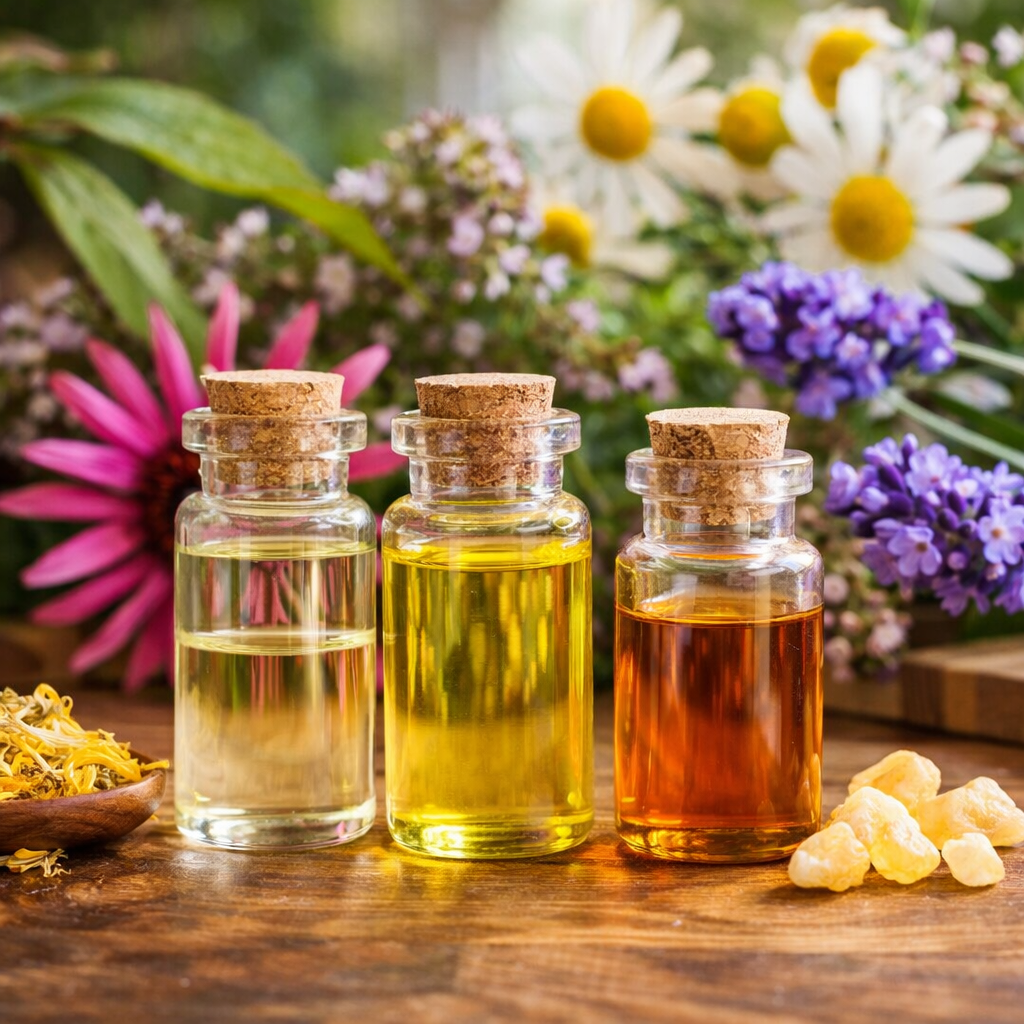
The Secret to a Signature Scent That’s Truly Yours (And Actually Lasts)
Ever get a headache just walking past the perfume aisle at a department store? Yeah, me too. It’s pretty common, actually. A lot of us are tired of those harsh synthetic clouds and just want to smell like something real—something that connects us to nature rather than a chemistry lab 1.
So, you decide to make your own. You grab your favorite botanicals, mix up a DIY perfume oil, and it smells incredible. For about fifteen minutes. Then? Gone. Like it never happened.
It’s frustrating, right? You want that unique, natural vibe, but you also want it to stick around longer than it takes to drink your morning coffee.
Here’s the thing—the secret usually isn’t in adding more expensive essential oils. It’s in the base. Think of carrier oils for perfume as the anchor for your fragrance. They don’t just make the blend safe for your skin; they actually trap those flighty scent molecules and hold them down.
Commercial sprays are like fireworks—loud and fast. But a proper essential oil perfume oil should be like a slow-burning candle, releasing scent gradually with your body heat. If you want a scent that actually lasts, we need to talk about the unsung hero of the blend: the carrier oil.
What Exactly Is an Essential Oil Perfume Oil?
Let’s keep it simple. An essential oil perfume oil is essentially a blend of concentrated aromatic notes (your essential oils) mixed into a fatty, neutral oil (the carrier). That’s the whole magic trick.
Unlike the alcohol-based sprays you see at the mall, this mix doesn’t rely on harsh solvents or water to get the job done. It creates a completely different experience.
Think about it like this: Alcohol perfumes are like fireworks. They shoot up, explode with a massive scent cloud, and then… poof. They fade out pretty fast because alcohol is designed to evaporate the second it hits the air. That’s why you can smell someone wearing cologne from three aisles over. We call that “sillage” (fancy French word for the scent trail), and commercial sprays rely on it heavily 1.
On the flip side, a perfume oil base is like a slow-burning candle. It sits on your skin, gets cozy with your body heat, and releases the fragrance slowly over hours. It stays in your personal bubble. It’s for you and the people you actually want in your personal space.
Now, you might be wondering, “Why not just dab pure lavender oil right on my wrist?”
Please, don’t do that.
Essential oils are incredibly potent plant chemicals. Applying them “neat” (undiluted) is risky business. It can cause chemical burns, nasty rashes, or even sensitization—where your body suddenly decides it’s allergic to that oil forever 2.
This is why strictly following a natural perfume recipe brings peace of mind. The carrier oils for perfume are non-negotiable. They act as a safety buffer for your skin while anchoring the scent so it doesn’t fly away five minutes after you put it on.
The 4 Crucial Roles of Carrier Oils in Perfumery
Okay, so we know we need them. But what are they actually doing in the bottle? It isn’t just about filling up space or making your supply last longer. These oils are working hard behind the scenes in four specific ways. If you understand these, you will make a DIY perfume oil that actually rivals the expensive stuff.
1. The Safety Buffer
Imagine drinking concentrated lemon juice straight. Yikes, right? That is basically what pure essential oils are like for your skin. They are just too strong. Some, like cold-pressed Bergamot, can actually burn your skin if you go out in the sun after applying them 1.
A carrier oil acts like water in that lemon juice. It dilutes the intensity down to a level your skin can handle. This controls the potency. It prevents something called “sensitization.” That is when your body suddenly decides it is allergic to an oil because you used it undiluted too many times. Using a proper base keeps your skin happy while you smell great.
2. The Time Anchor (Making It Last)
This is the big one. The main reason your fresh citrus scent disappears in ten minutes? Evaporation.
Essential oils are volatile. That is just fancy talk for “they want to turn into gas and fly away instantly.” But carrier oils for perfume are heavy. They sit still. When you mix them together, the heavy carrier oil molecules trap the flighty essential oil molecules.
It physically holds the scent onto your skin. Instead of flashing off in five minutes, the fragrance gets released slowly as your body heat warms up the oil. It turns a sprint into a marathon. This fixation effect is the main reason a perfume oil base lasts so much longer than a water or alcohol spray 2.
3. Setting the Mood
The oil you choose isn’t just a blank canvas; it changes the “texture” of the smell.
Here is a good example. Take Fractionated Coconut Oil (FCO). It smells like absolutely nothing. It is invisible effectively. This makes it perfect if you want your natural perfume recipe to smell exactly like the flowers you put in it without any interference.
But then look at Jojoba. It has a tiny hint of earthiness to it. It is technically a wax, not an oil. If you are making a woody, deep scent, a jojoba oil perfume base actually helps those damp wood notes shine. It adds a background layer that makes the perfume feel richer 3.
4. Sneaky Skincare
Here is a bonus we often forget. Alcohol sprays act a bit like paint thinner on your skin. They strip away your natural oils and leave you dry.
Carrier oils for perfume do the opposite. They put moisture back in. So while you are rolling on your signature scent, you are also treating your wrists and neck to a mini spa treatment. It feels luxurious, not drying. Plus, because they are oils, they glide on smooth in a roll-on bottle, making them super easy to apply on the go.
How to Choose the Perfect Carrier Oil for Your Natural Perfume
Alright, so we know we need a base. But please, step away from the vegetable oil in your kitchen cabinet. That is not what we want for a signature scent.
Picking the right base is like picking a roommate. You want something that gets along with your essential oils, doesn’t smell weird, and sticks around for the long haul.
Here are the top contenders that usually makeup the backbone of any professional-grade essential oil perfume oil.
1. Fractionated Coconut Oil (FCO): The Liquid Gold Standard
If you are a total beginner, start here.
Regular coconut oil turns solid when it gets cold (which is annoying for a roll-on bottle). Fractionated Coconut Oil stays liquid forever. Well, practically forever.
What makes fractionated coconut oil perfume bases so good is that they are totally invisible. They have no smell. Zero. They are also colorless. This means your expensive Jasmine or Rose oil will smell exactly like Jasmine or Rose, with nothing getting in the way.
Plus, it has a massive shelf life. You can keep a bottle for years, and it won’t go bad. This is usually my go-to recommendation for anyone just starting their natural perfume recipe collection.
2. Jojoba Oil: The Skin Mimic
Okay, science nerd moment (but a quick one). Jojoba isn’t technically an oil. It is a liquid wax.
Why does that matter? Because it is chemically super similar to the sebum your own skin produces. This means it absorbs beautifully without feeling greasy.
A jojoba oil perfume base is incredibly stable. It resists oxidation (going rancid) better than almost anything else. It does have a tiny, faint nutty or woody smell. If you are making a deep, earthy scent with Sandalwood or Vetiver, Jojoba makes it sing.
3. Sweet Almond Oil: The Sweet Softie
This one is a classic. It feels richer on the skin than coconut oil. It has a medium absorption speed, so it gives you a minute to rub it in.
It does have a mild, sweet marzipan scent. This works amazing if you are blending florals or lighter scents. Just keep in mind it doesn’t last quite as long on the shelf—usually about a year perfectly stored.
The “Quick-Absorb” Options
Maybe you hate the feeling of oil on your skin. I get it. If that is you, look at these:
- Grapeseed Oil: This is the sprinter of oils. It dries super fast and creates a “dry oil” feel. The catch? It has a short shelf life (maybe 6 months). Use it up quick or keep it in the fridge!
- Apricot Kernel Oil: This is huge for dry skin. It feels silky and luxurious but sinks in faster than Sweet Almond.
So, Which One Do You Pick?
To create your own custom blend, just ask yourself these three quick questions:
- Do I want the base to have a scent? If no, go with FCO. If you don’t mind a little warmth, go Jojoba or Almond.
- How long will this sit on my shelf? If you are slow to use things up, you need the stability of Jojoba or FCO.
- What is my skin type? If you are prone to breakouts, Jojoba is usually the safest bet because it doesn’t clog pores (we call that non-comedogenic) 4.
Once you have your base picked out, you are ready for the fun part—mixing the magic.
The Art & Science: How Carrier Oils Influence Your Perfume’s Scent Profile
You might think the carrier oil is just the quiet backseat driver. The essential oils are steering the car, right?
Actually, the carrier oil is the road itself. It changes how the car drives.
This is the part most people miss when they learn how to blend essential oils for perfume. They obsess over the top notes but ignore what those notes are floating in.
The Weight of the Matter (Viscosity)
Let’s talk about “weight.” Pros call this viscosity.
Think of it like honey versus water. Lighter oils, like Fractionated Coconut Oil, are thin and slippery. They don’t have much grip. This lets bright, sparkling notes—like Grapefruit or Peppermint—jump off your skin fast. They shout “Hello!” immediately.
But heavier oils, like Jojoba, are stickier. They hold onto those scent molecules tight. They act like a trap. This might make that initial citrus smell a bit quieter, but it makes the whole show last way longer 1.
It’s a tradeoff. Do you want a loud pop (light oil) or a slow burn (heavy oil)?
It’s All Chemistry
Every oil has a unique “fatty acid profile.” Basically, its chemical fingerprint.
These fats don’t just sit there. They interact with your essential oils. The fat molecules in your perfume oil base actually cuddle up with the scent molecules.
A base rich in one type of fat will release the smell differently than another. It implies that your natural perfume recipe might smell slightly different depending on if you use Almond or Jojoba, even if the essential oil drop count is exactly the same.
Matching the Vibe
So, how do you choose? You have to match the mood.
If you are making a “Wake Me Up” morning blend with lemon and rosemary? You want a light, fast carrier. A heavy oil would feel like putting snow boots on a sprinter. It just drags the energy down.
But if you are crafting a deep, date-night scent with Sandalwood and Vanilla? You want that rich, velvety texture. A thicker oil helps those deep notes stick to your skin and warm up slowly 2.
When you start treating your carrier as a real ingredient, your blends get so much better. This is why professionals are so picky about sourcing. Getting pure, consistent bases from suppliers like Aroma Monk ensures that “road” is always smooth, whether you’re making five bottles or five hundred.
Step-by-Step: Creating Your First Essential Oil Perfume Oil
Ready to play chemist? Don’t worry, it is way easier than high school science class. Actually, it is more like making a good salad dressing. You just need the right ingredients and a little patience.
First, let’s gather your gear. You will need a 10ml glass roller bottle (amber or blue glass is best to protect the oil), your chosen essential oils, and a small funnel if you don’t have a steady hand.
Oh, and your base. Fractionated Coconut Oil is usually the best carrier oil for roll-on perfume if you are a beginner, but Jojoba works great too.
The “Peace of Mind” Recipe
Let’s keep it simple with a classic blend: Lavender, Bergamot, and Sandalwood.
Important Safety Note: Since we are using Bergamot, try to find one labeled “FCF” (furanocoumarin-free). It means the part of the oil that reacts to sunlight has been removed. If you use regular cold-pressed Bergamot, you have to be super careful about sun exposure.
Here is a solid natural perfume recipe for a standard 10ml bottle (roughly a 5% dilution):
- 4 Drops Sandalwood (This is your Base)
- 6 Drops Lavender (This is your Heart)
- 2 Drops Bergamot (This is your Top)
The Mixing Process
- The Heavy Hitters: Always start with your base notes (Sandalwood). They are the heaviest and help anchor the lighter scents that follow.
- Layer It Up: Add your middle notes (Lavender) and finally your top notes (Bergamot). Give the bottle a tiny swirl to say hello.
- The Fill: Slowly pour your carrier oil into the bottle.
- Leave Room to Breathe: Stop pouring just before you reach the neck. You need an air gap (about the size of a dime) so the liquid can move when you shake it.
- The Wait: Cap it, shake it gently, and put it in a dark drawer.
Now, wait at least 48 hours. I know, I know. You want to wear it now. But right after mixing, the scents are fighting each other. They smell “pointy.” Letting them sit allows the chemical compounds to meld together into a new, single scent. This synergy is actually how to make essential oil perfume last longer and smell smoother.
How Strong Should You Make It?
Perfume is personal. What smells perfect to me might give you a headache. Here is a quick cheat sheet for dilution ratios in a 10ml bottle:
- The “Just a Hint” Blend (2-3%): Use 4–6 drops total. This is best for sensitive skin or if you just want a subtle background scent.
- The Daily Wear Blend (5%): Use 10–12 drops total. This is the standard strength for most essential oil perfume oil recipes.
- The “Date Night” Blend (10%): Use up to 20 drops total. This is intense. Only do this if you have tested the oils on your skin before and know you aren’t sensitive.
Once you master this basic technique, the sky is the limit. You can start sourcing unique oils from suppliers like Aroma Monk to ensure your ingredients are pure and lab-tested, because a perfume is only as good as the raw materials you put in it.
Now that you have your bottle mixed and curing in the cupboard, let’s talk about where to actually put this stuff so people can smell it.
How to Store and Apply Your Perfume Oil for Maximum Potency
So, you have mixed your masterpiece. It smells amazing. But don’t toss it on the bathroom counter just yet.
Light and heat are the enemies here. To keep your DIY perfume oil fresh, you need to store it like a vampire—in the dark. UV sunlight breaks down those delicate scent molecules faster than you’d think. That is why you always see professional blends in those dark amber or cobalt blue glass bottles. They act like sunglasses for your perfume.
Also, keep it cool (literally). A drawer is perfect. If you leave it on a sunny windowsill, even a super stable perfume oil base won’t save your fresh citrus notes from turning sour.
Now, let’s talk about putting it on. Since there is no alcohol to blast the scent into the air, we have to use biology. Apply your oil to your “pulse points.” That means your wrists, behind your ears, the base of your throat, and the insides of your elbows.
Why there? Your blood vessels run closer to the skin in these spots, creating natural warmth. This body heat gently “activates” the oil and helps push the scent out slowly all day. It’s a simple trick that really changes how to make essential oil perfume last longer.
Oh, and one big rule: Don’t rub your wrists together!
I know, we see people do it in movies all the time. But actually? It creates friction heat that burns off your top notes way too fast. It basically fast-forwards the nice opening of your perfume. Just roll it on and let it sink in naturally.
If you really want it to stick, try applying it right after a shower when your skin is warm and hydrated.
Your Journey Into Natural Perfumery Begins
So, we’ve covered the ground rules. The big secret isn’t just about picking the fanciest rose oil—it’s about the anchor that holds it all together.
We learned that carrier oils for perfume are basically the backbone of the whole operation. They keep your skin safe, sure. But they also control the show, turning a quick scent into a slow, warm experience that actually sticks around. There is a unique satisfaction in this process, creating a personal connection to the natural ingredients you are working with.
Now it’s your turn to play chemist. Seriously, give that simple Lavender and Sandalwood DIY perfume oil recipe a shot. The best part is experimenting until you find the vibe that feels strictly like “you”.
Just remember, your blend is only as good as the stuff you put in it. If you need pure, lab-tested bases, take a look at Aroma Monk. They handle the sourcing heavy lifting so you can focus on the mixing.
Go ahead and get creative. Your new signature scent is waiting in that little glass bottle.