
Unveiling the Essence: The Sacred Journey of Jatamansi Oil
Ever notice how some plants feel bigger than a plant? Jatamansi is one of those. Also called spikenard, it has been part of prayer, healing, and old beauty rituals for ages. In one old Bible story, Mary of Bethany used pure nard oil that was worth a whole year of wages. Wild, right?
That kind of history matters. And so does the way jatamansi oil is made.
In this guide, we’ll look at the full jatamansi oil extraction process, from sustainable jatamansi harvesting to the final bottle. We’ll also answer the real question people keep asking: how is jatamansi oil made, and what tells you if it’s good or not?
Because the process says a lot. If the rhizomes were pulled up carelessly, if the steam distillation of jatamansi was rushed, or if the oil was mixed with cheaper stuff, the final scent and feel can change fast. Good buyers, including brands like Aroma Monk, usually want lab-tested oils, traceable sourcing, and clean supply chains. That helps with skin care, aromatherapy, and product making.
So yes, this starts in the soil. But it ends in trust.
And that’s the part we should all care about.

1. What is Jatamansi (Nardostachys jatamansi)? A Botanical and Historical Profile
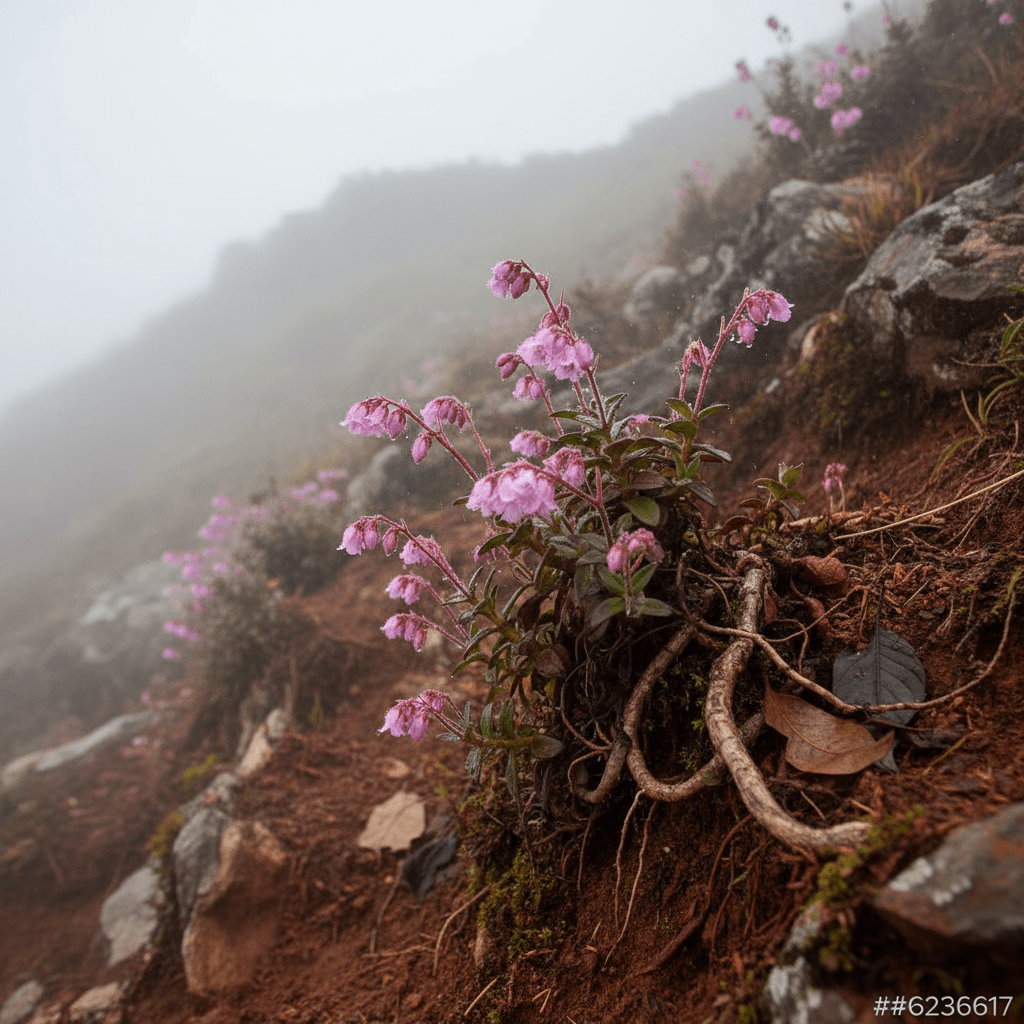
Ever seen a plant with a backstory bigger than its roots? Jatamansi has one. It’s a flowering perennial from the Caprifoliaceae family, and it grows with pink, bell-shaped flowers above a tight knot of hairy, spiked rhizomes. Those rhizomes matter most, because that’s where the scent lives. Kind of wild that the best part is hidden underground.
For centuries, people have treated jatamansi like more than a herb. In Ayurveda, it’s known as a calming plant and a medhya rasayana, which means it’s tied to memory, balance, and the nervous system. It also shows up in old Chinese medicine and in ancient stories as spikenard, a fragrant oil used in sacred and royal settings. One famous Bible story even says pure nard oil was worth 300 denarii, about a year of wages. That’s not pocket change.
The plant grows in harsh Himalayan places, usually at 3,000 to 5,000 meters, in Nepal, northern India, Bhutan, and parts of China. Cold air. Thin soil. Steep mountain slopes. Not exactly a soft life. But that tough home is part of why high-quality jatamansi oil has such a deep, earthy scent.
Here’s a simple snapshot:
| Feature | Details |
|---|---|
| Botanical name | Nardostachys jatamansi |
| Family | Caprifoliaceae |
| Plant type | Flowering perennial |
| Main part used | Rhizomes |
| Native region | Himalayas |
| Usual altitude | 3,000 to 5,000 meters |
And yes, the roots are the whole story here. For brands like Aroma Monk, that means source matters a lot. If the plant is gathered badly, the oil can lose its value fast. But when it’s handled with care, you get a spikenard essential oil that feels rich, deep, and true to its mountain home.
2. The Source of the Essence: Harvesting Jatamansi Rhizomes Sustainably
You know that feeling when something rare gets treated like it’ll never run out? That’s the big problem here.
Jatamansi oil starts underground. Not from the flowers. Not from the leaves. The oil comes from the jatamansi rhizomes, those thick root-like parts hidden in the soil. That’s why the whole harvest is such a big job. People have to dig up the plant by hand, clean the roots, and sort through the rough, tangled pieces one by one. No fancy shortcut. Just hard work.
And that’s also where the trouble starts.
Because once a plant is dug up, it’s gone. Jatamansi is listed as Critically Endangered and it’s also under CITES Appendix II rules, which means trade is watched closely. Over-harvesting has hit it hard, along with grazing, forest loss, and bad collecting habits. So if a supplier says they source jatamansi oil, the real question is not just, “Can they get it?” It’s, “How are they getting it?”
Here’s the short version of what good sustainable jatamansi harvesting looks like:
- only mature plants are collected
- some rhizome is left behind when possible
- harvest seasons are limited
- local collectors are trained in safer methods
- wild collection is tracked and documented
That matters for jatamansi oil quality too. Better harvests usually mean cleaner rhizomes, stronger scent, and a more trustworthy oil profile.
A few groups are already showing a better path. For example, the Darwin Initiative project in Nepal worked with local harvesters on non-destructive methods and fairer trade. That kind of model helps everyone. The plant. The people. The buyers.
So if you’re sourcing spikenard essential oil for skin care, aromatherapy, or product making, ask the direct questions. Where did the rhizomes come from? Was the harvest legal? Was it done with care? Because with jatamansi, the source is the story.

3. Pre-Extraction Prep: Turning Rugged Rhizomes into Raw Material
You know that moment when a muddy basket of roots looks like… well, just muddy roots? That’s where the real work starts.
Before jatamansi oil can be made, the harvested jatamansi rhizomes need a careful reset. First comes washing. The roots are scrubbed and rinsed to get rid of soil, bits of bark, and tiny stones that would only make a mess later. If the rhizomes stay dirty, the oil can pick up off-notes. Not cute.
Then comes drying. And this step matters a lot. The rhizomes are air-dried until the moisture is low enough to help stop mold and make the scent more concentrated. You won’t usually see one magic number in every guide, but the goal is simple: dry enough to store safely, not so harsh that the aromatic parts get damaged.
After that, the dried pieces are crushed, chopped, or ground into smaller bits. This is called comminution. Fancy word, simple idea. Smaller pieces give the steam more surface area to work with, which helps during the steam distillation of jatamansi. More exposed plant matter means the volatile oils can move out more easily.
Here’s the short version:
| Prep step | What happens | Why it matters |
|---|---|---|
| Cleaning | Rhizomes are washed well | Removes dirt and debris |
| Drying | Roots are air-dried | Helps block mold and sharpens aroma |
| Comminution | Roots are cut or crushed | Makes distillation work better |
So when people ask how is jatamansi oil made, this is the quiet but huge part they often miss. Clean roots. Proper drying. Good sizing. No shortcuts. That prep stage sets the tone for the whole spikenard oil extraction process.
If you’re buying for skin care, fragrance, or bulk product making, ask suppliers how they handle prep before distillation. Brands like Aroma Monk usually care about that because it affects jatamansi oil quality from the very start.
Get a quote from Aroma Monk.
Essential Oil Supplier – Bulk pricing • Samples • Fast response
4. The Heart of the Process: Steam Distillation of Jatamansi Oil
You know that old story about spikenard oil filling a whole house with scent? That kind of richness is part of why people still care about jatamansi oil today. The magic isn’t magic, of course. It’s heat, timing, and a lot of care. Pretty simple sounding. Not simple to do well.
For most makers, steam distillation of jatamansi is the go-to method for high-grade oil. Here’s the basic flow:
Load the chamber
The cleaned, dried, and crushed jatamansi rhizomes go into a stainless steel still.Send in low-pressure steam
The steam passes through the plant bits and heats them gently. That heat makes the aromatic compounds turn into vapor.Move the vapor to a condenser
The steam and oil vapor travel through a cooling pipe. A water-cooled condenser brings it back down to liquid.Separate the oil
The liquid lands in a receiver. The essential oil floats on top of the heavier water layer, which is the hydrosol or floral water.
Simple on paper. A little fussier in real life.
What’s happening inside the still is the real trick. The steam opens up the plant material and pulls out volatile aromatic compounds without soaking the rhizomes in water for too long. That matters because harsh heat can cook the scent instead of saving it. And nobody wants burnt spikenard. Nobody.
Here’s a quick look at the flow:
| Step | What happens | Why it matters |
|---|---|---|
| Steam passes through rhizomes | Aroma compounds vaporize | Pulls oil out without solvents |
| Vapor goes to condenser | Vapor cools into liquid | Makes separation possible |
| Oil and hydrosol split | Oil rises naturally | Gives a cleaner final product |
The final separation is pretty neat. Once the mixture cools, the lighter essential oil rises above the hydrosol. Then it’s skimmed off and filtered. That’s the part buyers care about most, because it affects jatamansi oil quality fast. A clean split usually means a cleaner scent, better stability, and a more trustworthy bottle.
And yes, the way the still runs can change the whole result. If the heat is too rough, the oil can smell cooked or flat. If the run is too short, some of the deeper notes stay trapped in the plant material. So distillers usually watch the process like hawks. Or like that one auntie who notices every tiny thing at a family dinner.
For brands like Aroma Monk, this is where lab testing and batch checks come in. A good spikenard essential oil should stay true to the plant, the harvest, and the method used to pull it out. That’s the real story behind how is jatamansi oil made. Clean roots. Gentle steam. Careful separation. Nothing flashy. Just solid craft.

5. Beyond Steam: Other Ways People Try to Pull Out Jatamansi Oil
Ever wonder why some oils feel rich and clean, while others smell a little off? A lot of that comes down to the extraction method. For jatamansi oil, steam distillation is the star. But there are a couple of other paths people talk about too.
One is hydrodistillation. That means the plant material is boiled right in water. It’s simple, yes. But it gives less control over heat, so the scent can shift more than you’d like. With a delicate root like jatamansi rhizomes, that’s a problem. Too much heat, and the soft aromatic parts can get cooked instead of captured. Not ideal.
Then there’s solvent extraction. On paper, it can pull out more material and give a higher yield. Sounds nice, right? But here’s the catch: leftover solvent can stay in the final product. For a therapeutic-grade spikenard essential oil, that’s a big no. People want a clean oil, not one with chemical traces hanging around.
Here’s a quick side-by-side look:
| Method | Oil yield | Purity | Main drawback |
|---|---|---|---|
| Steam distillation | Good | High | Needs careful control |
| Hydrodistillation | Fair | Medium | Less heat control |
| Solvent extraction | High | Lower for wellness use | Possible solvent residue |
So why does steam distillation of jatamansi stay the industry favorite? Simple. It usually gives the best mix of purity, scent, and trust. No extra solvents. Better control. Cleaner oil.
And that’s why most buyers looking for Nardostachys jatamansi oil extraction still ask for steam-distilled oil first. Especially brands like Aroma Monk, which focus on lab-tested oils for cosmetics, aromatherapy, and bulk product making. If you’re after real jatamansi oil quality, steam distillation is still the one to beat.
6. The Finishing Touches: Ensuring Jatamansi Oil Quality Post-Extraction
You know that moment when a fresh batch looks perfect, but you still want to check it one more time? That’s where the real trust starts.
Once the jatamansi oil leaves the still, makers usually run it through a fine filter. Tiny plant bits can sneak in during steam distillation of jatamansi, and nobody wants those floating around in the final bottle. Filtering helps the oil look cleaner, smell smoother, and stay more stable on the shelf. Small step. Big deal.
Then comes aging, or curing. And here’s the honest answer: unlike vetiver or patchouli, there isn’t strong proof that jatamansi oil gets better with long aging. Some batches may mellow a little over time, with the sharp top notes softening and the deeper earthy tone showing more clearly. But that change is usually subtle, not magical. So if someone tells you it turns into liquid gold after six months… maybe raise an eyebrow.
For Nardostachys jatamansi oil extraction, modern quality control often leans on GC-MS. That stands for Gas Chromatography-Mass Spectrometry. Fancy name, simple job: it checks what’s actually inside the oil. A good report helps confirm purity and spot key markers like valerenal, seychellene, and patchoulol. It can also show whether the oil smells right and matches the plant it came from.
Here’s a quick post-extraction checklist:
- fine filtering after distillation
- resting the oil in a dark, cool place
- checking color, thickness, and scent
- running a batch-specific GC-MS test
- comparing results with known jatamansi oil quality profiles
| Quality step | What it checks | Why it matters |
|---|---|---|
| Filtration | Removes tiny plant particles | Cleaner final oil |
| Aging | Lets the aroma settle | Smoother scent, sometimes |
| GC-MS | Confirms chemical makeup | Helps verify authenticity |
| Sensory check | Color, smell, thickness | Catches odd batches fast |
For brands like Aroma Monk, this is the part that protects buyers. A clean, tested spikenard essential oil gives product makers more confidence for skincare, aromatherapy, and bulk blends. And with a rare oil like this, confidence counts just as much as fragrance.## 7. From Process to Potency: How Extraction Defines Jatamansi Oil Quality
You can tell a lot about jatamansi oil before you even smell it. Strange but true. A slow, gentle run in the still usually gives a deeper, fuller oil than a rushed batch, because more of the plant’s heavier aromatic bits get a chance to come through.
That matters for the spikenard oil extraction process. When the steam is kept low and the run goes longer, the oil often holds a richer mix of molecules. Some of the heavier sesquiterpenes, like jatamansone and valerenal, tend to show up better in a careful distillation, and those are the compounds people often link with the calming, earthy side of the oil. Not magic. Just chemistry doing its thing.
And if the heat is too strong? Oof. The oil can turn flat, cooked, or thin. That’s why good makers watch the steam distillation of jatamansi so closely. A long, slow, low-pressure run usually helps pull out a wider scent range, including the deeper notes that make the oil feel more complete.
Here’s the simple version:
| Distillation style | What it tends to do | Result in the oil |
|---|---|---|
| Fast, hot run | Can stress the plant material | Flat scent, less depth |
| Slow, low-pressure run | Pulls out more aromatic layers | Richer, fuller profile |
| Too short | Leaves some compounds behind | Weaker scent and body |
The color tells a story too. Real jatamansi oil quality is often shown by a greenish to amber-brown tone, along with a thick, smooth feel. If it looks watery or oddly pale, that can be a sign that the plant material was weak, the distillation was off, or the oil was cut with something else. The smell should be deep, woody, earthy, and a little musky. Like a forest floor after rain… if that forest floor had a very old, sacred history.
So when you ask how is jatamansi oil made, the better question might be: how carefully was it made? Because the final bottle carries the whole trail with it. The rhizomes. The drying. The steam. Even the patience. For buyers like Aroma Monk, that’s the part that protects trust and keeps a spikenard essential oil true from root to bottle.
From Himalayan Slopes to Your Shelf: Appreciating True Jatamansi Oil
So the next time you open a bottle of jatamansi oil, think about the trip it took to get there. It probably started on a cold Himalayan slope, with careful sustainable jatamansi harvesting, then moved through washing, drying, crushing, and a slow steam distillation of jatamansi. That’s a lot for one tiny bottle. A real lot.
And here’s the big takeaway: the plant matters, sure. But the method matters just as much. If the jatamansi rhizomes were gathered badly or the Nardostachys jatamansi oil extraction was rushed, the scent, strength, and feel can change fast.
| What to check | Why it matters |
|---|---|
| Source of the rhizomes | Shows if the oil came from ethical, legal harvests |
| Extraction method | Affects aroma, purity, and overall jatamansi oil quality |
| GC-MS report | Helps verify what’s really in the bottle |
| Batch traceability | Lets buyers track the oil back to its source |
If you’re buying for skincare, aromatherapy, or bulk blending, ask direct questions. Was it steam-distilled? Can the supplier share a batch GC-MS report? Can they prove the source of the spikenard essential oil? Those answers tell you a lot.
Aroma Monk works with lab-tested essential oils, natural attars, and rose water, so buyers can ask for traceable, clean supply with more confidence. And honestly, that’s what good sourcing should feel like. Clear. Honest. No weird guesswork.
The best jatamansi oil isn’t just fragrant. It’s carefully made, responsibly sourced, and backed by proof. That’s the bottle worth keeping.

Get a quote from Aroma Monk.
Essential Oil Supplier – Bulk pricing • Samples • Fast response