
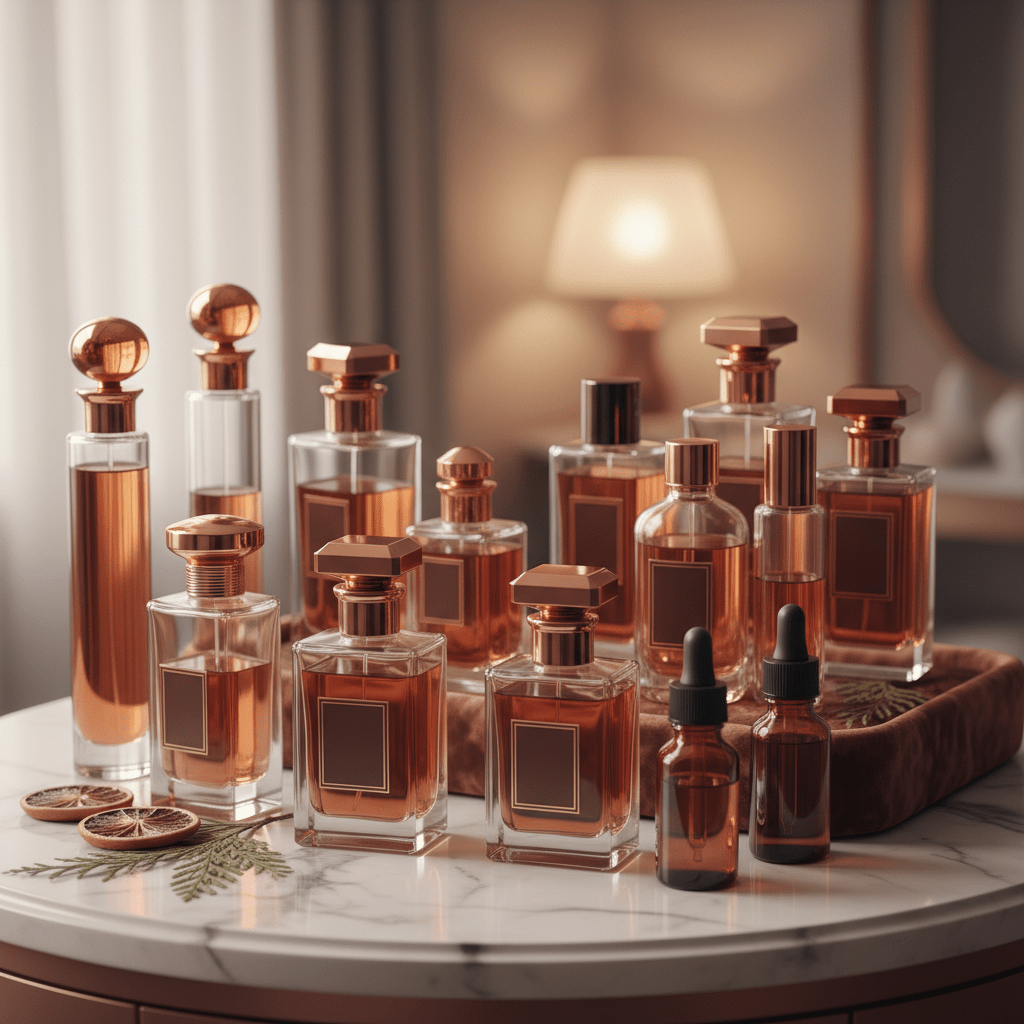
The Scent Revolution: Why Natural Perfumery is Redefining Personal Fragrance
You know that expensive bottle of perfume sitting on your vanity? Flip it over and look at the ingredient list. You’ll probably see the word “Fragrance” or “Parfum.”
It looks innocent enough. But here is the thing legacy brands usually don’t tell you.
That single word is actually a legal loophole. It allows companies to hide an average of 14 secret chemicals in just one product listing. In some cases, it can hide up to 200 different undisclosed ingredients, keeping you in the dark about what you’re spraying on your neck 14 secret chemicals.
Kind of wild, right?
But the secret is out. We are shifting away from mystery chemicals and moving toward total transparency. This is a massive driver behind the explosion of essential oils in the beauty world. We don’t just want to smell good anymore. We want to know that what we put on our skin is safe.
Actually, over 65% of shoppers now say they prioritize clean ingredients to avoid allergens consumer surveys. The market reflects this, too. The global demand for these natural options is projected to keep climbing through 2030 as sustainability becomes a must-have, not just a nice-to-have market growth.
This shift is opening the door for botanical perfumery and functional fragrance—scents that actually do something for your mood and health alongside smelling great.
So, where is this all heading? In this article, we’re going to break down the future of smell. We’ll look at why personalized scent profiles are replacing generic mall perfumes. We will talk about ethical sourcing (because nobody wants a scent that hurts the forest). And we’ll see why using pure essential oils is the only way forward for brands that care about quality.
Let’s get into it.
1. The Awakening: Understanding the Shift to Clean Fragrance
Ever walk through the perfume section of a department store versus a garden?
One might give you a headache. The other usually makes you take a deep breath.
It turns out, your body’s reaction isn’t just in your head. It’s chemistry. We mentioned those secret chemicals earlier, but we need to talk about what they actually do. It’s a bit scary.
Scientists have flagged ingredients like synthetic musks as persistent pollutants. They hang around in your body long after the scent fades. Even more concerning are harmful chemicals called phthalates. These are often linked to hormone disruption and other reproductive issues.
And here is a stat that might make you toss your old cologne: traces of phthalates are found in roughly 97% of Americans Health risks of fragrance chemicals.
That explains the massive shift we are seeing.
People aren’t just buying natural perfumes because they sound fancy. They are buying them because they are worried. This fear—and the desire for safety—is the heartbeat of the clean fragrance movement.
But what does “clean” even mean?
It can be confusing. Basically, it means transparency. It’s the intersection where the clean beauty movement meets common sense. Consumers want to see “Lavender Oil” or “Rose Absolute” on the label, not “Fragrance Blend #5.” They want plant-based ingredients they can pronounce.
There is a big psychological side to this, too.
In a world full of screens, notifications, and plastic, we are craving something real. Botanical perfumery offers that connection to the earth. It feels authentic. A synthetic scent might smell sort of like vanilla, but it won’t calm your nervous system. Real vanilla can.
This craving for authenticity is driving the market wild.
Actually, about 73% of luxury fragrance buyers now look into a brand’s sustainability habits and ingredient list before they spend a single dollar Sustainability market trends.
For business owners, procurement managers, or anyone mixing blends, this changes the game. You can’t cut corners anymore. “Good enough” isn’t good enough.
To build trust with this new wave of customers, you need sustainable scent sources. You need suppliers who provide lab-tested, verified pure ingredients—not the diluted stuff that floods the market. Because your customers? They are checking. And they know the difference.
2. Trend Focus: Hyper-Personalization and Custom Scent Profiles
Remember walking down a high school hallway and smelling the same body spray on twenty different people?
We’ve all been there. It was basically the uniform of the early 2000s. But things have changed.
Today, smelling like everyone else is a nightmare for most consumers. We don’t want to fit in anymore. We want to stand out. This desire is fueling the massive rise of personalized scent profiles.
Think about it like a Spotify playlist. You wouldn’t want to listen to the exact same top 40 songs as your neighbor every single day, right? You want a mix that matches your specific vibe. Fragrance is heading the exact same way.
Especially for Gen Z shoppers, the goal is individual expression. They are skipping the big celebrity bottles and traditional gendered marketing in favor of niche, unisex options that feel unique to them Gen Z preferences.
This shift brings us to “scent layering.”
It sounds technical, but it’s actually really simple. It’s the art of mixing different pure essential oils or sprays to build a smell that changes throughout the day. It allows you to build a “fragrance wardrobe” rather than wearing a uniform.

Maybe you start the morning with a bright citrus basil blend to wake up. By 2 p.m., when that afternoon slump hits, you roll on some peppermint. Then at night, you switch to deep vetiver or sandalwood to wind down.
This is where functional fragrance comes into play. It’s not just about smelling nice; it’s about using scent as a tool to change how you feel.
We are seeing a ton of new brands—maybe even yours—offering interactive “scent quizzes” now. The customer answers five questions about their personality, memory, or favorite season, and boom. They get a custom blend sent to their door. It puts the user in the driver’s seat. They get to play perfumer without needing a chemistry degree.
But here is the catch for businesses.
To offer this kind of variety, you need a serious library of ingredients. You can’t just stock three scents and call it a day. You need high-quality inputs—like the natural attars and lab-tested oils we supply at Aroma Monk—to create those infinite combinations.
If you are mixing a custom sleep blend, you need to know the lavender is 100% pure, or the aromatherapy benefits won’t work. The customization trend relies heavily on the quality of the building blocks. If the ingredients are cheap synthetics, the magic is lost.
So, customization isn’t just a fun marketing gimmick. It’s the future of how we interact with products. We are moving away from “one size fits all” and stepping into “made just for you.”
Get a quote from Aroma Monk.
Essential Oil Supplier – Bulk pricing • Samples • Fast response
3. Trend Focus: Conscious Consumption – The Rise of Sustainable Scent
Love the smell of Sandalwood? Who doesn’t? It’s rich, creamy, and arguably the most popular wood scent on the planet.
But here is the problem.
It takes decades for a Sandalwood tree to mature. And because everyone wants it, we are cutting them down faster than they can grow back.
This brings us to the ugly side of the fragrance industry. Over-harvesting is a real threat. In fact, popular ingredients like Sandalwood and Rosewood are now on environmental watch lists because they are becoming so rare Endangered essential oils.
For a long time, nobody really asked where their oil came from.
But that has changed. Big time.
Shoppers today are smart. They don’t just want to smell good; they want to feel good about what they are buying. This is called “conscious consumption.” It’s the reason online sales for organic personal care products surged by 48% in 2024 alone Market growth details.
People are voting with their wallets. They are choosing brands that protect the forest over ones that destroy it.
So, what does this mean for you if you are sourcing ingredients?
It means transparency is your new best friend. You can’t just claim your product is “natural.” You have to prove it.
Ethical sourcing isn’t just a buzzword. It means three specific things:
- Traceability: You know exactly which farm the plant came from.
- Fair Labor: The farmers are paid well and treated right.
- Regenerative Farming: The growing process heals the soil instead of hurting it.

If you are a procurement manager or a brand owner, this can feel like a headache. Finding pure essential oils that are also ethically sourced is tough. There is a lot of fake stuff out there.
We see this all the time at Aroma Monk. We work with businesses that are tired of wondering if their “pure” oil is actually diluted with chemicals or sourced illegally. That’s why we stick to rigorous lab testing and verified supply chains. Because when you are buying in bulk, you need to know—really know—that what you’re putting in your bottles is clean.
The bottom line?
Sustainability is no longer a nice-to-have. It’s a must-have. If your natural perfumes or functional blends damage the planet, your customers will find out. And they will move on.
Building a brand that lasts means building a supply chain that respects the earth. It’s the only way to stay relevant in a market that is watching your every move.
4. Trend Focus: Functional Fragrance and the Blurring of Aromatherapy
Remember when you wore cologne just to impress a date? or maybe to cover up the fact that you skipped laundry day?
Those days are fading fast.
We are entering the era of functional fragrance.
This is a fancy way of saying that we want our products to multitask. A scent is no longer just a pretty accessory. It is a tool. Think of it like a software update for your mood.
Life is stressful right now. We are all glued to screens. We are tired. So, consumers are looking for easy ways to fix how they feel. They don’t just want to smell good; they want to feel calm, focused, or energized.
This isn’t just magic thinking, either. There is real science backing it up.
Actually, recent studies have shown that inhaling blends like lavender and bergamot can lower cortisol levels—that’s the stress hormone—and improve sleep quality Essential oils for sleep.
Other research points to ingredients like rosemary and peppermint. Turns out, they can actually sharpen your focus and keep you alert when that 3 p.m. slump hits.
Brands are taking note of this data. They are getting creative with how they deliver these benefits. We aren’t just seeing glass perfume bottles anymore. Now, we are seeing:
- Focus-enhancing rollerballs designed specifically for office desks.
- Scent-infused sleep masks to help insomniacs drift off.
- Wearable diffusers that look like jewelry but act like a personal spa.
Product developers are using specific oils for specific jobs. They use Vetiver when they want to create a grounding feeling because it’s earthy and deep. They use Clary Sage for balance. And they grab bright citrus oils for a quick mood lift.
But here is the catch for anyone making these products.
If you promise a customer that your “Sleepy Time Mist” will help them rest, it actually has to work. If you use a synthetic lavender smell made in a lab, it might smell purple (if that makes sense). But it won’t lower cortisol. Your brain knows the difference.
To get the real aromatherapy benefits, you need the actual plant compounds found in pure essential oils.
This is a huge part of what we do at Aroma Monk. When we supply oils to wellness brands, we know they aren’t just making air fresheners. They are making tools for better living. That’s why we lab test everything. Because if the chemistry isn’t right, the product fails.
The line between a perfume bottle and a medicine cabinet is getting blurry. And honestly? It’s about time.
5. A Guide for the Savvy Consumer: How to Spot Quality and Purity
Ever stood in the wellness aisle staring at two bottles of “Lavender Oil” and wondered why one costs $5 and the other costs $25?
It’s confusing. And honestly? Brands often make it that way on purpose.
But if you are building personalized scent profiles or just stocking your home bathroom, you need to know what you are actually buying. Because there is a massive difference between “Essential Oil” and “Fragrance Oil.”
Think of it like orange juice.
Pure essential oils are like fresh-squeezed juice. They come directly from the plant rind, leaf, or flower. They carry the therapeutic properties we talked about earlier. Fragrance oils, on the other hand, are like orange-flavored soda. They are synthetic cocktails made in a lab to mimic nature. They might smell nice, but they have zero aromatherapy benefits.
So, how do you tell them apart? You have to become a label detective.
Here is a quick checklist to run through before you buy:
- The Latin Name: A real bottle will list the botanical name. For Lavender, it should say Lavandula angustifolia. If it just says “Lavender Scent,” it’s likely fake.
- Country of Origin: Different soils make different scents. A quality brand will tell you exactly where that Vetiver was grown (Haiti vs. Indonesia matters).
- Extraction Method: Was it steam distilled? Cold pressed? You should know.
But the biggest tell is something called a GC/MS report.
This stands for Gas Chromatography-Mass Spectrometry. It sounds super technical, but it’s basically a lie detector test for oil. It breaks down the chemical “fingerprint” of the liquid to spot any synthetic fillers or additives.
At Aroma Monk, we don’t let anything leave the warehouse without passing these tests. Why? Because purity matters.
Be careful with marketing buzzwords, too. You see “Therapeutic Grade” on labels everywhere. But here is a secret: there is no governing body that hands out that grade. It’s strictly a marketing term. Instead of falling for fancy gold stickers, ask for the test results Purity testing facts.
Also, watch out for the bottle itself.
Real essential oils are delicate. Sunlight and heat destroy them. That’s why reputable brands always sell them in dark amber or blue glass.

If you see “100% Pure” oil in a clear plastic bottle? Run.
The clean fragrance world is growing fast, but so are the shortcuts. Whether you are a procurement manager sourcing for a new line or just someone who wants a non-toxic home, these details count.
When you strip away the marketing fluff and look for the science—like specific botanical names and transparent testing—you ensure you’re getting the real deal. And trust me, your nose (and your health) will know the difference.
The Future of Fragrance: Personal, Purposeful, and Plant-Powered
So, where do we go from here?
We’ve looked at the scary stuff hidden in generic “Fragrance” labels. We’ve seen how botanical perfumery is helping us reclaim our health. And we’ve learned that a scent can actually help you focus on work or fall asleep faster.
It’s a lot to take in.
But here is the exciting part. You—whether you are mixing products for a new brand or just buying for yourself—you have the power now. The days of blind buying are over.
The future of smell isn’t about fitting in. It’s about finding what works for you. It’s about personalized scent profiles that tell your story. It’s about demanding clean fragrance that doesn’t hide behind legal loopholes.
If you are a business owner, this is your green light. The world is hungry for sustainable scent. They want pure essential oils that are tested, verified, and safe. That’s exactly why we do what we do at Aroma Monk—providing the honest, lab-tested building blocks for brands that refuse to compromise.
You don’t have to overhaul your entire life today. Start small.
Maybe you swap that synthetic car air freshener for a bottle of peppermint oil. Maybe you research one brand to see if they hold valid certifications or use regenerative farming Clean beauty standards.
Whatever you do, trust your nose. If it smells like a chemical factory, it probably is. But if it smells like a rainy forest or a fresh peeled orange? You’re on the right track.
Welcome to the revolution. It smells pretty good in here.
Get a quote from Aroma Monk.
Essential Oil Supplier – Bulk pricing • Samples • Fast response