
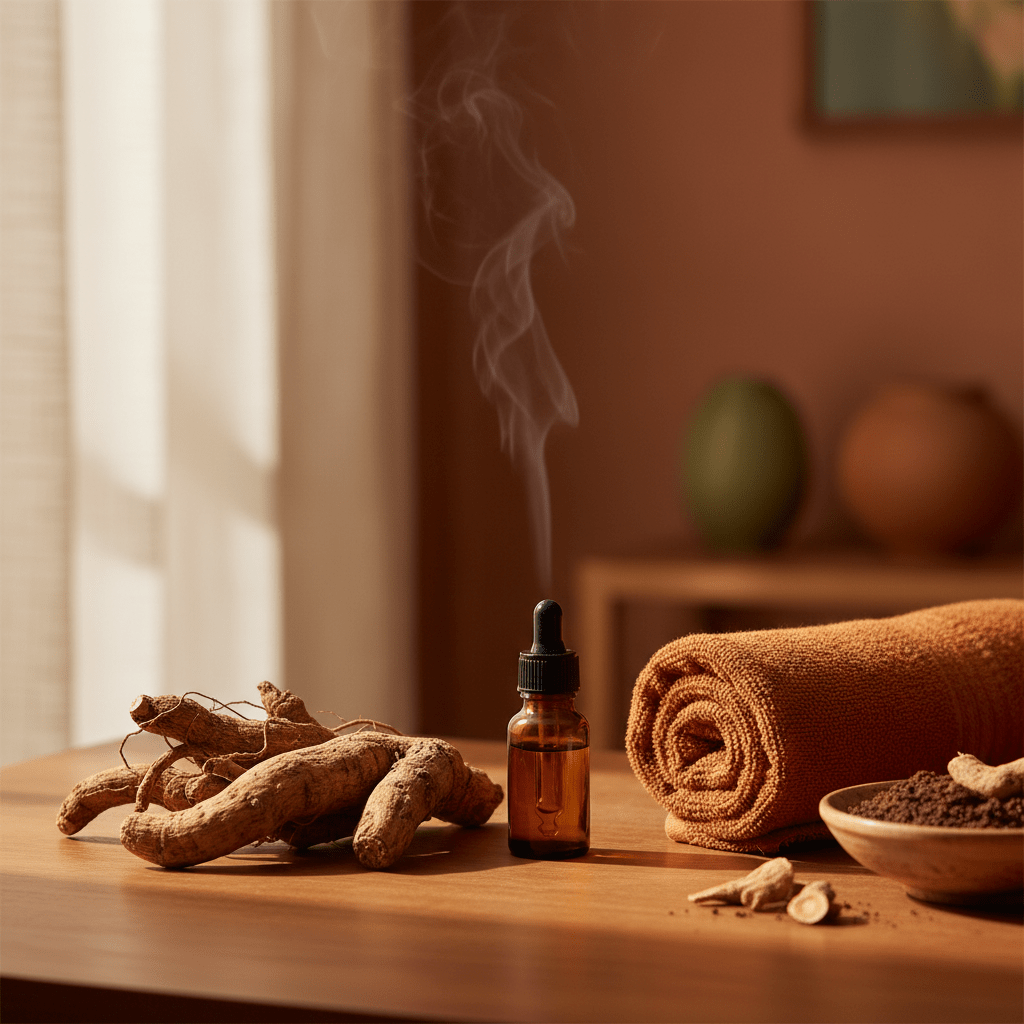
Introduction: Rediscovering an Ancient Remedy for a Modern World
You know that tired, wired feeling? The one where your shoulders stay tight, your mind won’t stop running, and even sleep feels a little shallow. A lot of adults are living there right now. In 2024 and 2025, stress and burnout kept climbing, and many working-age people said they felt more anxious than the year before. That’s a big deal.
And that’s part of why ashwagandha oil is getting fresh attention. This old Ayurvedic massage oil comes from Withania somnifera, a plant that’s been used in Indian wellness for thousands of years. In Ayurveda, it’s praised as a grounding oil for body and mind. Simple idea. Pretty powerful, too.
People have long turned to ayurvedic medicine for stress, sore muscles, stiff joints, and tired skin. Today, we’re looking at why. We’ll walk through the history of ashwagandha oil, what the research says, and how to use ashwagandha oil in real life without making it weird or overcomplicated.
If you’ve been curious about ashwagandha oil benefits, ashwagandha oil for pain, or even ashwagandha for skin, you’re in the right place. Let’s sort it out together.
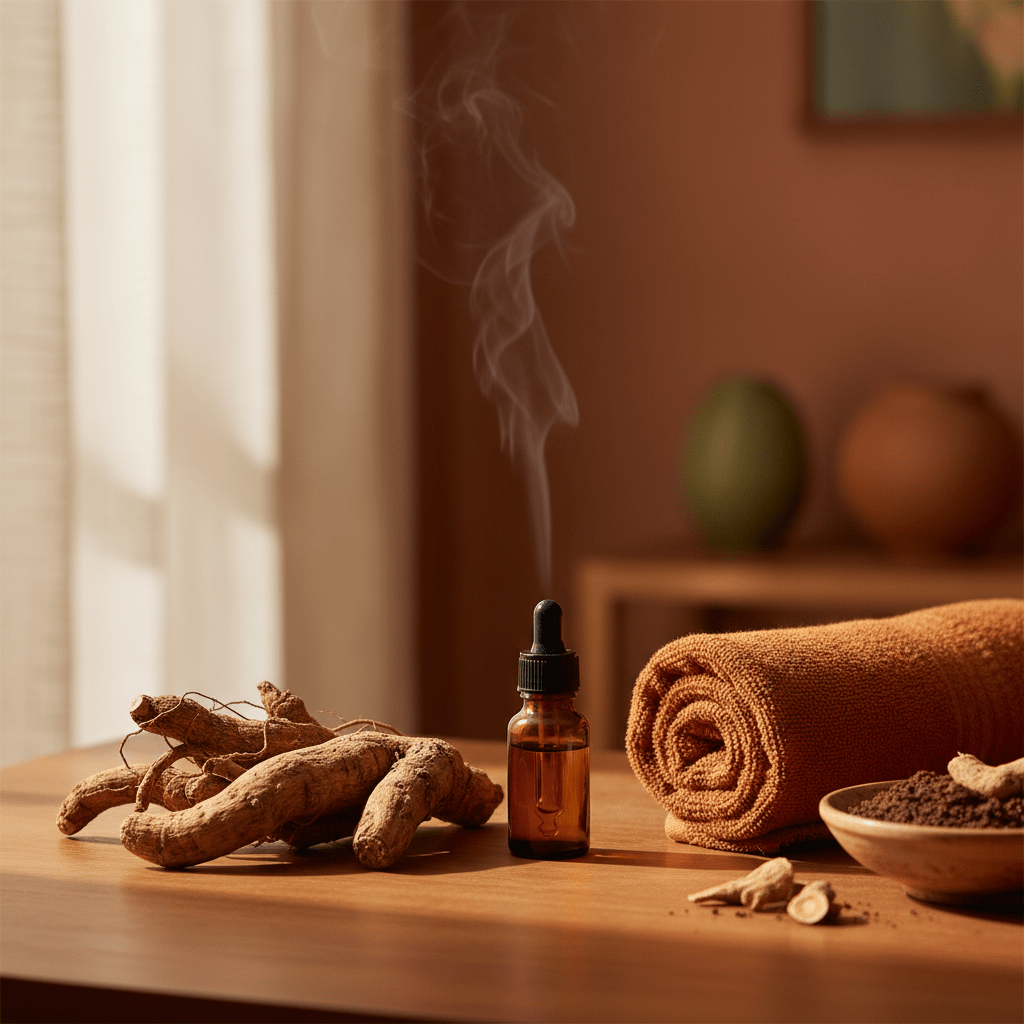
What is Ashwagandha? Understanding the ‘Royal Herb’ of Ayurveda
You know that plant people talk about like it can do a little bit of everything? Ashwagandha is one of those. Its full name is Withania somnifera, and it grows as a small shrub with yellow flowers and red berries. Pretty plain-looking plant. Big reputation.
The name ashwagandha comes from Sanskrit. “Ashwa” means horse, and “gandha” means smell. So yes, the root has a horse-like smell. Weird, right? But the name also points to what Ayurveda believes it gives the body: strength, steady energy, and stamina. That’s why it’s been called the “royal herb” for so long.
In Ayurveda, ashwagandha is classed as an adaptogen. That just means it’s seen as a herb that helps the body handle stress and bounce back better after strain. Not magic. Just a plant with a long history of being used for physical and mental fatigue, restless sleep, and that worn-down feeling many of us know too well.
And here’s the part that matters most for ashwagandha oil: the root. Ayurvedic makers usually use the root in oils and tonics because it holds the strongest share of the plant’s active compounds. That’s why many ayurvedic massage oil blends, including abhyanga oil, use root extract or root paste instead of the leaves.
| Quick fact | Why it matters |
|---|---|
| Botanical name: Withania somnifera | This is the plant behind ashwagandha oil |
| Root used most often | Holds more of the useful plant compounds |
| Adaptogen | Helps the body cope with stress |
| Warm, grounding herb | Fits well in Ayurveda for Vata balance |
So when people talk about ashwagandha oil benefits, they’re usually talking about that root-powered, grounding effect. It’s also why this herb shows up in talks about ayurvedic medicine for stress, ashwagandha oil for joints, and even ashwagandha for skin. The plant has a long memory. We’re just catching up.
If you’re looking for a real withania somnifera oil product, check the label. Root source matters. And if you’re buying for a brand or product line, Aroma Monk can help with pure, lab-tested oils and carrier oils that fit wellness and personal care blends.
From Root to Oil: The Traditional Process of Creating Ashwagandha Oil
Ever wonder why some oils feel warm the second they touch your skin? That’s not just a mood thing. In Ayurveda, the way an oil is made matters a lot, and ashwagandha oil is a good example.
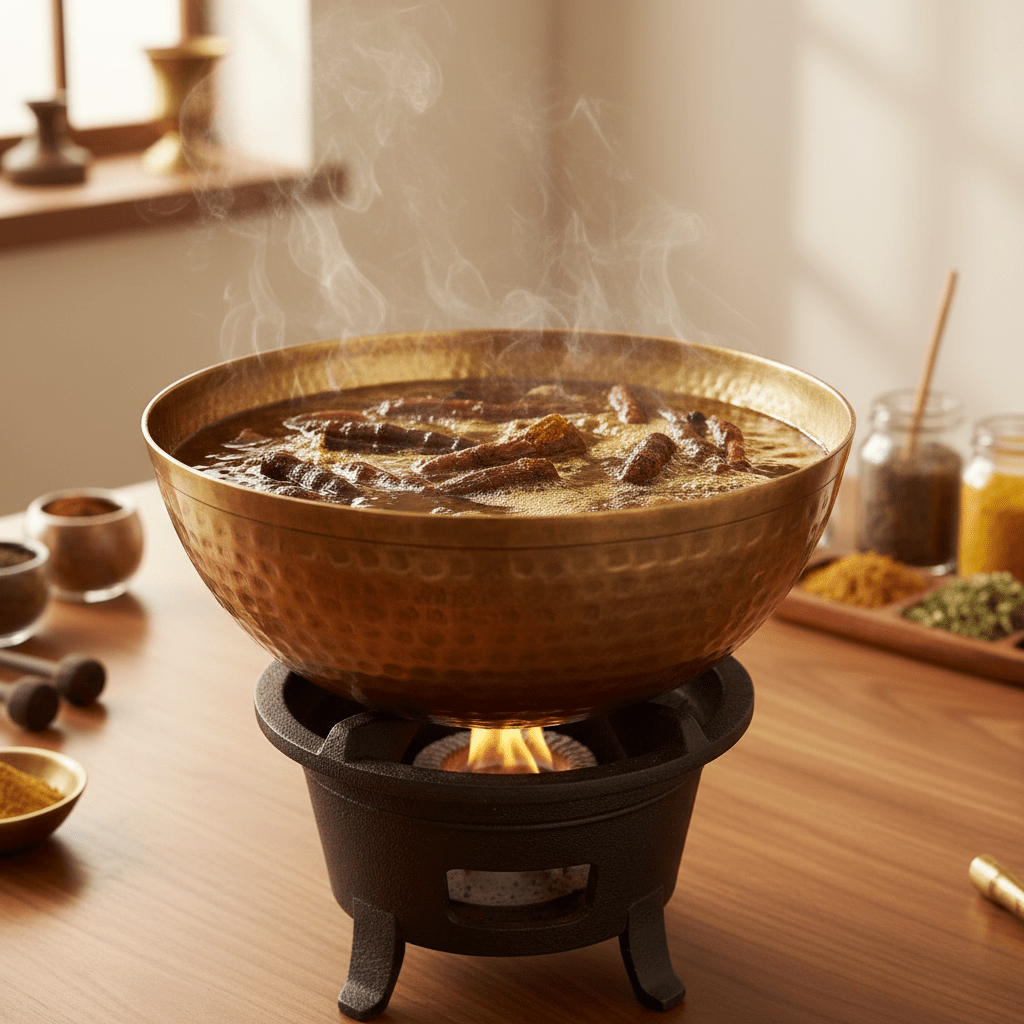
The traditional method starts with dried ashwagandha root powder. It gets slowly simmered into a carrier oil, usually sesame oil. This slow soak is often called maceration or taila paka. The herb gives up its good stuff little by little, and the oil carries it with it. No rush. No fancy lab tricks. Just steady heat and patience.
Sesame oil, or tila taila, is the classic base. Ayurveda likes it because it’s warm, heavy, and deeply nourishing. That matters for Vata dosha, which is said to be dry, light, cold, and jumpy. Warm sesame oil helps calm that dry, scattered feeling. So if you’ve ever felt tense, stiff, or a little all over the place, this is the kind of oil Ayurveda would reach for first.
Here’s the simple version of how it’s made:
- Dry ashwagandha root is ground into powder.
- The powder is mixed with sesame oil.
- A water decoction of the herb is often added too.
- The mix is heated slowly until the water cooks off.
- What’s left is a rich herbal oil ready for massage.
| Step | What happens | Why it matters |
|---|---|---|
| Root prep | Dried root is used | Keeps the oil stable |
| Slow heating | Herb steeps in oil | Pulls plant compounds into the oil |
| Sesame base | Warm, heavy carrier oil | Fits Vata-balancing use |
| Cooling and storage | Kept in a dark bottle | Helps the oil last longer |
That old-school method is still the gold standard for many Ayurvedic makers. But modern commercial production can look very different. Some brands use cheaper base oils, weak extracts, or vague labels that don’t say whether the root was organic or even whole root. Not ideal.
If you’re shopping for ashwagandha oil, look for a few plain things: cold-pressed carrier oils, organic sourcing, clear root details, and no weird additives. If you’re buying in bulk for a wellness line, that matters even more. Aroma Monk, for example, supplies lab-tested natural oils and carrier oils for brands that want clean ingredients and reliable sourcing.
And honestly, that’s the sweet spot. Old wisdom in a bottle. But made with care, not shortcuts.## The Science Behind the Soothing: Key Compounds and Therapeutic Properties
You know that feeling when your muscles stay grumpy long after the workout is over? Or your skin acts up for no clear reason? That’s where ashwagandha oil starts to get interesting.
The star players in ashwagandha are called withanolides. These are the plant compounds that give Withania somnifera a lot of its well-known body care perks. One of the best-known ones is withaferin A. It’s a big deal in research because it’s been studied for calming inflammation, easing pain, and helping the body deal with stress from the outside and inside. Not magic. Just plant chemistry doing its thing.
Here’s the simple version. Withanolides may help in three ways:
- Calm swelling and irritation
- Soothe sore, achy spots
- Fight free radicals that wear skin and tissue down
That last one matters more than people think. Free radicals are like tiny troublemakers. They can add to dry, tired-looking skin and make already cranky joints feel worse. Ashwagandha’s antioxidant side may help slow that down.
For ashwagandha oil benefits, this is the part that connects the old Ayurvedic story to modern use. The oil’s warming base, often sesame oil, pairs nicely with the herb’s grounding nature. So when people use it as an ayurvedic massage oil or part of abhyanga oil routines, they’re not just chasing a nice smell. They’re looking for comfort.
That’s why it shows up in talks about ashwagandha oil for pain and ashwagandha oil for joints. Warm oil massage can help loosen tight muscles, and the herb’s compounds may support that soothing effect. It can also feel nice on dry or irritated skin, which is one reason people explore ashwagandha for skin in simple body oils and blends.
| Compound group | What it may do | Where it helps most |
|---|---|---|
| Withanolides | Reduce inflammation | Joints, sore muscles |
| Withaferin A | Calm pain signals and irritation | Achy spots, stiff areas |
| Antioxidant compounds | Fight oxidative stress | Skin, tissue comfort |
And here’s the honest part. Most strong research has looked at ashwagandha taken by mouth, not rubbed on skin. So the topical story is still growing. But the chemistry makes sense, and the traditional use has kept it around for a reason.
If you’re building a wellness product line, this is also where clean sourcing matters. Aroma Monk supplies pure, lab-tested essential oils, carrier oils, and natural ingredients for brands that want quality they can trust. For anyone thinking about how to use ashwagandha oil in body care, massage blends, or joint comfort products, that kind of sourcing makes the whole thing feel a lot less guessy.
Core Ayurvedic Applications: How Ashwagandha Oil Restores Balance
Ever had one of those days where your body feels tight, your head feels busy, and even your skin seems annoyed with you? Yeah. Ayurveda would call that a Vata problem. And that’s exactly where ashwagandha oil gets its place.
1. Abhyanga for a shaky, overworked system
Abhyanga is the old Ayurvedic self-massage practice. Simple idea, really. You warm the oil, rub it into the body with slow strokes, and let the skin soak in the care. With ashwagandha oil, that care gets a little deeper because the herb is known for grounding and steadying the body.
Vata dosha is linked with dryness, restlessness, and that “I can’t settle down” feeling. Warm ashwagandha oil helps calm those traits because Ayurveda likes to use opposites. Cold gets warmth. Dry gets oil. Scattered gets steady. Makes sense, right?
This is why people reach for ashwagandha oil in the evening, after a long workday or a noisy commute. A few minutes can feel like a reset button. Not a miracle. Just a good ritual.
| Vata signs | How ashwagandha oil may help |
|---|---|
| Dry skin | Adds softness and moisture |
| Restless mind | Supports a calmer routine |
| Tight body | Helps muscles feel less wound up |
| Poor sleep | Works well in a bedtime massage ritual |
And yes, research on herbal oil massage backs up the old habit a bit. One study on Abhyanga found sleep trouble dropped by 27.9% and stress dropped by 16.4% after 15 days of use. That’s a pretty decent nudge for something that also feels nice.
2. Local care for sore joints and stiff spots
But what about pain in one spot? That’s where Sthanika Abhyanga comes in. It just means local massage. So instead of rubbing oil all over, you work it into the knees, elbows, lower back, or anywhere that feels cranky.
Ayurveda often uses this for Sandhi Vata, which is the traditional way of talking about joint stiffness and wear. Think old knees, tight fingers, or that stiff feeling after sitting too long. Warm ashwagandha oil is a common fit here because it supports circulation and comfort while also giving the area a soft, oily barrier.
A lot of people pair it with gentle heat, slow strokes, and a little patience. No need to go hard. In fact, going hard usually backfires. The body likes kindness more than force.
3. Mamsa Poshana for tired muscles
This one’s for the gym crowd, the parents carrying toddlers all day, and anyone whose back says “nope” by 4 p.m.
In Ayurveda, Mamsa Poshana means nourishing the muscles. Ashwagandha oil is often used here after physical work because it’s thought to help tired tissue recover and feel less drained. The warming oil and grounding herb fit well together. One soothes. The other supports.
You might use it after a workout, a long hike, or a week of bad posture at your desk. I’d say it’s especially nice on the shoulders and lower back. Not fancy. Just useful.
A simple way to try it
If you’re new to ashwagandha oil, keep it easy:
- Warm a small amount in your hands.
- Massage it into dry or tight areas.
- Leave it on for 15 to 20 minutes.
- Wipe off the extra oil with a warm cloth.
- Use it a few times a week, not just once and forgotten.
If you’re buying for a brand or personal care line, look for a clear root source, clean carrier oils, and lab-tested quality. Aroma Monk offers pure essential oils, carrier oils, and natural ingredients for wellness and cosmetic products, which makes it easier to build a formula that actually feels trustworthy.
Ashwagandha oil works best as a habit, not a one-time fix. And honestly, that’s very Ayurveda. Slow. Warm. Steady. The kind of care people keep coming back to.

Get a quote from Aroma Monk.
Essential Oil Supplier – Bulk pricing • Samples • Fast response
Modern Wellness Benefits: Using Ashwagandha Oil for Today’s Pains
You know that feeling when your body is tired, but your brain still won’t sit down? That’s the exact spot a lot of adults are in right now. Stress is high, sleep is shaky, and burnout keeps showing up at work and at home. In 2024, 43% of U.S. adults reported feeling more anxious than the year before, and about 49% reported experiencing heavy daily stress. That’s a lot of people carrying a lot of weight.
So where does ashwagandha oil fit in? Pretty nicely, actually. In Ayurveda, the old idea is that warm oil helps calm Vata, the part of the body linked with restlessness, dryness, and that wired feeling. In plain words, a slow abhyanga oil massage can feel like pressing pause. Not because the oil is magical, but because the ritual itself tells your body, “Hey, you can relax now.”
A 15-day self-massage study found sleep troubles dropped by 27.9% and stress dropped by 16.4% with Abhyanga. That lines up with what lots of people already feel in real life. Slow strokes. Warm oil. Less tension. If you’re looking for a simple ayurvedic medicine for stress habit, this is one of the easiest places to start.
Post-workout care that actually feels good
And here’s where it gets useful for sore legs, tight shoulders, and all those “I should’ve stretched more” moments. Ayurveda calls this muscle nourishment, and in modern terms, it’s a nice way to support recovery after exercise or a long day on your feet.
Massaging ashwagandha oil for pain into sore spots may help loosen things up, especially if your muscles feel stiff after a run, gym session, or too many hours at a desk. It’s not a replacement for rest, but it can be part of the fix. Warm oil plus gentle pressure tends to feel great on delayed-onset muscle soreness, or DOMS, and that little bit of movement can also help you feel less stiff.
Good spots to try it:
- Shoulders after laptop days
- Lower back after long drives
- Thighs after walking, lifting, or cycling
- Knees and elbows when they feel cranky
Actually, wait, there’s a better way to think about it. The oil itself is only part of the story. The massage is doing a lot too. Slow pressure, steady motion, and a few quiet minutes can be a pretty solid reset.
Skin that looks less tired
This is where ashwagandha for skin gets interesting. Dry skin often just wants moisture, plain and simple. A well-made withania somnifera oil blend can help coat the skin and lock in softness, which makes it handy in winter or anytime your skin feels rough.
Ashwagandha also has antioxidant compounds, and those may help fight free-radical damage that adds to dull, worn-looking skin. So while the research on topical use is still growing, the old use makes sense. Warm, nourishing oil. Less dryness. A calmer look.
| Skin concern | How ashwagandha oil may help |
|---|---|
| Dry patches | Adds a soft, oily layer |
| Dull look | May support a fresher glow |
| Tired skin | Helps skin feel more cared for |
| Rough texture | Works well in body massage blends |
If you’re shopping for ashwagandha oil benefits in a product line, look for clean sourcing and clear labels. Aroma Monk offers lab-tested essential oils, carrier oils, and natural ingredients for wellness and personal care blends, which is handy if you want something pure and ready for real use.
And if you’re just using it at home? Keep it simple. Warm it, massage it, and give it a little time. Sometimes that’s enough.
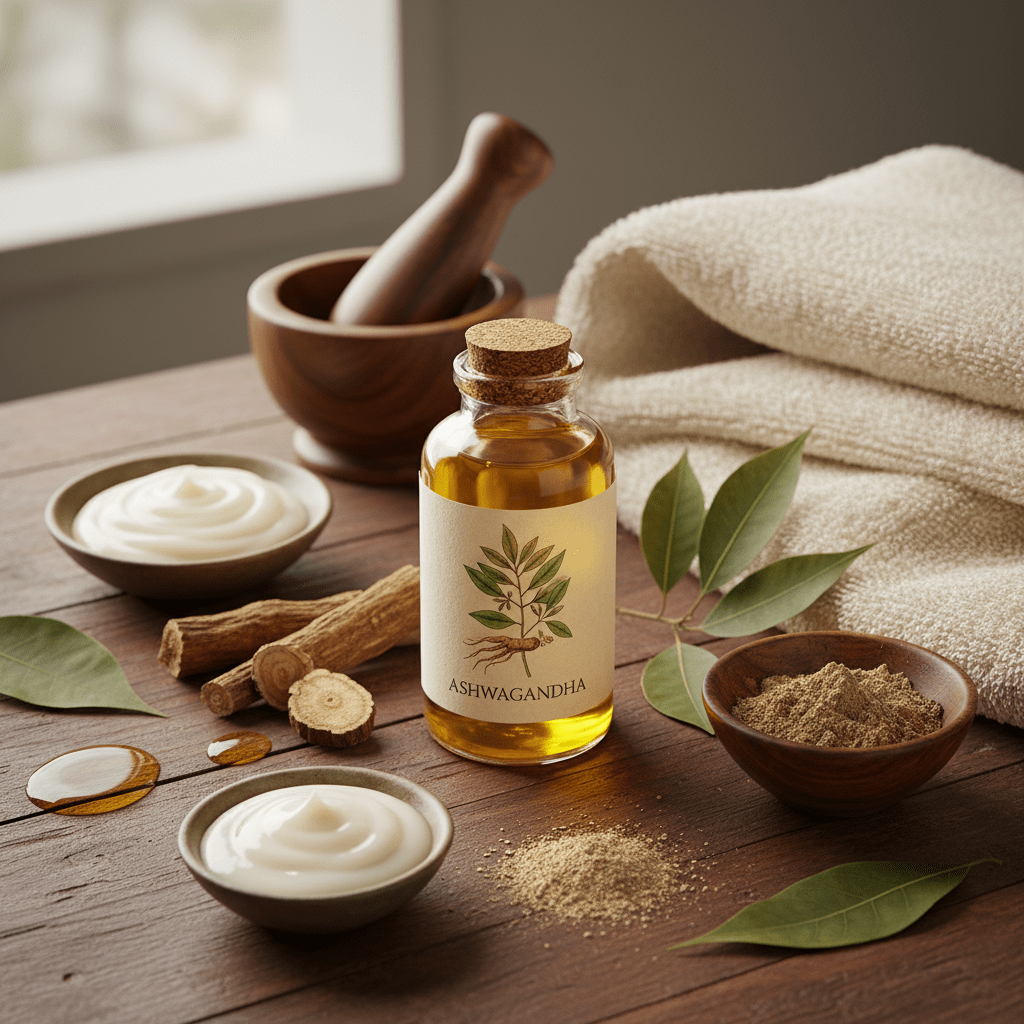
How to Select and Use Ashwagandha Oil Safely and Effectively
You know that moment when you buy a lovely-looking oil, then flip the bottle and think, “Wait… what is all this?” Yeah, same. Shopping for ashwagandha oil can feel that way if the label is vague or stuffed with stuff you can’t pronounce.
So let’s keep it simple.
Quick checklist for a good bottle
Look for these basics:
- Organic ashwagandha root or clearly listed root extract
- Cold-pressed carrier oil like sesame or almond
- No artificial fragrance or dye
- No weird fillers or mystery blends
- Lab-tested or third-party tested when possible
A good withania somnifera oil should feel like a real plant product, not a perfume trick. Sesame oil is the classic base for abhyanga oil because it feels warm and heavy, which fits Vata-balancing use. Almond oil works too if your skin likes it better. But if the label says “fragrance oil” and nothing else, I’d skip it.
A simple full-body Abhyanga routine
This part is easy. Really.
- Warm a small amount of oil in your hands or in a bowl set in warm water.
- Start with your scalp or feet, then move up with slow strokes.
- Use gentle circles on joints and longer strokes on arms and legs.
- Let it rest on your skin for 15 to 20 minutes.
- Shower with warm water after that.
Don’t rush it. That’s the whole point. A calm ayurvedic massage oil routine works best when you actually slow down a little. If you’re using ashwagandha oil for pain, spend extra time on sore knees, tight shoulders, or a cranky lower back.
Safety first. Always.
Before you use it all over, do a patch test on a small spot of skin. Wait a day. If it gets red or itchy, stop.
Also:
- Don’t use it on broken or irritated skin
- Avoid the eyes and face unless the product says it’s safe there
- Pregnant people should talk with a doctor first
- People with autoimmune conditions should check with a doctor too
- If you take medicine for thyroid, blood sugar, or blood pressure, ask your doctor before using ashwagandha regularly
That last part matters. A lot. Natural doesn’t mean “try anything and hope.”
If you’re choosing oils for a wellness brand or bulk product line, Aroma Monk offers pure, lab-tested essential oils, carrier oils, and natural ingredients that work well for body care, aromatherapy, and personal care blends. Clean sourcing makes the final product feel better from the start.
And if you’re just at home with one bottle? Keep it gentle, warm, and steady. That’s usually where the best ashwagandha oil benefits show up.## Conclusion: Embrace Ancient Wisdom for Lasting Well-Being
Some days, we don’t need a huge life fix. We just need one small, steady habit.
That’s where ashwagandha oil shines. It brings together stress relief, body comfort, and a calmer mind in one simple ayurvedic massage oil ritual. Warm it. Rub it in. Let your body slow down for a minute. That little pause can matter more than people think.
Ashwagandha has stayed around for a reason. It fits old Ayurvedic care, but it also speaks to modern life, where stress, stiffness, and poor sleep show up way too often. If you want to try how to use ashwagandha oil, start small. Tonight, massage a little warm oil into your feet before bed. That’s it. Simple. Quiet. Pretty powerful.
And if you’re looking for clean, lab-tested oils for your own blends, Aroma Monk offers pure carrier oils and natural ingredients that work well for wellness and personal care products.
Get a quote from Aroma Monk.
Essential Oil Supplier – Bulk pricing • Samples • Fast response