

Introduction: The Ancient Answer to Modern Women’s Stress
Ever have one of those weeks where you’re the planner, the fixer, the cook, the helper, and the one who remembers everyone else’s stuff too? Yeah. A lot of women are carrying that load, and it shows. Recent reports found burnout hit 42% of women overall in 2024, and for women ages 25 to 34, that number climbed to 71% in one study. That’s a lot of tired people running on coffee and grit.
And that stress doesn’t just live in your head. It can mess with sleep, mood, energy, and even hormones. That’s where ashwagandha comes in. Also known as Withania somnifera for women in many wellness chats, it’s a classic Ayurvedic herb that’s been used for more than 3,000 years as a rasayana, or rejuvenating tonic.
The thing is, a lot of people talk about ashwagandha like it’s one magic fix. It isn’t. But there is real interest in the possible ashwagandha oil benefits for women, especially for stress, sleep, and daily wellness. In this guide, we’ll look at what the herb is, how it fits into women’s health, and what the research actually says about ashwagandha for stress and anxiety, ashwagandha for female hormones, thyroid support, menopause, and more.
Plus, we’ll keep it real about how to use ashwagandha oil, what it may help with, and where the science still has gaps. No hype. Just the useful stuff.

What is Ashwagandha? Understanding the ‘Queen of Herbs’
You know that one plant everyone seems to bring up when stress gets too loud? Ashwagandha is one of those names. And for good reason.
In plain words, it’s called an adaptogen. That just means it’s a natural substance that may help the body handle stress and get back to a steadier place. Not magic. Not a quick fix. Just a helper.
Actually, wait, there’s a bigger reason people talk about it so much. Ashwagandha has been used in Ayurveda for more than 3,000 years as a rasayana, which means a rejuvenating tonic. It’s sometimes called Withania somnifera for women, especially in wellness spaces that focus on stress, sleep, and hormones.
Here’s the part that gets a little more interesting. Ashwagandha contains active compounds called withanolides. These are the plant parts most often studied for their possible role in stress support, sleep, and hormone balance. People usually talk about withaferin A, withanolide D, and withanosides when they mean the “working” bits of the herb.
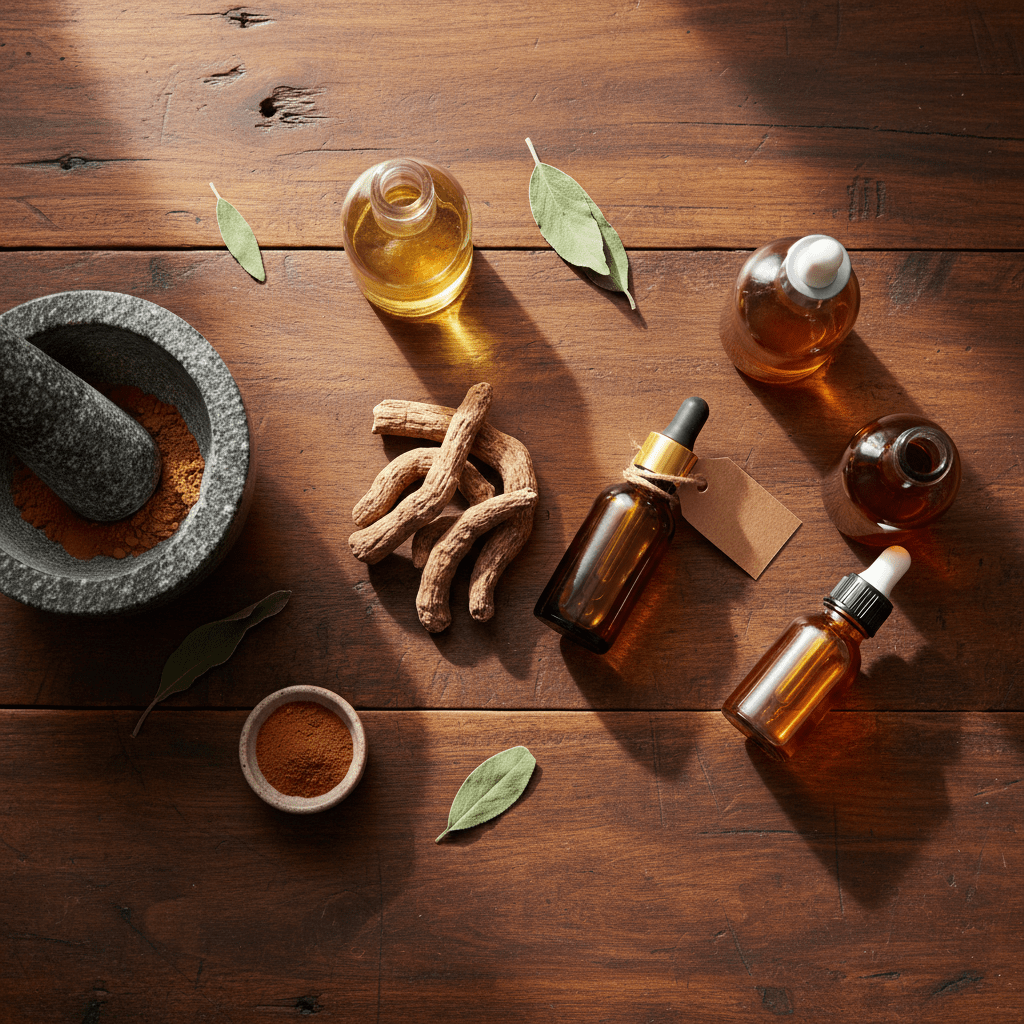
But let’s clear up a mix-up. Ashwagandha essential oil is rare and not the usual product. Most people are really talking about ashwagandha infused oil, which is made by soaking the root in a carrier oil like sesame, jojoba, coconut, or almond oil. That version is used on the skin or scalp, while root powder and capsules are usually taken by mouth.
That difference matters. A lot.
| Type | How it’s used | Common base | Usual purpose |
|---|---|---|---|
| Root powder or capsules | Taken by mouth | None | Stress, sleep, hormones, general wellness |
| Infused oil | Used on skin or scalp | Sesame, jojoba, coconut, almond | Massage, skin care, calming routines |
| Essential oil | Rare product | Varies | Not the standard ashwagandha form |
So if you’re looking at ashwagandha oil benefits for women, it helps to know what kind of oil you’re actually buying. That’s the first step. And if you’re shopping for plant-based oils for wellness or beauty products, a clean, lab-tested source matters a lot. Brands like Aroma Monk, which work with pure essential oils, natural attars, and carrier oils, are built around that kind of quality checking.
One more thing. The research on stress support is mostly about oral ashwagandha, not topical oil. So the herb is promising, but it’s smart to keep your feet on the ground.
Benefit 1: Regulating Stress and Anxiety by Balancing Cortisol
You know that tight-chest feeling when your brain won’t shut off? That wired-but-tired state? A lot of women live there way too often.
And stress isn’t just a mood. It can show up as shaky sleep, snappy reactions, low energy, and that “I can’t deal with one more thing” feeling. That’s why ashwagandha keeps popping up in chats about women’s wellness.
Here’s the deal. Ashwagandha is often called an adaptogen for women’s health because it may help the body handle stress better. Researchers think it works by calming the HPA axis, which is the body’s stress chain, and helping bring cortisol down. Cortisol is the main stress hormone. When it stays high for too long, your body can feel stuck in fight or flight mode.
A human trial found that people taking ashwagandha had lower stress scores and lower serum cortisol after 60 days, and a later review of 9 studies with 558 people found the same general trend. Less cortisol can mean less anxiety, a steadier mood, and a little more breathing room in your day. Not a miracle. Just a real shift some people feel.
But wait, there’s a catch. Most of that research is on oral ashwagandha, not oil rubbed on skin.
So what about ashwagandha oil benefits for women? Two things may still matter. First, if the oil is made with infused root extract, it may offer a small skin-based route for withanolides, though human proof is thin. Second, the ritual itself can help. Massage, slow breaths, and the scent of an ayurvedic oil for stress relief can nudge your nervous system toward calmer ground. That part is simple, but honestly, pretty powerful.
If you’re curious about how to use ashwagandha oil, start with a small patch test and use it during a quiet night routine. Think scalp massage, neck rub, or a few drops mixed into a carrier oil. For many women, the calm ritual may feel just as good as the herb itself.
And if you’re sourcing oils for products, purity matters a lot. Aroma Monk offers lab-tested essential oils, carrier oils, and natural attars for brands that want clean, traceable ingredients for wellness and personal care lines.
Benefit 2: Supporting Hormonal Harmony for Women’s Health
Ever notice how stress seems to hit women in the body, not just the brain? One month it’s a weird period. Then it’s sleep that goes off track. Then mood feels like it’s got its own weather system. Wild, right?
That’s one reason people talk about ashwagandha for female hormones so much. It may help in a roundabout way first. By calming stress. And when stress eases up, the whole hormone picture can feel a little less noisy.
Some early research points to this link. In perimenopausal women, ashwagandha was tied to better hormone balance markers, including higher estradiol and lower FSH and LH. That doesn’t mean it’s a cure for PMS or a fix for every cycle problem. But it does suggest the herb may support a steadier stress response, which can matter when mood swings, irritability, and fatigue show up together.
And that’s the tricky part. A lot of women are not dealing with one thing. It’s stress plus poor sleep plus hormone shifts. So a calming adaptogen for women’s health can feel pretty appealing.
What about menopause and perimenopause?
This is where interest really picks up. Some studies on ashwagandha benefits for menopause show help with hot flashes, night sweats, anxiety, and sleep trouble. That matters because sleep loss can make everything feel louder the next day. The laundry. The work inbox. The random hot flash at 2 a.m. Ugh.
A smaller but promising pattern also shows up with ashwagandha oil for sleep routines. Now, to be clear, the research is mostly on oral extract, not oil rubbed on skin. But a bedtime massage with an ayurvedic oil for stress relief can still be part of a calm routine, and routines have their own power.
And the thyroid piece?
Women are more likely than men to deal with thyroid trouble, so this gets a lot of attention. Ashwagandha may support the endocrine system by helping the body handle stress better, which can sometimes line up with more balanced TSH, T3, and T4 levels in people with low thyroid function. But there’s a catch. If someone has hyperthyroidism or Graves’ disease, ashwagandha may not be a good fit.
Here’s a quick look:
| Area | What the research may suggest | Simple note |
|---|---|---|
| PMS and cycle stress | May help by lowering stress load | Best seen as support, not a fix |
| Perimenopause and menopause | May ease hot flashes, anxiety, and sleep issues | Early research, not a magic answer |
| Thyroid support | May help some people with low thyroid markers | Not for people with overactive thyroid |
So if you’re wondering how to use ashwagandha oil, think gentle, not dramatic. A scalp massage, a quiet night routine, or a small patch test can be a nice start. And if you’re buying wellness oils in bulk for a beauty or personal care line, clean sourcing matters. Aroma Monk offers lab-tested essential oils, natural attars, and carrier oils for brands that want pure ingredients with traceable quality.
One last thing. If your stress feels heavy, or your period and sleep have gotten very off, it’s smart to talk with a clinician before trying any herb, especially if you already take thyroid meds or hormone support.
Benefit 3: Enhancing Energy, Sleep, and Cognitive Function
You know that foggy, half-awake feeling after a rough night? It’s awful. You’re staring at your inbox, rereading the same line, and your brain feels like it’s buffering.
That’s one place ashwagandha may help. A lot of the buzz starts with stress, but the sleep piece is a big deal too. When cortisol stays high for too long, sleep can get lighter, shorter, and more broken. And once sleep slips, daytime energy usually drops right behind it.
Studies on oral ashwagandha have found better sleep onset, better sleep efficiency, and less anxiety. One trial even showed sleep efficiency rising from 75.6% to 83.5% after 10 weeks. Another found 72% of people taking it said their sleep improved, compared with 29% on placebo. That can mean more steady energy the next day. More patience too. Which, let’s be honest, is worth a lot.
What about focus and memory?
This is where ashwagandha starts acting like a nootropic herb. Not in a flashy way. More in a quiet, steady way.
Because it may help protect the brain from oxidative stress, some research points to better attention, faster information processing, and stronger immediate memory. People also report feeling a little clearer in the morning. Less brain fog. Fewer “Wait, why did I walk into this room?” moments. We’ve all had those.
And if you’re like me and you need your brain to work before coffee kicks in, that matters.
Can it help with physical energy too?
Yep, maybe. Some studies suggest ashwagandha may support strength and oxygen use during exercise, which is why it comes up in fitness circles as well as wellness chats. That doesn’t mean it turns you into an athlete overnight. But if your body feels less worn down, moving through the day can feel easier.
Here’s the simple version:
| Area | What ashwagandha may support | Why women notice it |
|---|---|---|
| Sleep | Better sleep quality and fewer wake-ups | More rest, less dragging the next day |
| Mental clarity | Focus, memory, and quicker thinking | Less fog during work and home life |
| Physical vitality | Strength and oxygen use during exercise | Daily tasks can feel less heavy |
One small but helpful reminder: most of this research is still about oral ashwagandha, not oil rubbed on the skin. So if you’re thinking about ashwagandha oil benefits for women, the oil may fit more as a calming night ritual than a proven brain booster.
Still, the routine can matter. A gentle scalp massage with an ayurvedic oil for stress relief, plus a quiet bedtime, can help your body settle down. And if you’re building a wellness line, Aroma Monk offers lab-tested essential oils, carrier oils, natural attars, and rose water for bulk sourcing, so brands can keep quality steady from first batch to final bottle.

Get a quote from Aroma Monk.
Essential Oil Supplier – Bulk pricing • Samples • Fast response
Benefit 4: Bolstering the Immune System and Skin Health
You know that worn-out feeling that seems to hang around after weeks of stress? The kind where your skin looks dull and every little bug seems to find you first? Yeah, that stuff can stack up fast.
Chronic stress is a big part of that story. When cortisol stays high for too long, the immune system can get sluggish. And that’s where ashwagandha gets interesting for women who want support that goes beyond sleep and mood. By helping the body settle down, it may ease the immune drain that comes with nonstop pressure. One recent report even found burnout rates in women still running high in 2024, with women ages 25 to 34 hitting 71% in one 2024 burnout data study on women.
Ashwagandha also has antioxidant activity. That means it helps the body deal with free radicals, which are linked to aging and weaker defenses. Not flashy. Just useful. Think of it like backup support for cells that are always getting hit by stress, poor sleep, and daily life.
Can it help skin too?
Maybe, yes. The topical story is still early, but ashwagandha oil benefits for women often show up in skin care routines because the oil can feel soothing and moisturizing on dry skin. Some people use it in a gentle massage blend or as part of an ayurvedic oil for stress relief. It may also help calm the look of irritated skin, mostly because oil massage supports the skin barrier and can feel less harsh than a lot of busy products on the shelf.
Here’s the simple split:
| Form | What it may help with | What we know |
|---|---|---|
| Oral ashwagandha | Stress, cortisol, immune support | Better studied |
| Ashwagandha infused oil | Moisture, massage, skin comfort | More traditional than proven |
| Essential oil form | Rare and not standard | Be careful with what you buy |
So if you’re asking how to use ashwagandha oil, keep it soft and simple. Try a patch test first. Then use a small amount on dry skin, neck, or scalp. And if you’re building a beauty or wellness line, Aroma Monk offers lab-tested essential oils, carrier oils, natural attars, and rose water for bulk supply, so you can keep your ingredients clean and traceable.
A quick note, because this matters. Topical ashwagandha has tradition on its side, but the strongest human research is still about oral use. So think of the oil as a comforting add-on, not a cure-all. That’s the honest version.
How to Use Ashwagandha Oil Safely and Effectively
You know that feeling when you want calm, but you also don’t want to mess up your routine? Yeah, same. The good news is that using ashwagandha oil doesn’t have to be fussy.
Start small. Always.
A simple way to use it
Patch test first
Put a tiny bit on your inner arm or behind your ear. Wait 24 hours. If the skin gets red, itchy, or warm, skip it.Try pulse points
Rub a little on your wrists, neck, or temples. These spots are easy to reach, and the scent can feel calming during a busy night.Use it for massage
Mix a few drops with a carrier oil like coconut, almond, or sesame oil. Then use it for a scalp or body massage. This is one of the easiest ways to build a nightly wind-down habit.Add it to a warm bath
Put a few drops into bath oil, not straight into the water. Oils float, so mixing them with a carrier first helps spread them better.
How much should you use?
Less is usually better at first. A few drops can go a long way, especially if you’re using it every night. The benefits people look for, like calm, sleep support, and a softer self-care routine, tend to build with steady use. Not all at once. More like a quiet little habit.
That said, topical ashwagandha oil is still more of a comfort ritual than a proven treatment. The strongest research is on oral ashwagandha, not skin use.
Safety first
Ashwagandha may not be a good fit for everyone. Watch out for these possible side effects:
- Drowsiness
- Stomach upset
- Diarrhea
- Nausea
- Headache
And please check with a clinician before using it if you:
- Are pregnant
- Are breastfeeding
- Have an autoimmune condition like lupus, rheumatoid arthritis, or multiple sclerosis
- Have a thyroid disorder, especially hyperthyroidism
- Take thyroid medicine, sedatives, blood pressure meds, diabetes meds, or immune-suppressing drugs
One more thing. If you have Graves’ disease or another overactive thyroid issue, don’t guess your way through this. Talk to your doctor first.
For women looking at ashwagandha oil benefits for women as part of a calmer night routine, the sweet spot is simple use, steady use, and smart caution. And if you’re sourcing oils for a beauty or wellness line, Aroma Monk offers lab-tested essential oils, carrier oils, natural attars, and rose water for bulk supply, with traceable quality that works well for product development.
Conclusion: Integrating Ashwagandha Oil into Your Wellness Ritual
So, what’s the real takeaway here? Ashwagandha oil can be a nice support tool for women who feel worn down by stress, shaky sleep, hormone shifts, and that all-day tired feeling. It’s not a magic fix. But it can be part of a calmer routine, especially when you use it with care and keep your expectations grounded.
The best results usually come when you pair it with the basics. Good food. A little movement. Enough water. Some quiet time, even if that’s just 10 minutes in the car before you go inside and face the chaos. And if you’re looking at ashwagandha oil benefits for women, think of it as one piece of a bigger self-care picture, not the whole puzzle.
Actually, that’s what makes it so useful. It can fit into a night massage, a scalp rub, or a slow wind-down ritual that tells your body, “Hey, we’re done for today.” That small shift can matter more than people think.
Here’s a simple way to start:
- Try a patch test first
- Use a tiny amount
- Notice how your body feels
- Keep it gentle and steady
If your goal is stress support, better rest, or a softer bedtime habit, this ancient herb may be worth a place in your routine. Start small. Listen to your body. And if it feels right, build from there. Sometimes the quiet habits are the ones that stick.
Get a quote from Aroma Monk.
Essential Oil Supplier – Bulk pricing • Samples • Fast response