
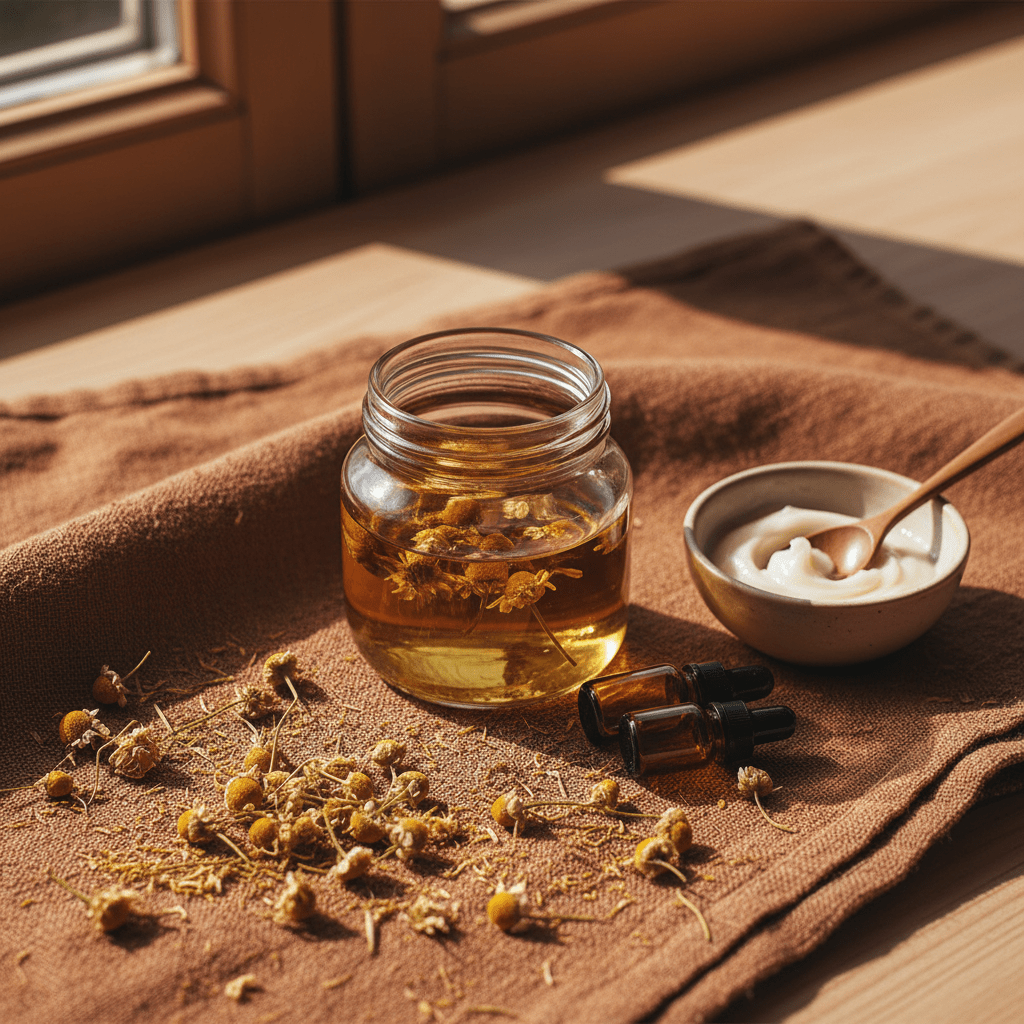
The Gentle Power of Nature for Sun-Stressed Skin
You know that stingy, hot feeling after a day outside? The kind that makes your shirt rub wrong and your skin feel like it’s on fire? Yep, we’ve all been there. And it’s not rare. The CDC found that 35.1% of U.S. adults had at least one sunburn in the past year, and 7.5% had four or more sunburns.
That’s why chamomile water for skin has become such a nice go-to for a natural sunburn remedy. It’s gentle. It’s simple. And it skips a lot of the stuff you’ll find in store-bought after-sun gels, like fragrance, drying alcohol, minty oils that sting, and harsh acids that can make burned skin feel worse.
This guide will walk you through the science behind chamomile for sunburn, how to make a DIY chamomile spray for skin, how to use chamomile for sun-damaged skin, safety tips, and a few extra skin perks too. Plus, if you love plant-based care, there’s more here than just sunburn help. We’ll talk about the benefits of chamomile tea on skin, chamomile hydrosol for inflammation, and other herbal remedies for sunburn.
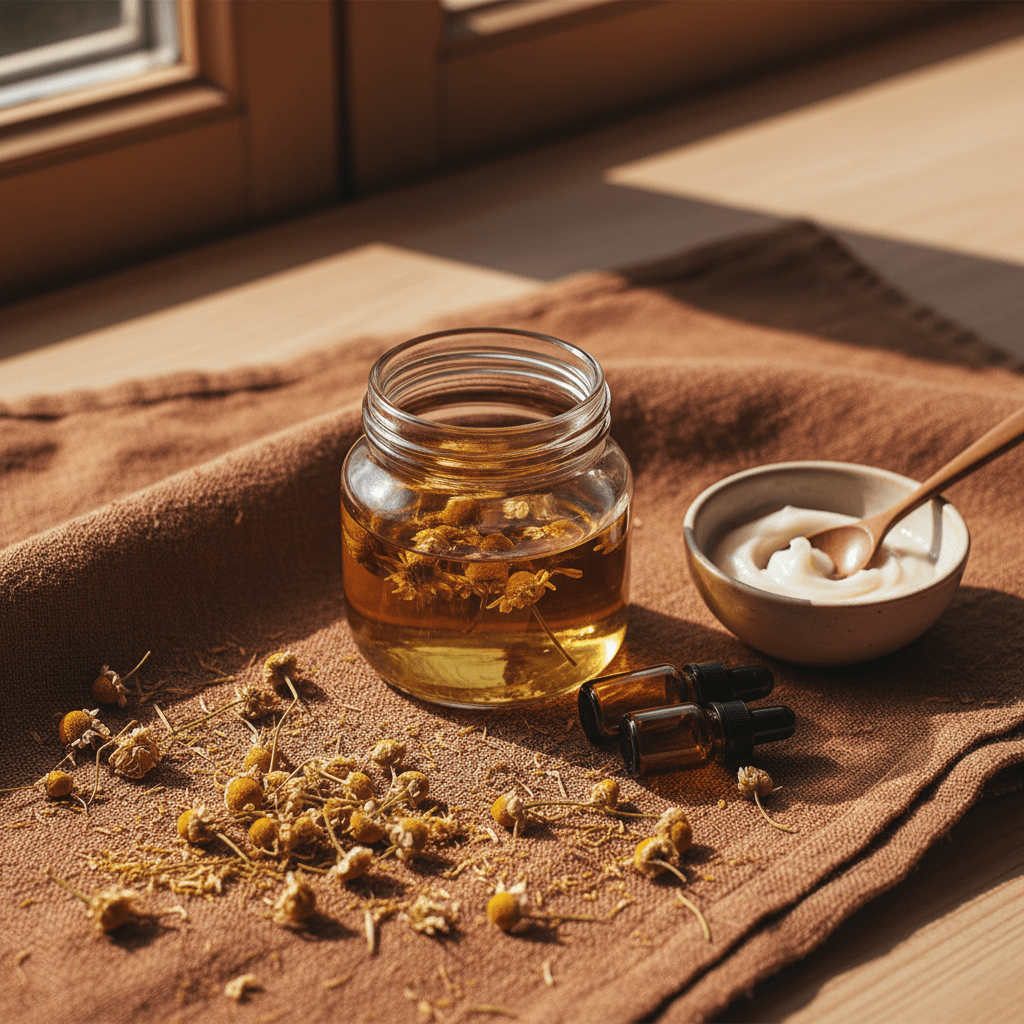
What Exactly Is Chamomile Water?
Chamomile water sounds fancy, but it’s really pretty simple. Think of it like a gentle herbal soak for skin. You steep chamomile flowers in hot water, then let it cool and use that liquid on the skin. That’s the basic DIY version, and it’s the one most people mean when they talk about chamomile water for skin.
But here’s the part that trips people up. Chamomile water is not the same thing as chamomile essential oil. Essential oil is super concentrated. It should not go straight on burned skin, and honestly, that goes for most skin too unless it’s properly diluted by a pro. It can irritate instead of calm.
There are also two common forms you’ll see: a simple chamomile tea infusion and a chamomile hydrosol. A tea infusion is just water plus steeped flowers. A hydrosol, or floral water, comes from steam distillation and usually has a more stable, polished feel. It’s still gentle, but it’s made in a different way. If you’ve seen chamomile hydrosol for inflammation in a product bottle, that’s what they mean.
And not all chamomile is the same. German chamomile is usually the one people reach for in skin care because it has more of the compounds linked to calming redness. Roman chamomile is lovely too, but it’s more often used for aroma and relaxation. For soothing skin after sun, German chamomile tends to be the star.
The old use is kind of cool, too. People have used chamomile for irritated skin for ages, from simple washes to soft compresses. So this isn’t some brand-new trend from a pastel bottle on a shelf. It’s old plant care with a modern spin.
If you’re making a DIY chamomile spray for skin, choose the plain infusion route first. It’s cheap, easy, and a nice starting point for herbal remedies for sunburn. Plus, if you buy ingredients for skincare products in bulk, brands like Aroma Monk can be a fit for pure, lab-tested plant-based materials.
The Science: Why Chamomile Works for Damaged Skin
Sunburn is rude. One minute you’re enjoying a walk, and the next your skin feels hot, tight, and angry. That’s where chamomile water for skin starts to make sense. It doesn’t just feel soothing. It has plant compounds that can calm the mess sun exposure leaves behind.
Chamomile has three big helpers: apigenin, chamazulene, and bisabolol. They each do a different job. Apigenin helps cool redness and swelling. Chamazulene helps fight free radical damage from UV rays. Bisabolol can ease that sore, tender feeling and may help skin settle down faster. Pretty neat for a simple flower, right?
Here’s the thing. Sunburn isn’t just “red skin.” UV light sparks inflammation and oxidative stress in the skin, which is why it burns, puffs up, and aches. Chamomile for sunburn works because it talks to those root problems, not just the surface sting. That’s a big reason people keep reaching for it as a natural sunburn remedy instead of grabbing a product full of fragrance, alcohol, mint oils, or acids that can make burned skin madder.
And yes, the form matters. German chamomile is the one with the strongest skin research behind it. It’s rich in those calming compounds, especially when used as a tea infusion or a chamomile hydrosol for inflammation. Roman chamomile is lovely too, but German chamomile tends to be the better pick for soothing skin after sun.
If you’re making a DIY chamomile spray for skin, think of it like this: the plant doesn’t block the sunburn, but it can help calm the flare-up after the damage is done. That’s why it fits so well into herbal remedies for sunburn and into gentle care for chamomile for sun-damaged skin.
For a deeper look at how sunburn affects millions of adults and why many commercial after-sun products can sting already irritated skin, the CDC and AAD both have helpful data in their recent reports: CDC sunburn findings.
A quick note, too. If your skin is blistering, oozing, or pain is getting worse after two days, that’s no longer a DIY moment. But for mild burns, chamomile water can be a calm little helper. A small one. Still useful.
How to Make Your Own Chamomile Water for Sunburn Relief: A Step-by-Step Guide
You know that moment when your skin feels hot enough to hiss? Not fun. And that’s exactly why a simple chamomile water rinse can feel so good after a long day in the sun.
Here’s the deal: the CDC reports that 35.1% of U.S. adults had at least one sunburn in the past year CDC sunburn findings. So if your shoulders or nose are pink and cranky right now, you’re not alone.
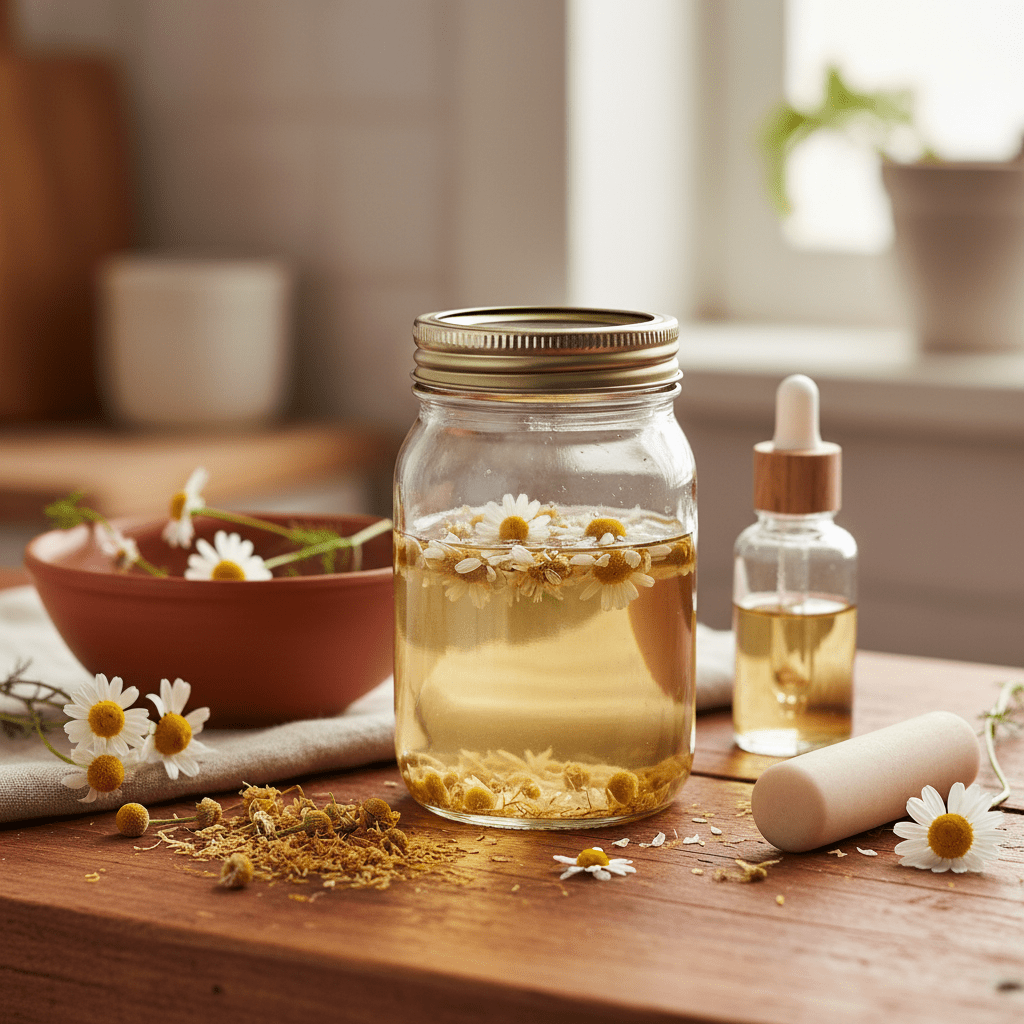
What you’ll need
- 2 tablespoons dried German chamomile flowers, or 2 to 3 chamomile tea bags
- 1 cup distilled water
- A clean pot or heat-safe bowl
- A fine strainer or clean cloth
- A glass jar or spray bottle
- A soft cloth, if you want a compress
Step 1: Heat the water
Warm 1 cup of distilled water until it’s just about boiling, then pull it off the heat. You want it hot, not raging. Around 194 to 203°F is the sweet spot for a strong infusion.
Step 2: Add the chamomile
Put the dried flowers or tea bags into the hot water. Cover it right away. This helps keep the good plant bits from escaping into the air. Little trick, big difference.
Step 3: Let it steep
Wait 10 to 15 minutes. That gives you a nice, strong infusion for chamomile water for skin without overcooking it.
Step 4: Strain and cool
Strain out the flowers or remove the tea bags. Then let the liquid cool all the way down before you touch it to burned skin. Seriously. Warm liquid can make sunburn feel worse.
Step 5: Store it safely
Pour it into a clean glass jar or bottle. If you used distilled water and keep it in the fridge, it usually lasts about 2 to 3 days. If it smells odd, looks cloudy, or changes color, toss it.
Three easy ways to use it
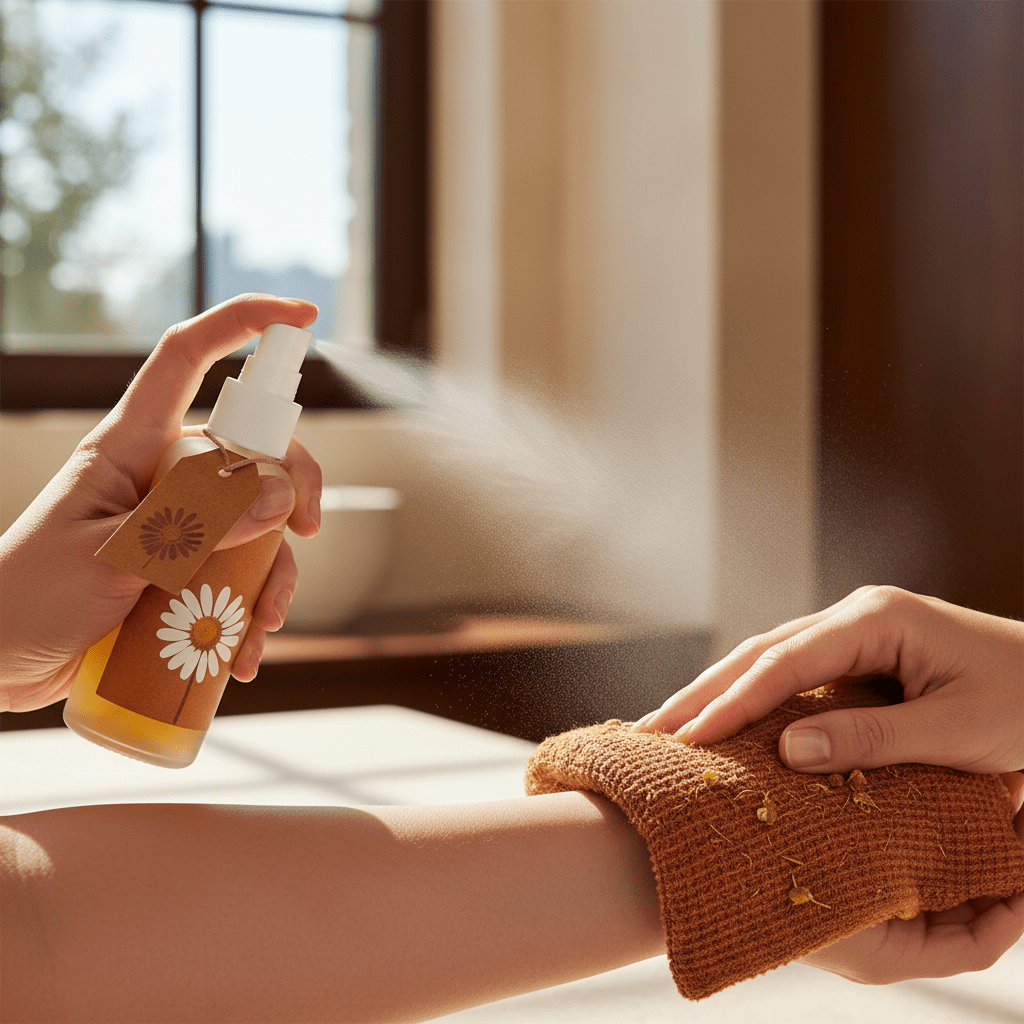
1. Mist it on
This is the easiest DIY chamomile spray for skin.
- Pour the cooled infusion into a fine-mist spray bottle
- Mist lightly over the sunburned area
- Let it air dry or pat gently with clean hands
Nice and simple. And it can feel really good on hot skin.
2. Use a soft compress
If your skin feels extra tender, this one’s lovely.
- Soak a soft cloth in the cooled infusion
- Wring it out so it’s damp, not dripping
- Lay it over the burn for 10 to 15 minutes
- Rewet it as needed
This works well for soothing skin after sun, especially on cheeks, shoulders, or a patch that keeps rubbing on clothes.
3. Add it to a cool bath
For a wider sunburn area, a bath can be a relief.
- Fill the tub with cool or lukewarm water
- Add the chamomile infusion
- Soak for 10 to 15 minutes
- Pat skin dry gently after
No hot water. No scrubbing. No drama.
A few smart tips before you try it
- Always do a 24-hour patch test first if you can
- Don’t use chamomile if you react to ragweed, daisies, marigolds, or other Asteraceae plants
- Don’t use chamomile essential oil straight on burned skin
- Skip this if the sunburn is blistering, oozing, or getting worse
If you want a natural sunburn remedy that feels plain, calm, and low-fuss, chamomile water is a pretty good place to start. It’s one of those old herbal remedies for sunburn that still makes sense now.
And if you’re making products for a skincare line, this is the kind of simple plant ingredient that pairs well with pure, lab-tested inputs like those from Aroma Monk. For brands that need bulk supply, traceable sourcing, and clean raw materials, that matters.
A small bowl. A soft cloth. A few minutes of care. Sometimes that’s enough to help burned skin settle down a bit.
Get a quote from Aroma Monk.
Essential Oil Supplier – Bulk pricing • Samples • Fast response
Best Practices and Safety Precautions
You know what’s funny? The gentlest remedies still need a little common sense. Chamomile water for skin can feel really soothing, but burned skin can be picky, and sometimes extra sensitive in ways you don’t expect.
First, do a patch test. Always. Put a tiny bit of the cooled chamomile infusion on the inside of your forearm and wait 24 hours. If you get itching, more redness, or any rash, skip it. This matters even more if you already react to ragweed, daisies, marigolds, or other Asteraceae plants, since chamomile can cross-react with that plant family.
And if your burn is severe, don’t wait around trying every DIY trick on the internet. Get medical help if you see blistering, oozing, fever, chills, spreading redness, or pain that keeps getting worse after 48 hours. That can point to a deeper burn or an infection.
Storage is a big deal too. Keep your DIY chamomile spray for skin in a clean glass jar or bottle in the fridge, and use it within 2 to 3 days. No preservatives means a short life. If it smells off, looks cloudy, or changes color, toss it out. Easy call.
A few quick do-nots:
- Don’t use hot liquid on sunburned skin
- Don’t put chamomile essential oil straight on the burn
- Don’t use it on broken or heavily blistered skin
- Don’t keep old infusion around “just one more day”
For mild burns, this little herbal rinse can be a calm, low-fuss natural sunburn remedy. For anything worse, call a doctor. That’s the line.
If you’re buying clean plant-based ingredients for skincare products, suppliers like Aroma Monk can help with pure, lab-tested materials for product lines that need quality and traceability.
Beyond Sunburn: Other Powerful Uses of Chamomile Water for Skin
You know that calm, clean feeling after a fresh splash of water on hot skin? Chamomile water for skin can feel a lot like that, only softer. And honestly, it’s one of those old-school remedies that still earns its spot on the shelf.
It’s not just for sunburn, either. People use chamomile for sun-damaged skin, but it can also work as a daily facial toner for sensitive skin that gets red fast or breaks out at the worst times. Chamomile has calming and mild antibacterial properties, so it may help skin feel less angry after a long day, a sweaty workout, or, let’s be real, a night of not sleeping enough.
Here’s the interesting part. German chamomile is the one with more skin research behind it, and it’s the better-known choice for soothing care. Roman chamomile is lovely too, but German chamomile tends to be the star in chamomile hydrosol for inflammation and simple tea-based infusions. That lines up with how people have used chamomile for ages, from ancient Egypt to Greece and Rome, where it showed up in washes and poultices for irritated skin.
A few other ways people use it
- As a gentle toner for acne-prone skin
- To calm mild eczema flare-ups
- For rosacea redness and flushing
- To ease razor burn after shaving
- As a soft compress for tired, puffy eyes
And yes, the benefits of chamomile tea on skin can go beyond the face. Some folks even use it in DIY face masks with honey or oats. Simple. Cheap. Kind of charming, actually.
If you’re making products, a DIY chamomile spray for skin can also pair well with clean inputs from brands like Aroma Monk, especially when you want pure, lab-tested ingredients for skincare lines or bulk blends.
One quick note. If you have ragweed or daisy family allergies, go slow and patch test first. Chamomile water is gentle, but your skin doesn’t care about good intentions.
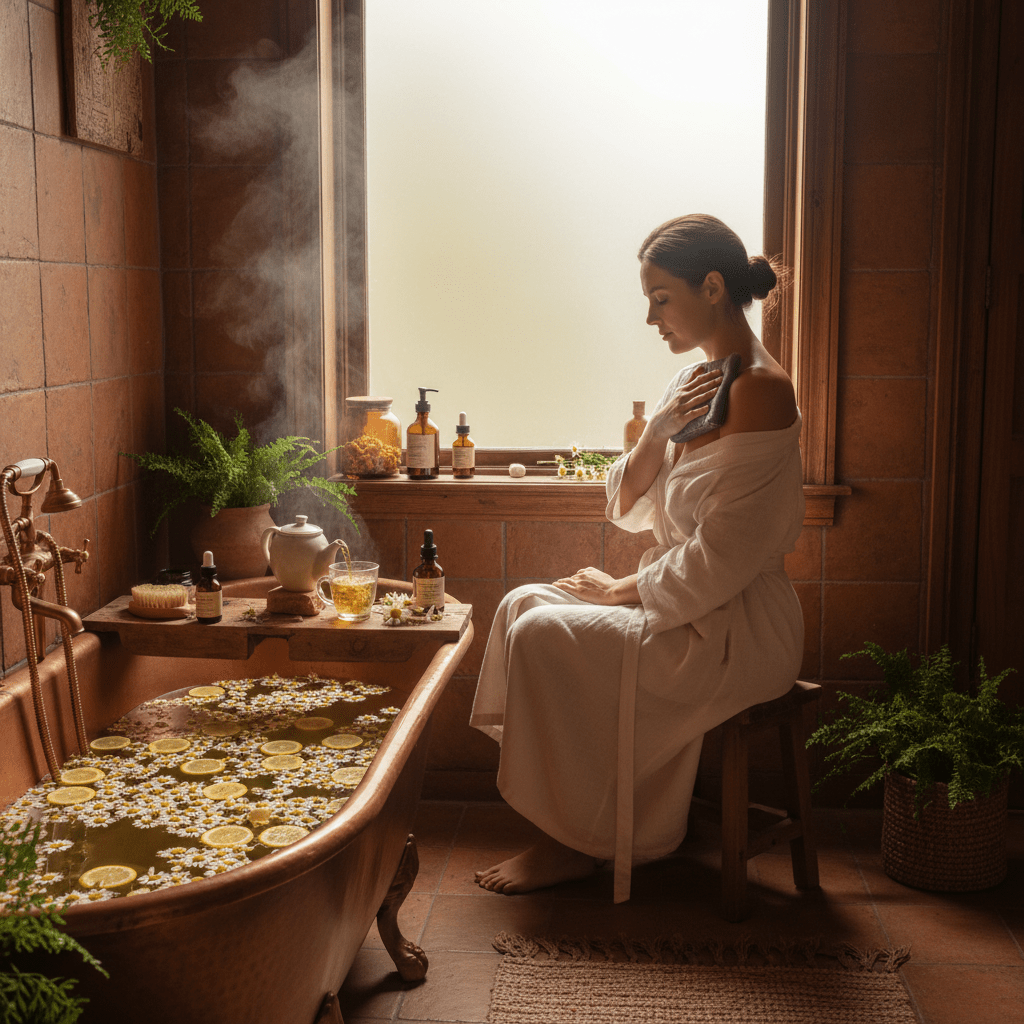
Embrace Nature’s Remedy for Calm, Healthy Skin
Chamomile water for skin is one of those old ideas that still makes a lot of sense. It’s simple. It’s gentle. And it can feel like a small relief when your skin is hot, tight, and mad after too much sun.
We’ve already seen how common sunburn is, too. The CDC says 35.1% of U.S. adults had at least one sunburn in the past year CDC sunburn findings. So if you’re looking for a natural sunburn remedy that doesn’t bring more sting to the party, chamomile can be a smart little tool to keep around.
What I like most is this: it’s easy to make, easy to use, and easy on skin that needs a break. A cool infusion, a soft compress, or a DIY chamomile spray for skin can help with soothing skin after sun without piling on fragrance, alcohol, mint oils, or scrubby acids.
And yes, commercial after-sun gels have their place. But for mild redness, chamomile for sunburn gives you a calm, low-fuss option that fits right into a home skincare routine.
If you’re making your own, stick with German chamomile, cool water, and a clean jar. Small steps. Big comfort. That’s the whole vibe.
So the next time your shoulders go pink or your nose feels extra tender, give chamomile water for skin a try. It might just become your favorite little herbal remedy for sunburn.
Get a quote from Aroma Monk.
Essential Oil Supplier – Bulk pricing • Samples • Fast response