
Glycerine: The Unsung Hero of Pharmaceutical Formulations
Ever notice how one ingredient can show up in cough syrups, skin creams, eye drops, and even injections? That’s glycerine. Or glycerol, if you want the fancier name.
It doesn’t get much spotlight, but it shows up everywhere in pharma. A quick search of FDA inactive ingredient records points to glycerine being used across hundreds of approved drug products, in more than a dozen dosage forms and routes of use (FDA inactive ingredient listings for glycerin). That’s a pretty big footprint for one humble excipient.
Here’s the tricky part for formulators. Glycerine is incredibly useful as a humectant, co-solvent, sweetener, and viscosity aid. But it also brings baggage. It’s thick, sticky, and hygroscopic, so it pulls in moisture. And if the quality isn’t right, you’ve got a real risk on your hands, especially in oral liquids and injectables.
So this guide is here to make things easier. We’ll walk through glycerin in pharmaceuticals, what glycerin USP means, how it works in pharmaceutical formulation, where it shines, where it can cause trouble, and how to compare it with propylene glycol vs glycerin in real-world products. If you make oral liquids, topical products, or other dosage forms, this one’s for you.
1. Deconstructing Pharmaceutical-Grade Glycerine: Beyond the Basics
You’ve probably seen glycerine on a label and moved right on. Fair enough. It sounds plain. But this little ingredient is doing a lot more work than most people guess.
Glycerine, also called glycerol, has the chemical formula C3H8O3. It’s a polyol, which just means it has three alcohol groups. That structure gives it a thick feel, a sweet taste, and a strong pull for water. In plain words, it acts like a tiny sponge. It holds moisture close and keeps formulas from drying out.
That’s why glycerin in pharmaceuticals shows up in so many places. It’s a humectant, a co-solvent, and a viscosity helper all at once. Pure glycerine is very thick at room temp, with a density of about 1.26 g/mL and a boiling point near 290°C. It also gets less sticky when warmed, which is handy during batch mixing. Warm it a bit, and life gets easier. Weirdly simple, right?
But not all glycerine is the same. Glycerin USP is the grade formulators want for medicine use. It has tighter purity rules than technical or food grades. In USP material, the assay must stay within 99.0% to 101.0% of C3H8O3, with low water, low residue, and very tight impurity limits. The FDA also warns manufacturers to test for DEG and EG contamination before use, since bad lots have caused real harm in the past (FDA guidance on testing glycerin for DEG and EG).
Here’s a quick side-by-side:
| Grade | Main use | Purity focus | Big risk |
| Technical grade | Industrial uses | Lower | Impurities |
| Food grade | Foods and flavor use | Medium to high | Not always fit for drugs |
| Glycerin USP | Drug products | Very high | Must control DEG and EG |
And the hygroscopic part? That’s a big deal. Glycerine pulls in moisture from the air, which can help oral liquids and creams stay smooth and spreadable. But it can also change water content in a tank or bottle if storage is sloppy. So for pharmaceutical formulation, sealed containers and dry storage matter more than people think. One open drum in a humid room can turn into a headache fast.
If you’re sourcing glycerine for oral liquids or topical products, ask for a CoA, check the USP grade, and confirm impurity limits before you build the batch. That one extra step can save a lot of trouble later.
2. The Multifunctional Roles of Glycerine as a Pharmaceutical Excipient
Glycerine is one of those ingredients that quietly does a lot of jobs at once. Kind of rude, really. It shows up in creams, syrups, eye drops, and even some injectables, and most people never give it a second thought.
That’s a miss, because glycerine in pharmaceuticals does some heavy lifting. As a pharmaceutical excipient, it can act like a humectant, emollient, co-solvent, sweetener, preservative, and viscosity modifier. One ingredient. A whole stack of jobs.
As a humectant and emollient
This is probably glycerine’s best-known role. In creams, ointments, and gels, it helps hold water in place so the product doesn’t dry out too fast. That matters a lot for skin feel. Nobody wants a lotion that turns chalky after two days.
It also brings a soft, soothing touch to the skin. That’s why it fits so well in topical pharmaceutical formulation. The product feels smoother, spreads better, and usually stays comfortable longer.
As a solvent and co-solvent
Here’s the deal: some active ingredients just don’t like water very much. Glycerol can help with that. It works as a co-solvent in oral liquids and some injectable products, helping APIs dissolve or stay mixed more evenly.
That’s a big deal in oral liquids, where cloudy, unstable formulas can be a headache. It’s also why glycerin uses in medicine often show up in syrups, elixirs, and liquid drops. If you’ve ever seen a product that stays clear instead of separating into weird layers, this kind of helper ingredient is often part of the reason.
And yes, sometimes it teams up with other excipients. Propylene glycol vs glycerin is a common comparison here. PG is usually the stronger solvent, but glycerine often wins on gentleness and better taste in many oral liquids.
As a sweetening agent, preservative, and viscosity modifier
Glycerine also helps oral products taste less harsh. It’s about 60% as sweet as sucrose, so it gives syrups and solutions a mild sweetness without that super sugary edge. Nice for pediatric formulas. Nice for adults too, honestly.
It can also help slow microbial growth. At concentrations above 20%, its lower water activity can make it harder for some microbes to grow, and higher levels are used in certain stabilized formulations. Not magic. Just chemistry doing its thing.
Plus, glycerine thickens liquids. That extra body can improve mouthfeel and help keep ingredients evenly mixed. For oral liquids, that can make a product feel less thin and more polished. For formulators, that means better pour control and sometimes better shelf behavior too.
Quick look at what glycerine does in pharma
| Role | What it helps with | Common use |
| Humectant | Holds moisture | Creams, ointments, gels |
| Emollient | Softens skin feel | Topicals |
| Co-solvent | Helps dissolve APIs | Oral liquids, some injectables |
| Sweetener | Masks bitter taste | Syrups, pediatric liquids |
| Preservative support | Lowers water activity | Some stabilized products |
| Viscosity modifier | Thickens formulas | Solutions, suspensions |
Now, you might wonder if one ingredient can really do all that without causing trouble. Short answer: yes, but only if you pick the right grade and the right level. Glycerin USP matters here, especially for drug products that need tight control and clean sourcing.
If you’re sourcing glycerine for oral liquids, topical products, or other dosage forms, it helps to ask for a CoA, impurity data, and clear supplier traceability. And if your team also works with natural product lines, Aroma Monk can be a useful partner for pure essential oils, rose water, and carrier oils that support clean label formulations.
3. Practical Applications: Where is Glycerine Used in Drug Dosage Forms?
You know that odd feeling when one ingredient seems to be everywhere? That’s glycerine. You’ll spot it in a cough syrup at the pharmacy, a skin cream on your shelf, and even in some injectables. Busy little ingredient.
Oral liquids, syrups, elixirs, and solutions
This is probably the most common home for glycerine in pharmaceuticals. In oral liquids, it works as a sweetener, a co-solvent, and a viscosity agent. That mix helps pediatric and geriatric formulas taste better and pour better, which sounds small until you’ve tried giving bitter medicine to a toddler. Not fun.
Typical use levels are often around 10% to 20% w/v in syrups and other oral liquids, though some products sit lower or higher depending on the drug and the recipe. The point is simple. Glycerol helps keep the liquid smooth, stable, and easier to swallow.
It also helps with mouthfeel. A thin, watery syrup can feel cheap and harsh. Glycerine gives it more body. And yes, it can help mask a bitter API a little, which is why it shows up so often in oral liquids.
Topical and transdermal products
In creams, gels, and ointments, glycerine acts as a humectant first and a comfort helper second. It pulls water in and helps the skin hold onto moisture. That matters a lot in topical pharmaceutical formulation, where dryness can make a product feel rough or stingy.
Common topical levels are usually about 1% to 10%, depending on the formula. Higher levels can be used too, but too much can make the product sticky. And nobody wants a cream that feels like glue.
It can also help as a vehicle for API delivery. So beyond skin feel, it has a real job in getting the active ingredient where it needs to go.
Parenteral and injectable formulations
This is where things get more serious. In injectable products, glycerine is used in low amounts as a co-solvent or tonicity-adjusting agent. Some IV products use around 2.5%, while therapeutic glycerin solutions for special uses may be much higher, like 10% to 20%.
But here’s the catch. Purity matters a lot. A lot. For parenteral products, formulators need glycerin USP and strong supplier checks because any DEG or EG contamination is a major safety risk. No shortcuts here.
Other dosage forms
Glycerine also shows up in a few less-talked-about places:
| Dosage form | What glycerine does | Typical role |
| Suppositories | Helps with lubrication and osmotic action | Makes the base work better |
| Soft gelatin capsules | Acts as a plasticizer | Keeps the shell flexible |
| Ophthalmic and otic products | Helps with moisture and comfort | Supports the formula |
In suppositories, glycerine can help the product work as an osmotic agent. In softgels, it keeps the shell from getting brittle. Small role, big difference.
Funny enough, this is also where the propylene glycol vs glycerin question comes up again. PG may win on solvent power, but glycerine often wins on gentler feel and better taste. That’s why formulating teams keep both on hand.
If you’re sourcing glycerine for oral liquids, topical products, or other dosage forms, ask for a full CoA, DEG and EG results, and clear traceability. And if your team also works on natural wellness or personal care lines, Aroma Monk can support your sourcing with lab-tested essential oils, rose water, and carrier oils for bulk product development.
4. Formulation Challenges and Stability Considerations with Glycerine
Ever left a syrup bottle in a warm car and came back to a mess? Yeah. Glycerine can make that kind of day even messier if the formula, room, or package is off.
That’s the tricky side of glycerine in pharmaceuticals. It’s useful, but it asks for care. A lot of care.
Moisture can sneak in fast
Glycerine is hygroscopic, which just means it grabs water from the air. That sounds harmless until you’re making oral liquids or creams and the water level starts drifting. Then the product can get thinner, lose balance, or give microbes a nicer place to hang out.
Actually, wait, there’s more. Extra moisture can also push API breakdown in the wrong direction, especially if the active ingredient hates water. So sealed drums, dry rooms, and tight lids are not just nice extras. They’re part of the job.
For bulk handling, many teams store it in closed tanks around 15 to 25°C, with humidity kept low and containers shut when not in use. Simple stuff. But it saves headaches.
Viscosity can slow everything down
Pure glycerol is thick. Really thick. That means pumping, mixing, and filtering can get sluggish, especially at room temperature.
Here’s the good part: warmth helps. When glycerine is heated, it flows better, so batch work gets easier. That’s why some plants warm it before blending. Not hot. Just warm enough to move.
| Handling issue | What it can do | Usual fix |
| High thickness | Slower pumping and mixing | Warm the tank |
| Sticky flow | Harder filtering | Use proper lines and pumps |
| Moisture uptake | Shifts formula strength | Seal and store dry |
| Water change | Affects stability | Test before use |
Watch for chemical clashes
Glycerine usually plays well with many ingredients, but not all. Some oxidizing agents can cause trouble, and high heat can break glycerol down into unwanted byproducts like acrolein. Nobody wants that. Not in a drug product. Not ever.
So if a process uses heat, keep it controlled. And if the formula includes touchy APIs or strong oxidizers, check compatibility early, not after the pilot batch is already half gone.
One more thing. Glycerine quality matters just as much as handling. Use glycerin USP, ask for a full CoA, and confirm DEG and EG results before release. That’s even more true for oral liquids and injectables, where a bad raw material can turn into a real safety issue fast. If your team also works with natural ingredient lines, Aroma Monk can help with lab-tested essential oils, rose water, and carrier oils for cleaner product development.
Get a quote from Aroma Monk.
Essential Oil Supplier – Bulk pricing • Samples • Fast response
5. Regulatory & Quality Control: Ensuring Safety and Compliance
If you’ve ever stared at a CoA and thought, “OK… but is this stuff really safe?” you’re not alone. This is the part where glycerine stops being a simple helper and turns into a serious quality check.
For glycerine in pharmaceuticals, the label alone is never enough. You need the right grade, the right tests, and the right paper trail. That’s the whole game.
What the main pharmacopeias ask for
Glycerin USP, NF, EP, and JP all set a pretty tight bar for drug use. The big idea is the same across them: high purity, low water, and no sketchy leftovers.
Here are a few core checks formulators usually look at:
| Test | What it tells you | Common USP/NF expectation |
| Assay | How pure the glycerol is | 99.0% to 101.0% |
| Identity | Confirms it is glycerine | Must match reference |
| Water content | How much moisture is present | Not more than 5.0% |
| Residue on ignition | Leftover minerals or ash | Not more than 0.01% |
| Heavy metals | Traces of unwanted metals | Not more than 5 ppm |
| DEG and EG | Toxic contamination check | Not more than 0.1% DEG |
The FDA’s current testing guidance for glycerin and similar excipients also pushes manufacturers to check for diethylene glycol and ethylene glycol before use in drug products (FDA guidance on DEG and EG testing). That’s not paperwork for the drawer. That’s the kind of thing that keeps bad raw material from reaching oral liquids, topicals, and injectables.
Why the DEG story still matters
This part is grim, but it’s why the rules are so strict.
In the past, contaminated glycerine has caused mass poisonings when it was used in syrups and other medicines. The worst cases are exactly the kind no one wants repeated: children harmed by what should have been a simple cough or fever medicine. That history changed how suppliers and formulators think about glycerin USP forever.
And honestly? Good.
Because of that, supplier checks now matter as much as the ingredient itself. You want a certificate of analysis, but you also want proof that the supplier actually controls the source, the batch, and the testing method. If a vendor can’t explain where the glycerol came from, I’d walk away pretty fast.
What formulators should ask for every time
Here’s the short list I’d keep on hand:
- Certificate of Analysis with assay, water, and impurity data
- DEG and EG test results
- USP/NF, EP, or JP compliance statement
- Batch traceability from source to drum
- Heavy metals and residue data
- A clear change-control policy from the supplier
That last one gets skipped a lot. But it matters. A supplier can be fine for years, then switch feedstock or processing steps and quietly change the quality profile. Not great.
Practical quality checks before release
For glycerine as a pharmaceutical excipient, most teams test incoming material before it goes into oral liquids or other dosage forms. A simple release plan often includes:
- Identity check
- Assay for purity
- Water content
- DEG and EG screen
- Visual check for color, odor, and clarity
If you’re making oral liquids, the bar should be even higher. Those formulas are easy to contaminate, and glycerin uses in medicine often depend on it being clean, stable, and consistent from batch to batch.
And if you’re also sourcing natural ingredients for wellness or personal care products, Aroma Monk can help with lab-tested essential oils, rose water, and carrier oils for bulk product development. Different category, same idea: know your source, know your specs, and don’t guess.

6. Comparative Analysis: Glycerine vs. Other Polyols
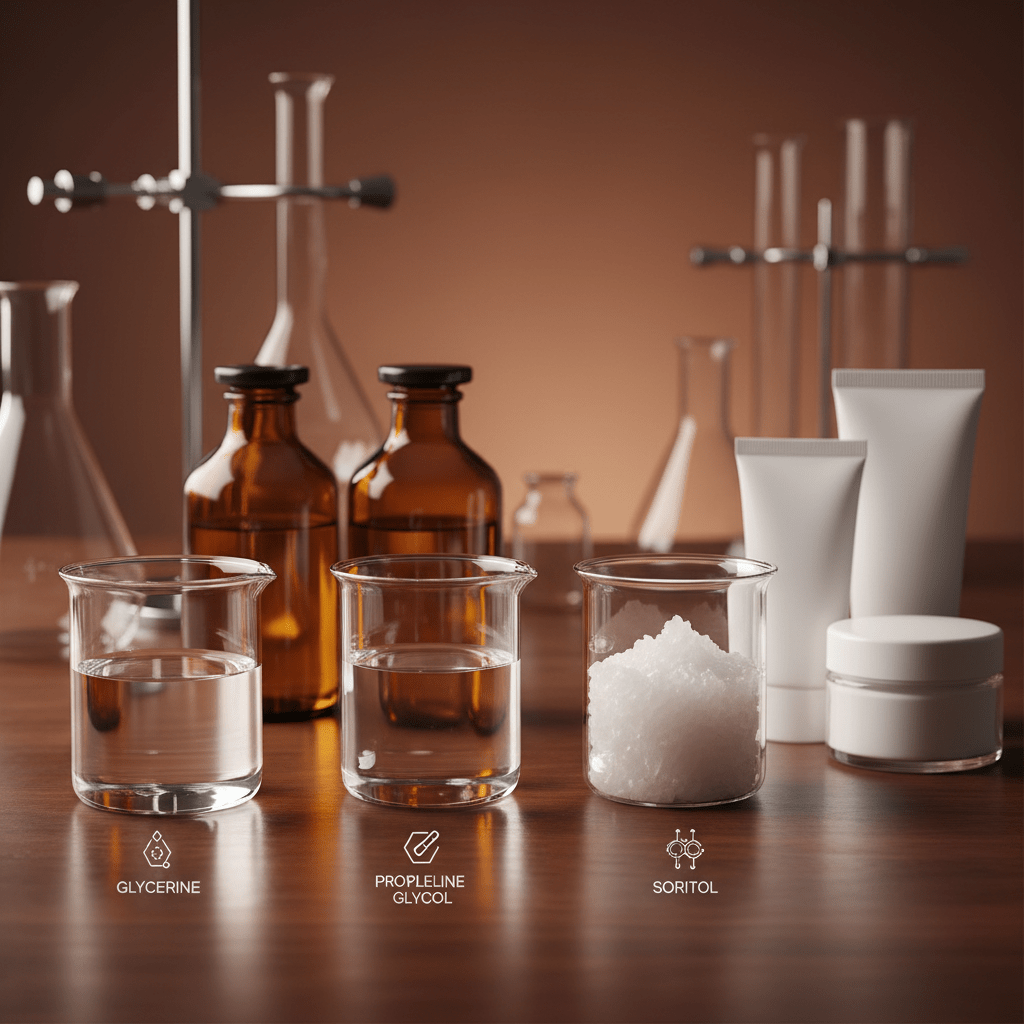
Ever had two ingredients look almost the same on paper, but behave totally different in the tank? Yep. That’s glycerine for you. It gets compared with propylene glycol and sorbitol all the time, and the choice can change taste, texture, and even patient comfort.
Glycerine vs. propylene glycol
This is the classic one. In propylene glycol vs glycerin, PG usually wins on solvent power. If you need to dissolve a hard-to-handle API, PG often does the job faster and with less thickness. Glycerine is more of a soft-spoken helper. It’s gentler, sweeter, and usually easier on the taste buds in oral liquids.
That taste part matters more than people think. In pediatric syrups, a bitter aftertaste can ruin the whole thing. And while PG can be useful, it can also raise safety worries in babies and young infants because their bodies clear it more slowly. Glycerine tends to have a friendlier safety profile in that group.
Glycerine vs. sorbitol
Sorbitol is another common polyol, but it brings a different vibe. It’s sweeter than glycerine, and many formulators like it for mouthfeel in oral liquids. But too much sorbitol can cause GI trouble. Bloating. Loose stools. The usual drama.
Glycerine is often less sweet, about 60% as sweet as sucrose, and it builds viscosity better in many systems. So if you want body, shine, and a mild sweet note, glycerine can be the better pick. Sorbitol may fit better if you want more sweetness with less thickness.
A simple way to choose
Here’s a quick cheat sheet.
| Need | Best first look | Why |
| Strong solvent power | Propylene glycol | Better at dissolving many APIs |
| Better taste in oral liquids | Glycerine | Mild, smooth sweetness |
| More viscosity | Glycerine | Gives more body |
| More sweetness | Sorbitol | Usually sweeter than glycerine |
| Better use in babies | Glycerine | Often easier to tolerate |
| Less GI upset risk | Glycerine | Sorbitol can act like a laxative at higher doses |
Making the right choice
The best polyol depends on the dosage form, the patient, and the job you need done. For oral liquids, glycerine often feels like the safe middle ground. For a formula that needs more solubility, PG may make more sense. For a sweeter syrup base, sorbitol can help, as long as the dose stays in a range people can handle.
And sometimes the smartest move is to blend them. A little glycerine plus a little PG can give you better solvent strength without leaning too hard on either one. That’s usually how real-world pharmaceutical formulation works. Not perfect. Just balanced.
If you’re sourcing glycerine for oral liquids, topicals, or other dosage forms, keep an eye on Glycerin USP specs, supplier traceability, and the end use first. That’s where the good decisions start. And if your team also needs clean, lab-tested natural inputs for wellness or personal care lines, Aroma Monk can support bulk sourcing with essential oils, rose water, and carrier oils.
Conclusion: The Enduring Value of Glycerine in Modern Drug Formulation
Glycerine may not be the flashiest ingredient on the shelf, but it keeps showing up for a reason. It works as a humectant, co-solvent, and sweetener, and that mix makes it a real helper in glycerin in pharmaceuticals, especially in oral liquids, creams, and other dosage forms.
But the same traits that make glycerol so useful can also cause headaches. It pulls in moisture. It gets thick. And if the grade is wrong, patient safety is on the line. So glycerin USP, supplier traceability, and tight quality checks are not just nice to have. They’re the whole point.
For formulators, the takeaway is pretty simple. Know what glycerine does. Know where it can misbehave. And always match the right excipient to the right product. That’s how you build better pharmaceutical formulation, one batch at a time.
If your team is sourcing ingredient inputs for wellness or personal care lines too, Aroma Monk can support bulk needs with lab-tested essential oils, rose water, and carrier oils.
Get a quote from Aroma Monk.
Essential Oil Supplier – Bulk pricing • Samples • Fast response