
Beyond the Hype: Understanding Where Your Sea Buckthorn Oil Truly Comes From
Ever bought a bottle and wondered, “OK, but where did this actually come from?” With sea buckthorn oil, that question matters a lot.
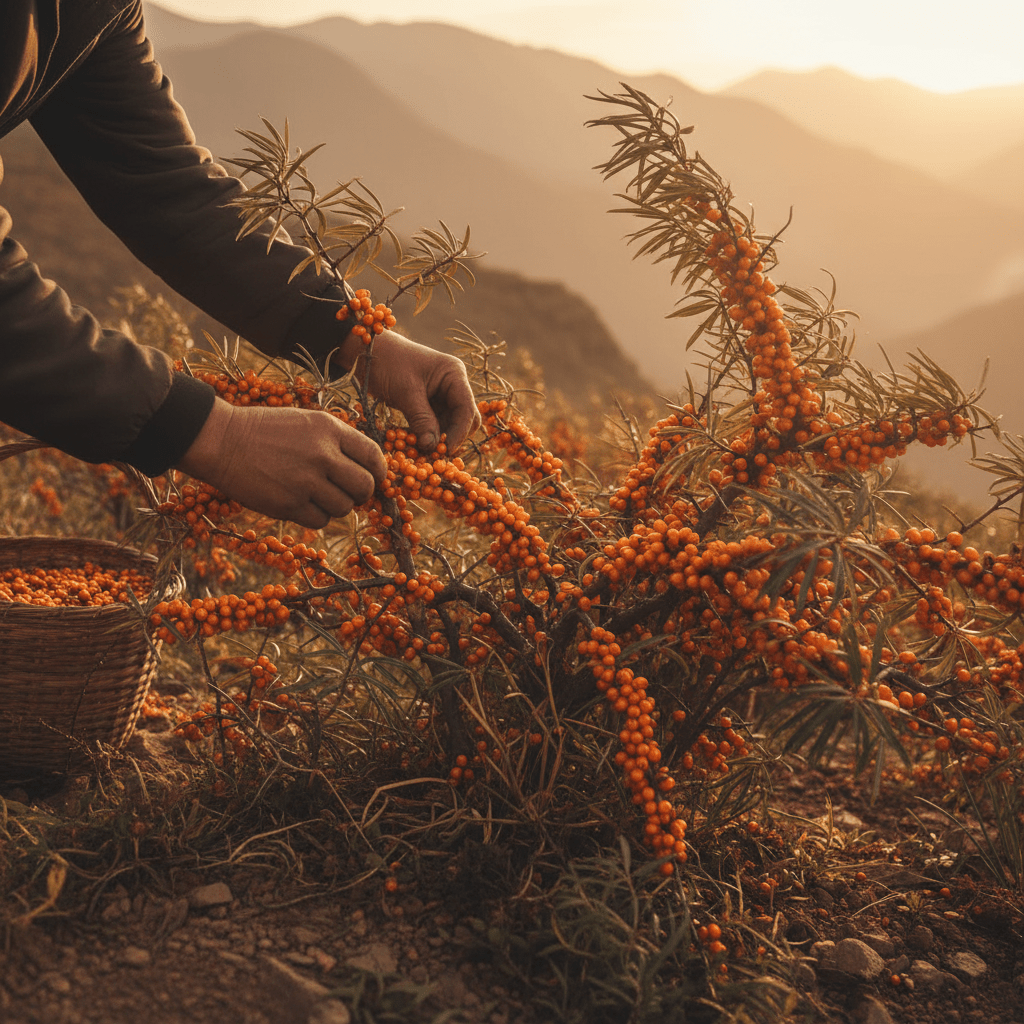
People love sea buckthorn oil for good reason. It shows up in skincare, wellness blends, and clean beauty chats because it’s packed with nourishing plant compounds. The market is growing fast too, with sea buckthorn oil valued at about USD 22.68 million in 2024 and still climbing as more people look for natural oils in their routines. But here’s the thing. The oil’s story does not start in a pretty bottle. It starts on a bush, often in rough, windy places where people work hard to gather the berries by hand.
And that’s where sourcing comes in.
Not all sea buckthorn oil is the same. Some comes from the berry, some from the seed. Some is wild-crafted in the Himalayas. Some is farmed at scale in China. Some is extracted with CO2, while other oils are pressed or solvent-made. Each path changes the final oil in your hand. Color. Texture. Nutrients. Even the impact on the land and the people who harvest it.
So if you care about what you put on your skin, or what your brand buys in bulk, this is worth a closer look. In this article, we’ll follow the journey of sea buckthorn oil from remote mountain slopes to the shelf, and we’ll look at sea buckthorn sourcing, sustainable sea buckthorn harvesting, and what makes an ethical sea buckthorn supply chain feel real instead of just nice-sounding.
Because the bottle is only half the story.
The other half is how it got there.

The Resilient Berry: An Introduction to Sea Buckthorn (Hippophae rhamnoides)
You know that plant that seems to survive where nothing else wants to grow? Sea buckthorn is that kind of tough little fighter.
It grows on scrubby hills, cold slopes, and windy high places where the air feels thin. Think rocky mountain land, sharp sun, cold nights, and very little rain. Not exactly a soft life. But that stress is part of the story. Sea buckthorn berries tend to pack in more plant compounds because the plant has to work hard just to stay alive. That’s one reason sea buckthorn oil gets so much attention in skin care and wellness.
The plant has a long history too. In traditional use across parts of Asia and Europe, sea buckthorn has been valued for food and body care. People have used the berries and oil for a long time, often because they’re rich and strong in a way that feels almost too good to be true.
And there are two main oils people talk about:
| Type | Where it comes from | Color | Main traits | Common use |
|---|---|---|---|---|
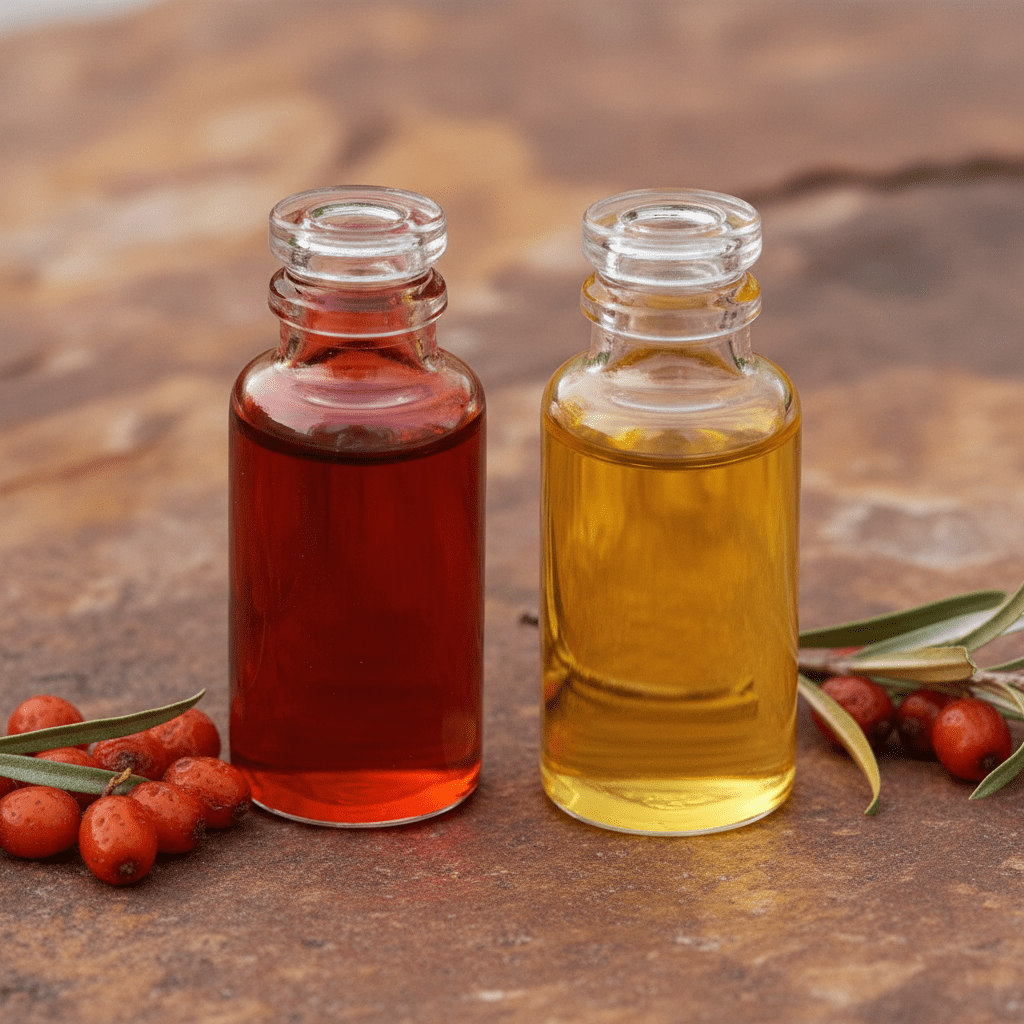
| Sea buckthorn berry oil | The pulp or fruit | Deep reddish-orange | High in omega-7 and carotenoids | Dry, mature, or stressed skin |
| Sea buckthorn seed oil | The seeds | Golden-yellow | Rich in omega-3 and omega-6 | Moisture support and skin comfort |
That color clue matters more than people think. Berry oil is usually bold and orange-red. Seed oil is lighter and more golden. If a label says sea buckthorn oil but never says berry or seed, I’d pause. Actually, wait, I’d pause hard.
The harsh growing place does more than sound interesting. It shapes the oil. Cold air, intense light, and tough soil push the plant to make more protective compounds, which is why origin affects quality so much. So if you’re buying sea buckthorn oil for a brand or for your own routine, the source is not a side note. It’s part of the product.
For B2B buyers, this is where a trusted supplier matters. Aroma Monk works with natural oils and lab-tested raw materials, so brands can ask better questions about origin, purity, and traceability before they buy in bulk. That kind of transparency helps you build products people can trust. And that’s the whole point, right?
A Global Tapestry: Mapping the Primary Sources of Sea Buckthorn
If you’ve ever seen a bright orange bottle of sea buckthorn oil and thought, “Where on earth did this grow?” you’re asking the right question.
Because source changes a lot. Not just the story on the label, but the oil itself.
The biggest name in sea buckthorn sourcing is China. It leads the pack with large farmed areas, steady processing, and export volume that keeps the supply chain moving. That matters for brands that need a lot of oil on a tight schedule. But scale is only one part of the picture. Russia and Eastern Europe are also major sources, and they often bring in wild or semi-wild berries with a colder, more rugged growing style. That can shift the aroma, the fat profile, and even the feel of the finished sea buckthorn oil.
Then there’s the Himalayan belt. This is the one a lot of people get excited about. India, Bhutan, and Nepal all sit in a region where sea buckthorn grows at high altitude, often in wild or lightly managed stands. In Ladakh alone, India has about 13,000 hectares under sea buckthorn, and over 70% of that is in Ladakh. Annual harvest is only around 600 tons, though, so the supply stays limited. That’s one reason Himalayan sea buckthorn gets a strong reputation in clean beauty and wild-crafted supply chains. India’s sea buckthorn development report lays out those figures in plain terms.
High places make tough plants. Tough plants make interesting oils.
Here’s a quick look at how the regions often compare:
| Region | Common growing style | What buyers often notice |
|---|---|---|
| China | Cultivated at scale | Steady supply, more standardized lots |
| Russia | Wild or semi-wild | Cold-climate berries with distinct scent and profile |
| Eastern Europe | Wild or semi-wild | Strong regional character, smaller lots |
| Himalayan region | Mostly wild-harvested | High-altitude berries with rich color and bioactive content |
Terroir matters here too. That’s just a fancy way of saying the plant’s place matters. Soil, rain, cold nights, and strong UV all shape the berry. In the Himalayas, the stress is real. And that stress often boosts protective compounds like carotenoids and tocopherols, which helps explain why some buyers seek out organic sea buckthorn oil from those regions. Chinese varieties can also differ, with the sinensis subspecies often showing higher vitamin C, while Himalayan and European types bring their own fatty acid and aroma mix.
So if you’re sourcing sea buckthorn berry oil or sea buckthorn seed oil, don’t just ask “Is it pure?” Ask where it grew. Ask how it was gathered. Ask who handled it. That’s the difference between a nice label and a real ethical sea buckthorn supply chain.
And if you’re a brand looking for bulk natural ingredients, this is exactly the kind of traceability Aroma Monk supports across its supply work. Clear origin. Lab-tested quality. Better questions all around.
From Branch to Bottle: Wild-Crafting vs. Cultivation and Harvesting Methods
You know that moment when you realize a bottle on a shelf has a whole messy backstory? Sea buckthorn oil has one of those stories.
Some berries are gathered from wild shrubs on steep mountain slopes. Others come from organized farms with rows that look neat enough for a drone shot. Both can end up as sea buckthorn oil, but the path changes a lot. Taste. Color. Price. Even how the land gets treated.
Wild-crafting means harvesting plants from their natural home. No planting in tidy rows. No big farm plan. Just careful collection from shrubs already growing in the wild. Done well, it can be a smart way to work with wild-crafted sea buckthorn without hurting the patch. That means leaving enough berries for birds, small animals, and new growth next season. It also means taking only a small share from each stand, using clean tools, and skipping damaged or weak plants.
But if wild harvesting is sloppy, things get ugly fast. People can strip too much, trample fragile ground, and leave the area worse than they found it. And in high places, recovery is slow. Really slow.
Cultivation is the other route. Farmers grow sea buckthorn on managed land, often on a bigger scale. That helps with steady supply, more even quality, and simpler planning for brands that need lots of sea buckthorn oil for skincare or wellness products. But farmed land can also lean too hard into one crop. Monoculture. Less mix. Less grit in the system. If pests show up or the soil gets tired, the whole setup can wobble.
Here’s the quick tradeoff:
| Method | Good stuff | Watch out for |
|---|---|---|
| Wild-crafting | Natural habitat, strong local character, lower farm input | Overharvesting, habitat damage, uneven supply |
| Cultivation | Steady volume, more consistency, easier planning | Monoculture, lower resilience, soil stress |
And then there’s the harvest itself. Sea buckthorn bushes are thorny. Like, truly annoying thorny. Collecting the berries by hand takes time and patience, and timing matters a lot because fruit picked at peak ripeness usually has the best color and nutrient content. Pick too early and you may miss some of the oil’s richness. Wait too long and berries can get soft, damaged, or dropped.
That’s part of why ethical sea buckthorn supply chain work is so hands-on. People are not just scooping fruit into bins. They’re watching the bushes, watching the weather, and choosing the right window. Some harvesters use small tools. Some freeze branches and shake the berries loose later. Others sort by hand right after picking. It’s slow work. But the good kind of slow, if that makes sense.
If you’re buying sea buckthorn oil for a brand, ask how the berries were gathered. Ask if the supplier uses sustainable sea buckthorn harvesting steps. Ask if the lot came from wild or farmed land. Aroma Monk supports bulk buyers who want that kind of traceability, with lab-tested raw materials and direct supply support that helps you know what you’re really getting. And honestly, that’s the part that separates a pretty label from a supply chain you can trust.
Get a quote from Aroma Monk.
Essential Oil Supplier – Bulk pricing • Samples • Fast response
The Extraction Equation: How CO2 Extraction Protects Potency and Purity
Ever notice how two oils can look like cousins, but act like strangers? Sea buckthorn oil is a lot like that.
The extraction method changes everything. With CO2 extracted sea buckthorn oil, makers use pressurized carbon dioxide to pull the oil from the berries or seeds. No harsh heat. No leftover chemical mess. Just a clean way to get the good stuff out. And that matters a lot for a plant this rich in color and plant compounds.
Here’s the simple version. Carbon dioxide gets squeezed until it acts like a solvent. It moves through the plant material, grabs the oil, and then turns back into a gas. The oil is left behind. Pretty neat, right? Actually, it’s more than neat. It helps protect delicate parts of the oil that can get damaged by heat.
That’s where CO2 extraction stands apart from other methods:
| Method | How it works | What to watch for |
|---|---|---|
| CO2 extraction | Uses pressurized carbon dioxide at low heat | Higher cost, but cleaner and richer oil |
| Cold-pressing | Squeezes oil out without chemicals | Simpler, but not always as full in nutrients |
| Solvent extraction | Uses a chemical solvent to pull out oil | Lower cost, but residue can be a worry |
For sea buckthorn berry oil, this matters even more because the oil’s deep red-orange color comes from carotenoids. Those are the compounds many buyers want. A good CO2 extract often keeps that rich color and fuller plant profile better than methods that use more heat. In one study, optimized CO2 extraction recovered up to 77.2% of tocopherols and 75.5% of carotene from sea buckthorn material, which is a big deal for quality-focused brands.
So yes, CO2 extracted sea buckthorn oil usually costs more. Often 2 to 5 times more, actually. But the price makes sense if you want a clean-label ingredient with strong color, no chemical residue, and a better shot at keeping those heat-sensitive nutrients in place.
And for brands in skincare or wellness, that can be the whole point. Consumers looking for organic sea buckthorn oil or premium sea buckthorn seed oil usually want more than a fancy label. They want proof that the oil was handled with care from start to finish.
For B2B buyers, Aroma Monk supports that kind of sourcing with lab-tested raw materials, traceability, and bulk supply support for natural oils and related ingredients. If you’re building a product line and want cleaner input from the start, that kind of detail is worth asking about. Because once you know how the oil was made, the bottle makes a lot more sense.
The Sustainability Ledger: Environmental and Social Impacts of the Supply Chain
You know that nice, earthy feeling you get from a natural oil? Yeah, there’s a real story behind it. And sometimes that story is messy.
Sea buckthorn oil can be a good thing for skin, but the way it’s sourced can either help people and land… or wear both down. Wild harvesting sounds dreamy on a label, but if it’s not handled with care, it can wipe out berry patches, leave less food for birds and small animals, and hurt fragile high-altitude soil. In places where recovery is slow, that damage can hang around for years.
That risk is bigger with wild-crafted sea buckthorn in remote areas where harvest teams may feel pressure to pick fast. Too much picking. Too much trampling. Not enough time for the shrubs to bounce back. Soil can loosen. Roots can suffer. Local ecosystems get thrown off balance. Not fun. Not pretty. Just real.
Here’s the thing though. Good sea buckthorn sourcing can also support people and repair land.
Some brands and cooperatives work with sustainable sea buckthorn harvesting rules that keep the take small, protect habitat, and leave enough fruit for wildlife and regrowth. For wild plants, that can mean careful limits, clean tools, and harvesting only from healthy stands. It sounds basic, but basic is often what saves a system from getting chewed up.
And then there’s the human side. In Ladakh and nearby Himalayan areas, sea buckthorn can bring extra seasonal income in places where cash work is hard to find. Women often do a lot of the sorting and collection work. That matters. A lot. But fair pay and long-term buying deals matter too. Without them, local harvesters do the hard part while middlemen take the bigger cut. That’s not an ethical sea buckthorn supply chain. That’s just a pretty story with a gap in it.
If you’re buying for a brand, look for proof, not just nice words. Fair for Life and FairWild are two names worth knowing. Fair for Life focuses on fair purchase prices, safer work, and community support. FairWild is made for wild-collected plants and looks at harvest rules, habitat care, and fair benefit-sharing for collectors. Those labels don’t solve everything, but they do help separate real sourcing from marketing fluff.
And there’s a bright side that’s easy to miss. Sea buckthorn is also being planted in dry, damaged land to help fight soil loss and desert spread. In some places, it acts like a tough little shield against erosion. The shrub holds soil. It can survive rough weather. It gives farmers and land managers a plant that does more than one job. That’s a big deal in dry regions where the ground needs all the help it can get.
So the best sea buckthorn oil story is not just about a rich orange oil in a bottle. It’s about whether the source helps a hillside stay alive, helps a family earn fair money, and leaves the next season a little stronger than the last.
If you’re a buyer, ask the plain questions: Was it wild or farmed? Was it harvested with care? Who got paid? And can the supplier show it?
For brands that want that kind of clear, lab-tested input, Aroma Monk’s bulk supply approach can help you trace ingredients with more confidence. That makes it easier to build products that feel good on skin and sit better with your values too.

Buyer’s Guide: How to Choose a High-Quality and Ethical Sea Buckthorn Oil
You know that moment when a bottle looks fancy, but the label feels a little too quiet? Yeah, sea buckthorn oil can do that to people. Bright color. Big promises. Tiny print. And that tiny print matters.
First, check the name. Does it say sea buckthorn berry oil or sea buckthorn seed oil? If it just says “sea buckthorn oil,” I’d be suspicious. The two oils are not the same. Berry oil is deep reddish-orange and usually smells strong and earthy. Seed oil is lighter, more golden, and has a milder feel. If you want the fruit oil for rich skin support, that color should look bold, not pale.
Here’s a quick label check:
| What to look for | What it tells you |
|---|---|
| Supercritical CO2 Extracted | Usually cleaner oil with better nutrient retention |
| USDA Organic or similar | Grown without standard synthetic pesticides |
| Fair for Life or FairWild | Better sign of fair and careful sourcing |
| Berry oil or seed oil named clearly | Shows the seller knows the difference |
| Country or region listed | Helps you trace where it came from |
And yes, the extraction method is a big deal. CO2 extracted sea buckthorn oil is often a better pick if you want less heat damage and no leftover solvent mess. It usually costs more. But that price often matches the quality.
Also, use your eyes and nose. A high-quality unrefined fruit oil should look deep red-orange and smell strong. Not flat. Not washed out. Not weirdly scent-free like it went through too many filter steps. Pale oil can mean over-refining, dilution, or just plain bad labeling.
But don’t stop at the bottle. Go to the brand website. Look for the sourcing partner, harvest method, and any ethical notes. Do they talk about wild-crafted sea buckthorn? Do they explain if it came from the Himalayas, China, or elsewhere? Do they say how they support sustainable sea buckthorn harvesting? If a brand hides all that, I’d keep shopping.
That kind of openness is what buyers should expect now. A cleaner bottle is nice. A clearer supply chain is better.
If you’re a brand sourcing bulk ingredients, this is where a supplier like Aroma Monk can help. Their lab-tested, traceable oils and direct bulk supply model make it easier to ask the right questions before you buy. And that saves a lot of headaches later.
One last thing. If a deal looks too cheap, it probably is. Sea buckthorn oil is not a bargain-bin ingredient when it’s made right. So trust your eyes, read the label, and ask where the oil really came from. That’s how you spot the real thing.
Your Purchase as a Pledge: Supporting a Sustainable Future
Buying sea buckthorn oil is not just a skin care choice. It’s a vote for how plants, people, and land get treated.
If you’ve followed the trail this far, the pattern is pretty clear. Where sea buckthorn oil comes from changes its color, strength, and feel. It also changes what it does to the land and the people who gather it. Wild-crafted sea buckthorn can be beautiful, but only if it’s picked with care. Farmed berries can give steadier supply, but only if the soil is respected. And CO2 extracted sea buckthorn oil often costs more because it usually keeps more of the plant’s color and delicate parts intact.
That higher price is not just markup. It often points to better handling, cleaner extraction, and more care all around. Same story with organic sea buckthorn oil, fair-trade style sourcing, and clear lot traceability. You’re not just paying for liquid in a bottle. You’re paying for the steps that got it there.
Here’s the simple test I’d use:
- Ask if it’s berry oil or seed oil
- Ask where it was grown
- Ask how it was harvested
- Ask how it was extracted
- Ask who benefited from the sale
That last one matters more than people think.
For brands, this is where a supplier like Aroma Monk can help. Their lab-tested, bulk supply model makes it easier to ask better questions about purity, origin, and traceability before you buy. For shoppers, it means looking past the pretty label and choosing products that fit your values too.
So yes, your bottle of sea buckthorn oil can support your skin. But it can also support a healthier supply chain, fairer pay, and better land care. That’s a good trade.
And honestly? That’s the kind of clean beauty worth backing.
Get a quote from Aroma Monk.
Essential Oil Supplier – Bulk pricing • Samples • Fast response