
Introduction: Pine Oil – The Versatile Workhorse from a Renewable Source
You probably know that crisp, woodsy smell from your kitchen floor cleaner. It’s iconic. But here’s the thing—if you think pine oil ends at janitorial supplies, you’re missing the real story.
In the industrial world, this stuff is a powerhouse. It’s silently doing the heavy lifting in everything from mineral flotation to high-performance surface coatings. Sourced primarily as a byproduct of the forestry industry, it stands out as a natural industrial solvent that doesn’t just mimic green chemistry—it defines it.
For the R&D specialists and procurement managers reading this: we’re moving past the fragrance. This article breaks down the technical industrial applications of pine oil, from its efficacy as a pine oil disinfectant to its crucial role in [pine oil in paints and coatings]. Let’s look at why this renewable resource is still one of the most versatile tools in a formulator’s kit.
1. What is Industrial Pine Oil? Composition and Grades
Let’s get down to basics. What exactly is in this bottle?
It usually starts with the leftovers. Not garbage, but the stumps and logs from pine trees. To get the oil out, manufacturers use a process called steam distillation. Think of it like a giant pressure cooker that pulls the essential oils out of the wood matrix.
But here is the chemistry part (don’t worry, I’ll keep it simple).
The oil isn’t just one thing. It’s a mix. The main ingredient—the heavy hitter—is something called terpene alcohols. Specifically, you want to look for alpha-terpineol. This is the component that gives pine oil its cleaning power and that famous germ-killing ability.
When you look at spec sheets from suppliers, you usually see numbers like 50%, 70%, or 85%.
This can be confusing if you don’t know what you’re looking at. These numbers tell you how much of the active alcohol is in there. It’s a lot like juice concentrate.
- 50% to 60% Grades: These are your basic levels. They work well for simple surface cleaners where you need that solvent power but don’t need hospital-grade sterilization.
- 85% Grade: This is the high-performance stuff. It refers to the total terpene alcohol content. If you are working on a high-strength pine oil disinfectant or a heavy-duty degreaser, this is usually what you want.
The higher the percentage, the more “active” the oil is against bacteria and grease. Use the 85% grade when you need strong antimicrobial action. Use the lower grades when you just need a good solvent or a nice scent.
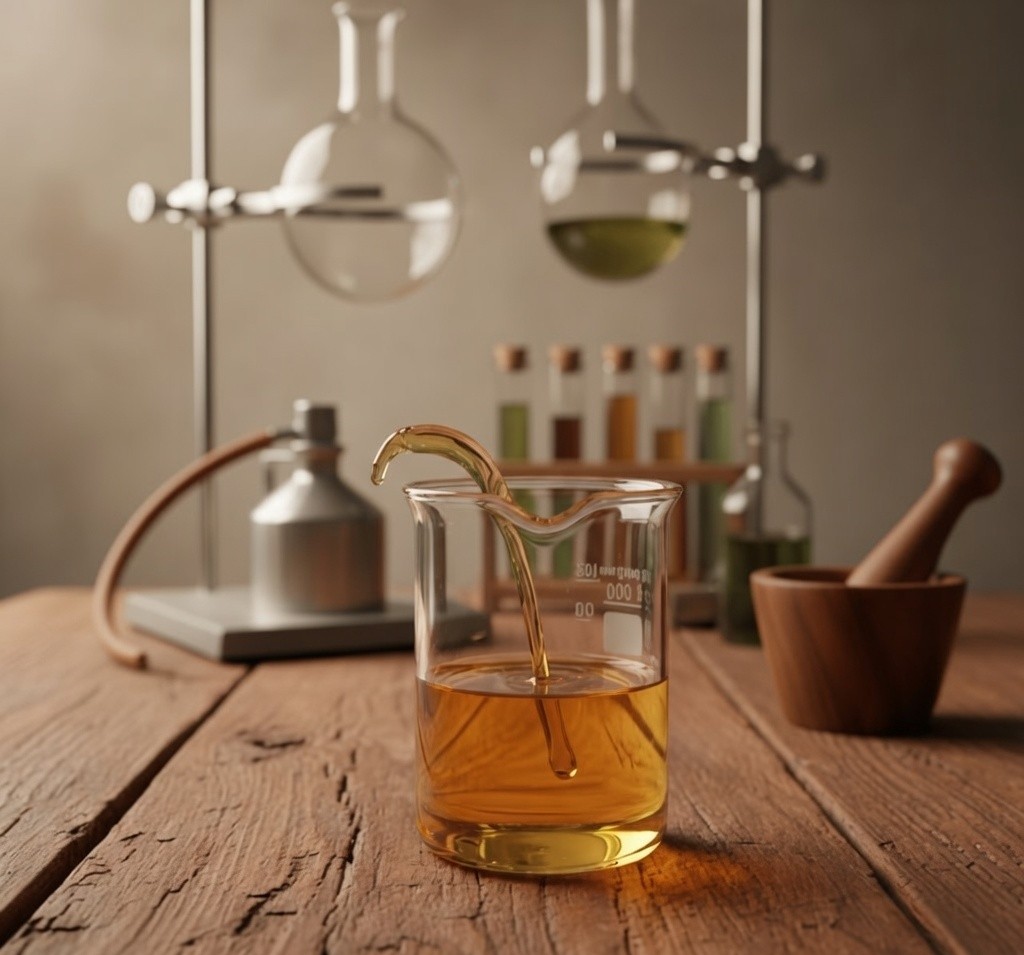
Also, physical properties matter. Industrial pine oil is usually a colorless to pale yellow liquid. And funny enough, it’s less dense than water. That means it floats. This characteristic—floating on water—is actually a big deal in mining applications (we’ll get to that in a minute).
For the folks in procurement, knowing these grades saves headaches. You don’t want to buy a 50% oil for a job that needs 85% strength. It simply won’t pass the tests. So, whether you are sourcing bulk ingredients from a specialist like Aroma Monk or elsewhere, check that percentage first.
Now that we know what it’s made of, let’s look at how it cleans up messes.

2. High-Performance Solvency: Pine Oil in Industrial Cleaners and Degreasers
Here’s a situation we’ve all dealt with: trying to scrub heavy grease off a garage floor or a machine part. You scrub and scrub, but the water just beads up and rolls off.
Grease is stubborn. To move it, you need a solvent—something that dissolves the bond holding the dirt down.
Usually, industries reach for petroleum-based solvents. They work, but they often come with harsh fumes and environmental baggage. This is where pine oil as a solvent shines. It’s practically nature’s paint thinner.
The Muscle: Kauri-Butanol Value
I’m going to throw one technical term at you, but I promise it’s simple. It’s called the KB Value (Kauri-Butanol value). Think of this as a strength score for solvents.
- Mineral Spirits: Typically scores around 30 to 35.
- Pine Oil: Scores around 67.
See the difference?
Pine oil has roughly double the solvency power of standard mineral spirits for certain resins and oils. It cuts through rubber heel marks, crayon, and heavy machinery grease that weaker solvents just smear around. This high score is why you find industrial applications of pine oil in heavy-duty degreasers and parts washing fluids. It doesn’t just push the dirt; it eats into it.
The “Bloom” Effect (Emulsions)
Have you ever poured pine cleaner into a bucket of water and watched it turn milky white?
That cloudiness is actually a really good thing.
Pine oil is fantastic at creating stable emulsions. Basically, oil and water hate each other. They don’t mix. But pine oil acts like a peacekeeper. It helps the oil (grease) and the water mix together so you can rinse the dirt away.
If the emulsion is unstable, the grease just settles back onto the floor as soon as you lift the mop. Pine oil keeps it suspended in the water so it leaves the surface clean.
Why It Matters Now
Shifting to pine oil in cleaning products isn’t just about cleaning power anymore. It’s about where the chemistry comes from.
The market for green chemicals is exploding—projected to grow massive amounts by 2035. Companies are hunting for bio-based ingredients that actually work. Pine oil offers that “drop-in” solution. It works as well as (or better than) the synthetic stuff, but it comes from a tree stump, not an oil rig.
So, it dissolves grease, smells great, and creates stable cleaners. But pine oil has another trick up its sleeve. It makes bubbles.
And in the mining industry, those bubbles are worth millions.
3. Potent Biocidal Action: Pine Oil as a Disinfectant and Sanitizer
You know that smell? The one that screams “clean”?
It’s comforting. But in an industrial setting, smelling clean isn’t enough. It actually has to be clean. And that means killing germs.
This is where pine oil stops being just a cleaner and starts being a weapon against bacteria.
How It Kills Germs (The Science Bit)
It’s not magic; it’s biology. Remember those terpene alcohols we talked about? Specifically, alpha-terpineol?
When this compound meets a bacteria cell, it doesn’t play nice. It attacks the cell walls and membranes. Think of it like popping a water balloon. The pine oil disrupts the outer shell of the bacteria, causes it to leak, and eventually shuts down its energy production.
It’s actually kind of brutal at a microscopic level. But that’s exactly what you want.
The Hit List
So, what does it kill?
If you are formulating a pine oil disinfectant for hospitals, schools, or veterinary clinics, you need to know it works on the heavy hitters. Studies show that high-grade pine oil—specifically the 85% concentrate—is effective against some nasty pathogens.
- Salmonella: The bacterial bad guy responsible for food poisoning.
- E. coli: Often found in contaminated water or food.
- Staphylococcus aureus (Staph): A common cause of skin infections.
And here is a practical tip for the formulators: It’s surprisingly good against fungi, too. That makes it a solid choice for locker rooms or damp industrial areas where mold tries to grow.
Mixing It Up: Synergy in Formulations
Now, I’ll be honest. Pine oil is strong, but it isn’t always used alone.
In modern industrial applications of pine oil, formulators often mix it with other biocides. You’ll frequently see it paired with Quaternary Ammonium Compounds (we just call them “Quats”).
Why? Teamwork.
The pine oil cuts through the grease and grime (remember that high KB value from the last section?), exposing the bacteria. Then, the Quats come in to finish the job. This combo gives you a broader kill range and better cleaning power than either ingredient alone.
A Note on Purity
This is important. If you are buying bulk ingredients, purity changes everything.
A lot of “pine” cleaners on the grocery store shelf barely have any real oil in them. They are mostly water and cheap perfume. That’s fine for a kitchen floor, maybe. But for industrial disinfection, you need the real thing with high terpene alcohol uses.
Suppliers like Aroma Monk focus on these pure, high-strength oils because, in this industry, consistency is the name of the game. If your raw material fluctuates in quality, your final product won’t pass testing. Simple as that.
So, it cleans grease. It kills germs. But can it separate metal from rock? Actually, yes.
Next, let’s look at how this oil helps miners strike gold (and copper).
Get a quote from Aroma Monk.
Essential Oil Supplier – Bulk pricing • Samples • Fast response
4. Froth Flotation Agent: A Critical Role in the Mining Industry
Here is a wild fact: The copper in your phone wiring probably took a bath in pine oil before it got to you.
Mining isn’t just about digging massive holes and crushing rocks. Once you have the rock crushed into a fine powder, you have a massive problem. You have a pile of valuable metal mixed with a ton of garbage rock (we call this “gangue”).
How do you separate the two? You can’t pick through dust with tweezers.
You use bubbles.
The Champagne of Mining
This process is called froth flotation. It is basically a giant, industrial bubble bath.
Engineers mix the crushed rock with water and specific chemicals, then blow air through the bottom of the tank. The valuable minerals—like copper, zinc, and lead—cling to the air bubbles and float to the top. The waste rock sinks to the bottom.
But ordinary water bubbles are weak. They pop instantly. You need something to make them stronger, stretchier, and stable enough to carry heavy mineral particles all the way to the surface.
That is where pine oil enters the chat.
In industry terms, pine oil is a “frother.”

It lowers the surface tension of the water. This creates a froth that is stable, but not too stable. You want the bubbles to hold together during the ride up, but you also need them to break down (be “brittle”) once they hit the collection trough so you can actually get the metal out. If the foam never pops, you just have a mess.
Why Miners Still Love It
There are synthetic options out there, like MIBC (Methyl Isobutyl Carbinol). Synthetics are precise. They give you very uniform bubble sizes, which engineers like.
But pine oil has a serious safety advantage.
- MIBC Flash Point: Around 41°C (105°F).
- Pine Oil Flash Point: Around 78°C (172°F).
In a hot, spark-prone mining environment, that difference helps everyone sleep better. Plus, pine oil often acts as a “collector” as well as a frother, meaning it helps grab the mineral while also making the bubble. It is a dual-threat flotation reagent that is particularly good for sulfide ores (that’s where we get copper, lead, and zinc).
The Sustainability Push
Mines are under huge pressure to clean up their act. Pouring tonnes of synthetic chemicals into water systems is becoming a “no-go” in many regions.
Because pine oil is bio-based and biodegradable (it comes from a tree, after all), it fits perfectly into the green chemistry market trends we are seeing globally. It does the job without the heavy environmental guilt.
For the procurement managers out there: if you are sourcing this for a mining operation, volume and consistency are everything. You can’t have one drum frothing perfectly and the next one falling flat. Suppliers like Aroma Monk specialize in these bulk natural oils, ensuring that when you need 85% purity for a flotation circuit, that is exactly what you get.
Pine oil separates the treasure from the trash. But what about when you need to make sure the paint on your walls dries smooth? That’s next.
5. Performance Enhancer in Paints, Coatings, and Inks
Ever painted a door or a cabinet, stepped back to admire your work, and realized it looks like a topographic map? Those brush marks are the worst.
Usually, that happens because the paint dried too fast. It didn’t have time to flow out and flatten.
Here is where pine oil in paints and coatings becomes the unsung hero of a smooth finish. It’s all about timing.
The “Wet Edge” Advantage
Technically, pine oil is what we call a “high-boiler.”
It evaporates very, very slowly. If you compare it to a standard solvent like n-butyl acetate (which has a speed rating of 1), pine oil clocks in at around 0.011. That is incredibly slow.
Why does this matter?
When you add it to solvent-based paints (especially alkyds), it keeps the paint wet for just a bit longer. This keeps the “wet edge” active, giving the liquid time to level out and fill in those brush grooves before it hardens. It’s the difference between a professional glass-like finish and a DIY disaster.
No More Crusty Cans
We’ve all opened a half-used can of paint and found that gross, rubbery skin on top.
That skin forms because the solvent at the surface evaporated, and the paint started to cure. Because pine oil acts as a natural industrial solvent with such low volatility, it often works as an anti-skinning agent. It sits at the surface and prevents that premature drying in the can.
Making Colors Pop in Inks
It’s not just house paint, though.
In the printing world, getting the powder pigment to mix perfectly with the liquid vehicle is a headache. We call this “wetting.”
Pine oil is really good at wetting pigments. It helps grind the color particles down and disperse them evenly so the ink flows smooth and the color looks solid.
The Bigger Picture
This creates a huge opportunity for procurement teams. With the global green chemicals market projected to jump from $161 billion in 2025 to over $400 billion by 2035, the pressure to swap out petroleum solvents is real.
Pine oil offers a way to improve paint performance—better flow, better leveling, better storage—while being able to slap a “Bio-Based” label on the can.
So, it makes paint smooth and keeps ink flowing. But what about the textile industry? Turns out, pine oil is pretty good at doing laundry on a massive scale.
6. Other Niche and Emerging Industrial Applications
Just when you think we’ve covered it all, pine oil proves it has a few more tricks.
It’s basically the Swiss Army knife of natural chemistry. Beyond mines and disinfectant plants, this oil shows up in places you probably interact with every single day—like the shirt on your back or the tires on your car.
The Textile “Wetting” Agent
Making fabric is messy waxy business.
Raw cotton, for instance, is naturally coated in waxes and pectin. If you try to dye raw cotton, the water-based dye just sits on top because—you guessed it—water and wax don’t mix.
Textile mills use pine oil as a wetting agent and penetrant. It strips away those natural oils during a process called “scouring.” Because pine oil lowers surface tension so effectively, it helps the dye soak deep into the fiber rather than just sitting on the surface.
Plus, it helps disperse the dye evenly so you don’t end up with splotchy jeans. It’s a crucial step in ensuring that industrial applications of pine oil translate to high-quality consumer goods.
Rubber Recycling and Softening
Recycling rubber is notoriously hard. Once rubber is vulcanized (hardened), it doesn’t want to melt down again.
But pine oil acts as a plasticizer and reclaiming agent. It helps soften up old rubber, penetrating the tough matrix and making it pliable enough to be re-processed. It effectively dissolves the resins that hold the rubber together, allowing manufacturers to give old tires a second life.
For companies looking to source natural industrial solvent options for rubber processing, this is a big win. You get the solvency you need without leaning entirely on harsh petrochemicals.
The “Masking” Effect
Here works a simple psychological trick.
Many industrial chemicals smell terrible. Sulfurs, ammonias, and solvents can make a factory floor unbearable. Pine oil is often added to these mixtures not to clean, but to cover up. Its strong, pleasant aroma masks the chemical stench, making products easier to use and workplaces nicer to be in.
The Green Horizon
Use of these bio-based ingredients is part of a massive shift. We are moving toward what experts call “bio-better” materials—substances that aren’t just green alternatives, but actually perform better than the synthetic versions they replace.
For the procurement managers out there, this diversity is great, but it complicates things. You need a supplier who understands that the pine oil for a copper mine isn’t necessarily the same grade you’d put in a wool scouring tank. That’s why reliable partners like Aroma Monk define their specs clearly—so you know exactly what kind of performance you are buying.
Industries are changing. And funny enough, the solution to some of our most modern manufacturing problems comes from a very old tree.
7. Sourcing, Sustainability, and Safety Considerations
You generally want to know where your materials come from. With pine oil, the good news is that the answer is usually a forest, not an oil rig.
Since it comes from pine stumps and logs—often the leftovers from the lumber industry—it is a renewable resource. It is a classic example of upcycling. Instead of letting that wood go to waste, we turn it into something useful.
Technically, it creates a very small footprint. Research shows that terpineol (the main ingredient) is “readily biodegradable.” That basically means if it spills, nature breaks it down quickly and safely—usually about 80% of it behaves during standard testing.
This is a big deal right now.
The industry is shifting toward green chemicals. We are seeing a massive jump in demand for bio-based products because companies want to get away from harsh petrochemicals. Using a natural industrial solvent like pine oil helps you meet those sustainability goals without sacrificing power.

Handle with Care
But hold on. Just because it comes from a tree doesn’t mean it’s harmless.
It is still a strong chemical concentrate.
- Read the SDS: Always check the Safety Data Sheet before you open a drum.
- Wear Gear: You need gloves and safety glasses. It can irritate your skin and eyes.
- Watch the Heat: While it is safer than many solvents, it is still flammable. It has a flash point around 78°C (172°F), so keep it away from open flames.
The Purity Problem
Here is the tricky part for buyers.
Not all pine oil is created equal. Because it is valuable, some suppliers cut it with cheap fillers or synthetic knock-offs to lower the price.
If you are running a copper mine or a paint factory, inconsistent oil can ruin a whole production run. You can’t afford to guess.
This is why reliable sourcing manages risk.
Suppliers like Aroma Monk focus heavily on purity. They don’t just ship drums; they provide the lab reports and certification to prove you are getting the real thing. When you are managing a complex supply chain, knowing your ingredients are 100% pure protects your final product—and your reputation.
Conclusion: The Enduring Industrial Value of Pine Oil
So, what is the verdict?
We moved way past the kitchen floor. It turns out that the humble pine stump is actually a powerhouse of modern industry.
We have seen it work as a heavy-duty natural industrial solvent that strips grease better than petroleum. We have looked at its role as a bubble-maker in mines and a smoothing agent for pine oil in paints and coatings. It really does it all.
Here is the bottom line.
The world is shifting. Companies are not just looking for chemicals that work; they want ingredients that do not wreck the planet. With the bio-based market set to explode in value over the next decade, pine oil is perfectly positioned. It offers that rare combo of high performance and low environmental impact.
But remember, it all starts with the raw material.
Using cheap, watered-down oil will not get you the results we talked about. Whether you are creating pine oil in cleaning products or running a flotation cell, purity matters. That is why partnering with a transparent supplier like Aroma Monk makes sense. You get the documentation, the purity, and the peace of mind.
The future of industry is green. And honestly? It smells pretty good, too.
Get a quote from Aroma Monk.
Essential Oil Supplier – Bulk pricing • Samples • Fast response