
Tired of Seasonal Sniffles? Nature’s Answer Might Be in the Forest
You know that scratchy feeling in your throat? Or that heavy weight in your chest when the seasons change? It’s the worst.
Actually, it happens a lot more than you’d think. Research shows that adults usually get two to three colds every single year. That adds up to a lot of days spent under a blanket with a box of tissues.
But what if the answer to feeling better was already growing outside?
For a long time—we’re talking way back to ancient Greece—people didn’t have cough syrup. Instead, Hippocrates (the “Father of Medicine”) used pine sap and bark to treat chest pain and coughs. Native American families did something similar, using pine needles in teas to help mostly with breathing issues.
They were definitely onto something.
In this guide, we’re going to look at how this fresh, woodsy oil works. We’ll cover the best pine oil uses for opening up your airways, how to use it safely (because that matters), and why quality matches—like the pure oils found at Aroma Monk—make a real difference.
Let’s take a deep breath and get into it.
What Exactly is Pine Essential Oil? (And What It’s Not)
So, what is this stuff anyway?
Real pine essential oil isn’t the same thing as that green car air freshener you see at the gas station.
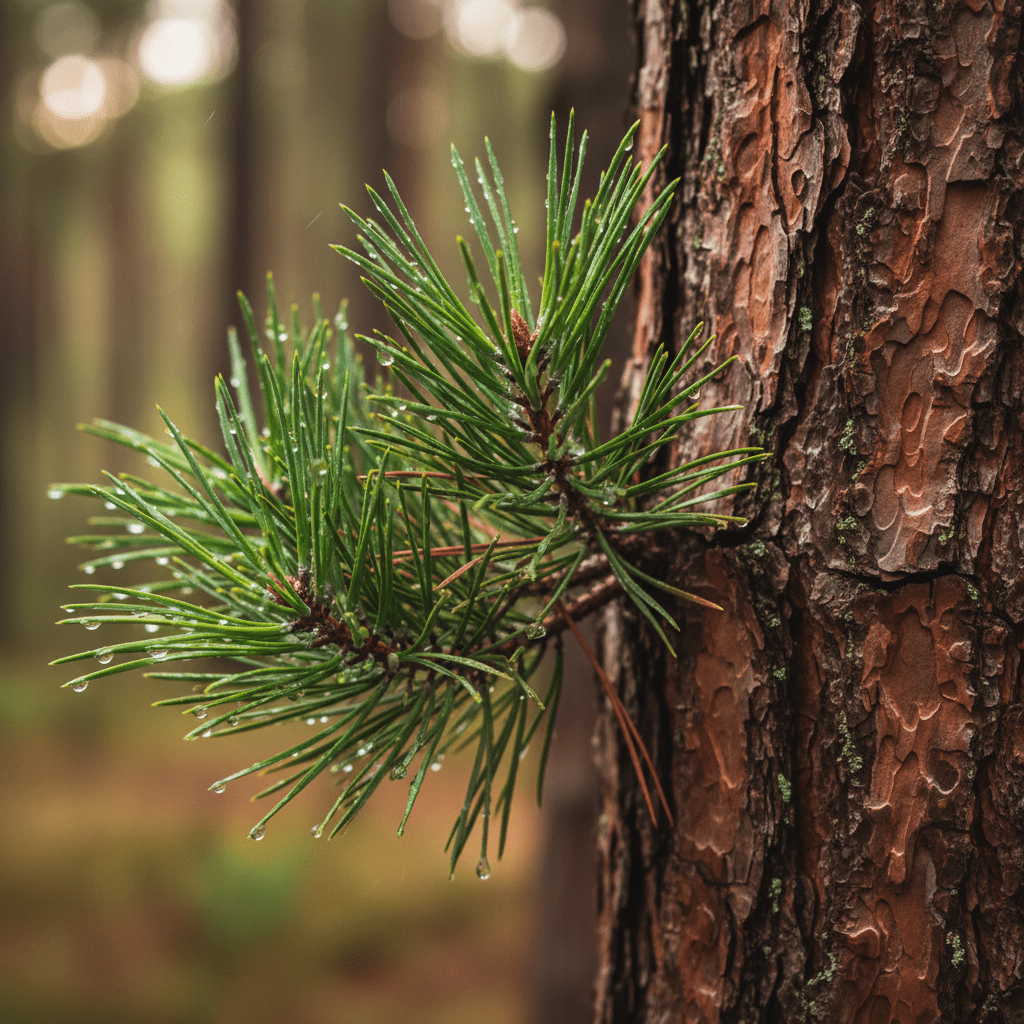
True pine oil usually comes from the Scots Pine tree (scientists call it Pinus sylvestris). To get the oil, makers take the needles—and sometimes the twigs—and steam them. It’s a process called steam distillation. Think of it like cooking veggies, but instead of eating the broccoli, you catch the steam because that’s where the magic is.

Inside that steam are tiny natural chemicals. The big boss here is called alpha-Pinene.
I know, science words can be boring. But this one is cool. Alpha-pinene is what gives pine trees that fresh smell. More importantly, studies suggest it acts as a bronchodilator. That’s just a fancy way of saying it helps relax the muscles in your lungs so air can move in and out easier.
Here’s the tricky part though.
Not all “pine” bottles are created equal.
If you walk down the cleaning aisle at the grocery store, you’ll see “Pine Scent” everywhere. But a lot of that is just fake perfume made in a lab. It smells nice, but it won’t help your cold.
Actually, breathing in synthetic fragrances might give you a headache instead of fixing your cough.
For the pine oil uses we are talking about—like clearing up congestion—you need the real deal. You need 100% pure, therapeutic-grade essential oil.
This is where quality counts. Real oil keeps all those helpful compounds (like alpha-pinene and limonene) intact. Synthetic stuff doesn’t have them. That’s why suppliers like Aroma Monk focus on lab-tested, pure oils. Whether you are a business making a natural chest rub or just a person trying to breathe better, you want to know exactly what is in that bottle.
So, real pine oil? It’s nature’s chemistry set for your lungs. Fake pine smell? Just an air freshener.
The Science: How Pine Oil Supports Your Respiratory System
Okay, let’s look at why this actually works.
It’s not just about smelling like a Christmas tree. There is real chemistry happening here.
When we talk about using pine essential oil for cough relief, we are really talking about three specific jobs this oil does for your body. You don’t need a lab coat to understand them, either.
1. It helps move the “gunk”
You know that stuck feeling in your chest? When you cough but nothing comes up? That is the worst.
Pine oil is what experts call a natural expectorant.
Basically, it helps loosen up the mucus and phlegm sitting in your lungs. Once that stuff is loose, your body can finally get rid of it. Instead of a dry, hacking cough that hurts your ribs, you get a productive cough that actually clears things out. It’s like unclogging a drain.
2. It fights the bad stuff
This marks the difference between covering up a smell and actually cleaning the air.
Pine oil is tough on germs.
Studies show that pine oil helps stop the growth of certain bacteria that cause respiratory infections. When you diffuse it in your home, you aren’t just making the room smell nice. You are arguably helping to lower the number of airborne weirdos—like bacteria and viruses—floating around your family.
3. It calms the cooling pipes
Sometimes, the problem isn’t just mucus. It’s swelling.
When your nose feels stuffed, it’s usually because the tissues inside are inflamed. It’s like trying to breathe through a squashed straw.
Research suggests that the alpha-pinene we mentioned earlier works to reduce this inflammation. It acts as a natural decongestant, helping to open up those nasal passages so air can flow freely again.
So, here is the recap:
- It loosens the heavy stuff in your chest.
- It helps clean the air around you.
- It calms down the swelling in your nose.
Pretty hardworking for a few drops of oil, right?
But just because it’s natural doesn’t mean you can use it however you want. You have to be careful with how you apply it. Let’s talk about the safe ways to get these benefits without irritating your skin or lungs.
Get a quote from Aroma Monk.
Essential Oil Supplier – Bulk pricing • Samples • Fast response
5 Effective Pine Oil Uses for Congestion and Cough Relief
So, we know the science. We know that pine oil isn’t just a pretty smell. It’s actually doing some heavy lifting for our lungs.
But knowing why it works is only half the battle. You need to know how to use it without making a mess or accidentally hurting yourself.
Here is the thing—you don’t need a fancy spa setup to get pine oil respiratory benefits. You can do most of this right at your kitchen table.
Let’s look at five simple ways to use this oil when you (or your kids) are feeling stuffed up.
1. The Classic “Tent” Steam Inhalation
If you only remember one thing from this list, make it this one.

A pine oil steam inhalation is probably the fastest way to get relief when your sinuses feel like cement. The warm steam helps moisten your dry nose, and the pine oil hitches a ride on that steam straight into your lungs.
But be careful. Steam is hot (obviously), and essential oils are strong.
Here is how to do it safely:
- Get a bowl: Grab a large ceramic or glass bowl.
- Heat water: Boil some water, but let it sit for a minute so it’s not bubbling like crazy. You want it hot and steamy, not boiling.
- Add the oil: Pour the water into the bowl. Then, add just 2 to 5 drops of pine essential oil. Seriously, don’t add more. A little goes a long way [1].
- Make a tent: Lean over the bowl (keep your face about 8-10 inches away) and drape a large towel over your head and the bowl. This traps the steam.
- Breathe: Close your eyes tight—essential oil vapor can sting eyes—and breathe deeply through your nose for about 5 to 10 minutes.
It might feel intense at first, but stick with it. That “opening up” feeling is worth it.
2. DIY Decongestant Chest Rub
Store-bought vapor rubs act fast, but they are often full of petroleum jelly and synthetic smells. Making your own pine oil chest rub recipe is super easy, cheaper, and honestly feels nicer on the skin.
Plus, when you make it yourself, you know exactly what is in it. This is where having a high-quality carrier oil matters. If you are a business making this for others, or just a parent making it for your family, using a clean base like the ones from Aroma Monk ensures the rub absorbs well without being greasy.
The “Breathe Easy” Blend:
- Base: 1 ounce (about 2 tablespoons) of carrier oil. Coconut oil, jojoba oil, or almond oil all work great.
- The Oils:
- 10 drops of Pine Oil
- 5 drops of Eucalyptus Oil (helps open things up even more)
- 3 drops of Peppermint Oil (for that cooling sensation)
Mix it all together in a small glass jar. Rub a small amount on your chest and back before bed.
Quick safety note: If you are using this on kids, dilute it way more. For little ones, stick to just 3-4 drops of essential oil per total amount of carrier oil to keep it safe.
3. Air-Purifying Diffusion
Sometimes you don’t need the oil on you—you just need it around you.
This is one of the best pine oil uses for preventing sickness from spreading in a house where one person is already down with a cold. Diffusing helps clean the air and keeps the room feeling fresh instead of stuffy.
Try this Forest Fresh Blend in your diffuser:
- 3 drops Pine Oil
- 2 drops Lemon Oil
- 1 drop Cedarwood Oil
This mix doesn’t just smell like a walk in the woods. Because pine and lemon blend so well, it creates a crisp atmosphere that helps you feel more awake when that cold medicine fog sets in.
Just run it for 30 minutes on, then 30 minutes off. You don’t need it running 24/7 to get the benefits.
4. Soothing Bath Soak
When your body aches from the flu, a hot bath acts like a reset button. Adding pine oil can turn that bath into a full-body decongestant session.
But wait!
Do not just drop oil into the water. Oil and water don’t mix. If you drop it straight in, the oil will just float on top and stick to your skin in one concentrated hot spot. That burns.
Instead, mix 5-8 drops of pine oil into a tablespoon of carrier oil (like olive oil) or a cup of Epsom salts first. Then, dump that mixture into the bath. The carrier helps the oil disperse through the water safely.
Sink in, breathe deep, and let the steam do the work.
5. Natural All-Purpose Clearing Spray
Not everyone has a diffuser. And sometimes you need to freshen up a pillowcase or a stale sick room quickly.
This spray acts as a natural decongestant for the room itself.
Simple Room Spray Recipe:
- Get a small spray bottle (4 oz size is perfect).
- Fill it almost to the top with distilled water.
- Add 1 tablespoon of high-proof alcohol (like vodka) or witch hazel. This helps the oil and water mix.
- Add 20 drops of Pine Oil and 10 drops of Lavender.
Shake it well before every spray. Mist it over bedding, curtains, or just in the air to help clear the heaviness out of the room.
A Very Important Warning: Is Pine Oil Safe for Everyone?
Before you go diffusing this everywhere, we need to talk about our furry friends.
Is pine oil safe to breathe for humans? Generally, yes.
Is it safe for cats? No. Absolutely not.
Cats act differently than dogs or humans. Their livers are missing a specific enzyme called glucuronyl transferase. Without getting too technical, this means they cannot break down certain compounds in pine oil. If they breathe it in or get it on their fur, it can build up in their bodies and become toxic very quickly.
If you have cats, avoid diffusing pine oil in rooms they use. If you use it on your skin, don’t let them lick you. It’s better to be safe than sorry here.
For dogs, it’s usually okay in moderation, but always make sure they can leave the room if the smell bothers them.
Now that you have the recipes and the safety rules, you are ready to tackle cold season head-on. Next up, we’ll wrap things up with a final check on why sourcing matters—because using the wrong oil can actually make things worse.
Safety First: How to Use Pine Oil Responsibly
We mentioned the danger to cats earlier, but let’s be real for a second—humans aren’t invincible either.
Just because pine oil comes from a tree doesn’t mean you can use it carelessly. It is highly concentrated nature. Think of it like chili powder; a sprinkle makes the chili taste great, but you definitely wouldn’t want to rub a handful of it into your skin.
To get the benefits without the burn, you have to follow a few ground rules.
Rule #1: Respect the Dilution
Here is the most common mistake people make: putting essential oil directly on their skin (neat application).
Please don’t do this.
Pine oil is strong. If you apply it straight, it can cause redness, itching, or even a chemical burn. You always need a “carrier oil” to act as a buffer. This helps the pine oil absorb into your skin safely. If you are mixing up a batch of that chest rub we talked about, or even if you are a business creating a product line using bulk supplies from Aroma Monk, getting the ratio right is everything.
Here is a simple cheat sheet to keep your skin happy [1]:
- Adults (Standard Use): Aim for a 2% to 5% dilution. That is roughly 12 to 30 drops of essential oil for every ounce (30 ml) of carrier oil.
- Kids (Ages 6+): Keep it lower, around 1.5% to 3%. Their skin is thinner and more sensitive.
- Little Ones (Toddlers): Be extremely careful. Stick to 0.5% to 1% (about 3 to 6 drops per ounce) and always test a tiny patch of skin first.
Rule #2: Keep It Out of Your Mouth
You might see random advice online telling you to put a drop of oil in your water glass.
Skip that advice.
Essential oils and water do not mix. If you drink it, the oil floats on top and hits your sensitive mouth and throat tissue commercially full-strength. It can cause serious irritation to your esophagus and stomach lining. Unless you are working directly with a certified aromatic medicine professional, keep the oil in the diffuser or on your skin—never in your stomach.
Rule #3: Listen to Your Body
Even with natural stuff, some people are just more sensitive.
If you have asthma, pine oil (which is great for opening airways) can sometimes trigger a reaction if you use too much too fast. Start with a very low dose in the diffuser—like 10 minutes—to see how you feel.
Also, if you are pregnant or nursing, your body is doing a lot of extra work already. While pine oil is generally considered okay for diffusion, it’s always smart to double-check with your doctor before using it topically.
Now that you know how to use it safely, there is one last piece of the puzzle. You need to make sure the oil you are buying is actually what the label says it is.
Buyer’s Guide: Choosing a High-Quality Pine Oil
Okay, you know the safety rules. You have the recipes. Now comes the tricky part: actually buying the oil.
It sounds easy, right? You just search for “pine oil” and click buy.
But here’s the problem. If you pick up a bottle that is low quality—or worse, synthetic—none of those pine oil uses we talked about will actually work. You might just end up with a room that smells like cheap car cleaner.

Here is a quick checklist to make sure you are getting the good stuff.
1. Check the Latin Name
Don’t just look for the word “Pine” on the front label. Flip that bottle over.
You want to see specific words in the ingredient list: Pinus sylvestris.
This is the botanical name for Scots Pine. Why does this matter? Because different pine trees make different oils. Pinus sylvestris is the one famous for high levels of alpha-pinene, that compound that helps your lungs. If the bottle just says “Pine Scent” or “Fragrance,” put it back. That is perfume, not medicine.
2. Look for the Tests
How do you know the oil is pure? You ask for the proof.
Honest suppliers don’t ask you to trust them blindly. They use something called GC/MS testing (Gas Chromatography/Mass Spectrometry). It’s basically a lie detector test for oils.
This is a big reason why professional suppliers like Aroma Monk stand out. They ensure their oils are lab-tested so you know there are no hidden fillers or nasty chemicals in there. Whether you are a business buying in bulk or just grabbing a bottle for your home, transparency is everything.
3. Mind the Bottle
Light kills essential oils.
If you see pine oil sold in a clear glass bottle or—heaven forbid—a plastic one, run away.
Ultraviolet light breaks down the oil and makes it spoil faster. High-quality oil should always come in dark amber or cobalt blue glass bottles. This protects the liquid inside from the sun and keeps it fresh longer.
So, remember: Check the Latin name, look for the lab tests, and grab the dark glass.
If you stick to those three rules, you’ll be breathing easier in no time.
Breathe Deep and Embrace the Power of Pine
Dealing with a stuffy nose or a chest cold is exhausting. But you don’t have to just wait it out under a blanket.
We’ve seen that the pine oil respiratory benefits are real. It acts as a natural decongestant, helps move that stuck mucus, and even cleans the air in your home. It’s pretty wild that a simple oil can do all that.
You don’t need a complicated routine, either.
Whether you choose a steam inhalation or just run a diffuser, these pine oil uses are easy shortcuts to feeling human again.
Just keep those safety tips in mind—especially for your pets—and make sure you are using pure, lab-tested oils like the ones from Aroma Monk. Quality matters when it comes to your lungs.
Now, you have the knowledge and the tools. Go ahead and take that deep breath. You earned it.
Get a quote from Aroma Monk.
Essential Oil Supplier – Bulk pricing • Samples • Fast response