
The Truth Behind the ‘Clean’ Scent of Pine
You know that smell, right?
The one that hits you as soon as you walk into a kitchen and think, “Okay, someone scrubbed the floors today.”
For decades, that distinctive woodsy smell was the universal sign of a clean home. But here is the weird part. If you grab a bottle of that famous yellow cleaner from the grocery store shelf today, take a close look at the label.
You might be shocked.
Actually, you should be shocked. Since around 2014, many big brands swapped out actual pine oil for man-made chemicals that just mimic the smell because real oil got too expensive 1. So, a lot of us are cleaning with perfume, not the powerful natural cleaner we think we have.
Real pine oil cleaner is different.
It comes straight from pine trees. It doesn’t just smell nice; it actually fights grease and grime in a way synthetic stuff can’t. Plus, it’s a natural pine cleaner that helps sanitize surfaces without flooding your home with mystery ingredients.
In this guide, we are going to fix that confusion. We will look at what is pine oil, how the real stuff is made, and how you can get that true deep clean back in your bucket using pure ingredients like the ones we source at Aroma Monk.
Let’s figure out what’s actually in your cleaning supply cabinet.
What is Pine Oil? The Aromatic Heart of the Forest
So, what exactly is the real stuff?
It sounds like a simple question. But if you walk down the cleaning aisle, you’ll see a dozen bottles claiming to have “Pine Power.” Most of them have never seen a forest.
Real pine oil is a volatile essential oil.
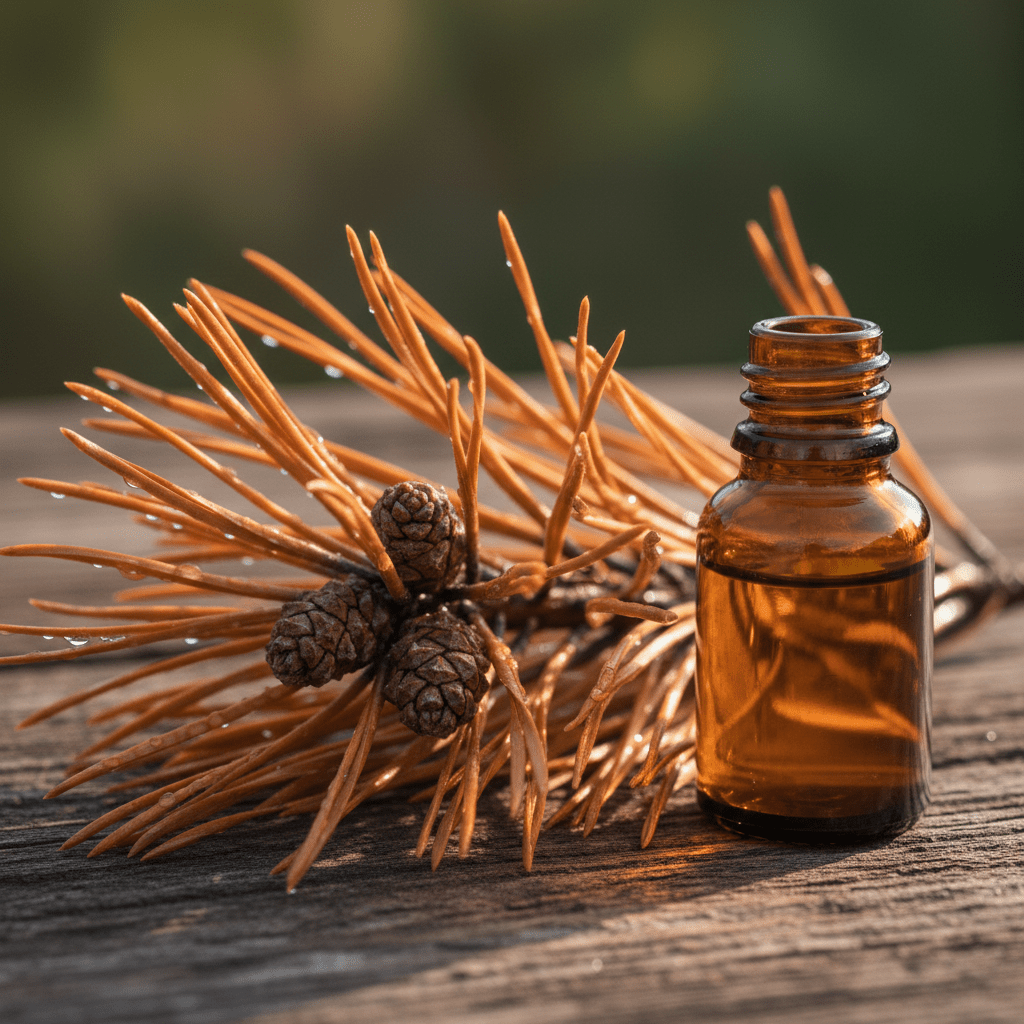
It is extracted directly from the needles, twigs, and cones of pine trees. Usually, this comes from the Pinus genus, specifically the Scots Pine (Pinus sylvestris). Makers use a process called steam distillation to pull the oil out of the plant material. It takes a lot of needles to make a small bottle of oil, which is why the pure stuff is so potent.

Think of pine oil as the blood of the tree. It protects the wood from decay and pests. When we bottle it, we are harnessing that same protective power for our homes.
The Secret Ingredients: Terpenes
The reason pine oil works so well isn’t magic. It’s chemistry.
The oil is packed with natural compounds called terpenes. The big players here are alpha-pinene (about 34%) and beta-pinene (around 13%) 2.
That might sound technical, but here is what you need to know: these terpenes are the engines behind the oil. They give pine its famous sharp smell. More importantly, they are responsible for the antimicrobial properties that help scrub away grease and grime.
The Three Types of “Pine”
This is where most people get tricked. To get a natural pine cleaner, you have to know which version you are holding. In the industry—and at Aroma Monk—we usually see products fall into three buckets:
- Pine Essential Oil: This is the 100% pure extract from the plant. It has therapeutic benefits and cleaning power. It contains no synthetic fillers.
- Pine Fragrance Oil: This is a lab-created scent. It mimics the smell of the forest using chemicals, but it has zero cleaning power. It’s basically perfume for your floor.
- Pine-Scented Cleaners: These are commercial blends. They might contain a tiny drop of real oil (or none at all) mixed with strong soaps and water.
If you want the benefits of a pine oil disinfectant, you need the oils rich in those terpenes, not just a synthetic copycat that smells nice.
From Tree to Bottle: How is Pine Oil Made?
You might be wondering, “How exactly do you squeeze oil out of a sharp pine needle?”
It’s a fair question. Unlike an orange or a lemon, you can’t just press a pine cone and expect juice to flow out. The process is a bit more scientific, but the concept is actually pretty simple.
To get that pure liquid gold, makers mostly use a method called steam distillation.
Here is how it works.
We take huge amounts of raw material—mostly needles, twigs, and sometimes cones—and load them into a large steel tank. Then, we pump hot steam through the plant material. The heat acts like a key, unlocking the tiny membranes in the needles that hold the oil inside.
Once those membranes burst, the volatile oil hitches a ride on the steam, effectively vaporizing.
This vapor travels down a cooling tube. As it cools, it turns back into liquid water. Since oil and water don’t mix, the pine essential oil separates and floats right to the top, where it can be skimmed off. The water left behind is called a hydrosol (which smells nice, but doesn’t have the cleaning muscle of the oil).
Why Real Pine Oil is So Potent
The reason natural pine cleaner smells so strong is that it is incredibly concentrated.
We are talking about a massive amount of plant material for a tiny return.
Research shows that for every 100 kilograms (about 220 pounds) of pine branches, you might only get about 250 milliliters of oil 1. That is a pile of branches heavier than most people, just to fill a regular coffee cup with oil.
That creates a huge “yield” problem for big box companies.
Because the yield is so low, real oil is expensive. It is much easier for mass-market brands to mix some chemicals in a lab than to harvest tons of forest material. But some companies do use chemical solvents to strip more oil out of the wood. The problem? That method often leaves yucky chemical residues behind.
At Aroma Monk, we stick to the traditional steam method. It keeps the oil pure and protects those natural terpenes we talked about earlier.
So when you are scrubbing your floors with a true pine oil disinfectant, remember: you aren’t just using a scent. You are cleaning with the concentrated essence of an entire forest.
The Science Behind a Natural Pine Oil Cleaner’s Power
You know how some cleaners feel like they are just pushing dirt around?
Real pine oil doesn’t do that.
It works because of chemistry, not magic. And the best part? It does three big jobs at once. It cuts through grease, fights germs, and stops bad smells.
Let’s look at why this natural ingredient is such a powerhouse.
It Eats Grease for Breakfast
Have you ever tried to wash a buttery pan with just water? It doesn’t work. The water just rolls right off. That is because water and oil don’t get along.

But pine essential oil for cleaning is different.
Because it is an oil itself, it interacts with grease perfectly. In science class, they might call this a “solvent.” Basically, the powerful compounds in the pine oil—those terpenes we mentioned—latch onto the sticky grease on your counter.
They break the grease down so you can wipe it away easily. It works on sticky residues, scuff marks, and that mystery gunk on the kitchen floor. You don’t need harsh chemicals to melt the mess; the pine does the heavy lifting for you.
Fighting the Invisible Bad Guys
This is where things get really cool.
Pine oil isn’t just a soap. It has serious protective skills. Remember, the tree makes this oil to keep itself safe from rot and pests.
Those same defenses work in your home.
Scientists have tested pine oil against some pretty nasty bacteria. While results vary depending on the type of pine, studies have shown that pine oils can stop the growth of common germs like E. coli and Staphylococcus aureus (Staph).
It works because the oil damages the cell walls of the bacteria. So, when you use a real pine oil disinfectant, you are actually sanitizing your surfaces, not just making them look shiny.
Stopping Smells, Not Hiding Them
We have all sprayed that “Summer Breeze” air freshener in a smelly room.
What happens?
Usually, you just end up with a room that smells like trash covered in flowers. That is because fake scents just mask the odor. They sit on top of the bad smell.
Natural pine cleaner works differently.
Because it kills the bacteria that cause the bad smells in the first place, it neutralizes the odor at the source. It cleans the air and the surface.
This is why we love sourcing pure oils at Aroma Monk. We know that when our customers—from big cleaning brands to local makers—put this in their products, they aren’t just selling a perfume. They are selling a real solution.
So, it cuts grease, fights germs, and kills odors. But are you using it safely? Let’s check.
Get a quote from Aroma Monk.
Essential Oil Supplier – Bulk pricing • Samples • Fast response
Buyer Beware: Is Your ‘Pine’ Cleaner a Fake?
Here is the uncomfortable truth.
Most of us grew up trusting that famous yellow bottle. You know the one. It sat under Grandma’s sink for thirty years. But if you walk into a grocery store today and grab that same bottle, you are likely buying a completely different product.
Actually, it’s mostly just perfume.
The Great Switch of 2014
For a long time, brands like Pine-Sol were the gold standard. They used real pine oil—up to 12% in the old days—to melt grease and kill germs.
But something happened around 2014.
Real pine oil got expensive. The supply of proper pine timber (the trees need to be about 20 years old) started shrinking. So, Clorox, the company behind the big brand, made a quiet change. They announced that for most of their lineup, they were swapping the real oil for synthetic ingredients 1.
If you ask is pine sol made with real pine, the answer today is… mostly no.
Unless you buy the specific “Original” scent (and even then, you have to check the label carefully), you are likely scrubbing your floors with “Pine Scent,” not actual pine oil. It smells similar, but it cleans differently.
How to Spot the Fakes
It is tricky. The front of the bottle will scream “Forest Fresh” or “Pine Power.” But the truth is always on the back, in the tiny print.
To find a true pine oil cleaner, you have to ignore the marketing and look at the ingredient list. Here is a cheat sheet to help you decode what you are buying:
| If the Label Says… | What It Usually Means | The Verdict |
|---|---|---|
| Pinus Sylvestris Oil | Real pine oil extracted from the tree (Scots pine). | ✅ Buy it |
| Pine Essential Oil | Pure plant-based pine extract. | ✅ Buy it |
| Fragrance / Parfum | Artificial, lab-made scent chemicals. | ❌ Fake |
| Glycolic Acid | A synthetic chemical sometimes used instead of real pine oil. | ❌ Fake |
| Pine Scent | Smells like pine but contains no real pine. | ❌ Fake |
What Are You Actually Spraying?
If it’s not pine oil, what is it?
Usually, it’s a mix of water, soap, and a cocktail of chemicals.
A common ingredient in the new formulas is Glycolic Acid. It removes scum, sure, but it lacks the natural antimicrobial punch of the terpenes found in the tree oil. Another group of chemicals often used are Quaternary Ammonium Compounds (or “Quats”). These kill germs, but they can be harsh and are definitely not natural.
And then there is the smell.
Since the cleaning power comes from chemicals, the “pine” smell is added later. It’s usually a synthetic fragrance made from petroleum products.
At Aroma Monk, we see this gap in the market every day. Big manufacturers cut costs, but quality brands—the ones we supply—are scrambling to find the real Pinus sylvestris oil. They know that discerning customers (like you) are starting to realize that a pine oil disinfectant should actually contain pine oil.
So, before you toss that cleaner in your cart, just flip the bottle. If you don’t see the Latin name for the tree, you aren’t getting the cleaning power of the forest. You’re just buying a pine-scented air freshener for your floor.
Safety First: How to Use Pine Oil Cleaner Correctly
Here is the thing about switching to the real stuff.
When you buy those yellow bottles from the grocery store, they are mostly water. You can splash them around without thinking too much about it. But pine essential oil for cleaning is different.
It is highly concentrated.
If you treated it like the watered-down stuff, you would ruin your surfaces and probably give yourself a headache. Since we supply 100% pure oils at Aroma Monk, we always tell our partners: this is raw power. You have to respect it.
The Golden Rule: Dilute, Dilute, Dilute
You simply can’t use it straight out of the bottle. It’s too strong.
For a standard DIY pine cleaner, you only need a tiny amount. A safe ratio is usually around 1%.
Here is a simple recipe that works for most non-porous surfaces:
- 1 cup of distilled water
- 1/4 cup of white vinegar
- 10 to 15 drops of pine oil disinfectant

That’s it. You don’t need half the bottle. Those drops go a long way.
A Serious Warning for Pet Owners
We need to talk about cats.
Dogs usually handle pine scent okay if they aren’t eating it. But cats are different. Their livers are missing a specific enzyme called glucuronyl transferase.
Because they lack this enzyme, they cannot break down the terpenes in the oil. If a cat walks on a wet floor treated with pine oil, then licks its paws, the toxins build up in their system. It can cause liver damage or worse.
If you have cats, be incredibly careful. Keep them out of the room until the floor is completely dry. Or better yet, skip the pine oil on surfaces they walk on accurately.
Protect Your Skin and Your Stash
Since real pine oil is a solvent, it can irritate your skin if you touch it directly.
If you have sensitive skin, throw on a pair of rubber gloves before you start mixing your solution.
Also, keep your oil in a dark, cool place. Light and heat can cause the oil to oxidize. When pine oil oxidizes, it loses its fresh scent and is more likely to cause skin reactions. A dark amber bottle in a cupboard is usually your best bet.
Make an Informed Choice for a Naturally Clean Home
We have covered a lot of ground today.
We went from the deep forests where Pinus sylvestris grows all the way to the chemistry inside your mop bucket.
The biggest takeaway? That “clean” smell shouldn’t come from a lab.
Real pine oil is powerful stuff. It stops germs and melts grease because nature designed it that way to protect the tree. It doesn’t need synthetic help to do its job.
Actually, more families are waking up to this. The market for natural household cleaners is growing fast as people decide to ditch the harsh chemicals for safer, greener options.
So, you have a choice to make.
You can keep buying the yellow water that smells like a car air freshener. Or, you can choose the real thing.
When you look for a pine oil cleaner, check that label. Look for the Latin name. It is the only way to ensure you are getting a natural pine cleaner that actually disinfects.
If you are a maker or a brand looking to create something genuine, reliable purity matters. That is exactly what we focus on here at Aroma Monk—getting the raw power of the forest into your hands.
Your home deserves the real deal, not a cheap copy. Go get the good stuff.
Get a quote from Aroma Monk.
Essential Oil Supplier – Bulk pricing • Samples • Fast response