
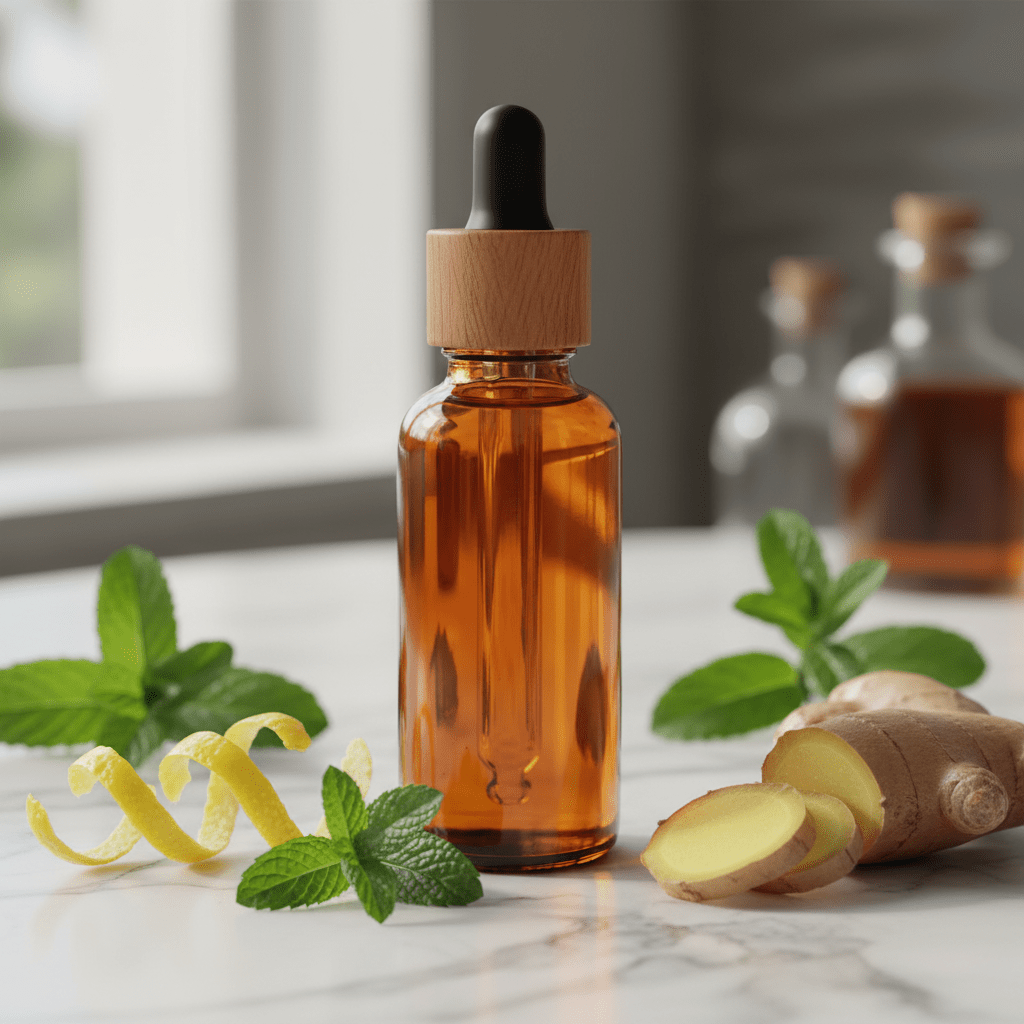
Introduction: More Than Just Taste—The Hidden Wellness Power in Your Pantry
You know that feeling when you’re trying to eat healthy, but everything tastes… mostly like cardboard?
It’s the worst. You want to spice things up, but then you flip the package over and see a list of ingredients that looks like a science experiment. You aren’t alone in this. In fact, about 74% of us are now obsessively checking labels because we want “clean” food without the artificial junk.
We’re stuck in a tricky spot: we want flavor, but we don’t want the chemicals.
Here is the good news. There is a sweet spot between “boring health food” and “fake additives.” It’s found in flavour oils. And I don’t just mean the artificial drops you might have used for candy making years ago. I’m talking about high-quality, food-grade essential oils and natural flavorings derived from actual plants.
These little bottles are actually kind of magical. They don’t just make your morning smoothie taste like a tropical vacation. They can actually help your body, too. We are talking about concentrated food flavouring that offers real perks, from digestion support to mood boosting.
In this guide, we are going to figure this out together. We will look at the real health benefits of flavour oils, ask the hard questions (like “are flavor oils safe?”), and I’ll show you exactly how to start using flavor oils in food so you don’t ruin your dinner.
Let’s get into it.
What Exactly Are Flavour Oils? A Clear Distinction
Let’s clear up the confusion right now. When people hear “oil,” they often think of cooking grease or the stuff you put in a diffuser to make your room smell like a spa.
So, what are flavour oils?
Simply put, they are highly concentrated food flavouring extracts. But here is the important part: the good ones aren’t made in a lab. Real, high-quality flavour oils are extracted directly from nature—fruits, spices, herbs, and plants. Think of them as the “soul” of the ingredient, captured in a bottle.

The “Food-Grade” Difference
This is where most people get stuck. You might ask, “Can I just drink my lavender essential oil?”
Please don’t.
There is a massive difference between standard essential oils and food-grade essential oils. While they might come from the same plant, the processing matters. Standard oils often contain synthetic fillers or are extracted using solvents you definitely don’t want to eat.
True flavour oils intended for your kitchen must meet strict safety standards. In the industry, we look for items designated as GRAS (Generally Recognized As Safe). This means experts agree they are safe to eat.
If it doesn’t say food-grade or suitable for internal use, keep it in the diffuser.
Natural vs. Artificial: What You’re Actually Eating
It makes sense why so many of us are skeptical. About 74% of consumers are actively looking for “clean” labels because they are tired of artificial junk.
Artificial flavorings are chemical mimics. They trick your brain into thinking you’re tasting strawberry, but your body doesn’t get any of the benefits of the actual fruit.
Natural flavorings and pure oils are different. They utilize methods like cold-pressing or CO2 extraction to pull the flavour out without destroying the delicate compounds. This means you aren’t just getting the taste; you’re often getting the active plant properties too.
It’s the difference between eating a grape-flavored candy and eating an actual grape. One is just sugar and chemistry; the other is food.
When you choose pure, tested sources—like the ones we focus on at Aroma Monk—you are choosing ingredients that work with your body, not just against your taste buds.# The Science of Scent and Taste: How Flavour Oils Influence Your Well-being
Have you ever caught a whiff of vanilla and suddenly remembered your grandmother’s kitchen? Or peeled an orange and felt a tiny bit more awake?
That isn’t just in your head. Well, actually, it is. But there is a biological roadmap for why it happens.
To understand the health benefits of flavour oils, we have to look at how our bodies are wired. It turns out, your sense of smell (the olfactory system) is the only sense that has a VIP pass directly to your brain’s emotional center.
The Superhighway to Your Brain
When you open a bottle of food-grade essential oils, tiny invisible molecules float up your nose. They hit the olfactory nerves, which send a signal straight to a part of the brain called the limbic system.
This is a big deal.
The limbic system manages your emotions and memories. Unlike sight or sound, which have to go through a processing center first, scent signals get instant access.
This is why lemon oil benefits can feel immediate—the scent hits your amygdala (the feeling part) and hippocampus (the memory part) before you even realize you’re smelling a lemon. It acts fast.
More Than Just a Scent
But here is where natural flavorings get really interesting. It’s not just about the smell. It’s about the chemistry.
Real flavour oils contain “actives”—compounds found in the actual plant.
- D-Limonene: Found in citrus oils, this compound is often linked to lifting moods.
- Menthol: Found in mint oils, this physical compound creates that cooling sensation.
When you use artificial flavors, you might get the smell, but you miss out on these actives. It’s like watching a fireplace on TV vs. actually sitting in front of one. One looks warm; the other is warm.
The Dual-Pathway Effect
So, when you are using flavor oils in food, you get a double benefit. We call it a dual-pathway.
First, you breathe it in while you eat, triggering those brain responses we just talked about. Second, you digest it.
Take peppermint oil for digestion as a classic example. When you consume it in a tea or dessert, the menthol works physically in your gut to help relax the smooth muscles, while the aroma simultaneously signals your brain to wake up.
This synergy is why quality matters so much. At Aroma Monk, we see this constantly—manufacturers who switch from synthetic to pure concentrated food flavouring notice that the product doesn’t just taste better; it feels different to the consumer.
Synthetics can mimic the taste. But they can’t mimic the feeling.# 5 Powerful Flavour Oils and Their Science-Backed Health Benefits
Okay, let’s get to the fun part. You know that concentrated food flavouring can make your water or brownie batter taste amazing. But which ones should you actually keep in your pantry for wellness?
It can be pretty overwhelming. If you look at a supplier list, there are hundreds of options.
We are going to keep it simple. We’re focusing on the “Big 5.” These are the heavy hitters—the oils that don’t just taste good but have serious science backing them up.
You might be part of the 19% of people who are actively cutting out artificial sweeteners this year. If so, swapping sugary syrups for these potent oils isn’t just a diet hack. It’s an upgrade.
Here are the five oils that punch way above their weight class.
1. Peppermint Oil: The Belly Soother
Ever finish a big meal and immediately regret it? We’ve all been there. You feel like a balloon that’s about to pop.
This is where peppermint oil shines. It is arguably the most versatile of all the flavour oils.
Why It Works
The magic ingredient here is menthol. Menthol isn’t just what makes your breath smell icy fresh. It has a physical job. It helps relax the smooth muscles in your intestines.
Think of your gut like a clenched fist when it’s upset. Menthol helps that fist open up and relax. This can ease that tight, bloated feeling pretty quickly.
Also, it wakes up your brain. One whiff of peppermint is often enough to snap you out of that 3 PM slump.
Pro Tip: Use caution. Peppermint oil is incredibly strong. One drop is roughly equivalent to 26-28 cups of peppermint tea. You do not need a teaspoon of this. You need a toothpick dip.
2. Lemon Oil: Sunshine in a Bottle
If peppermint is the doctor, lemon is the cheerleader.
Most of us don’t drink enough water because, let’s be honest, water is boring. Lemon oil benefits change the game. It adds a crisp, bright finish without the acid that ruins your tooth enamel (which you get from squeezing actual lemon juice all day).
The Science Part
The star compound in lemon oil is D-limonene.
While we don’t want to make wild medical claims, D-limonene is widely studied for its ability to support the body’s natural detox processes. Plus, the scent alone is a mood shifter.
Have you ever peeled a fresh orange or lemon and just felt… better? That is the aromatic compounds hitting your limbic system. It signals “alertness” and “clean functionality” to your brain.
At Aroma Monk, we see beverage companies buying this in bulk specifically because customers associate that citrus scent with energy and cleanliness.

Get a quote from Aroma Monk.
Essential Oil Supplier – Bulk pricing • Samples • Fast response
3. Lavender Oil: Not Just for Laundry (But Be Careful!)
This one usually confuses people.
“Wait, eating lavender? Isn’t that for soap?”
It is. But high-quality, food-grade essential oils made from lavender are a secret weapon for high-end bakers and wellness experts. It adds a sophisticated floral note to lemonades and shortbread.
But the health perk is the real story here. It’s all about anxiety relief.
The Calm Down Compound
Lavender is famous for containing linalool.
Recent clinical reviews have looked at lavender oil’s effect on anxiety. The results are pretty impressive. In some trials, specific lavender preparations helped reduce anxiety scores significantly, especially in stressful situations.
Important Warning: You cannot just grab any lavender oil off the shelf at a craft store. Most of those are perfume-grade. They are often cut with synthetic solvents that are definitely not safe to eat. You must check the label for GRAS status or explicit “for flavoring” designations. If you aren’t 100% sure, don’t eat it.
4. Ginger Oil: The Anti-Inflammatory Powerhouse
If you get motion sickness, or just general nausea, ginger is probably already your best friend.
But chewing on fibrous raw ginger root isn’t always fun. Ginger flavour oils give you that warm, spicy kick without the woody texture.
The Heat Source
The active compound is gingerol. It’s what makes ginger spicy and what makes it work.
Gingerol is fantastic for:
- Warming up cold hands and feet (it supports circulation)
- Settling a queasy stomach
- Reducing inflammation markers in the body
It’s a favorite for travel. A tiny drop in a water bottle can settle a stomach faster than you’d expect. Plus, it pairs perfectly with that lemon oil we talked about earlier.
5. Orange Oil: The Stress Buster
Last but not least, we have Orange Oil (specifically Sweet Orange).
While lemon is sharp and zesty, orange is sweeter and rounder. It’s often called the “Happy Oil.”
Why Pop the Top?
It’s packed with antioxidants. But the biggest benefit of using flavor oils in food like orange comes down to stress.
There is something biologically disarming about the smell of sweet orange. It tends to slow down a racing pulse.
We see a lot of interest in this from parents. It’s a great way to flavor plain yogurt or smoothies for kids who are picky eaters. They get the flavor of an orange creamsicle, and you get to skip the high-fructose corn syrup.
A Quick Reality Check on Quality
Before you start adding drops to your dinner, we need to pause.
These benefits only exist if the oil is real. If you buy a synthetic “orange flavor” from a discount baking aisle, you are likely getting a mix of chemicals that smell like orange but contain zero plant compounds. You won’t get the immune support or the mood lift. You’ll just get the taste.
To get the health wins, you need the plant chemistry. That means sticking to suppliers who verify purity.
Make sure the bottle passes the “blink test.” If the price seems impossibly low for a bottle of pure oil, blink twice and walk away. Real plants cost money to grow and distill.
Ready to see how to actually use these without ruining your food? Let’s talk recipes and ratios.
Safety First: A Practical Guide to Sourcing and Using Flavour Oils
We need to have a serious talk.
I know, I know. Safety guidelines are usually the boring part where you scroll past to get to the cookie recipes. But please stick with me for a minute.
Because here is the deal: flavour oils are powerful.
We aren’t talking about sprinkling a little cinnamon on your oatmeal. We are talking about concentrated plant chemistry. If you treat these bottles casually, you can ruin a dish—or worse, give yourself a stomach ache.
So, are flavor oils safe? Yes, absolutely. But only if you follow the rules.
Determining What Is Safe to Eat
First things first: verify your source.
Creating high-quality natural flavorings is expensive. It takes a mountain of plant material to fill a small bottle. This means there are a lot of “fake” options out there that are much cheaper, but they belong in a candle, not your body.
When you are shopping, you need to be a detective. Look for these specific things on the label:
- GRAS Designation: This stands for “Generally Recognized As Safe.” It’s the FDA standard that says experts agree this item is safe to eat.
- Extraction Method: You want oils that are Cold-Pressed or CO2 extracted. These methods don’t use harsh chemical solvents like hexane.
- USDA Organic: If you can, go organic. This ensures the plants weren’t sprayed with pesticides before they were crushed into oil.
If a bottle just says “Aromatherapy Oil” or “For External Use Only,” believe them. Do not put it in your smoothie.
At Aroma Monk, we are kind of obsessive about this. We lab-test our bulk oils to ensure purity because we know that our customers—from bakery owners to skincare brands—need to trust what’s in the bottle.
The “Toothpick Method”: How to Dose Correctly
When using flavor oils in food, the biggest mistake beginners make is using a spoon.
Put the spoon down.

Remember, one single drop of peppermint oil can equal nearly 28 cups of tea. If a recipe calls for a teaspoon of extract and you swap it for a teaspoon of flavor oil, you will make your food inedible.
The Golden Rule: Less is more.
- Start with the Toothpick Method: Dip a clean toothpick into the oil bottle, then swirl that toothpick into your batter or drink. Taste it.
- The One-Drop Limit: For most single-serving drinks (like a glass of water), one drop is a lot. Usually, 1-2 drops is the max for a whole batch of frosting.
It is incredibly concentrated stuff. You can always add more, but you can’t take it out.
Who Should Be Careful?
Even with food-grade essential oils, some bodies are more sensitive than others.
Since these are potent plant extracts, they can interact with medications or conditions. For instance, if you are pregnant, nursing, or have a specific health condition, check with your doctor first.
Also, do a quick check for allergies. If you are allergic to oranges, you will likely be allergic to orange oil. It seems obvious, but people often forget that these aren’t just “scents”—they are real plant ingredients.
Safety isn’t about being scared. It’s about respect for the potency of the plant. Once you respect the bottle, you unlock a whole new level of flavor without the worry.
Now that we know how to browse the aisle safely, let’s look at some actual recipes to get you started.
From Kitchen to Calm: Simple Ways to Integrate Flavour Oils Into Your Life
Now that we’ve covered the safety rules, let’s get to the fun part.
How do you actually use these things without turning your kitchen into a science lab?
It’s easier than you think. You don’t need to be a professional baker to start using flavor oils in food. Actually, the best way to start is usually the simplest.
Upgrading Your Water and Drinks
Let’s be real. Drinking eight glasses of plain water a day is a chore. But if you are part of the 19% of people actively cutting out artificial sweeteners this year, you don’t want to reach for those sugary flavor packets either.
Here is a better swap.
Take your sparkling water and add one single drop of orange or grapefruit oil. Suddenly, you have a gourmet soda with zero sugar and all the aroma of fresh fruit. It satisfies that craving for something sweet without the crash.
Cooking and Baking Hacks
Concentrated food flavouring isn’t just for candy. It works wonders in savory dishes too.
- Salad Dressings: Whisk a drop of lemon or basil oil into your olive oil and vinegar. It tastes fresher than dried herbs.
- Smoothies: If your green smoothie tastes too much like… well, grass, a drop of orange oil changes everything.
- Baking: Making shortbread? A drop of food-grade essential oils like lavender creates that high-end bakery taste instantly.
Wellness Beyond the Plate
You don’t always have to eat them to get the perks.
Since we know the scent travels straight to the brain, you can use these oils for a quick mood shift.
Feeling foggy at 3 PM? Put one drop of peppermint oil on a tissue and take a deep breath. It’s like a reset button for your focus. Need to relax? Diffusing the same lavender oil you used for baking can help settle the house down before bed.
This versatility is exactly why businesses—from spas to bakeries—buy from suppliers like Aroma Monk. They need oils that are pure enough to eat and potent enough to smell amazing.
3-Minute Flavour Oil “Recipes”
Ready to try it? Here are three super simple ways to start. Remember our golden rule: start with a toothpick swirl, or just one drop.
1. The Morning Mood-Boost
- Goal: Wake up and feel happy.
- The Mix: Large glass of ice water + 1 drop Lemon Oil.
- Why: You get the hydration plus the lemon oil benefits of mental clarity and alertness.
2. The Digestive Soother Tea
- Goal: Settle a heavy stomach after lunch.
- The Mix: Warm herbal tea + 1 drop Ginger Oil.
- Why: Ginger warms you up and aids digestion faster than waiting for tea bags to steep.
3. The Evening Wind-Down Latte
- Goal: Chill out without a hangover.
- The Mix: Warm oat milk (or dairy) + 1 drop Lavender Oil + 1 tsp honey.
- Why: It tastes floral and fancy, but physically helps your body prepare for sleep.
Give these a shot. You might be surprised at how much a tiny bottle can change your daily routine.
Conclusion: Elevate Your Health and Palate, One Drop at a Time
So, here is the bottom line. You don’t have to choose between food that tastes good and food that is actually good for you.
We’ve covered a lot of ground here—from the science of how natural flavorings talk to your brain, to the specific perks of peppermint oil for digestion. The big takeaway? These little bottles of concentrated food flavouring are arguably the easiest way to upgrade your wellness routine.
They bridge the gap for the growing number of us trying to ditch artificial sweeteners without losing the joy of eating Consumer Trends.
But remember the golden rule we discussed: Quality is everything.
You really can’t fake biology. To get the genuine health benefits of flavour oils, you need the real plant compounds, not a synthetic mimic made in a factory. Whether you are a home baker, a wellness junkie, or a brand formulation team, stick to verified food-grade essential oils. If you need that level of purity and traceability, suppliers like Aroma Monk are exactly where you should be looking to stock up.
Don’t let the science intimidate you. Start with just one bottle—maybe that lemon or orange we talked about earlier. Try the toothpick swirl. See how it makes you feel.
Your pantry is about to get a whole lot more exciting.
Get a quote from Aroma Monk.
Essential Oil Supplier – Bulk pricing • Samples • Fast response