
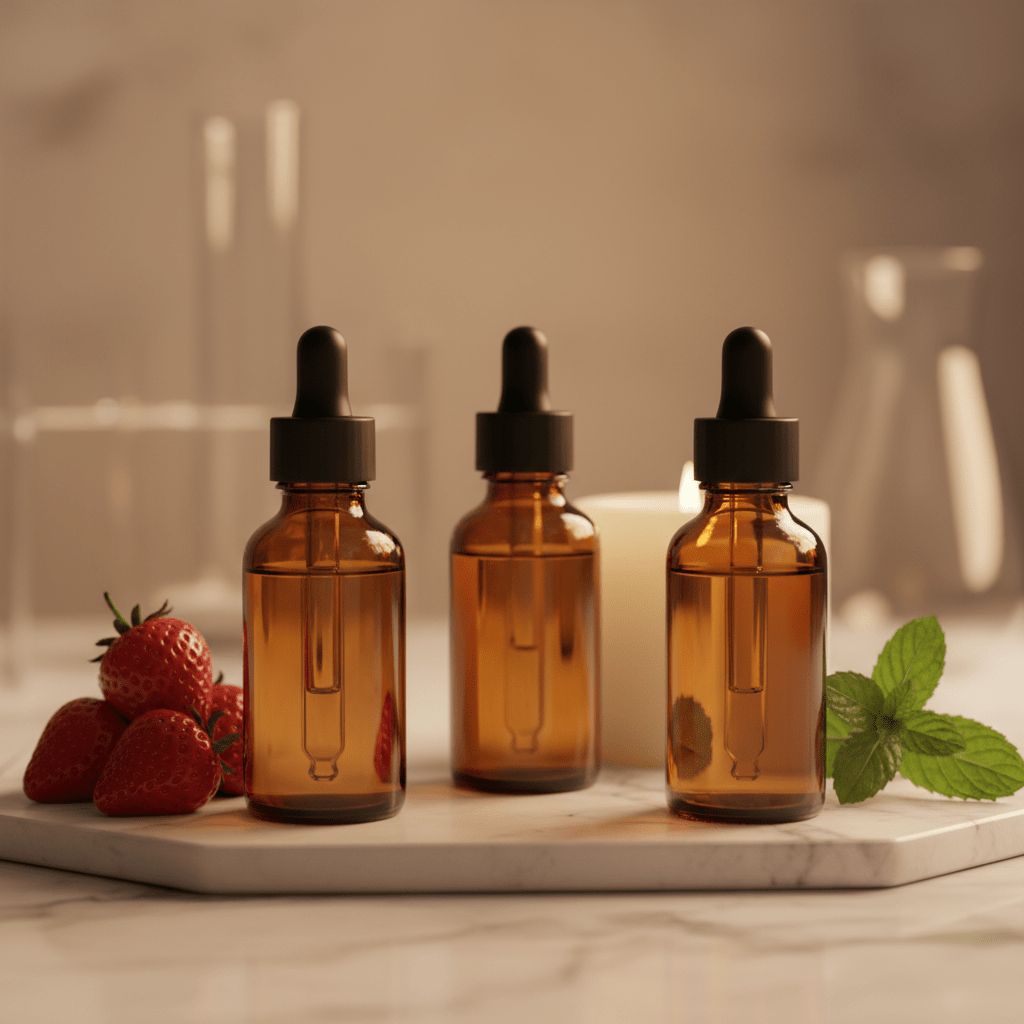
Introduction: The Secret Behind Your Favorite Lip Balm Flavor
You know that feeling. You swipe on some chilled Sweet Mint or classic Cherry balm, and suddenly your day feels a little brighter. It smells delicious, almost like you could eat it. But have you ever stopped mid-swipe and asked yourself, “Wait, what is this stuff actually made of?”
It feels like magic, but it’s really chemistry.
The truth about lip balm flavour oils is surprisingly complex. Are they food? Are they perfume? Actually, they are special compounds designed to trick your brain. Since our tongues can only taste sweet, sour, salty, bitter, and savory, most of what we think is “flavour” is actually smell.
Whether you’re a DIY crafter hunting for the best flavor oils for lips or just a daily user curious about the ingredients in flavor oils you’re essentially eating, we need to clear up the confusion. Let’s peel back the label and see what’s really inside that tube of vanilla bean goodness.
1. Flavor Oil, Fragrance Oil, Essential Oil: Decoding the Difference for Lip Safety
Here is the tricky part about making your own lip products. You might see a bottle labeled “Strawberry” or “Vanilla” and think, “Great, that goes in the balm!”
But wait.
If you grab the wrong bottle, you might end up with a lip balm that tastes like soap—or worse, hurts your skin. When you are looking for lip safe flavor oils, you usually run into three main categories. We need to sort these out because while the FDA often lumps them together on labels as just “fragrance” or “flavor,” they act very differently on your mouth FDA Labeling Guide.

Flavor Oils: The Tasty Tricksters
Flavor oils are the gold standard for DIY lip balm flavoring. Here is the secret: they are actually specific fragrance oils that are safe to eat in small amounts.
They are designed to smell amazing, and when you pair them with a sweetener (like stevia), your brain is tricked into thinking you are tasting strawberries or mint. The key here is that they are formulated with food grade flavouring for lip balm standards. They don’t usually taste like anything on their own—they just smell like it.
Fragrance Oils: For Your Nose Only
This is where people get confused. Fragrance oils are strictly for smell.
Think about a “Ocean Breeze” candle. You wouldn’t want to eat that, right? Fragrance oils are made for candles, soaps, and perfumes. They often contain ingredients like phthalates or solvents that are definitely not meant for your lips. plus, if you accidentally use one of these in a gloss, it will taste bitter and chemical-like. Yuck.
Essential Oils: The Natural Powerhouse
Then you have essential oils. These are 100% natural plant extracts.
Some are fantastic for lips, like peppermint or grapefruit. Actually, if you are looking for pure, chemical-free options, getting high-quality extracts from suppliers like Aroma Monk is often the best route for natural formulations. But you have to be careful. Just because it’s natural doesn’t mean it’s gentle. Some raw essential oils (like cinnamon) can burn if not properly diluted.
Here is a quick cheat sheet to keep it straight:
| Type | Safe to Lick? | Best Used For |
|---|---|---|
| Flavor Oil | Yes (in small amounts) | Lip balms, glosses, edible massage oils |
| Fragrance Oil | No (tastes bad/unsafe) | Candles, soaps, lotions, room sprays |
| Essential Oil | Sometimes (check safety) | Aromatherapy, skin care (diluted), natural balms |
So, when you are shopping for cosmetic flavour oil ingredients, always double-check the label. Does it say “Lip Safe”? If not, put it back on the shelf.
2. The Foundation: Carrier Oils and Solvents in Flavour Formulations
Here is something most people don’t know. When you buy a bottle of “Blueberry” flavor, you aren’t buying pure blueberry juice. If you did, it would be way too strong. It would probably burn your lips.
Instead, the actual flavor chemicals are highly concentrated. To make them safe and usable, they are dissolved into a liquid base. We call these carrier oils.
Think of the carrier oil like a bus. Its job is to carry the passengers (the flavor molecules) safely to the destination (your lips).
The Star Player: MCT Oil
If you look at the cosmetic flavour oil ingredients on a label, you will probably see something called Caprylic/Capric Triglycerides. That is a fancy name for MCT Oil (Medium-Chain Triglycerides). It usually comes from coconuts.
Why is it the favorite for lip balm flavour oils?
- It has no taste. This is a big deal. You don’t want your cherry balm to taste like coconut oil.
- It stays liquid. It won’t harden up in your bottle.
- It lasts a long time. It doesn’t go bad (rancid) as fast as other cooking oils.
The Backups: Sunflower and Castor Oil
Sometimes, you might see Sunflower Oil or Castor Oil used as a base. These work, but they are different. Sunflower oil is heavier. It can sometimes add a “oily” taste that messes with your fruit flavor. Plus, it doesn’t stay fresh as long as MCT oil does.
The Helpers: Solvents
You might also see Propylene Glycol or Vegetable Glycerin on the list. These aren’t oils. They are solvents.
Basically, some flavor parts dissolve better in water, and some dissolve better in oil. Solvents help everything mix together so you don’t get a separated mess. Vegetable Glycerin is cool because it actually tastes sweet on its own, which helps your balm taste better without adding extra sugar.
Here is a quick breakdown:
| Ingredient | Role | Why It’s Used |
|---|---|---|
| MCT Oil | Carrier | No taste, clear, stays fresh |
| Sunflower Oil | Carrier | Cheaper, more natural, but heavier |
| Propylene Glycol | Solvent | Helps mix ingredients smoothly |
| Vegetable Glycerin | Solvent | Mixes ingredients and adds sweetness |
So, the next time you look at a flavor bottle, remember: mostly, you are looking at the carrier oil. The actual flavor is just a tiny, potent part of the mix.
3. From the Earth: Natural Ingredients in Flavour Oils
So, if we aren’t using fake stuff from a lab, where do the best flavors come from to create that perfect natural lip balm flavor?
Nature, of course. But it’s not as simple as squeezing a lemon into a tube.
Here is the problem: If you put fresh fruit juice in your lip balm, it would go moldy in about three days. Yuck. Plus, some plants don’t give up their flavor easily. To get those yummy scents into a bottle safely, scientists use some pretty cool methods.

The Magic of CO2 Extracts
This is the secret weapon for high-end balms.
We usually get oils by steaming plants or soaking them in alcohol. But heat can cook the flavor, making it taste a bit… different. Imagine the difference between a fresh strawberry and strawberry jam.
CO2 extraction is different. It uses high pressure (and carbon dioxide) to gently pull the oil out of the plant without heating it up. Because it is so gentle, you get the full, true scent of the plant.
For example, Vanilla CO2 Extract is a game changer.
- Old way: Fake vanilla smells like sweet plastic.
- CO2 way: It smells rich, creamy, and exactly like a real vanilla bean pod.
Plus, these extracts last way longer on your shelf—sometimes up to five years. If you are learning how to flavor lip balm professionally, this is the ingredient you want to look for.
The Heavy Hitters: Oleoresins
Sometimes, you need something thicker and stronger. That is where Oleoresins come in.
Think of these as the “concentrated syrup” of the flavor world. They contain the heavier parts of the plant that usually get left behind in regular oils. This makes them very potent.
Have you ever used a lip plumper? You know, the kind that makes your lips tingle and swell a tiny bit?
That sensation often comes from Chili Oleoresin or Capsicum. It creates a warming effect that rushes blood to your lips. But be careful—this stuff is powerful. A tiny drop goes a long way, and you definitely don’t want to use it undiluted!
Fruit Scents Without the Fruit Rot
So what about the fruity stuff? Since we can’t use juice, chemists separate the specific parts of a fruit that create the smell. These are called natural isolates.
They take the molecules that make a peach smell like a peach and leave behind the water and sugar that would rot. This gives you lip safe flavor oils that smell juicy but stay fresh in your pocket for months.
Finding the Real Deal
Here is the tricky part for creators.
There are a lot of “fake naturals” out there. If you are looking for cosmetic flavour oil ingredients, you have to trust your source. You need to know that your “Rose” is actually from a flower and not a factory mix.
This is where specialized suppliers like Aroma Monk really help. They focus on pure, lab-tested natural extracts. For a business, being able to trace your oil back to the actual plant is a big deal. It ensures you aren’t accidentally putting a candle scent on someone’s mouth.
Whether you are using a fancy CO2 extract or a classic essential oil, the rule is simple: the better the ingredient, the better the balm.
Get a quote from Aroma Monk.
Essential Oil Supplier – Bulk pricing • Samples • Fast response
4. Essential Oils as Flavor: A Guide to Safe Usage
You might think, “It’s just a plant, how can it hurt me?” I used to think that that too. Then I learned that poison ivy is also 100% natural.
When it comes to your lips, essential oils are powerful. They aren’t just flavors; they are concentrated medicine. Some are amazing for balms, but others can actually blister your skin if you go out in the sun. Scary, right?
Let’s break down which ones go in your tube and which go in the trash.
The Safe List (Green Light)
If you want that minty tingle or a burst of citrus, stick to the classics. These are usually safe if you don’t use too much:
- Peppermint & Spearmint: These are the kings of lip balm. They feel cooling and smell fresh.
- Sweet Orange & Tangerine: These give you a sugary, candy-like scent without the burn.
- Lavender: It tastes a bit floral (like eating a flower), but it is very gentle on dry lips.
If you are a business looking for extracts that are actually what they say they are, suppliers like Aroma Monk are a lifesaver. They lab-test everything, so you know your peppermint isn’t mixed with cheaper, harsh chemicals. Purity matters when you are putting it on your mouth.
The “Danger Zone” (Red Light)
Here is where beginners get burned—literally.
1. The Sunburn Oils (Phototoxins)
Some citrus oils react with sunlight. If you put Bergamot, Lemon, or Lime oil on your lips and then go to the beach, you can get a serious blistery sunburn. This is called phototoxicity.
Can you still use them? Yes, but only if you buy special “Steam Distilled” or “FC-Free” versions. If the bottle doesn’t say that, don’t put it in your balm.
2. The Hot Oils
You know those lip plumpers that sting? They often use Cinnamon or Clove. In a DIY kitchen, these are risky. A tiny drop too much can turn your soothing balm into a painful experience. It’s usually better to skip these until you really know your math.
The 1% Rule
Here is a rule of thumb I live by: Keep it under 1%.
If you are making a small batch of balm (like 100 grams), you should use less than 1 gram of essential oil. Strong oils like Peppermint are potent. You don’t need much to get the effect.
| Flavor Profile | Safe Options | Risky Options |
|---|---|---|
| Minty | Peppermint, Spearmint | Wintergreen (can be toxic) |
| Citrus | Sweet Orange, Mandarin, Distilled Lime | Cold-Pressed Lemon, Bergamot |
| Spicy | Ginger (in low amounts) | Cinnamon Bark, Clove |
For your next batch, try mixing Sweet Orange with a tiny bit of Vanilla CO2. It tastes like a creamsicle and is totally safe for a sunny day.
5. Lab-Crafted Flavors: Understanding Nature-Identical and Artificial Compounds
There is a huge debate in the beauty world right now. We often hear that “chemicals are bad” and “natural is best.” But when it comes to lip balm flavour oils, the truth isn’t that black and white.
Actually, sometimes the safest, cleanest option comes from a lab, not a field.
Let’s break down the two types of science-based flavors you will see: Nature-Identical and Artificial.

Nature-Identical: The Science Clone
This one confuses a lot of people.
A “nature-identical” compound is a molecule made in a lab that is exactly the same as one found in nature. It is like an identical twin.
Take vanilla, for example. You can get vanillin by soaking real vanilla beans. Or, a scientist can put atoms together in a lab to create the exact same vanillin molecule. Under a microscope, they look identical. Your tongue can’t tell the difference.
So why do we use the lab version?
- Cost: Real vanilla is incredibly expensive and rare.
- Sustainability: We don’t have enough vanilla orchids to satisfy everyone’s sweet tooth.
- Consistency: Lab-made vanillin always tastes the same. Real beans can change flavor depending on the weather.
Even though they are chemically the same, the FDA usually makes companies label these as “artificial” because they didn’t come directly from the plant Natural vs Artificial Definitions. It sounds scary, but it’s really just a labeling rule.
Artificial Flavors: The Fantasy Makers
Then you have true artificial flavors. These are flavors that don’t exist in nature at all.
Think about “Cotton Candy” or “Blue Raspberry.” You can’t go to a farm and pick a blue raspberry. These flavors are created using specific molecules—like Ethyl Maltol, which gives that sugary, spun-sugar taste—to tickle your brain.
These allow you to have fun, nostalgic scents in your balm that nature just can’t provide.
Are They Safe?
Here is the surprising part: Lab-made flavors are often purer than natural ones.
When you extract oil from a plant, you might accidentally get pesticides, heavy metals, or allergens along with it. Lab-made compounds are created in a sterile environment. They are 100% pure.
Plus, they are strictly tested. Before a molecule can go into your cosmetic flavour oil ingredients, it has to be approved as safe for use. So, while “artificial” sounds harsh, it often means “tested, consistent, and clean.”
If you want a lip safe flavor oil that tastes like birthday cake, chemistry is your best friend.
6. The Role of Sweeteners and Enhancers
Here is a funny truth: your nose does most of the work, but your tongue still needs a job.
Have you ever bought a balm that smelled exactly like a glazed donut, but when you licked your lips, it tasted like… nothing? Or worse, like candle wax?
That is because lip balm flavour oils are mostly smell. To make your brain truly believe it is eating a treat, you need to add a taste. Since we can’t put fruit juice in a tube (it spoils), and regular sugar makes the balm gritty, we have to get creative with food grade flavouring for lip balm.
The Sweet Stuff
You effectively have two main choices to make that flavor pop.
- Stevia (Sweet leaf): This is the natural favorite. It comes from a plant and is way sweeter than sugar. Pros use Stevia Rebaudiana Extract. It works great, but it can be tricky to mix into oil without separating.
- Sucralose: This is the stuff found in Splenda. It is very stable and doesn’t leave a bitter aftertaste.
It is important to know the rules where you are selling. While the US allows these easily, the EU has stricter compositions for sweeteners like Stevia in cosmetic products.
The Secret Boosters
Now, if you really want to know the secret to the best flavor oils for lips, it is often a hidden ingredient called an enhancer.
Think of these like salt on a steak. They bring out the flavor.
- Maltol: This is found in cocoa and bread crust. It adds a warm, “fresh baked” vibe.
- Ethyl Maltol: This is the heavy hitter. It smells like cotton candy or caramelized sugar.
When you are looking at the ingredients in flavor oils, you might see these listed. A tiny pinch makes a strawberry scent taste like “strawberry jam” instead of just “raw plant.” It rounds out the sharp edges and makes the flavor feel complete.
7. How to Choose and Use Lip Balm Flavour Oils: A Practical Checklist
Okay, this is the part where the rubber meets the road. Or, I guess, where the oil meets the wax.
You have your beeswax melting, and you are ready to add that amazing “Blueberry Muffin” scent. But pause for a second. figuring out how to flavor lip balm safely isn’t just about dumping the bottle in and hoping for the best.
If you use too much, it separates. If you buy the wrong kind, it tastes soapy.
Here is a simple checklist I use before I pour anything.
1. The Label Detective
First, flip that bottle over and ignore the pretty fruit picture.
You are looking for specific words. “Fragrance” is tricky because it can mean anything. Instead, look for “lip safe flavor oils” or “Aroma.” If you see terms like “Potpourri,” “Diffuser Oil,” or “Candle Only,” keep it away from your face.
You want food grade flavouring for lip balm. Just because it smells like strawberries doesn’t mean it’s safe to eat. Also, check the carrier. Remember when we talked about ingredients in flavor oils? If the first ingredient is something weird like Dipropylene Glycol, it might taste chemically. You usually want to see MCT or Sunflower oil listed first.
2. The Golden Ratio (0.5% to 3%)
This is the most common mistake I see. People think “More oil = More flavor.”
Actually, it’s the opposite. Too much oil ruins the texture. It makes your balm soft and greasy. Plus, it can actually irritate your lips.
For most recipes, you want your flavor to be between 0.5% and 3% of the total weight. So, if you are making a 100g batch, you only need about 1 to 3 grams of flavor. Start small. You can always add more, but you can’t take it out once it’s mixed Usage Guide.

3. The 24-Hour Test
I learned this the hard way.
Before you make 50 tubes of flavoring for lip gloss to sell or gift, do a patch test. Put a tiny drop of the flavor oil (diluted in a little olive oil) on your inner arm. Put a band-aid over it and wait a day.
If it gets red or itchy? Do not put it on your lips.
It feels like a lot of steps, I know. But finding reliable suppliers—like Aroma Monk—who actually lab-test their naturals makes this way easier. When you know your natural lip balm flavor is pure, you spend less time worrying about safety and more time creating the perfect blend.
Conclusion: Flavouring with Confidence
So, we have peeled back the label. It turns out that the ingredients in flavor oils aren’t just one thing. It is usually a clever mix of sturdy carrier oils, powerful plant extracts, and sometimes those science-backed compounds that keep things safe and stable.
Now that you know the secret, you don’t have to guess if “Vanilla” means real bean or just a perfume.
Actually, recent trends show that 73% of people are willing to pay more just to know exactly what is inside their beauty products. That makes total sense. Whether you are scanning the aisle for your next tube or mastering DIY lip balm flavoring at your kitchen counter, knowledge is your best tool.
If you are hunting for the best flavor oils for lips, stick to transparency. Working with suppliers who prioritize lab-tested purity—like Aroma Monk—takes the scary guesswork out of the equation.
Go ahead. Read that label, try that recipe, and enjoy the real science behind your smile.
Get a quote from Aroma Monk.
Essential Oil Supplier – Bulk pricing • Samples • Fast response