
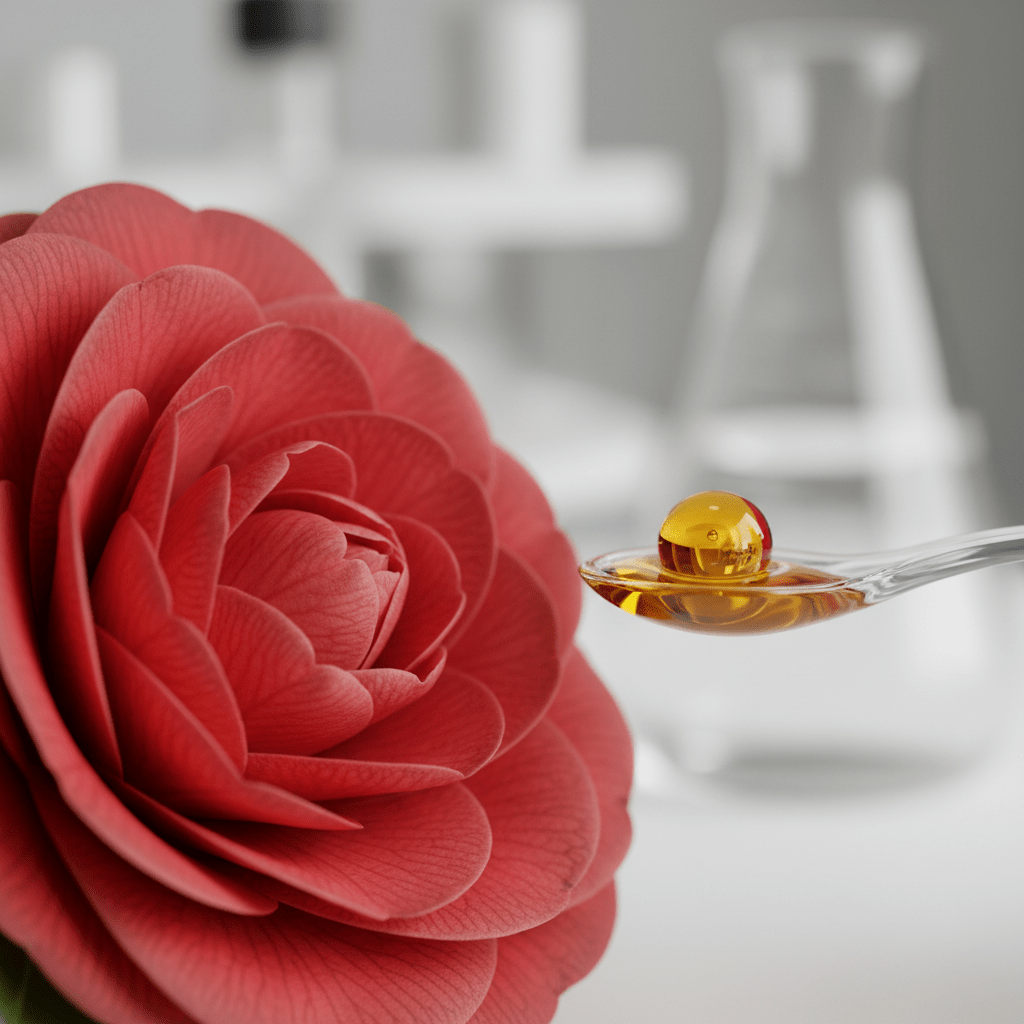
Unlocking an Ancient Elixir: Why Camellia Oil is a Skincare Game-Changer
Picture this. It’s the Edo period in Japan, way back in the 1600s. Geishas are applying heavy, lead-based makeup that should absolutely wreck their skin. But when they wash it off at the end of the day? Their faces are flawless. Glowing. Porcelain-smooth.
Their secret wasn’t some complex chemical formula. It was camellia japonica oil, known locally as Tsubaki.
For over a thousand years, this oil has been the go-to for fixing dry skin, smoothing wrinkles, and giving hair that famous mirror-like shine. It’s basically the original “glass skin” hack.
Fast forward to right now. The beauty aisles are crowded with complicated labels and ingredients we can’t even pronounce. Honestly? It’s overwhelming. That’s why so many of us—and smart beauty brands—are looking backward for answers. We want ingredients that are pure, effective, and actually proven to work.
Camellia oil fits that bill perfectly. It is packed with vitamins and something called oleic acid, which drinks right into your skin without clogging pores. Whether you are a skincare formulator looking for the best camellia oil for skin products or just someone wanting to know how to use camellia oil at home, you are in the right place.
In this guide, we’re going to look at the benefits of camellia oil, compare it to other big names like argan, and see why this ancient flower seed is becoming the biggest trend of 2024.
What Exactly is Camellia Oil? A Look at its Origins and Composition
Let’s clear up a little confusion first. If you flip over a beauty bottle and see “Camellia” on the label, you might think you’re getting the good stuff. But botany is tricky. There isn’t just one type of Camellia plant—there are three main ones, and they do very different jobs.
Here is the quick breakdown so you know exactly what you are looking for:
- Camellia Sinensis: This is the tea plant. The leaves give us green and black tea for drinking. It’s great in a mug, but different when pressed into oil.
- Camellia Oleifera: This is often called Tea Seed Oil. You see this a lot in cooking, especially in China. It is good, but it’s usually heavier.
- Camellia Japonica (Tsubaki): This is the star of the show. It’s the best camellia oil for skin and the specific variety used by those Geishas we talked about.
When we talk about the benefits of camellia oil for your face, we are almost always talking about Camellia Japonica oil.

What makes it so special?
It pretty much comes down to chemistry. This oil mimics your skin’s natural biology better than almost anything else out there.
See, our skin produces its own oil called sebum to stay soft and waterproof. Camellia seed oil for skin is incredibly rich in something called Oleic Acid (Omega-9). In fact, it is usually over 80% Oleic acid. This makes it eerily similar to human sebum.
Because of this similarity, your skin recognizes it instantly. It doesn’t fight it or block it out. It drinks it up.
But it’s not just about fats. This oil is basically a multivitamin for your face. It is naturally loaded with:
- Vitamins A, B, D, and E: Essential for healthy skin repair.
- Squalane: A powerful moisturizer that keeps skin looking plump.
- Polyphenols: These fight off environmental damage from things like pollution.
The “Secret” Weapon: Molecular Weight
Have you ever put oil on your face and felt like a greaseball for the next two hours? That happens because the oil particles are too big to sink in. They just sit on top.
This is where camellia japonica oil wins. It has a very low molecular weight. In plain English? The particles are tiny.
Because they are so small, they can slip past the surface quickly. This is why people call it a “dry oil.” It absorbs almost instantly and leaves your skin feeling velvet-soft, not sticky. Studies confirm that this unique composition allows it to penetrate deeper layers of the skin than many other commercial oils.
So, if you have been scared to use face oils because you don’t want to look shiny, this is likely the solution you’ve been waiting for.
The Science-Backed Benefits of Camellia Oil for Your Skin
Okay, so we know Geishas loved it. And we know it has some fancy vitamins. But let’s be real—sometimes “natural” beauty ingredients are just hype. Is this one actually going to do anything for your face, or is it just expensive salad dressing?
Turns out, science is pretty obsessed with camellia japonica oil, too. And the results are actually exciting.
Here is what happens when you put this stuff on your skin.
It Locks Moisture In (Like, Really Locks It In)
You know that tight, dry feeling your skin gets after washing it? That’s usually because your moisture barrier is compromised. You are losing water faster than you can replace it.
In the science world, they call this “Transepidermal Water Loss” (TEWL). It’s a fancy way of saying your skin is evaporating.
Camellia seed oil for skin is a superstar here because of that high Oleic Acid content we mentioned earlier. It creates a breathable seal over your skin. It doesn’t suffocate your pores, but it stops that water loss in its tracks.
One study actually tested this on 30 volunteers. The result? It significantly reduced water loss without causing any bad reactions. So, it keeps the good stuff in and the dry air out.
It Fights the “Pac-Man” That Eats Your Collagen
This is my favorite part. We all want more collagen. It’s the scaffolding that keeps our skin looking bouncy and not saggy.
But as we get older, our bodies make an enzyme called MMP-1. Think of MMP-1 as a little Pac-Man that goes around eating your collagen. Not cool, right?
Well, research shows that camellia japonica oil basically tells that Pac-Man to stop. It inhibits the activity of MMP-1. But it gets better—it also tells your skin cells (fibroblasts) to start making more collagen.
So you get a double whammy: you stop losing the old collagen, and you start making new collagen. That is a huge win for anyone worried about fine lines.
It Calms Angry, Red Skin
Ever put a product on your face and immediately regret it because your skin turns bright red? That won’t likely happen here.
Because it is so similar to our natural oils, camellia oil is known for being incredibly soothing. It is packed with anti-inflammatory compounds that help calm down irritation.
In fact, in tests involving skin models with dermatitis (a type of skin inflammation), using camellia oil helped reduce the swelling and inflammation. It even helped boost a protein called filaggrin, which is essential for a strong, healthy skin barrier.
This makes it a solid choice if you have sensitive skin that usually freaks out over new products.
A Quick Note on Quality (Because It Matters)
Here is the catch. All these benefits—the collagen boosting, the moisture locking—they depend on the oil being pure.
If you buy a cheap version that has been heated to death or mixed with fillers, you lose those delicate antioxidants. For the DIY creators or business owners out there properly sourcing your ingredients is everything.
It’s why suppliers like Aroma Monk focus heavily on lab-testing their oils. If you are making a product for others, or just for yourself, make sure you are getting the cold-pressed, unrefined stuff. You want those vitamins intact, not cooked out.
So, we know it works. But how does it stack up against the other big bottle on your shelf—Argan oil? Let’s fight it out in the next section.
Camellia Oil vs. The Competition: How It Compares to Argan, Rosehip, and Jojoba Oil
Walk into any beauty store or open Instagram, and you’re bombarded with choices. Argan. Rosehip. Jojoba. Marula.
It’s a lot, right?
You might be standing there wondering, “If I already have Argan oil, do I really need Camellia?” Or maybe you are a formulator trying to decide which oil should be the star ingredient in your new face cream.
Let’s break it down. Because while they are all “natural oils,” they act very differently on your face.
Camellia vs. Argan Oil
Argan oil is the heavy hitter. Literally. It is rich and fantastic for very dry hair or body lotions. But for the face? It can be a bit much.
Argan tends to sit on top of the skin for a while before sinking in. It helps seal moisture, but you might feel it there.
Camellia japonica oil is like the lightweight cousin. Because its molecular weight is so much lower, it absorbs faster. If Argan is a warm winter coat, Camellia is a silk shirt. You get the protection and the glow, but you don’t feel weighed down. It is generally better for texture if you hate feeling greasy.
Camellia vs. Rosehip Oil
Rosehip is famous for a reason. It is packed with Vitamin A (natural retinol) and is great for scarring. It’s considered a “dry oil” because it soaks in fast.
But here is the catch with Rosehip: it is unstable. It goes bad (rancid) pretty quickly if you don’t use it up, and it doesn’t love sunlight.
Camellia oil is much more stable. It’s tough. You can wear it during the day under sunscreen without worrying about it oxidizing on your face. Plus, Camellia wins on the “soothing” front. While Rosehip treats damage, Camellia prevents dryness and irritation in the first place.
Camellia vs. Jojoba Oil
Here is a fun fact: Jojoba isn’t actually an oil. It’s a liquid wax.
That sounds weird, but it’s cool because it closely mimics human sebum (oil). It tricks oily skin into thinking, “Hey, we have enough oil, let’s stop making so much.”
So, Jojoba is great for balancing oil production. But camellia oil for face use is better for hydration. It penetrates deeper to bring moisture down into the skin layers, whereas Jojoba mostly works on the surface barrier.
Here is a quick cheat sheet to help you decide:
| Feature | Camellia Oil | Argan Oil | Rosehip Oil | Jojoba Oil |
|---|---|---|---|---|
| Texture | Very Light / Silky | Heavy / Rich | Medium / Dry | Medium / Waxy |
| Absorption | Very Fast | Slow | Fast | Medium |
| Best For | Glow, Anti-Aging, Sensitive | Dry Skin, Hair Repair | Scars, Acne Marks | Oily Skin Control |
| Scent | Almost None | Nutty | Earthy | Mild |
So, Which One Wins?
Honestly? It depends on your skin goals.
If you are fighting acne scars, grab the Rosehip. If your skin is an oil slick, try Jojoba. But if you want that “glass skin” look—plump, smooth, and glowing without the grease—camellia oil is the undisputed champion.
For the business owners and creators reading this: offering a variety matters. Just make sure you aren’t buying low-grade stuff. Suppliers like Aroma Monk understand that whether you need Argan or Camellia, purity is what keeps customers coming back. When you are buying in bulk, you need to know exactly what is in that drum.
And speaking of skincare trends, even dermatologists are catching on to why these traditional oils are beating out complex chemicals in 2024.
Now that we’ve compared the heavyweights, let’s look at a specific routine that is changing how people wash their faces.
Get a quote from Aroma Monk.
Essential Oil Supplier – Bulk pricing • Samples • Fast response
How to Use Camellia Oil for Face: A Step-by-Step Guide for Every Skin Type
So, you’ve got a bottle of camellia japonica oil. Now what? Do you pour it all over? Use a cotton ball?
It can be a little scary putting oil on your face, especially if you’ve spent years trying to scrub oil off. But don’t worry. Using camellia oil for face care is actually pretty simple, and you don’t need a 10-step routine to get it right.
The golden rule here is straightforward: Less is more.

The “Press and Pat” Technique
Most of us are used to rubbing lotion into our skin. But with oils, you want to change your strategy. Rubbing can pull at your skin, and we definitely don’t want that.
Instead, try the Geisha-inspired method:
- Warm it up: Put 2-3 drops (seriously, that’s all you need) into your palms.
- Activate: Rub your hands together for about 5 seconds until the oil feels warm.
- Press: Gently press your palms against your cheeks, forehead, and chin.
- Pat: Lightly pat your skin until it feels absorbed.
This helps the oil sink in faster and boosts circulation. Plus, it feels like a mini spa moment.
Customized Routines for Your Skin Type
One of the best things about camellia seed oil for skin is that it plays nice with almost everyone. But how you use it depends on what your skin is doing that day.
For Dry or Mature Skin (The “Seal It In” Method)
If your skin feels tight or looks dull, this oil is your best friend. Use it as the very last step in your nighttime routine. Apply your serums and heavy creams first, then pat the oil on top. This creates a seal that traps all that moisture underneath so it doesn’t evaporate while you sleep.
For Oily or Acne-Prone Skin (The Cleansing Method)
It sounds minimal, but adding oil to oily skin actually helps balance it out. Instead of leaving it on, use it to wash your face. It dissolves excess sebum in your pores better than water ever could.
For Combination Skin (The “Cocktail” Method)
If you have an oily T-zone but dry cheeks, try mixing a single drop of camellia oil into your daily moisturizer in your hand before applying. It gives you a hydration boost without being too heavy.
The Double Cleanse: The Secret to deeply Clean Pores
If you wear makeup or sunscreen, you need to know about double cleansing. It’s a game-changer.
Water cleansers (like foams or gels) aren’t great at breaking down waterproof mascara or heavy foundation. But oil eats oil.
Here is the 2-step process:
- Step 1: Massage pure camellia oil onto your dry face for 60 seconds. It will melt away makeup and grime. Studies suggest this method removes oil-based impurities without stripping the skin barrier.
- Step 2: Rinse with warm water, then wash again with your regular foam cleanser.
Your face will feel squeaky clean but soft, never tight.
A Quick DIY Glow Mask
You don’t need to buy expensive masks to get a glow. You can make a hydrating treatment right in your kitchen.
- Mix: 1 tablespoon of raw honey + 3-4 drops of Camellia oil.
- Apply: Spread it on clean skin and let it sit for 15 minutes.
- Rinse: Wash off with warm water.
Honey is a humectant (draws moisture in) and Camellia oil locks it there. It’s simple, cheap, and works.
A Note for Creators and Formulators
If you are mixing up batches of face oils for your own brand, or even just for holiday gifts, the quality of your base oil makes or breaks the product. You can’t mask bad oil with fragrance.
Finding a supplier that provides lab-tested, pure ingredients is key. That’s where suppliers like Aroma Monk come in handy. They focus on pure, verified oils so you aren’t accidentally putting fillers or rancid oils on anyone’s face. When you’re dealing with raw ingredients, purity is the only thing that matters.
Now that you know how to use it, you might be wondering—is there anyone who shouldn’t use it? Let’s look at safety and side effects next.
A Buyer’s Guide: How to Choose the Best Camellia Oil for Your Skin
So, you are ready to try this ancient beauty secret. You hop online, type in “Camellia Oil,” and… wow.
There are a million options.
Some bottles cost five dollars. Others cost fifty. Some are clear, some are yellow. It is enough to make you close the tab and give up. But don’t do that yet.
Here is the thing. Not all oil is created equal. In fact, a lot of the stuff on the shelves is barely better than what you use to fry an egg.
If you want the best camellia oil for skin health—the kind that actually fixes dry patches and gives you that glow—you need to know how to read the label. It’s not hard, but you have to know what to look for.
Here is your cheat sheet for buying the real deal.
1. Check the Latin Name
Remember how we talked about the different types of plants earlier? This is where it matters most.
Flip the bottle over. Ignore the fancy front label. Look at the ingredient list.
- Good: Camellia Japonica Seed Oil (This is the Tsubaki oil Geishas used).
- Okay: Camellia Oleifera (This is tea seed oil. It’s moisturizing, but heavier and better for cooking).
- Bad: Mineral Oil, Fragrance, Parabens (Run away).
If the label just says “Camellia Oil” without specifying, be careful. Brands often swap in the cheaper cooking oil variety because it costs them less. You want the specific anti-aging benefits of Camellia Japonica oil.
2. Look for “Cold-Pressed” (Non-Negotiable)
This is the big one.
There are two ways to get oil out of a seed. You can squeeze it out mechanically (cold-pressing), or you can use harsh chemicals and high heat to extract every last drop (solvent extraction).
Heat is the enemy here.
When oil gets hot during processing, it cooks away the delicate vitamins and antioxidants. You end up with an oil that is technically Camellia, but it’s “dead.” It won’t do much for your skin.
Cold-pressed means the oil was extracted without heat. This keeps all those skin-loving nutrients, like Vitamin E and polyphenols, alive and active. Research shows that this method preserves significantly higher levels of antioxidants compared to other methods source.

3. Color and Scent Matter
If your oil is crystal clear and smells like absolutely nothing, that’s usually a bad sign.
Real, unrefined camellia seed oil for skin should have a pale golden color. It might even have a very faint, nutty scent. This is good. It means it hasn’t been bleached or deodorized.
Think of it like apple juice. The clear stuff is full of sugar and processing. The cloudy stuff? That’s where the actual apples are.
4. The Packaging Test
Light kills oil. If you leave a bottle of oil sitting in the sun, UV rays will break it down and make it go rancid.
High-quality brands know this. That’s why the best camellia oil for skin will always come in a dark glass bottle—usually amber or cobalt blue.
If you see a clear plastic bottle? Skip it. That oil has probably already started to degrade before you even bought it.
A Note for the Makers
Maybe you aren’t just buying a bottle for your bathroom shelf. Maybe you are a skincare formulator looking to add this ingredient to your own product line.
If that’s you, sourcing becomes even more important. You can’t just trust a label; you need proof.
This is where suppliers like Aroma Monk stand out. They focus on providing ingredients that are 100% pure and lab-tested. When you are buying in bulk, you need to see the paperwork (called a COA or Certificate of Analysis) to prove that what you are buying is actually pure Camellia Japonica and not a cheap blend.
Whether you are applying it to your own face or selling it to customers, the rule is the same: purity equals results.
Beyond the Face: Versatile Cosmetic Applications of Camellia Oil
Here is the cool thing about natural ingredients. They don’t stay in one lane.
While we usually talk about camellia oil for face routines, this stuff is actually a total multitasker. You don’t need five different plastic bottles cluttering up your bathroom counter when one glass bottle does it all.
Here is how to use it from head to toe.
The “Tsubaki” Hair Secret
Remember how we talked about Geishas? They didn’t just have nice skin. They were famous for long, glossy black hair.
Their secret was combing camellia japonica oil through their hair using wooden combs. It smoothed out the texture and added a mirror-like shine. Today, you can use it to tame frizz or treat split ends.
- Pre-Shampoo Mask: Massage a generous amount into your scalp and ends 20 minutes before showering.
- Leave-in: Rub a tiny drop between your palms and smooth it over dry ends to kill static.
Unlike coconut oil, which can be a nightmare to wash out, Camellia is light. It won’t leave your hair looking greasy or weighed down source.
Nail and Cuticle Rescue
If you are someone who picks at their cuticles (guilty!), or if winter air makes your hands crack, this oil is a lifesaver.
Because it is packed with Vitamin E and squalane, it repairs the skin around your nails fast. Just massage a drop into your nail beds while watching TV. It strengthens the nail itself, making it less likely to peel or break. It is a simple fix for hands that look tired.
Instant Body Glow
Face oils are popular, but body oils are somewhat underrated. Lotion is fine, but it is mostly water. It evaporates.
For the softest skin of your life, apply camellia seed oil for skin care right after you turn off the shower.
Do not dry off completely. Apply the oil while your skin is still damp. The oil mixes with the water droplets on your skin and creates an emulsion that sinks in deeply. It feels luxurious, almost like a spa treatment, but it takes about 30 seconds.
Plus, for the business owners sourcing ingredients, offering a “multipurpose” oil is a huge selling point right now. Customers love buying one high-quality product that replaces three cheap ones.
So, we know it works. But we should probably address the elephant in the room: is this stuff actually safe for everyone? Let’s wrap things up.
Embrace the Radiance: Is Camellia Oil Your Next Holy Grail Ingredient?
We’ve covered a lot of ground, from Edo-period secrets to the molecular science that makes this oil so special. And honestly? It’s rare to find an ingredient that lives up to hundreds of years of hype.
But camellia japonica oil really does.
It sits in that sweet spot between being gentle enough for sensitive skin and powerful enough to actually change your texture. Whether you are chasing that “glass skin” look or just tired of waking up with a dry face, the benefits of camellia oil are hard to ignore. It locks water in, tells your collagen to get to work, and doesn’t leave you looking like a greaseball.
If you are ready to test it out, just remember that quality is everything. To get results, you need the best camellia oil for skin—which means cold-pressed, unrefined, and strictly Japonica.
Even top dermatologists are now calling it “the ingredient of the hour” because of how well it protects against premature aging.
For the creators and business owners reading this, sourcing matters. Your customers can tell the difference between a cheap filler and the real deal. That is why partners like Aroma Monk are crucial for ensuring you get the certified, pure ingredients that turn a one-time buyer into a loyal fan.
So, here is your homework. Swap your heavy night cream for a few drops of Tsubaki oil tonight. Your skin will probably thank you by morning.
Get a quote from Aroma Monk.
Essential Oil Supplier – Bulk pricing • Samples • Fast response