
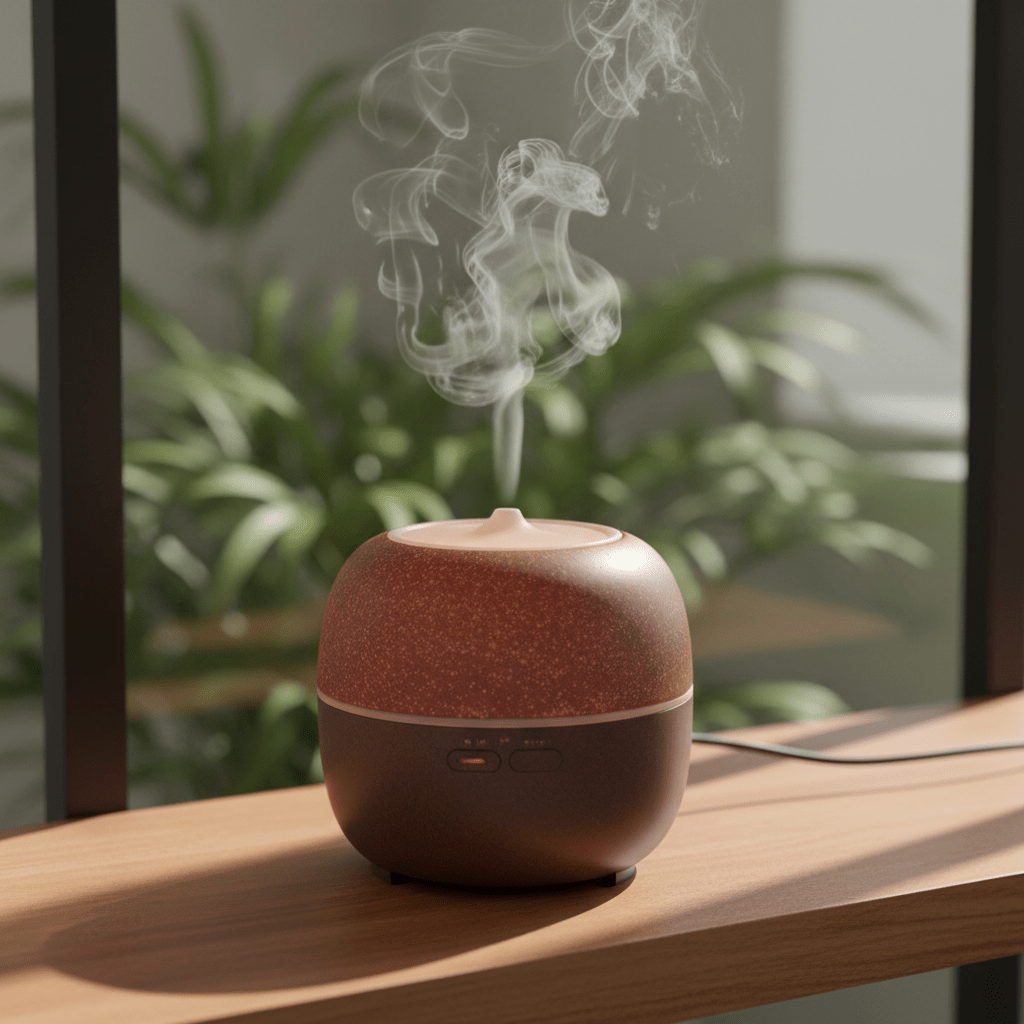
Why Your Mood Matters (And How Your Diffuser Can Help)
Have you ever walked into a spa and instantly felt your shoulders drop? It feels like the stress just melts away.
That isn’t an accident. But let’s be real—most of us don’t have time for a spa day. We are too busy juggling work, kids, and deadlines that were due yesterday.
Things are pretty intense right now. Actually, a recent report found that 91% of working adults in the UK are dealing with high or extreme stress levels. And if you are a parent in the US? You are likely part of the 33% reporting high stress lately.
It’s a lot to handle.
So, how do we fix it without quitting our jobs to live in a cave? One simple tool might be sitting on your shelf right now: essential oils for diffuser blends.
This isn’t magic. It is biology.
When you breathe in an aroma, tiny molecules travel up your nose. They hit a spot called the olfactory bulb. From there, the signal shoots straight to the limbic system in your brain. This comprises the amygdala and hippocampus.
Why does this matter?
Because the limbic system is the boss of your emotions and memories. This connection bypasses the thinking part of your brain, which is why a scent can change your mood instantly.
That is the power of aromatherapy for mood enhancement.
In this guide, we aren’t just guessing. We are going to look at what actually works. We will cover:
- The science behind different scents
- How to use essential oils for stress
- Simple recipes for energy and sleep
- Critical safety tips (because yes, quality matters)
Speaking of quality, using 100% pure, lab-tested oils—like the ones Aroma Monk supplies to wellness brands—is the only way to get these real benefits. If it’s synthetic, your brain won’t react the same way.
Ready to change the vibe in your room? Let’s get started.

The Science of Scent: How Aromatherapy Affects Your Brain and Emotions
You know how the smell of fresh rain might remind you of playing outside as a kid? Or how the scent of pine instantly creates that cozy holiday feeling?
That isn’t just nostalgia. It is your brain hard at work.
Here is the deal. When you turn on your essential oils for diffuser, you aren’t just making the room smell good. You are releasing tiny, invisible molecules into the air.
These little guys float up your nose and hit a spot called the olfactory bulb. Think of this as a direct hotline to your brain.
Most senses—like touch or sight—have to go through a processing center first. They take the scenic route. But scent? It takes a shortcut straight to the limbic system.
I know, “limbic system” sounds fancy. But stick with me.
This is simply the part of your brain that handles memories and emotions. It includes the amygdala and the hippocampus. Because of this direct link, your brain reacts to a smell before you even realize what it is.
This explains why aromatherapy for mood enhancement is so powerful. It doesn’t ask for permission. It just works.
Take lavender, for example.
We all know it is supposed to be relaxing. But science backs this up. Research suggests that lavender can actually lower cortisol, which is the nagging stress hormone that keeps us awake at night.
So when we talk about how to use essential oils for stress, we are talking about changing your brain chemistry. Naturally.
But here is the catch.
To get this biological reaction, the oil has to be the real deal. If you use a fake scent made in a lab (what we call synthetic fragrance), your brain knows the difference. It won’t trigger that same healing response in the limbic system.
That is why brands that care about results—like the partners sourcing bulk oils from Aroma Monk—stick to pure, verified plant extracts. You need the real plant DNA to talk to your biology.
Now that you know the “why,” let’s look at the “how.”
A Beginner’s Map: Navigating Essential Oils by Mood Category
Ever stood in the health aisle staring at fifty identical brown bottles?
Yeah, me too. It’s overwhelming. You just want something to help you relax, but you’re stuck choosing between Ylang Ylang and Eucalyptus.
Here’s the thing. You don’t need to be a chemist to figure this out. We can actually group essential oils for diffuser blends into four simple buckets based on how they make you feel.
Think of this as your cheat sheet.
1. Calming & Relaxing (The “I Can’t Turn My Brain Off” Zone)
This is probably why you bought a diffuser in the first place.
When your mind is racing at 11 PM, you need oils that act like a “stop” sign for your nervous system. These are usually floral or slightly sweet.
- Lavender: The classic. It’s famous for a reason.
- Roman Chamomile: Think of this as a warm cup of tea for your nerves.
- Bergamot: A citrus scent that is surprisingly chill.
Does it work? Absolutely. A study looking at coronary patients found that a blend including Lavender and Roman Chamomile significantly improved sleep quality and lowered anxiety. If it works for them in a high-stress hospital, it can probably handle your Tuesday night.
2. Uplifting & Energizing (The “I Need Five Coffees” Zone)
Hard time waking up? Or maybe you hit that 3 PM wall where a nap sounds better than finishing your report.
Skip the extra caffeine. You need energizing diffuser blends. These scents are usually sharp, zesty, and fast-acting.
- Lemon & Grapefruit: Bright and happy.
- Peppermint: A wake-up call for your nose.
- Wild Orange: mood-boosting and fun.
3. Focusing & Clarifying (The “Where Did I Put My Keys?” Zone)
Brain fog is real.
When you need to get work done, you want essential oils for diffuser recipes that sharpen your mind without making you jittery.
- Rosemary: This is the heavy hitter for focus.
- Basil: deeply clarifying.
- Peppermint: (Yes, it’s here too!)
Funny enough, sniffing Rosemary isn’t just an old wives’ tale. Researchers have found that the aroma of Rosemary boosts brain power, actually improving speed and accuracy on mental tasks.
4. Grounding & Balancing (The “I Feel Scattered” Zone)
Sometimes you aren’t tired, but you aren’t exactly “here” either. You feel flighty or anxious.
This is where you need aromatherapy for mood enhancement that feels heavy and earthy. These oils often come from tree resin or roots.
- Frankincense: Deep and resinous.
- Vetiver: Smoky and rich.
- Cedarwood: Smells like a forest walk.
These oils are often called “base notes.” They stay in the air longer because their molecules are heavier. Experts classify these as grounding because their chemical makeup stabilizes the nervous system, helping you feel planted on the earth.
A Quick Note on Mixing
Here is something cool: oils can multitask.
Take Bergamot. It is a citrus fruit, so it is uplifting. But it also calms the nerves. It is basically the best of both worlds.
But remember, these categories only hold true if the oil is pure. A synthetic lemon scent from a dollar store might smell nice, but it lacks the chemical structure to trigger that focus response in your brain. That is why product makers who source from suppliers like Aroma Monk focus so heavily on lab reports—they need to know the “dna” of the oil is intact so it actually works for you.
Now that you have your map, let’s look at some specific recipes you can mix right now.

Wind Down & De-Stress: The Best Calming Essential Oils for Your Diffuser
We have all been there.
It is 11:30 PM. You are exhausted. But the second your head hits the pillow, your brain decides it is the perfect time to replay that awkward thing you said three years ago.
Relaxing sounds easy, but it is actually hard work for a busy brain.
This is where your essential oils for diffuser blends come in handy. We aren’t just covering up bad smells here. We are using specific plant chemistry to tell your nervous system, “It is okay to let go now.”
Let’s look at the heavy hitters for relaxation.
1. Roman Chamomile: The Liquid Lullaby
You probably know chamomile as a tea. It is that gentle drink you have when you feel sick or tired.
The oil is basically that, but supercharged.
It contains a compound called apigenin. This little molecule binds to receptors in your brain that promote sleepiness. It is distinct because it doesn’t just knock you out; it lowers anxiety first.
Think of it as a warm, heavy blanket for your thoughts. According to sleep experts, the sedative effects found in chamomile preparations may directly help with insomnia, making it a top pick for your bedside table.
2. Bergamot: The Happy Calm
Most calming oils smell like flowers. Bergamot is different.
It is a citrus fruit (it gives Earl Grey tea its flavor). Usually, citrus wakes you up. But Bergamot is unique because it is both uplifting and calming.
If you are feeling stressed and a bit sad, this is your go-to. It helps turn off the stress response without making you feel sluggish.
3. Ylang Ylang: The De-Compressor
This one has a rich, sweet, floral scent.
It is fantastic for slow, deep breathing. If your heart is racing after a frantic email from your boss, Ylang Ylang can help bring your pulse back down to earth.
Why Ingredients Matter
Here is the tricky part.
Since these oils work by interacting with your brain chemistry, purity is everything. A synthetic lavender smell from a gas station won’t lower your cortisol. It just smells purple.
This is why product creators flock to suppliers like Aroma Monk. They need 100% pure, lab-tested oils to ensure their wellness brands actually deliver on their promises. If the chemistry isn’t right, the result isn’t there.
Two Recipes to Try Tonight
Ready to mix? You don’t need to be a scientist. Just add these drops to your water reservoir.
The “Brain Off” Button (For Sleep)
- 3 drops of lavender
- 2 Drops Roman Chamomile
- 1 Drop Vetiver (optional, for grounding)
The “Sunday Afternoon” Vibe (For General Stress)
- 3 Drops Bergamot
- 2 Drops Frankincense
- 2 Drops Orange
A Critical Safety Note (Don’t Skip This!)
Before you turn that machine on, look around the room.
Do you have a cat or dog?
Our furry friends—especially cats—process smells differently than we do. Their livers physically cannot handle certain compounds.
Many popular oils, including Peppermint, Tea Tree, and Ylang Ylang, are significant toxins for pets. In fact, liquid potpourri and certain oils can cause serious poisoning in cats.
Always leave the door open so your pet can leave if the smell bothers them, and double-check your oil list against a vet-approved safety guide.
Now that we are relaxed, let’s talk about the opposite problem—how to wake up.
Boost Your Day: Top Energizing Diffuser Blends for Focus and Positivity
Okay, so you finally got some sleep. That helps.
But now it is 2:00 PM on a Tuesday. You just ate lunch, and your eyelids feel heavy. The coffee pot is empty, and you still have three hours of work left.
We have all hit that wall.
Before you reach for another energy drink, pause for a second. There is a cleaner way to wake up your brain.
Just like some scents act as a lullaby, others act like a bugle call. These energizing diffuser blends trigger the parts of your brain responsible for alertness and memory.
Let’s look at the best oils to keep on your desk.
1. Lemon: The Instant Mood Lift
Think about peeling a fresh orange or cutting into a lemon. What happens? You smile. You almost can’t help it.
Citrus oils are naturally uplifting. Lemon, in particular, is fantastic because it is sharp and clean. It cuts through the mental fog almost instantly.
It isn’t just a nice smell, though. Studies suggest that inhaling lemon oil influences norepinephrine, a brain chemical that affects motivation. It is basically sunshine in a bottle.
2. Peppermint: The Wake-Up Call
If Lemon is a gentle nudge, Peppermint is a splash of cold water.
This oil contains menthol, which stimulates the hippocampus (that memory center we talked about earlier). It is incredible for fighting mental fatigue when you just want to quit.
But a quick heads-up: Peppermint is strong. Really strong.
Experts suggest using high dilution—like 1-3 drops per 100ml—because too much can actually be overwhelming. You want to wake up, not make your eyes water.
3. Rosemary: The “Smart” Oil
This one surprises people. Isn’t rosemary just for potatoes?
Nope. It is actually a powerhouse for your brain.
Rosemary contains a compound called 1,8-cineole. That sounds technical, but here is what it means for you: it helps your brain work faster.
Researchers found that sniffing Rosemary boosts brain power, helping people perform math and memory tasks with better speed and accuracy. If you have a big presentation to prep for, this is the oil you want in the air.
Recipes into Reality
Knowing the oils is one thing. Mixing them is where the fun starts.
Try these recipes the next time you feel that afternoon slump coming on.
The “Morning Motivation” Blend
- 3 Drops Wild Orange (for happiness)
- 3 Drops Peppermint (for energy)
The “Study Session” Focus Blend
- 4 Drops Rosemary (for memory)
- 2 Drops Lemon (for clarity)
- 1 Drop Basil (optional, for extra focus)
A Quick Note on Purity
I probably sound like a broken record, but this part is vital.
If you are trying to trick your brain into being more alert, you need the actual plant chemistry to do it. A synthetic lemon perfume might smell nice, but it won’t interact with your neurotransmitters the same way.
This is why I always tell business owners to verify their sources. Suppliers like Aroma Monk provide bulk oils that are fully lab-tested and pure. Whether you are blending for your own home or creating a product line for others, starting with verified ingredients ensures you get the results you are looking for.
Now that we are awake and focused, let’s look at safety practices to make sure we are doing this right.
Become Your Own Alchemist: How to Create Custom Essential Oil Diffuser Blends
Okay, buying a bottle of Lavender is easy.
But making your own signature scent? That sounds like something you need a chemistry degree for, right?
Actually, no.
Mixing essential oils for diffuser blends is a lot like cooking. Once you know the basic recipe, you can make whatever you want. Plus, making your own blend makes you feel like a wizard, which is a nice bonus.
To start, you just need to understand “notes.”
Perfumers use this word to describe how fast a smell disappears. Imagine a pyramid.
The Pyramid of Scent
Every great blend has three layers. If you skip one, the scent might feel flat or fade too fast.
| Note Type | What It Does | Common Examples |
| Top Note | The “Hello!” It hits you first but fades quickly (1-2 hours). | Grapefruit, Lemon, Peppermint, Bergamot |
| Middle Note | The “Heart.” It balances the blend and lasts longer (2-4 hours). | Lavender, Rosemary, Chamomile, tea Tree |
| Base Note | The “Anchor.” It is heavy and stays all day. | Cedarwood, Frankincense, Vetiver, Patchouli |
It is fascinating how this works. While top notes spark immediate interest, base notes contain heavier molecules that linger, helping to fix the scent so it doesn’t dissipate immediately.
The Golden Ratio: 3-2-1
You don’t need a scale. Just use this simple rule for your diffuser:
- 3 Drops of a Top Note
- 2 Drops of a Middle Note
- 1 Drop of a Base Note
This gives you a perfectly balanced smell that changes over time.

How to Create Your Mix (Step-by-Step)
Ready to try it? Let’s keep it simple.
Step 1: Set Your Intention
Ask yourself: “How do I want to feel right now?”
If you are stressed, grab a calm base like Frankincense. If you are tired, grab a zesty top like Lemon.
Step 2: Pick Your Players
Choose one oil from each category in the table above. Don’t overthink it. If you like how they smell individually, they will likely smell good together.
Step 3: The Drop Test
Before you put them in the machine, take the caps off and hold the bottles together under your nose. Waft the air toward you. Like it? Great. Add the drops to your water water using the 3-2-1 rule.
Be brave with it.
The worst that happens is you make a funky smell and have to dump the water.
But here is the secret sauce: this only works if your ingredients are good. You can’t bake a gourmet cake with bad flour. The same applies here. Large wellness brands usually source from bulk suppliers like Aroma Monk because they need 100% pure oils to ensure the “Top Note” actually smells like a real fruit, not a car air freshener.
When your ingredients are pure, your custom blend doesn’t just smell better—it works better.# Essential Oil Safety: The Golden Rules for Diffusing at Home
Natural doesn’t always mean safe. Bears are natural. Poison ivy is natural. You probably don’t want either in your living room.
Because essential oils for diffuser blends are highly concentrated plant chemicals, you need to treat them with respect.
Here is the thing. A single drop of peppermint oil is roughly equal to 28 cups of peppermint tea. That is potent stuff.
So, how do you enjoy the smells without the risks? Follow these golden rules.
Rule 1: Purity is Non-Negotiable
You are breathing this in. Your lungs don’t have a filter for toxins found in cheap synthetic oils.
Always look for the Latin name on the bottle (like Lavandula angustifolia instead of just “Lavender”). Also, check for dark glass bottles—light kills the oil.
This is why product manufacturers who buy from suppliers like Aroma Monk are so obsessed with lab reports. They use GC/MS testing to prove there are no hidden nasties. If your oil brand can’t prove what is in the bottle, don’t put it in your diffuser.
Rule 2: Watch Out for Furry Friends
This is the big one.
Our pets process chemical compounds differently than we do. Cats, specifically, are missing a liver enzyme needed to break down certain oils.
If you have a cat, be extremely careful. Common oils like Peppermint, Tea Tree, and Ylang Ylang can actually cause serious poisoning in cats.
The Pet Safety Checklist:
- Always leave the door open so they can leave the room.
- Avoid the “Hot” Oils: Tea Tree, Cinnamon, Citrus, and Peppermint are often toxic to cats and dogs.
- Watch for signs: If your pet starts drooling or acting wobbly, turn it off immediately.
Rule 3: Time it Right
More isn’t always better.
If you run your diffuser 24/7, your nose actually stops smelling it. This is called olfactory fatigue.
Plus, constant exposure can stress your nervous system. Experts recommend running your diffuser for 30 to 60 minutes, then turning it off for at least an hour.
For dosage? Stick to 3-5 drops per 100ml of water. It is plenty.
By following these simple steps, you ensure that your “calming” blend doesn’t turn into a stress fest for your body—or your pets.
Transform Your Atmosphere, Transform Your Mood
So, where does this leave you?
We have covered valid science, simple recipes, and the safety rules that keep your fur babies happy.
But here is the main takeaway. Mastering essential oils for diffuser blends isn’t just about making your living room smell like a spa. It is an act of self-care. It puts a powerful tool right in your hands.
As aromatherapy expert Robert Tisserand puts it, this practice seeks to “restore lost balance to mind, body and soul”.
When the world feels heavy, you can literally chang the energy in your home with a few drops of liquid. That is a big deal.
Just remember, nature works best when it is pure. Whether you are a home user or a business sourcing bulk oils from Aroma Monk, sticking to verified, chemical-free ingredients is the only way to get real results.
Ready to try it? Start small. Pick one scent that calls to you. Turn the machine on. Close your eyes.
Breathe it in.
See? You feel better already.