
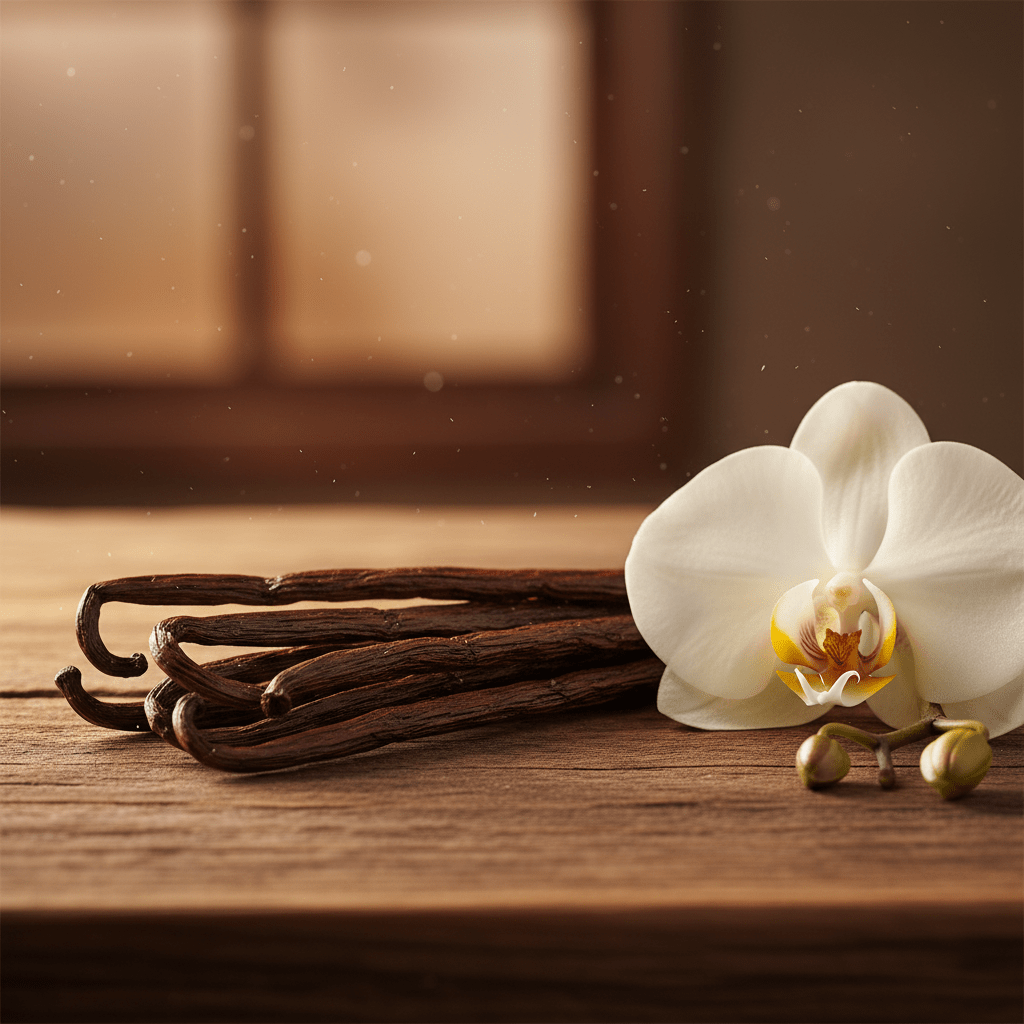
Why Vanilla Never Goes Out of Style: An Introduction to a Fragrance Superpower
You know that feeling when you walk past a bakery? Or when you light a fresh candle after a tough Tuesday? That warm, sweet smell hits you, and suddenly, your shoulders drop. Stress melts a little. That’s the magic of vanilla.
It’s funny because people often use “vanilla” to describe something boring. But in the business of smelling good, it’s actually a superhero. Industry experts even called it the “main character” of 2024, noting that it grabbed over 20% of the market share in its category.
Those aren’t small numbers. We are looking at a market worth $3.61 billion right now, and it’s on track to hit over $5 billion by 2030. Whether you are creating a comforting vanilla candle fragrance or a high-end perfume, this scent pays the bills.
So, why does everyone still love it after all this time? In this guide, we’ll stick our noses into why vanilla fragrance oil keeps selling out and how businesses like yours can use it to create products people actually want to buy. Let’s get into it.
The Psychology and History Behind Our Love for Vanilla
Ever wonder why a simple whiff of vanilla feels like a warm hug? It turns out, that cozy feeling isn’t just in your head—it’s biology.
There is a reason vanilla scented products fly off the shelves when times get tough. Our brains are basically wired to love it. Some experts believe this connection starts extremely early, pointing out that vanilla notes can be detected in breast milk, linking the scent to our earliest feelings of safety and nourishment.
Science backs this up, too. A study found that smelling vanilla actually fosters calmness and happiness, measuring a real drop in stress levels. It triggers the rewards center of your brain, releasing dopamine. So when you light that candle, you aren’t just making the room smell nice—you are hacking your mood.
But vanilla wasn’t always the friendly, affordable scent we know today.

If we rewind about 900 years, vanilla was a rare treasure. The Totonac people in Mexico were the original growers, treating it as a sacred herb. Later, the Aztecs demanded it as a tribute, calling it “tlilxochitl” or “black flower.” They reserved it for royalty, mixing it into a fancy chocolate drink for the elite.
When Spanish explorers arrived, they were hooked. They brought it back to Europe, where it became a luxury item for queens and kings. But there was a catch—for centuries, nobody could grow it outside of Mexico. Why? Because the specific bee needed to pollinate the orchid lived only in that one region in Mexico. It took years to figure out how to hand-pollinate the flowers, finally allowing natural vanilla extract to spread across the globe.
Fast forward to today, and vanilla has become what perfumers call “black gold.” It is incredibly valuable because it can do almost anything.
In the world of scent, vanilla works hard. It acts as a fixative, which is just a fancy way of saying it helps other smells last longer on your skin. You’ll find it anchoring sweet gourmand fragrances (the ones that smell like edible treats) just as often as you find it softening spicy colognes.
Yvan Jacqueline, a big name in the perfume world, notes that its “round, warm, and gentle notes” make it a precious tool for any creator. It’s the ultimate team player—making sharp scents softer and simple scents deeper without stealing the show.
Deconstructing the Scent: Natural Vanilla vs. Synthetic Vanilla Fragrance Oil
Let’s be real for a second. If you have ever looked at the price tag for pure, food-grade vanilla beans, you probably did a double-take. It is expensive.
So when you are trying to source materials for your next candle line or face cream, you have a big decision to make. Do you go with the natural stuff, or do you grab the vanilla fragrance oil that was made in a lab?
It’s not just about price, though money definitely matters here. It’s about what your customer actually wants and what your product needs to do.
The Real Deal: Natural Vanilla Extract
True vanilla comes from the seed pod of an orchid. That’s it. It’s simple, but getting it is incredibly hard work. Farmers have to pollinate every single flower by hand.
Because it depends on the weather and the crop yield, the smell can change slightly from batch to batch. It is deep, complex, and usually has a bit of a boozy or woody edge.
But here is the kicker: It is pricey.
We are talking about a massive price gap. High-quality natural vanilla extract or absolute can run anywhere from $80 to over $200 per ounce depending on the harvest quality. That is a big investment if you are just testing a recipe.
However, people want it. A recent survey showed that 74% of shoppers prefer natural scents over synthetic ones. They are checking labels more than ever, looking for clean ingredients.
The Lab Version: Synthetic Vanillin
On the other side, we have synthetic vanilla.
Most of the vanilla smell in the world—about 99% of it—isn’t from a bean at all. It comes from something called vanillin. Scientists figured out they could make this molecule from other stuff, like wood pulp (lignin) or clove oil (eugenol).
Why use it?
- Consistency: It smells exactly the same every single time. No surprises.
- Cost: It is much cheaper. While natural absolute is hundreds of dollars, synthetic options can be less than $5 per ounce.
- Strength: It often holds up better in high-heat processes, like making candles.
But it can feel a little flat. It usually gives you that sugary, cupcake-frosting smell, but it misses the spicy, floral depth of the real plant.
Which One Should You Choose?
Here is a quick cheat sheet to help you decide what fits your project:
| Feature | Natural Vanilla | Synthetic Fragrance Oil |
|---|---|---|
| Cost | High ($$$) | Low ($) |
| Scent Profile | Rich, woody, spicy, complex | Sweet, sugary, consistent |
| Best Used For | Luxury perfumes, high-end skincare, aromatherapy | Soaps, candles, budget-friendly lines |
| Label Appeal | “100% Natural,” “Clean Label” | “Fragrance,” “Parfum” |
The Middle Ground
There is also a third option gaining traction.
Biotech companies are now making “natural-identical” vanillin using fermentation (kind of like brewing beer) with rice bran. It counts as natural in many places but costs less than the bean.
If your brand is built on wellness or luxury, sourcing authentic natural ingredients is usually the winning move. Customers are smart; they know the difference between a complex botanical scent and a dollar-store candle.
This is where reliable partners matter.
Finding a supplier who offers verifiable, third-party tested materials—like the pure extracts and attars from Aroma Monk—ensures you aren’t guessing about what’s in your bottle. When you are promising your customers “natural,” you need a paper trail that proves it.
Vanilla’s Market Dominance: A Statistical Overview
Okay, we know vanilla smells amazing. But does it actually make money?
The short answer: Yes. A lot of it.
It turns out, vanilla isn’t just a safe bet—it’s a financial powerhouse. If you are running a business, you can’t really afford to ignore it. In 2024, industry experts watched as vanilla grabbed over 20% of the market share in its category. That is a massive slice of the pie for just one scent profile.
Let’s look at the hard numbers.
The global market for vanilla scented products is huge. We are talking about a valuation of $3.61 billion recently. But it’s not stopping there. Data shows it is projected to grow to over $5 billion by 2030. That is a steady climb, not a flash-in-the-pan trend.
Why the jump? It’s mostly thanks to the personal care sector. While food and drinks still use the most vanilla (because, well, ice cream), the demand for vanilla in lotions, perfumes, and cosmetics is growing faster than anything else—projected at a growth rate of over 5% every year.
Here is a quick breakdown of where the money is going:
| Market Segment | Projected Growth | Key Drivers |
|---|---|---|
| Gourmand Fragrances | High | Gen Z loves smelling “edible” (cookies, caramel, vanilla) |
| Personal Care | 5.72% CAGR | Body butters and lotions consumers use daily |
| Home Fragrance | Steady | Candles and diffusers for stress relief |
The Rise of “Edible” Scents
You might have heard the term “gourmand” thrown around. In the fragrance world, this just means scents that smell like food. Think honey, chocolate, and—you guessed it—vanilla.
Gourmand fragrances are exploding right now. In fact, online searches for vanilla perfumes jumped 41% recently. People want to smell delicious. It’s comforting, it’s nostalgic, and it sells.
Social media is fueling this fire, too. On platforms like TikTok, users are obsessing over the best vanilla scents, driving products like Victoria’s Secret’s Bare Vanilla to become top searches. If you are formulating a new line, leaning into these sweet, edible notes is a smart move.
Where Should You Focus?
If you are holding a bottle of vanilla fragrance oil and wondering what to make, the data points to three big winners:
- Candles: Home fragrance is still king. A simple vanilla candle fragrance is often a brand’s best-seller. It’s the scent people buy without smelling it first because they trust it.
- Body Care: Thick body butters and scrubs. Customers love slathering on something that smells rich and warm after a shower.
- Reed Diffusers: These are gaining traction for people who want a constant background scent without the flame.
Following fragrance market trends isn’t about copying everyone else. It’s about knowing what people are already searching for. Right now, they are searching for comfort. And nothing says comfort quite like vanilla.
Get a quote from Aroma Monk.
Essential Oil Supplier – Bulk pricing • Samples • Fast response
The Evolution of Vanilla: 3 Key Trends Shaping Its Future
Think vanilla is just for baking cookies? Think again. The scent we all thought we knew is going through a massive makeover.
For a long time, “vanilla” was shorthand for boring. But lately, it has turned into the cool kid on the block. Perfumers and candle makers are twisting, smoking, and spicing it up to make something totally new.

If you are planning your next product line, you need to know where this trend is heading. It is not staying in the bakery aisle. Here are the three big shifts changing the game right now.
1. The “Vanilla 2.0” Glow Up
Forget the sticky-sweet cupcake smell. The modern customer wants something deeper. We call this “Vanilla 2.0.”
Creators are mixing vanilla with unexpected things like leather, smoke, salt, and heavy spices. It adds a moody, grown-up vibe that people are loving. You can see this shift everywhere.
Even big household names are jumping on it. Febreze recently launched a “Vanilla Suede” scent, mixing smoked vanilla with woody notes to create a vibe that feels more like a fancy hotel than an air freshener.
High-end brands are leading the charge, too. Take Burberry Goddess, which uses a trio of vanilla extracts to get a rich, complex profile rather than a simple sugar rush. If you are making vanilla candle fragrance, consider pairing your vanilla with oud, tobacco, or patchouli. It creates that luxury feel without the luxury price tag.
2. Sourcing That You Can Brag About
Shoppers today are smart. They flip the bottle over. They read the label. They want to know that what they are buying didn’t hurt the planet.
This push for sustainability is huge. Since natural vanilla is so labor-intensive (remember the hand-pollination?), reliable and ethical sourcing is a major selling point. Companies like Symrise are working directly with thousands of farmers in Madagascar to ensure fair pay and better farming practices.
But here is the cool part: science is helping out, too.
There is a rise in “biotech vanillin.” Instead of chopping down forests or using petrochemicals, scientists are using fermentation—kind of like brewing beer—to create vanilla from rice bran. It is a cleaner way to get that scent we love, and it gives brands a great story to tell their eco-friendly customers.
3. Vanilla is for Everyone
The idea that vanilla is just a “girly” scent? That is over.
Gender norms in fragrance are breaking down fast, especially with Gen Z buyers. They don’t care if a bottle says “For Her” or “For Him.” They just buy what smells good. And it turns out, everyone likes smelling like comfort.
We are seeing a boom in unisex and masculine scents that feature vanilla heavily. But it’s usually paired with boozy or earthy notes. Scents like NEST’s Vanilla Bourbon mix the sweetness with a dark, oaky punch that anyone can wear.
So, if you are stuck thinking vanilla only belongs in your floral collection, try moving it to your men’s or unisex line.
This is where having a supplier with a wide range comes in handy. Whether you need a dark, smoky absolute or a sweet, consistent oil, reliable partners like Aroma Monk can help you nail these complex blends without the guesswork.
How to Choose and Use the Right Vanilla Fragrance Oil for Your Brand
So, you’ve decided to add vanilla to your lineup. Easy, right?
Actually, it’s one of the hardest scents to get right.
Type vanilla fragrance oil into any supplier’s search bar, and you’ll get dozens of results. French Vanilla. Vanilla Bean. Smoked Vanilla. Vanilla Santal. It’s overwhelming.
But here’s the thing: picking the wrong one won’t just smell bad—it could ruin your product.
Before you buy a gallon of oil, you need to match the specific profile to your brand identity. Are you making a nostalgic, bakery-themed candle line? Then you want a “Buttercream” or “Birthday Cake” profile rich in gourmand fragrances. These are sweet, heavy, and make people hungry.
But if you are aiming for a high-end luxury lotion, that sugary smell will feel cheap. Instead, look for floral or woody descriptions. Notes like “Vanilla Orchid” or “Tonka Bean” offer that sophisticated, expensive vibe without the sugar crash.
The Technical Stuff (Don’t Skip This)
Smelling good is only half the battle. You have to make sure the oil actually works in your detailed formula.

I’ve seen entire batches of soap ruined because someone didn’t check the vanillin content.
Here is what you need to watch out for:
- The “Vanilla Tan” in Soap: If you make cold-process soap, vanilla is a troublemaker. It naturally turns soap brown over time—from a light tan to a dark chocolate color. It’s unavoidable if the vanillin content is high. You can embrace it (chocolate-colored soap looks great!) or use a stabilizer, but you need to know it’s coming Soap Troubleshooting.
- Flashpoints for Candles: If you are making a vanilla candle fragrance, check the flashpoint. This is the temperature where the scent can combust. It’s usually not a safety issue for the finished candle, but it matters when you are pouring hot wax.
- Skin Safety (IFRA): This is the big one. The International Fragrance Association (IFRA) sets strict limits on how much oil you can put on human skin. Just because an oil is safe for a candle (Category 12) doesn’t mean you can put it in a body butter (Category 5A).
Check out this quick breakdown of typical safety limits versus what you actually need:
| Product | Typical Usage (For Scent) | IFRA Safety Max (Approx.) |
|---|
| Candles | 6–10% | Often 100% (Non-skin) |
| Lotions | 1–2% | Varies severely (check docs) |
| Soap | 3–6% | Usually 5–20% |
It can be confusing to read these charts at first. Here is a helpful video that breaks down exactly how to read IFRA certificates without getting a headache:
Detailed Sourcing: Trust but Verify
So, where do you get the good stuff?
Buying cheap oil from a random website is a gamble. You might get a bottle that smells like plastic or, worse, something that isn’t skin-safe.
You need a paper trail.
Legitimate suppliers will always provide two things: an SDS (Safety Data Sheet) and an IFRA certificate. If a supplier can’t give you these, run.
This is where working with established partners like Aroma Monk makes a difference. Because they specialize in lab-tested purity for both huge manufacturing orders and smaller batches, you aren’t guessing about what’s in the bottle. They provide the documentation you need to stay compliant.
Pro Tip: Never buy bulk first.
Always order a 1oz sample. Test it in your specific wax or lotion base. Does it smell weird when it burns? Does it turn your lotion yellow? Spend ten dollars on a sample now to save a thousand dollars on a wasted drum later.
The Future is Sweet: Embracing Vanilla’s Enduring and Evolving Legacy
Look, we’ve covered a lot of ground. But if there is one thing to take away, it’s this: vanilla isn’t going anywhere.
It might seem basic, but that’s exactly why it works. Whether you are crafting the best vanilla scents for a high-end line or a cozy vanilla candle fragrance, you are tapping into a market that is projected to hit over $5 billion by 2030. That is huge.
But here is the trick—don’t just copy what everyone else is doing.
The real magic happens when you get creative. Try mixing a deep vanilla perfume oil with something weird like smoke or black pepper. Use synthetic vanillin for your candles to keep costs down, but maybe splurge on natural vanilla extract for your face creams.
How to use fragrance oils is an art just as much as it is a science.
The key is sticking to quality. If you use cheap ingredients, your customers will smell it instantly. That’s why partners like Aroma Monk are so important. They help you skip the guessing game by providing pure, lab-tested ingredients that actually do what they are supposed to do.
So, go ahead. Break some rules. Mix that vanilla with something unexpected. Your next bestseller is probably waiting right inside that bottle.
Get a quote from Aroma Monk.
Essential Oil Supplier – Bulk pricing • Samples • Fast response