
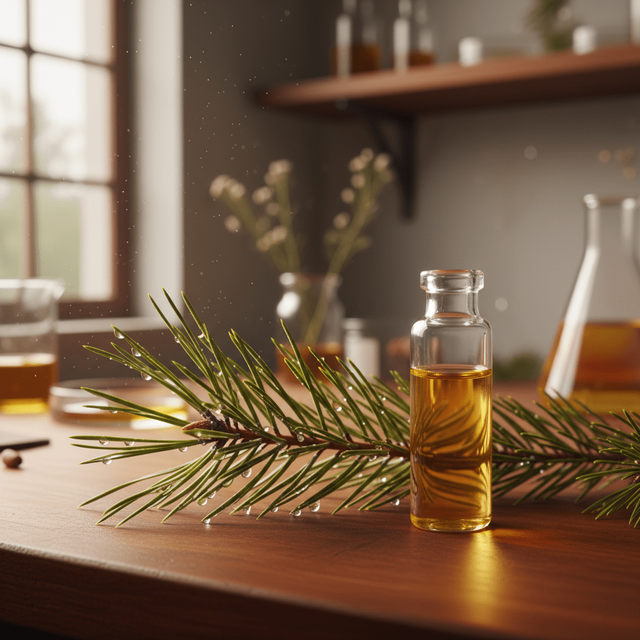
Uncovering the Essence of the Forest: An Introduction to Pine Oil
You know that smell. The one that instantly makes a room feel fresh and clean? It’s like bringing a whole forest indoors. That crisp, woodsy scent is a big reason why the natural household cleaners market is expected to hit over $7 billion by 2025 market report.
But here is the thing. Not all “pine” is the same.
That cleaning product under the sink? It might be industrial-grade solvents or just a synthetic fragrance made in a lab. Real pine essential oil is completely different. It usually comes from trees like Pinus sylvestris and is packed with natural power. It’s confusing, right? You see “pine” on a label, but you don’t always know if you’re getting nature or just chemicals.
So, what is pine oil made of exactly?
In this guide, we are going to look at the science. We will break down the pine oil composition—including compounds like alpha-pinene and terpineol—and see why they matter. We aren’t just talking about a nice smell here. We are looking at the properties of pine oil that drive those famous pine oil benefits, especially when you use pine oil for cleaning or wellness products.
Let’s clear up the confusion and see what this oil can really do.
What Exactly is Pine Oil? Differentiating Key Types
Ever wonder why some pine products smell like a crisp walk through a winter forest, while others smell… well, like a harsh chemical cleaner?
It turns out, there are two totally different things happening here. And mixing them up is a huge mistake—especially if you are making products for people’s skin or homes.
Here is the deal. Not all “pine” comes from the same place.

1. The Real Deal: Pine Essential Oil
This is what nature actually smells like. Pine essential oil is usually steam-distilled directly from the needles, twigs, and buds of the tree. We are mostly talking about Pinus sylvestris (Scotch Pine) or sometimes Pinus mugo (Dwarf Pine).
Because it comes from the fresh green parts of the tree, it is light and fresh. It’s barely yellow, almost clear. This is the stuff that is packed with alpha-pinene. That acts as the main engine for that “hiking in the mountains” vibe.
If you are looking for pine oil benefits related to wellness—like clearing your head or soothing muscles—this is the type you want. At Aroma Monk, we see a lot of demand for these specific Pinus sylvestris extracts because customers can tell the difference instantly. It’s zesty, almost like lime, rather than heavy.
2. The Heavy Lifter: Industrial Pine Oil
Then, you have what the industry just calls “pine oil.”
This is usually a byproduct. It often comes from wood stumps, the paper pulp industry, or is processed from gum turpentine. Instead of fresh needles, it’s made from older, woodier parts or even synthesized source details.
The result? It is thick and gold-colored. It is packed with terpineol and other alcohols. It acts as a powerful solvent. That makes pine oil for cleaning incredibly strong—it cuts through grease like magic. But you wouldn’t want to put this in a diffuser. It smells sharp and heavy, not like fresh air.
So, What Is Pine Oil Made Of?
It depends on where you look:
- Needles & Twigs: Give you pine essential oil (Wellness & Aromatherapy).
- Stumps & Wood: Give you industrial pine oil (Heavy Duty Cleaning).
Knowing the difference protects you from buying a harsh solvent when you really wanted a soothing spa experience. Or vice versa.
Now that we know the sources, let’s look closer at the actual chemical ingredients inside these oils.
The Chemical Composition of Pine Oil: A Molecular Deep Dive
Okay, let’s open up the hood and see what’s actually powering this engine.
You might think pine essential oil is just “liquid tree,” but it’s actually a really specific cocktail of natural chemicals. We call them terpenes. Think of them as the active ingredients that do all the heavy lifting.
Here is the thing. The specific mix of these tiny molecules determines everything—from how the oil smells to how well it kills germs.
When we look at the pine oil composition in a lab (something we do a lot at Aroma Monk), we are usually looking for a few key players.

1. Alpha-Pinene: The Fresh Leader
If Pinus sylvestris (Scotch Pine) were a band, alpha-pinene would be the lead singer.
It typically makes up about 40% to 45% of the total oil. This is the molecule responsible for that sharp, incredibly fresh snap that clears your sinuses instantly. It’s not just a pretty scent, though. It’s known for fighting inflammation and microbes, which is why it’s a favorite in wellness products.
2. Limonene: The Cleaning Powerhouse
Funny enough, pine trees produce the same chemical found in lemon peels.
Limonene adds a subtle citrus note to the woodsy scent. But more importantly? It is a grease-eating machine. This is a big reason why pine oil for cleaning is so legendary. It dissolves sticky messes that water just pushes around.
3. Terpineol: The Industrial Heavyweight
Now, here is where it gets interesting.
Remember how we talked about the difference between natural essential oil and industrial cleaners? The difference is largely about terpineol.
While natural pine oil has a mix of ingredients, industrial versions are often processed to be 50-85% terpineol or other terpene alcohols. It has a heavier smell—some people say it smells like lilacs mixed with pine. It’s a fantastic disinfectant for hospital floors, but it lacks the delicate, airy quality of the natural oil.
A Quick Look at the Recipe
To make it simple, here is a breakdown of what is pine oil made of depending on the type:
| Component | Pine Essential Oil (Natural) | Industrial Pine Oil (Cleaner) |
| :— | :— | :— |
| Primary Ingredient | Alpha-Pinene (Fresh, airy) | Terpineol (Heavy, solvent) |
| Smell | Crisp, dry, balsamic | Sharp, chemically, heavy |
| Best For | Aromatherapy, skin products | Degreasing, floor cleaners |
| Source | Needles and buds | Wood stumps / Turpentine |
Why This Matters for Your Business
I’ve seen plenty of procurement managers get tripped up here.
If you are formulating a new organic face wash or a premium diffuser blend, you need high properties of pine oil specifically from alpha-pinene. If you buy the industrial stuff by mistake? Your product will smell like a mop bucket.
That’s why sourcing matters. At Aroma Monk, we provide lab reports that prove the pine oil composition so you know exactly which molecules you’re putting into your product.
So, we know what’s in it. But how does this actually help you? Let’s look at the specific benefits next.
From Composition to Action: Key Physical and Antimicrobial Properties
So, we know what is inside the bottle. But how does that chemistry set actually work in the real world?
Why does it strip paint? Why does it kill mold? And why does it smell so strong?
It comes down to the physical properties of pine oil. When you act as a buyer or a formulator, understanding these three “superpowers” helps you explain to your customers why this natural ingredient beats synthetic chemicals every time.
1. The Natural Grease-Eater (Solvency)
Ever notice how water just sits on top of a greasy stove, doing absolutely nothing? That’s because water and oil don’t mix.
But pine oil? It is a hydrocarbon.
In simple terms, it is made of the same basic stuff as the grease itself. In chemistry, there is a rule: “like dissolves like.” Because pine oil shares a similar structure to fats, oils, and grime, it doesn’t just push the dirt around. It actually dissolves it.
This is why pine oil for cleaning has been a staple in mechanics’ shops for decades. It cuts through heavy sludge that would ruin a normal sponge. It’s a natural solvent, and it does the job without the harshness of bleach.
2. The Invisible Shield (Antimicrobial Power)
It’s not just about removing visible dirt. It’s about what you can’t see.
This is where the pine oil composition we talked about earlier—specifically alpha-pinene and terpineol—gets to work. These compounds are famous for disrupting the cell walls of bacteria and fungi. Basically, they break the bad guys apart.
Studies back this up too. Research has shown that extracts from Pinus sylvestris (Scots Pine) are surprisingly effective against tough pathogens like Staphylococcus aureus (Staph). It works against fungal issues like Candida as well antimicrobial study.
It is worth noting that while it is tough on gram-positive bacteria (like Staph), it can sometimes struggle with gram-negative ones (like E. coli) unless it is used in higher concentrations. That is a handy fact for your R&D team when they are formulating a balanced disinfectant.
3. The Room Filler (Volatility and Scent)
Finally, let’s talk about that famous smell.
Pine oil is highly “volatile.” That basically means it loves to turn from a liquid into a gas.
This matters for more than just smelling good. Because the terpenes in the oil evaporate so quickly, they carry those antiseptic properties into the air. When you diffuse pine essential oil, you aren’t just making the room smell like a forest. You are potentially reducing airborne nasties, too.
A quick safety note though: Because it is so volatile, it can be flammable. True essential oil has a pretty low flash point (around 36-40°C), while the heavier industrial stuff has a higher flash point (around 76-78°C) safety data. Knowing which one you are handling matters for storage safety in your warehouse.
So, it cleans grease, fights germs, and fills the room instantly. But is it safe for everyone? Let’s check the safety guidelines next.
How Extraction Methods Change Everything
You can have the best pine needles in the world, but if you extract the oil the wrong way, you ruin it.
Think of it like making coffee. If you gently pour hot water over the beans, you get a smooth, rich cup. If you boil those same beans for three hours? You get sludge.
The specific pine oil composition we talked about earlier—that delicate balance of alpha-pinene and limonene—depends entirely on how the oil is pulled out of the tree.
1. Steam Distillation: The Gentle Touch
This is the gold standard for pine essential oil.
Here makes it special. Producers take fresh needles, twigs, and buds—usually from Pinus sylvestris—and pass gentle steam through them. The steam picks up the tiny oil pockets without burning them. As it cools down, the oil floats to the top, and it gets collected.
This method is surprisingly inefficient, which is why real essential oil costs more. The typical yield is tiny—often between 0.1% and 0.6% yield data. That means you need a massive pile of needles just to fill one small bottle.
But the result? It preserves the fragile properties of pine oil that are good for your health. You get that crisp, airy scent we all love.
2. Destructive Distillation & Chemical Synthesis
Now, let’s look at how the heavy-duty cleaners are made.
Industrial pine oil isn’t usually made from fresh green needles. It often comes from old pine stumps or is a byproduct of making paper and gum turpentine.
Sometimes, manufacturers use “destructive distillation.” This involves high heat that breaks down wood into tar and solvents. Other times, they take basic turpentine and chemically react it to create more alcohols, specifically terpineol production details.
Does it smell like pine? Sort of. But it’s much heavier, chemically stable, and aggressive. It’s perfect for scrubbing a factory floor, but you definitely wouldn’t want to put it on your face.
How to Read the Label
This can be tricky for buyers. If you are sourcing oil for a new product, the extraction method tells you the quality before you even open the sample.
- Look for: “Steam Distilled” and “Needles/Twigs”
- Avoid: “chemically synthesized” or vague descriptions like “pine fragrance” if you want natural benefits.
At Aroma Monk, we are pretty obsessed with this part. We supply bulk oils that are steam-distilled because we know our partners—whether they make luxury perfumes or natural therapeutic balms—need that exact chemical profile intact.
So, we have the oil. But is it safe? Let’s talk about safety limits and how to use it without overdoing it.
Applications of Pine Oil: From Household Cleaner to Aromatherapy
We have geeked out on the chemistry long enough. We know about the molecules and the extraction methods. But let’s be honest—you probably just want to know how to use the stuff.
Whether you are a product formulator looking for the next big hit or just someone trying to clean their kitchen without passing out from fumes, pine oil is a workhorse. It bridges the gap between heavy-duty industrial power and a relaxing spa day.
Weird combination, right?
Let’s break down how to use these properties of pine oil safely and effectively.

1. The Ultimate Natural Cleaner
There is a reason your grandparents’ house probably smelled like pine.
Commercial pine cleaning products hit the shelves way back in the 1920s history source. They didn’t just smell strong; they worked. Remember what we said about pine oil for cleaning? It acts as a solvent. That means it doesn’t just wipe grease away; it actually dissolves it.
With the natural household cleaners market expected to hit over $7 billion by 2025 market stats, making your own—or selling a natural version—is a smart move.
Simple DIY All-Purpose Cleaner:
You don’t need a degree in chemistry to make this.
- The Base: 1 cup of water
- The Cutter: 1/2 cup white vinegar (cuts grime)
- The Mixer: 1 teaspoon liquid castile soap (this is crucial—it helps the oil and water mix)
- The Star: 15-20 drops of pine essential oil
Mix it up in a glass spray bottle. Shake it before every use. This gives you a safe dilution (roughly 1%) that kills germs without burning your eyes.
2. Aromatherapy and Mental Clarity
Okay, step away from the mop bucket for a second.
When we talk about pine oil benefits in aromatherapy, we are usually talking about Pinus sylvestris. It’s high in alpha-pinene, which is fantastic for your lungs. If you have a stuffy nose or a cough, diffusing this oil acts as an expectorant—it helps clear out the junk in your chest.
But it also helps your head.
Research suggests that the scent of pine helps reduce anxiety and improve mood. It’s basically “forest bathing” without leaving your desk. One study even found that fir oils (cousins to pine) significantly reduced feelings of fatigue and tension mood study.
At Aroma Monk, we see a lot of wellness brands using this in “Focus” or “Clarity” blends. It wakes you up without the jitters of caffeine.
3. Soothing Sore Muscles
Ever notice how many sports rubs smell like menthol and pine?
Because pine oil composition stimulates blood flow, it is great for massaging into sore muscles or joints. It brings a warming sensation that can help with stiffness.
But here is a major warning.
Pine essential oil is potent. Never, ever put it directly on your skin undiluted. It can cause irritation.
- For Body Oils: Aim for a 1% to 2% dilution. That is about 6 to 12 drops of essential oil for every ounce of carrier oil (like jojoba or almond) safety guide.
- For Baths: Mix the oil with soap or salts first before dropping it in the tub. If you don’t, the oil floats on top and can burn your skin.
So, whether you are scrubbing the floor or trying to relax after a long run, this oil covers a lot of bases. Just make sure you are using the right kind for the job.
A Buyer’s Guide: How to Choose High-Quality, Authentic Pine Oil
So, you are ready to buy. You know the science, you know the benefits, and you are ready to get started.
But here is the tricky part. Because the demand for natural household cleaners is exploding—we are talking about a market hitting over $7 billion soon—there are a lot of imitators out there. If you aren’t careful, you might end up with a bottle of synthetic fragrance that gives you a headache instead of health benefits.
Here is how to spot the real stuff and use it without hurting yourself.
Safety First: Respect the Potency
I can’t stress this enough. Real pine essential oil is strong.
It is not a lotion. If you put it directly on your skin, it will probably burn. I learned this the hard way years ago with a different oil, and trust me, you don’t want that experience.
- Dilute, Dilute, Dilute: For cleaning sprays, a 1% to 3% dilution is usually plenty. For skin, stick to around 1% to 2% mixed with a carrier oil like almond or jojoba.
- The Patch Test: Before you go all in, put a tiny drop of your diluted mix on your arm. Wait 24 hours. If it gets red or itchy? Don’t use it.
- Don’t Drink It: This sounds obvious, but people see “natural” and think “edible.” It’s not. Keep it away from kids and pets.
The “Real Deal” Checklist
When you are looking at a label (or a supplier’s spec sheet), do not settle for generic terms.
If the bottle just says “Pine Oil” or “Pine Scent,” put it back. That is likely the industrial stuff we talked about earlier. You want to see these specific details:
- Botanical Name: Look for Pinus sylvestris. This is the gold standard for aromatherapy. Sometimes you might see Pinus mugo, which is also good. But if the Latin name isn’t there? It’s a red flag.
- Extraction Method: It should say “Steam Distilled.” If it mentions “destructive distillation” or chemicals, it’s for floors, not faces.
- The Lab Report: This is the big one. Reputable suppliers (like us at Aroma Monk) will have a GC/MS report available. It’s basically a report card that proves the oil actually contains alpha-pinene and isn’t just turpentine in a fancy bottle.
proper Storage Matters
Pine oil has one weakness: Air.
If you leave the cap off, the oxygen reacts with the oil. This is called oxidation. When pine oil oxidizes, it doesn’t just lose its smell—it actually becomes more likely to irritate your skin.
Keep your oil in a dark glass bottle (amber or cobalt blue). Keep it cool. And keep the lid tight. If you store it right, that fresh forest scent will last for ages.
Buying the right oil feels like a bit of a treasure hunt at first. But once you know what to look for, you will never be fooled by the fake stuff again.
Pine Oil: Nature’s Potent and Versatile Essence
So, we have covered a lot.
We went from the molecular dance of alpha-pinene to the heavy lifting of industrial solvents. And it really boils down to one thing: pine oil composition isn’t just science trivia. It is the roadmap that tells you exactly what a bottle can do.
Remember the golden rule. If you want wellness, mental clarity, and that fresh “hiking trip” scent, you need pine essential oil from Pinus sylvestris. But if you need to dissolve grease on a shop floor? That high-terpineol industrial oil is your best friend.
Mixing them up? That is the mistake most people make.
With the natural cleaning market expected to hit over $7 billion soon market outlook, distinct knowledge like this puts you ahead of the curve. You aren’t just guessing anymore.
Whether you represent a brand formulating a new product line or just want a safer home, you now have the tools to choose wisely. Check the lab reports—something we strictly verify at Aroma Monk—and put nature’s most versatile engine to work.