
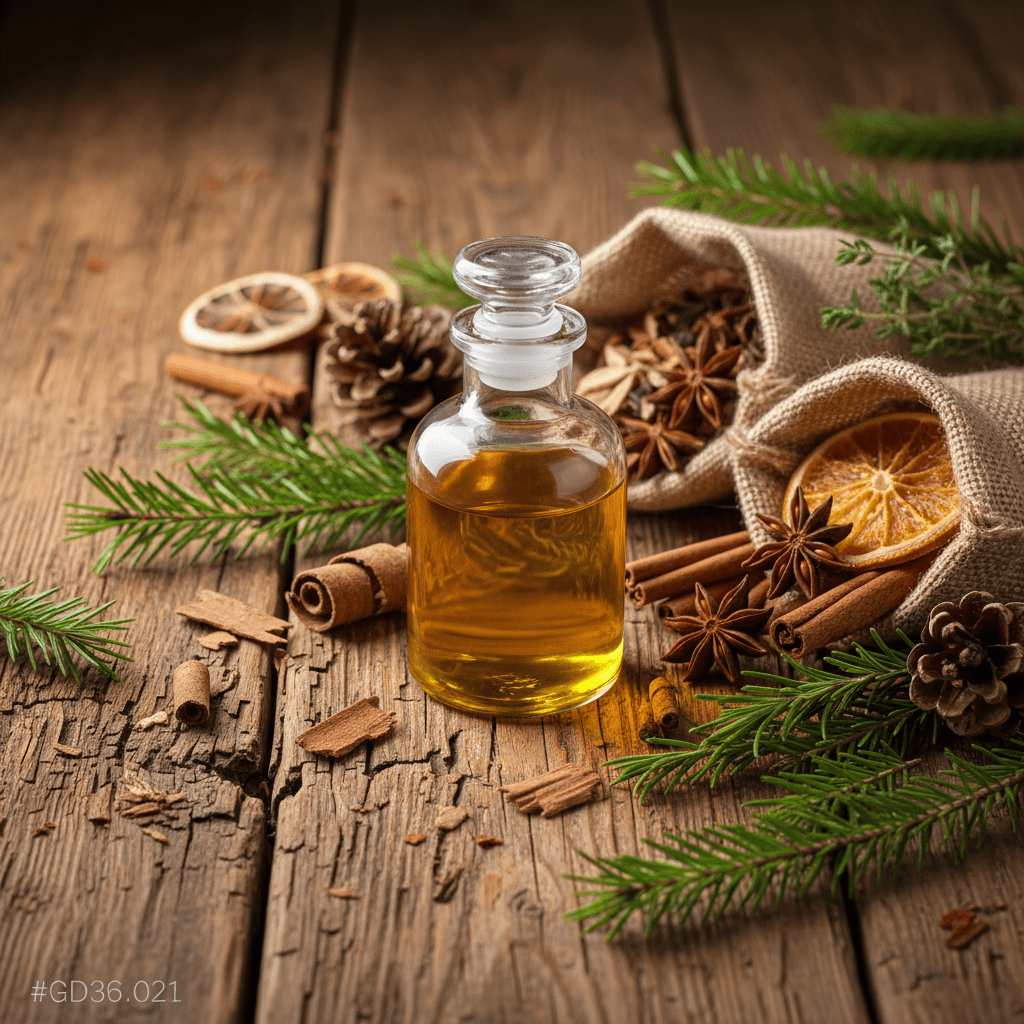
The Search for an Effective, Natural Pest Control Solution
You know that sinking feeling? You walk out to your garden, coffee in hand, ready to check on your tomatoes or roses. But instead of healthy green leaves, you see holes. Or worse, a swarm of tiny bugs taking over.
It’s frustrating. And if you are trying to keep things natural, it’s even harder.
You aren’t the only one looking for a better way. In fact, about 70% of shoppers in Europe and nearly half in North America are now prioritizing organic options to avoid harsh chemicals. We all want safe food and beautiful plants, but finding a natural pest control method that actually works is a constant battle.
Even professional organic farmers struggle with this. They fight tough pests like cucumber beetles and aphids every single season.
But here is some good news. There is a powerful option that often gets overlooked: pine oil.
Most of us think of pine oil as just a floor cleaner with a strong smell. But pine oil for plants is gaining attention as a serious biopesticide. derived from renewable pine trees, it packs a punch against soft-bodied insects.
In this guide, we are going to break it all down. we will look at what pine oil actually is, the science behind how it works, and how it compares to other options like neem oil. Let’s figure out if this is the missing piece for your garden toolkit.
What Exactly is Pine Oil 80? Unpacking the Composition

Before we go any further, I have to stop you from making a classic mistake. I’ve seen enthusiastic gardeners run to the cleaning aisle, grab a bottle of pine-scented floor cleaner, and spray it on their prize-winning roses.
Please, don’t do that.
That bottle under your sink relates to pine oil for plants about as much as grape soda relates to fine wine. They aren’t the same thing.
So, what are we actually looking for? In the world of natural pest control, we are talking about a specific grade known as Pine Oil 80.
Where It Comes From
Real pesticidal pine oil isn’t made in a lab. It comes from the steam distillation of pine wood, stumps, and needles—mostly from Pinus trees. It is a natural extraction process that pulls out the heavy, potent oils from the wood.
What the “80” Means
Here is the technical part, but I promise to keep it simple. The “80” typically stands for 80% terpene alcohols.
Think of terpene alcohols as the “muscle” of the oil. The main one is called alpha-terpineol. This is the active compound that does the heavy lifting against bugs. If you get a product with low terpene content, it’s just not going to have that same punch as a terpene alcohol pesticide.
The Three Types of “Pine Oil”
It gets confusing because the same name is used for three very different things. Let’s clear this up so you buy the right stuff:
- Pine Essential Oil: This is what companies like Aroma Monk specialize in. It represents the pure, therapeutic stuff you put in a diffuser to make your house smell like a forest. It is amazing for wellness, but it has a different chemical profile than the heavy-duty agricultural grade.
- Pine Cleaners (like Pine-Sol): This is mostly water, soap, and harsh detergents. Sometimes they add a splash of pine oil for the scent, but the other chemicals in the bottle can burn your plant’s leaves in minutes.
- Pine Oil 80: This is the industrial or agricultural grade. It is thick, strong, and rich in those bug-fighting alcohols we talked about.
When you are looking for an organic insecticide or fungicide, purity matters. You want the power of the pine tree, not the fillers.
The Science: How Pine Oil Works as a Natural Pesticide and Fungicide
Ever wonder how a pine tree sits in the woods for a hundred years without getting eaten alive by bugs?
It doesn’t have hands to swat them away. It can’t run. Instead, it uses chemical warfare. The sticky sap and strong smell aren’t just there to smell nice—they are a complex defense system designed to keep invaders out.
When we use pine oil for plants, we are basically borrowing that tree’s natural armor for our own garden. But how does it actually kill the bugs? It’s not poisoning them like a typical chemical spray would. It’s physical.
Melting the Armor
Most of the pests that drive us crazy—like aphids, whiteflies, and mites—are what we call “soft-bodied” insects. But even soft bugs have a protective layer. It is a waxy coating on their skin called the epicuticle.
Think of this wax like a raincoat. It keeps the bug’s moisture inside so they don’t dry out in the sun.
Here is where the pine oil 80 comes in. The active ingredients, those terpene alcohol pesticides we mentioned, act like a powerful solvent. When you spray it on an aphid, the oil dissolves that waxy raincoat almost instantly.
Once that shield is broken, the insect can’t hold water anymore. The scientific word for this is desiccation, but basically, they melt and dry out. It’s fast, and because it’s a physical attack rather than a chemical poison, it’s much harder for bugs to build up a resistance to it.
What About Fungus?
It’s not just bugs. If you have ever fought powdery mildew on your squash leaves, you know how annoying fungal spores can be.
While specific studies on pine oil for garden mildew are harder to find than insect studies, the science tells us that pine oil is a strong antimicrobial. Just like it breaks down the bug’s wax, the oil works to disrupt the cell walls of fungi.
It breaks the barrier, stopping the fungus from growing and spreading. This makes it a versatile tool for natural pest control, potentially hitting two problems with one spray.
The Secret Superpower: It Helps Water Spread
There is one more thing pine oil does that most people miss.
Have you ever sprayed water on a cabbage leaf or a rose petal? It beads up, right? It rolls right off. That is because leaves have a waxy coating too. If your organic insecticide rolls off the leaf, it can’t protect the plant.

Pine oil acts as a “surfactant” or a wetting agent.
It lowers the surface tension of the water. instead of beading up, the spray spreads out flat, covering the whole leaf surface. So even if you aren’t using pine oil as the main killer, adding a little bit to your tank helps other treatments cover more ground and stick better.
It’s nature’s way of making sure the defense system actually works.
Get a quote from Aroma Monk.
Essential Oil Supplier – Bulk pricing • Samples • Fast response
Practical Applications: Using Pine Oil in Your Garden, Farm, or Greenhouse
Alright, we know the science. We know it melts the waxy armor of bugs. But how do you actually use this stuff without hurting your plants?
If you are ready to add pine oil for plants to your routine, we need to get specific. This isn’t like watering your flowers; it is a tactical operation.
The Hit List: What It Works On
Remember, this is a contact sport. You have to actually hit the bug with the spray for it to work. Generally, pine oil uses in agriculture focus on the soft, squishy pests that are hard to get rid of.
It is great for:
- Aphids (Those tiny green or black specks under leaves)
- Spider Mites (If you see tiny webs, you have trouble)
- Whiteflies (The white cloud that flies up when you shake a plant)
- Thrips and Mealybugs
Interestingly, big-time organic farmers often struggle the most with pests like aphids and beetle larvae. Since we can’t always just buy a drum of heavy chemicals, using a targeted oil spray gives us a fighting chance.
How to Mix It (Without Burning Everything)
Here is the tricky part. Because pine oil 80 is so strong, a little bit goes a long way. If you use too much, you will burn your leaves.
The Golden Rule: Always read the label on your specific bottle. But generally, for a homemade mix, you are looking for a very weak dilution.
- Standard Foliar Spray: Mix about 1 to 2 tablespoons of agricultural pine oil concentrate per gallon of water.
- As a “Sticker” (Surfactant): If you are just adding it to help another product stick, use even less—maybe 1 teaspoon per gallon.
Also, keep an eye out for labels that say “Minimum Risk Pesticide” or mention “25(b) exemption.” These products use ingredients like terpene alcohols that the EPA considers safe enough that they don’t need the same heavy regulation as toxic poisons.
The “One Leaf” Test
I cannot stress this enough. Do not—I repeat, do not—spray your whole garden the first time you try this.
Plants are like people. Some have sensitive skin. A thick cabbage leaf might be fine, but a delicate tomato leaf might curl up and die.
Do the spot test:
- Mix a small batch.
- Spray just one leaf on the plant you want to treat.
- Wait 24 hours.
If you come back the next day and that leaf looks happy and green, you are good to go. If it has brown spots or looks crispy? You need to add more water to your mix.
Timing is Everything
Imagine putting on baby oil and lying in the hot sun at noon. You’d get a sunburn instantly.
Plants are the same. Never spray pine oil (or any oil, really) when the sun is blazing high. The oil acts like a magnifying glass. It heats up and fries the plant tissue.
Best times to spray:
- Early Morning: Before the dew has fully dried.
- Late Evening: As the sun is going down.
This gives the oil time to work on the bugs without battling the heat. It also lowers the risk to bees, since they usually head home in the evening.

A Note on Quality
It is kind of like shopping for yourself. When you want something for your own body—like pure rose water or therapeutic essential oils—you go to a dedicated specialist like Aroma Monk because you need that certified purity for wellness. You wouldn’t use a floor cleaner on your face.
The same logic applies to your garden. Don’t grab a random bottle of cleaner. Look for products meant for horticulture. Your plants will thank you.
Pine Oil vs. Other Natural Pesticides: A Head-to-Head Comparison
If you have ever stood in the garden aisle staring at fifty different bottles, you know the struggle. Each one claims to be the best.
It is confusing. And expensive.
Most people just grab the first bottle they see with a leaf on it. But if you want to save your plants (and your wallet), you need to know the difference. Let’s look at how pine oil stacks up against the two heavyweights: Neem oil and insecticidal soap.
Round 1: Pine Oil vs. Neem Oil
Neem oil is like the celebrity of organic gardening. Everyone knows it. It comes from the neem tree and contains a compound called azadirachtin.
Here is the main difference:
- Neem Oil: It acts slowly. It messes with the bug’s hormones so they stop eating or laying eggs. It works, but it takes days. Plus, it is often the most expensive option, costing between $30 and $80 for a gallon of concentrate.
- Pine Oil: It is a contact killer. It doesn’t wait around. It dissolves the bug’s armor immediately.
Also, neem is heavy. It has a high risk of burning your plants if you use it when it’s hot out—we call this phytotoxicity. Pine oil carries risks too, but because it evaporates faster, it can be a bit more forgiving if you time it right.
Round 2: Pine Oil vs. Insecticidal Soap
Insecticidal soap is the budget-friendly choice. It’s usually basic potassium salts of fatty acids.
- The Good: It is cheap. You can often make gallons of spray for under $5. It works great on easy targets like aphids.
- The Bad: It has to touch the bug wet. Once it dries, it does nothing. It has zero lasting power.
Pine oil hits harder. While soap just washes away the outer layer, the terpenes in pine oil penetrate deeper. Plus, remember that surfactant bonus? Pine oil helps spread itself out, whereas soap sometimes just drips off waxy leaves like cabbage.
Where Pine Oil Fits in Your Plan
You don’t have to pick just one. Actually, the best gardeners use a mix.
This is called Integrated Pest Management (IPM). Think of it like a toolbox.
- Use Pine Oil when you see a big outbreak and need to knock it down today.
- Use Neem Oil early in the season to stop bugs from settling in.
- Use Insecticidal Soap for small spot treatments on sensitive plants.
It is about using the right tool for the job. Just like you wouldn’t use a hammer to tighten a screw, don’t use a slow-acting preventative when your roses are being eaten alive right now.
Safety, Sustainability, and Regulatory Considerations
We need to have a serious talk for a minute.
There is a dangerous myth in gardening that “natural” means “harmless.” Please, do not fall for that. Arsenic is natural. Poison ivy is natural. Neither belongs on your skin or in your eyes.
Protect Yourself First
Remember what we said earlier? Pine oil 80 works by melting through protective layers. Your eyes and skin have protective layers too.
If this oil splashes on you, it is going to sting. Badly.
When you are mixing up a batch, especially the concentrated stuff, treat it like the strong tool it is.
- Wear Gloves: Nitrile or rubber gloves are best.
- Protect Your Eyes: Safety glasses are non-negotiable here.
- Cover Up: Long sleeves keep the mist off your skin.
It takes thirty seconds to put this gear on. Trust me, it beats spending your afternoon rinsing your eyes out at the sink.
Save the Bees
We all want to kill the pests, but we love our pollinators. This is where it gets tricky.
The active ingredient in pine oil, alpha-terpineol, is powerful. In lab tests, it has shown moderate toxicity to bees when they are hit directly with it.
Does this mean you can’t use it? No. It means you have to be smart about when you use it.
The Rule of Dusk:
Bees go home when the sun goes down. If you spray in the late evening, the oil has time to dry and do its work on the pests overnight. By the time the bees wake up for breakfast, the danger zone has passed. Never spray flowers that are actively blooming while bees are buzzing around them.
The Legal Stuff (It’s Actually Good News)
If you are growing for a market or running a small farm, paperwork is usually a nightmare.
But here is a win. Because pine oil is derived from wood waste and breaks down cleanly, the EPA often classifies it as a “Minimum Risk Pesticide.” You might see this referred to as a 25(b) exemption.
Basically, the government agrees that this stuff is safe enough that it doesn’t need the same heavy restrictions as toxic synthetic chemicals.
Plus, many pine oil products are OMRI Listed. That’s the gold standard for organic growing. It means you can use it on your crops and still keep your organic certification intact.
It is sustainable, renewable, and effective. You just have to handle it with respect.
Integrating Pine Oil into Your Sustainable Agriculture Toolkit
So, where does this leave us?
We know that pine oil for plants is more than just a sticky sap from the forest. It is a legitimate, powerful tool that melts bug armor and helps your other sprays stick better. Whether you are running a small backyard plot or a bigger operation, having a natural pest control option that works on contact is a pretty big deal.
And you aren’t alone in this shift. The demand for safe, clean food is exploding right now. In fact, the global organic food market is expected to reach over $480 billion by 2030 Allied Market Research. People want food grown without harsh poisons. By adding pine oil to your rotation, you are building a garden that fits that future.
Ready to give it a try? Don’t overcomplicate it. Here is your simple cheat sheet for how to use pine oil for pest management:
- Identify Your Pest: Make sure you are targeting soft-bodied bugs like aphids or mites.
- Get the Right Stuff: Look for “Pine Oil 80” or a horticultural surfactant. (Remember, keep your therapeutic essential oils for the diffuser, not the tomato plants!)
- Do the Spot Test: Spray exactly one leaf. Wait 24 hours. If it looks happy, you are safe to proceed.
- Spray at Dusk: Save the bees—and your leaves—by avoiding the hot midday sun.
Gardening is always a bit of an experiment. But with tools like pine oil, you have a natural way to fight back that actually works. Good luck out there.
Get a quote from Aroma Monk.
Essential Oil Supplier – Bulk pricing • Samples • Fast response