
Choosing the Right Pine Oil: Why Grade Matters for Your Cleaner’s Performance
You know that feeling when you crack open a bottle of cleaner and that crisp, woodsy scent just hits you? It’s classic.
But if you’re the one making the product, getting that scent—and the scrubbing power to match—is harder than it looks. I remember looking at a supplier list for the first time and feeling totally lost. You see Pine Oil 80, Pine Oil 60, maybe even 50.
It’s just a number, right?
Actually, no. Here’s the deal. Picking the wrong grade isn’t just about the label. It changes everything inside the bottle. Your pine oil cleaner might separate and get sludgy. Or worse, it won’t cut through grease the way you promised. That’s a nightmare for your brand, especially if you deal with picky industrial clients.
Most pros stick to Pine Oil 80 as the gold standard. It’s got high terpene alcohol content, which is basically the muscle that lifts dirt. Lower grades often have more fillers and hydrocarbons. This messes with pine oil solvency—how well it dissolves grime.
And let’s be real, the stakes are high. People want natural cleaning ingredients that actually work. In fact, the market for natural household cleaners is exploding and is expected to reach over $7 billion in the next year or so.
So, if you are formulating with pine oil, you need consistent results. But is the price bump for grade 80 worth it? Or can you get away with 60?
Let’s figure this out together. We’re going to break down 7 key differences so you can pick the perfect oil for your next batch.
1. Terpene Alcohol Content: The Engine of Your Cleaning Power
Think of terpene alcohol content as the horsepower in your car engine. That number on the bottle—whether it’s 80, 60, or 50—isn’t just a marketing label. It tells you exactly how much cleaning “muscle” is inside.
Here’s how it works.
In Pine Oil 80, roughly 80% of the liquid is made up of these powerful alcohols. The heavy hitter here is something called alpha-terpineol. This is the specific component that does the heavy lifting.
Now, compare that to a lower grade. In Pine Oil 60, the total alcohol content drops to about 60%. But here is the tricky part—the amount of that powerful alpha-terpineol drops even more sharply, sometimes sitting around 38.9% in typical grade 60 formulations.
So, what’s taking up the rest of the space in the bottle?
It’s mostly terpene hydrocarbons. While they sound fancy, for cleaning purposes, they act a lot like fillers. They don’t have the same solvency power.
When you are making an industrial pine oil cleaner, this difference is huge. High alcohol content does two main jobs:
- It dissolves grease: The alcohols cut through sticky grime that water just bounces off of.
- It fights germs: While you have to follow strict rules to call something a disinfectant, alpha-terpineol is the ingredient known for being tough on bacteria like Staph and E. coli.
Basically, if you use a lower grade, you’re getting less of the active ingredient that actually cleans. It’s like trying to make strong coffee using twice as much water—it just won’t have the same kick.
2. Solvency & Degreasing: Dissolving Tough Grime
Ever tried to wipe up a grease spill, only to just smear it around? That is so frustrating.
It happens because the cleaner lacks pine oil solvency.
I know “solvency” sounds like a boring chemistry word. But in our world, it’s everything. It is simply the ability of a liquid to dissolve a solid—or in this case, that sticky, stubborn gunk on a garage floor.
Here is where Pine Oil 80 really shines compared to the lower grades.
Remember those terpene alcohols we talked about? They aren’t just for disinfecting. They are aggressive solvents. When you have a high concentration of them, like in Pine Oil 80, the oil acts like a liquid knife. It cuts right through heavy oils and fats.
Lower grades? Not so much.
Because they are packed with more inert fillers or water, they might smell nice, but they don’t have the chemical strength to break down heavy soils. You end up scrubbing harder to get the same result.
Actually, the solvency power of high-quality terpene solvents is often compared to industrial chemicals like chlorinated solvents—but without the same harsh profile source.
If you are formulating an industrial pine oil cleaner, this extra power is non-negotiable for things like:
- Heavy-Duty Floor Cleaners: For warehouses with tire marks and oil drips.
- Industrial Degreasers: Where machinery gets coated in thick lubricants.
- Parts Washing Fluids: When mechanics need to clean engine components fast.
Think of it. If your customer is a mechanic, they don’t care about the price per gallon as much as they care about the time per job. If Pine Oil 80 cleans a part in two minutes, and a lower grade takes five… well, the math is easy.
Nobody likes scrubbing the same spot three times.
So, while grade 60 might look cheaper on paper, the lack of solvency can actually cost you customers who need serious power.

3. Disinfectant Efficacy: The Power of Antimicrobial Action
There is a big difference between looking clean and actually being clean.
You can scrub a locker room floor until it sparkles. But if the germs are still throwing a party down there, you haven’t really done the job.
This is where Pine Oil 80 pulls ahead of the pack again.
Remember that alpha-terpineol we talked about earlier? It turns out it doubles as a germ assassin. Studies show that this component is effective against some pretty nasty characters, including Staphylococcus aureus (Staph) and E. coli scientific data shows strong inhibition rates.
But here is the catch.
To kill those bugs, you need a specific concentration of the active ingredient.
If you are using a cheaper grade like Pine Oil 60, you have significantly less alpha-terpineol to work with. To get the same germ-killing power, you would need to dump way more oil into your formula.
Actually, some data suggests you need a concentration of around 30% for strong effects against certain pathogens source.
Try fitting that much oil into a budget cleaner without ruining your margins. It’s tough.
Also, we need to talk about the legal stuff.
In the US, you can’t just splash the word “Disinfectant” on a label because it smells like a forest. You have to prove it works and get registered with the EPA.
When you start with Pine Oil 80, you are starting with a known, potent quantity. It makes hitting those efficacy targets much easier.
With lower grades? You are rolling the dice with more fillers and less active power.
So, saving fifty cents on the raw material might cost you a fortune in failed lab tests later.
4. Fragrance Profile & Deodorizing Ability
You know how some cleaners smell like a fresh walk in the woods, while others smell like… well, a gas station?
That difference isn’t an accident. It all comes down to the grade of oil you are using.
When you use Pine Oil 80, you get that crisp, sharp pine scent everyone loves. Believe it or not, the main ingredient, alpha-terpineol, actually has a scent profile that leans towards lilac. It’s pleasant and signals “clean” to anyone walking into the room source.
But lower grades? That’s a different story.
Because they are packed with extra terpene hydrocarbons (the filler stuff we talked about earlier), they often carry a harsh, turpentine-like odor. It can smell chemical-heavy or even oily.
If you are making an industrial pine oil cleaner for a school or an office, that harsh smell can be a dealbreaker. People might think the air is toxic rather than clean.
And here is the cool part about the science.
High-grade pine oil doesn’t just cover up bad smells. It fights them.
Because of its chemical makeup, Pine Oil 80 acts as a true deodorizer. It attacks the bacteria causing the odor—like in garbage bins or bathrooms—neutralizing the funk at the source. Lower grades with less active alcohol just try to shout louder than the bad smell with a heavy perfume.
Think of it this way: Grade 80 is like opening a window. Grade 60 is like spraying cheap cologne in a locker room.
If you want your product to be known for natural cleaning ingredients that leave a space feeling fresh, you can’t skimp here. The nose knows the difference.
5. Formulation Stability & Emulsification
You know what a formulator’s worst nightmare is?
It’s not running out of inventory. It’s walking past a store shelf and seeing your product separated.
There is nothing worse than a bottle of cleaner that looks like salad dressing gone wrong—with a weird, oily sludge floating at the top. In the lab, we call this “creaming” or phase separation.
And if you are formulating with pine oil, this is the battle you fight every day.
See, pine oil and water hate each other. They really do not want to mix. To force them together, you need emulsifiers—chemical matchmakers that hold everything in place.
But here is where the grade of oil makes or breaks your product.
Pine Oil 80 is consistent. It is clean. Because it has high purity, it behaves the same way every time you mix a batch. You know exactly what you’re working with.
Lower grades? That’s a total gamble.
Since they are packed with random hydrocarbons and impurities, they fight your surfactant system. I’ve seen it happen. You think you have the formula perfect. Then you switch to a cheaper Grade 60, and suddenly the emulsion breaks.
Now you have to scramble.
You end up adding more expensive surfactants—maybe loading up on complex nonionics—just to glue the formula back together source.
Basically, you are spending the money you saved on cheap oil just to fix the problems the cheap oil caused.
Does that make sense?
By sticking with Pine Oil 80, you generally get:
- Predictable Results: No surprise separation weeks after packaging.
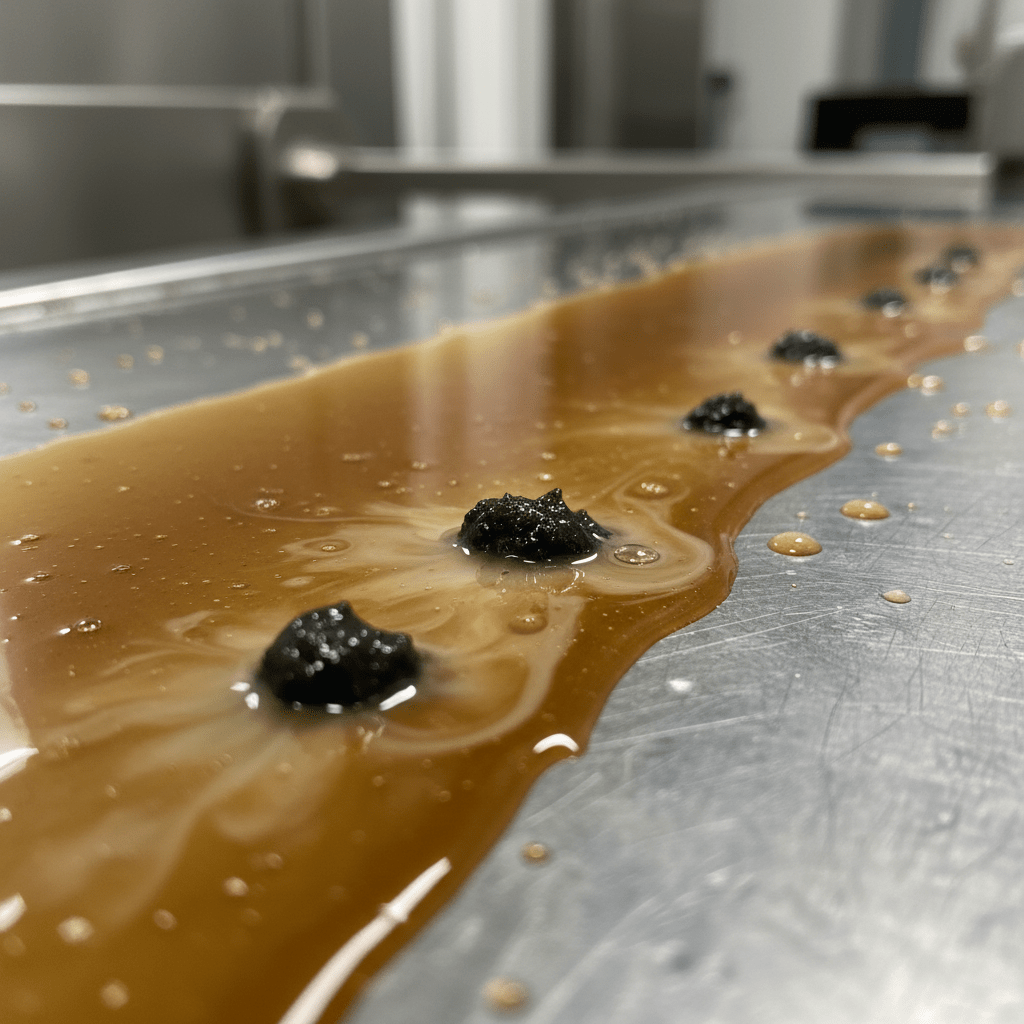
- Better “Bloom”: That satisfying moment when the clear amber liquid hits water and turns milky white. Customers love that.
- Simpler Recipes: You don’t need a complex cocktail of chemicals to keep it stable.
It’s about peace of mind. You want to ship your industrial pine oil cleaner knowing it will look just as good six months from now as it does today.

6. Cost-Effectiveness: Looking Beyond Price Per Pound
Okay, let’s talk about the elephant in the room. Money.
If you look at a supplier price list, Pine Oil 80 is going to startle you a bit. It’s not the cheapest option. In fact, it typically costs about 30% more per gallon than a standard Grade 60 source.
But here is the thing. That price tag is kind of lying to you.
When you buy chemicals, you shouldn’t just look at the price of the drum. You have to look at the “use-cost.” Basically, how much does it cost to get the job done?
Because Pine Oil 80 is so packed with active terpene alcohol content, it is pure muscle. You don’t need much of it.
If you try to use Grade 60, you are buying a lot of filler. To match the cleaning power of the good stuff, you actually have to dump way more oil into your mixing tank.
I ran the numbers on this recently.
To get a 5% active cleaning solution, you need significantly less Grade 80 than Grade 60. When you do the math, using the “expensive” oil can actually lower your final batch cost by around 22% because you are using so much less volume.
Wild, right? Paying more upfront actually saves you money in the vat.
And the savings don’t stop there. Formulating with high-quality oil ripples through your whole recipe:
-
Less Emulsifier Needed: Since you are using less total oil volume, you don’t need to buy as many expensive surfactants to hold it all together.
-
No Masking Scents: Grade 80 smells fantastic on its own. You don’t need to add extra perfumes to cover up that gross oily smell common in lower grades.
-
Higher Sale Price: Customers pay more for natural cleaning ingredients that work. With the natural cleaner market growing fast source, you can command a premium price.
So, don’t let the sticker shock fool you. It’s cheaper to use the best.
7. Sustainability & Source Consistency
We live in a world where everyone checks the label. Your customers want to know: is this product actually safe for the planet?
This is where formulating with pine oil gives you a massive advantage.
Unlike harsh chemicals pumped out of the ground, pine oil is renewable. Truly. It starts as a tree stump. Usually, it is a co-product from the forestry or paper industry. Basically, we are using parts of the tree that might otherwise go to waste. It’s upcycling at its finest.
But here is where the grade—specifically Pine Oil 80—matters for your production line.
To get that high alcohol content, the oil goes through a process called fractional distillation. It sounds technical, but think of it as a super-filter. It boils off the inconsistencies.
When you buy cheaper grades, you are getting a product that is closer to the crude, natural chaos of the forest. If the weather was weird that year, or the soil was different, your oil might act funny.
Imagine dialing in your recipe perfectly. Then a new drum of “Grade 60” arrives, and suddenly your product separates because the raw material changed. That is a headache you don’t need.
High-grade oil is refined to be the same, every single time.
This means your industrial pine oil cleaner won’t just clean well; it will be biodegradable and safe for the environment. In fact, big producers are now getting certifications like ISCC PLUS to prove their pine chemicals are fully traceable and sustainable source.
So, picking the right grade protects the planet and your brand reputation.

if you are ready to stop guessing and start using consistent, high-purity oils, we can help. At Aroma Monk, we specialize in sourcing the exact natural ingredients you need to keep your production line moving smoothly—and greenly.
Pine Oil 80 vs. Other Grades: At a Glance
That was a ton of information, right?
If your head is spinning a little from all the chemistry talk, don’t worry. I’ve been there. Sometimes you just need the quick facts to show your boss (or just to double-check your own sanity).
So, let’s simplify this entire pine oil grades comparison.
Whether you are mixing a heavy-duty degreaser or a household sanitizer, seeing the differences side-by-side makes the choice way clearer. Here is exactly how the high-quality stuff stacks up against the budget options.
| Feature | Pine Oil 80 (The Gold Standard) | Lower Grades (50-60) |
| :— | :— | :— |
| Cleaning Muscle | High terpene alcohol content (~80%). | Lower alcohol (~50-60%). Mostly fillers. |
| Grease Cutting | Excellent pine oil solvency. Cuts fast. | Weak. Requires way more scrubbing. |
| Disinfecting | Strong. Effective against bacteria. | Inconsistent. Harder to pass lab tests. |
| Smell | Crisp, fresh, and woodsy. | Can smell harsh, oily, or like turpentine. |
| Stability | Predictable. Stays mixed in water. | Prone to separation (that gross sludge). |
| True Cost | Higher price tag, but you use ~22% less. | Cheap price tag, but you use way more. |
| Consistency | High purity. Same results every batch. | Variable. Changes with every shipment. |
When you look at it this way, formulating an industrial pine oil cleaner isn’t just about the price per gallon.
It’s about efficiency.
You might save a few bucks buying a drum of Grade 60, but you will likely pay for it later with unstable formulas—or worse, unhappy customers who can’t get the grease off their floors.
Making the Right Choice for Your High-Performance Pine Oil Cleaner
It often comes down to this: what kind of brand do you want to be?
You could definitely save a few cents upfront with a lower grade. But honestly? The headaches usually aren’t worth it. Between the separation issues in the bottle and the weaker cleaning power on the floor, cheap ingredients have a way of becoming expensive problems.
Pine Oil 80 essentially solves the hard parts of formulating for you.
Because it has that high active alcohol content, you get a stable formula that acts as a powerful cleaning agent and smells like actual nature, not a chemical factory. Plus, you’re using less of it per batch, so the math actually works out in your favor.
With the natural household cleaners market expected to hit over $7 billion in the next year, your customers are looking for quality. They can smell the difference.
If you are ready to lock in a reliable supply of pure, consistent oil for your industrial pine oil cleaner, let’s talk.
At Aroma Monk, we don’t just sell drums of oil; we help you keep your production line moving without the drama. We test every batch so you don’t have to guess what’s in the drum.
Ready to test the difference?
Request a sample of Pine Oil 80 today or chat with our team about your specific formulation needs.