
Unlock Your Signature Scent: The Art and Science of Homemade Essential Oil Perfume
You know that feeling when you catch a whiff of a certain scent, and it instantly reminds you of a childhood memory? It’s wild how that works. Smell is actually our strongest link to memory. But let’s be real for a second—walking down the perfume aisle at a department store isn’t usually a pleasant memory trip. It’s overwhelming.
And for a lot of us, those strong, mass-produced sprays lead to instant headaches.
There is a reason for that. Many commercial bottles are packed with synthetic chemicals. Some even contain hidden ingredients called phthalates, which are linked to health issues like hormone disruption.
That’s exactly why figuring out how to make perfume with essential oils is such a smart move.
Creating DIY perfume with essential oils lets you ditch the mystery chemicals and build a scent that is 100% you. Plus, it’s not as hard as it sounds. You don’t need a chemistry lab or a fancy degree. You just need the right ingredients and a little curiosity.
In this guide, we will walk you through everything you need to know. We will cover:
- How to understand those fancy “fragrance notes”
- Choosing the best oils (purity is a big deal here, which is why pros use suppliers like Aroma Monk)
- Safe mixing rules so you don’t irritate your skin
- Simple essential oil perfume recipes to get you started
Mixing your own natural fragrance blends is creative, safe, and honestly? It’s a lot of fun. Ready to find your signature scent?
The Perfumer’s Pyramid: Understanding Top, Middle, and Base Notes
Okay, let’s get into the fun part. Have you ever put on a scent, loved it instantly, but then felt differently about it an hour later? That happens because perfume is actually alive. It changes while you wear it.
Pro perfumers use something called the “Perfumer’s Pyramid” to map this out. It sounds fancy, but it’s really just a way to organize oils by how fast they disappear.

It all comes down to “volatility.” That is just a science word for how quickly an oil evaporates off your skin. Some oils are light and fly away fast. Others are heavy and hang around for days. To make a balanced homemade perfume spray, you need a mix of all three layers.
Top Notes: The First Impression
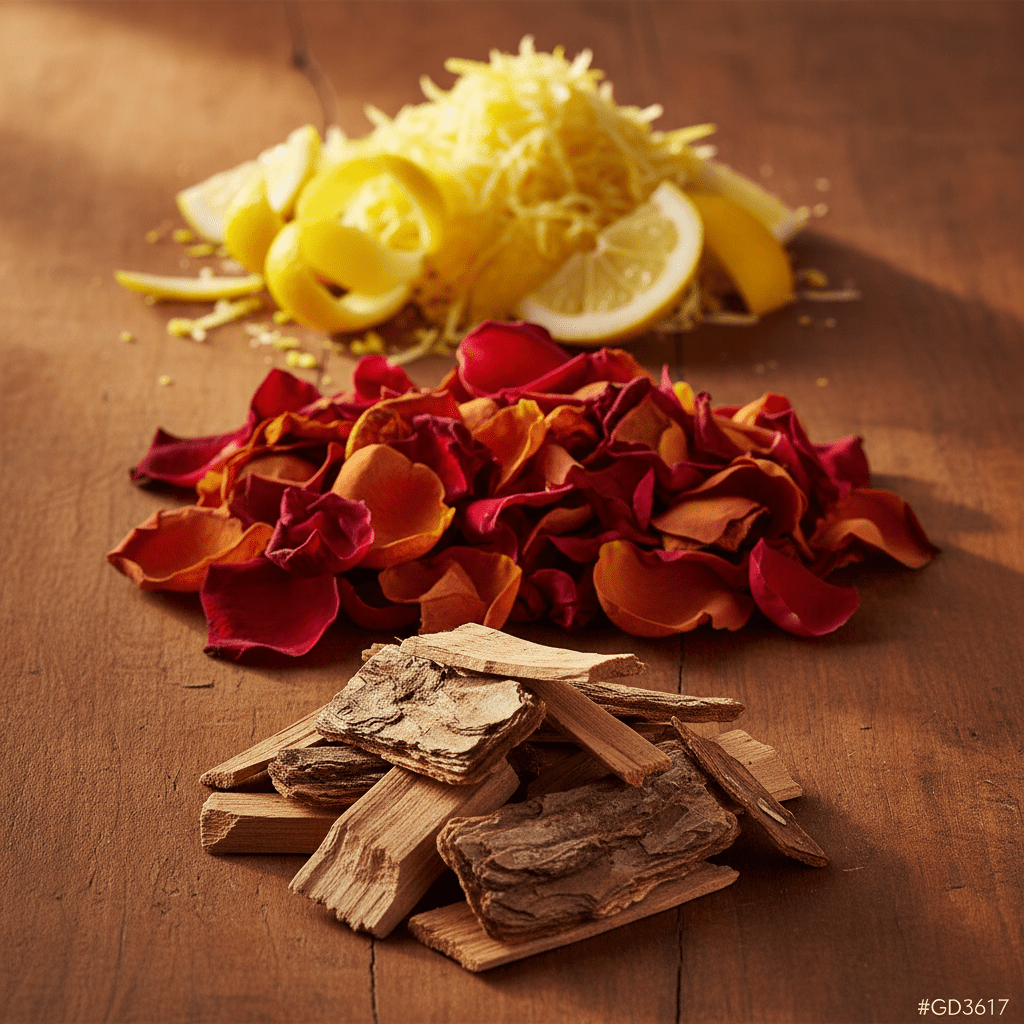
These are the first scents you smell. They hit you right away—bam! They are usually fresh, citrusy, or sharp. But here is the catch: they fade fast. Usually within 15 to 30 minutes.
Think of top notes as the friendly “hello” of your perfume. They grab your attention, but they don’t stay for dinner.
- Best examples: Lemon, Sweet Orange, and Bergamot.
- Why they matter: If you don’t have top notes, your scent can smell heavy or flat right out of the bottle.
Middle Notes: The Heart
Once the citrus fades, the “heart” notes show up. This is the real personality of your DIY perfume with essential oils. They last for a few hours and bridge the gap between the fleeting top notes and the heavy base layer.
- Best examples: Lavender, Rose, and Ylang Ylang.
- Fun fact: These usually make up the biggest chunk of your blend, around 50% of the total drops.
Base Notes: The Foundation
These are the heavy hitters. They stick to your skin and can last for a whole day (sometimes longer). They give your perfume depth and staying power. Without base notes, your scent would just float away in an hour.
- Best examples: Sandalwood, Frankincense, and Cedarwood.
Why Purity Matters Here
Here is the thing though—this pyramid only works if your oils are real.
Synthetic fragrance oils from a cheap craft kit don’t evaporate the same way. They tend to smell linear (the same from start to finish). If you want that beautiful, evolving scent journey, you need 100% pure oils.
This is why serious DIYers and small shop owners often source from bulk suppliers like Aroma Monk. When you use tested, pure oils, you know that the natural fragrance blends you create will behave correctly on the skin.
So, when you are brainstorming essential oil scent combinations, try the classic starting ratio: 30% Top notes, 50% Middle notes, and 20% Base notes.
It’s not a strict law, but it’s a great place to start your experiments.
Navigating the Scent Families: How to Create a Balanced Blend
So, the pyramid tells us when we smell things. But scent families tell us what we interact with.
Think of this like cooking. You wouldn’t throw pickles, chocolate, and onions in a bowl just because you have them, right? Dealing with essential oil scent combinations is pretty similar. You have to pick flavors—or rather, families—that actually like each other.
If you are just learning how to make perfume with essential oils, keeping it simple is the best strategy. Most oils fit into one of these six main groups:
- Citrus: Happy, sharp, and energizing. (Lemon, Grapefruit, Bergamot)
- Floral: Romantic and soft. (Rose, Jasmine, Geranium)
- Woody: Grounding and outdoorsy. (Cedarwood, Sandalwood, Pine)
- Spicy: Warm and exotic. (Ginger, Black Pepper, Cinnamon)
- Herbal: Fresh and crisp. (Rosemary, Basil, Peppermint)
- Resinous/Earthy: Deep and mysterious. (Frankincense, Patchouli, Myrrh)
The Secret to “Accords”
Perfumers use a fancy term called an “accord.” Honestly? It just means a blend of notes that creates a new, unified smell. The goal is harmony.
To get this right without wasting expensive oils, many pros use a “Scent Wheel.” It works just like a color wheel in art class. Families that sit next to each other usually blend perfectly. Families across from each other are bolder contrasts.
Here is a cheat sheet for natural fragrance blends that almost always work:
- Citrus + Floral: This is the classic, fresh summer vibe. You can’t really mess this one up.
- Woody + Spicy: Warm, cozy, and often leans a bit masculine or unisex.
- Floral + Spice/Wood: This creates that sophisticated “Floriental” style found in famous perfumes like Shalimar or Opium.
Also, a quick tip on sourcing: If you want your DIY perfume with essential oils to smell expensive, the quality of your base ingredients is everything. Especially for those deep Woody or Resinous families. Synthetic versions smell like plastic. This is where sourcing 100% pure, lab-tested oils from places like Aroma Monk makes a noticeable difference. Their natural attars and oils are the real deal, which means your perfume won’t smell like a car freshener.
You can mix almost anything with Citrus—it’s like the universal donor of the scent world. But be careful with the Herbal family. It’s strong. A little Rosemary goes a long way.
Once you pick your family, you need something to hold it all together. Let’s talk about the carrier.
Get a quote from Aroma Monk.
Essential Oil Supplier – Bulk pricing • Samples • Fast response
Gather Your Supplies: Essential Tools and Ingredients for Natural Perfumery
Ready to start mixing? Good news. You don’t need a fancy lab coat or a sterile room. You can pretty much do this at your kitchen table.
But you do need the right gear so you don’t waste precious drops. Here is your basic toolkit.
The Hardware
- Dark Glass Bottles: Light kills scent. It’s the enemy. So, always store your perfumes in amber or cobalt blue bottles.
- Funnels: These tiny helpers save you from spilling expensive ingredients all over the counter.
- Glass Droppers or Pipettes: Some oils are thick (looking at you, Vetiver). You need these to measure accurately.
- Paper Strips: Pros call these “aroma wands.” They let you test a blend before you commit it to a bottle.
- A Notebook: Do not skip this. I mean it. There is nothing worse than making a magical scent by accident and realizing you have zero clue how many drops of Jasmine you just added.

The Carrier: Your Scent’s Taxi
Essential oils are potent. Like, really potent. You can’t just slather them on neat—they need a vehicle to get onto your skin safely. This is called a “carrier.”
For how to make perfume with essential oils, you usually have two choices:
- Oil-Based (Roll-ons): This uses oils like Jojoba or Fractionated Coconut Oil (FCO). Jojoba acts almost exactly like human skin oil, while FCO stays liquid forever and has a super long shelf life. These scents stay close to the skin. They are intimate. You smell them, and maybe the person hugging you smells them.
- Alcohol-Based (Sprays): This uses high-proof alcohol (like perfumer’s alcohol or high-proof vodka). Alcohol evaporates fast, which helps the scent explode into the air. This gives you that “sillage” (fancy word for scent trail).
If you want high-quality results, the base matters as much as the smell. That’s why I usually grab bulk carriers from Aroma Monk. They test everything in a lab, so you know your Jojoba is actually Jojoba and not some cheap filler.
The Starter Kit
Don’t go buy 50 oils yet. You’ll get overwhelmed. Start with a solid team of 10 that play nice together.
- Top: Sweet Orange, Bergamot, Grapefruit.
- Middle: Lavender, Ylang Ylang, Geranium.
- Base: Cedarwood, Patchouli, Frankincense, Sandalwood.
Got your supplies? Awesome. Now let’s talk about safety, because nobody wants a rash.# The Art of the Blend: Dilution Ratios for Safe and Beautiful Homemade Perfume
Here is where a lot of beginners get stuck. You have your supplies, but how much oil do you actually use?
Real talk: Essential oils are concentrated plant power. They are heavy-duty. If you put them straight on your skin, you risk burning yourself or getting a nasty rash.
To keep things safe, we use dilution ratios. This just means mixing a small amount of essential oil into a larger amount of carrier oil or alcohol.
Which strength should you make? Here is a simple breakdown of what commercial perfumes use:
| Type | Strength | Best For |
|---|---|---|
| Parfum | 15–25% Oil | Intense, all-night wear |
| Eau de Parfum | 10–15% Oil | The standard “perfume” strength |
| Eau de Toilette | 5–10% Oil | Lighter, everyday wear |
| Body Mist | 2–5% Oil | A quick refreshing spritz |
For a standard 10ml roller bottle (which is great for beginners), stick to the Eau de Parfum range. That is usually about 20 to 30 drops of essential oil total. The rest is your career.
The “Sandwich” Method
When you are ready to mix, don’t just dump everything in at once. Believe it or not, the order matters.
Think of it like building a house. You wouldn’t put the roof on before the foundation, right?
- Base Notes First: Add your heavy oils (like Cedarwood or Patchouli). These act as the anchor.
- Middle Notes Second: Add your heart notes (like Lavender). Swirl them gently with the base.
- Top Notes Last: Finish with your citrus or light herbs.
Expert perfumers say this helps the scents bind together properly.
A Serious Note on Safety
Just because it’s natural doesn’t mean it’s harmless. Some oils are “hot.”
Cinnamon and Clove, for example, are super strong. You should never use more than a tiny specific amount (often less than 0.5%) on your skin. Also, citrus oils like Bergamot can cause sunburns if you go outside right after applying them (that’s called phototoxicity).
This is another reason why I stick with suppliers like Aroma Monk. When you buy from a place that focuses on professional quality, you get pure ingredients without the guesswork. Knowing your oil is 100% pure helps you calculate these safety percentages accurately.
Once you’ve mixed your blend, you might be tempted to use it right away. But wait! Let it sit in a dark cupboard for at least 48 hours. This lets the scents “marry” and smooths out any rough edges.
Ready to try your first recipe? Here are a few reliable ones to get you started.
Your First Creations: 3 Step-by-Step Essential Oil Perfume Recipes
Okay, you have your bottles, your carrier oil, and your pure essential oils. Now comes the best part.
We are going to make three different natural fragrance blends. These recipes are designed for a standard 10ml glass roller bottle. We are aiming for about 20 drops of essential oil total.
This creates roughly a 10% dilution. It smells strong enough to notice, but it is generally safe for most skin types.
Here is a tip before you start: Label your bottles first. Trust me. You think you will remember which one is which, but you won’t.

Recipe #1: Sun-Kissed Citrus Grove (Fresh & Happy)
This blend is basically sunshine in a bottle. It is perfect for mornings when you need a little energy boost.
Top Note: 8 drops Bergamot
Top/Middle Note: 7 drops Grapefruit
Middle Note: 5 drops Rosemary
Why it works: The Bergamot and Grapefruit are super cheery, while the Rosemary adds a crisp, herbal kick that wakes up your brain.
Watch out: Since this is heavy on citrus, be careful in the sun. Citrus oils can be phototoxic, meaning they make your skin extra sensitive to sunlight. Maybe don’t wear this one to the beach.
Recipe #2: Enchanted Forest (Deep & Grounding)
Feeling stressed? This woody blend is like taking a walk through an old forest. It is great for meditation or just chilling out after a long day.
Base Note: 8 drops Cedarwood
Base/Middle Note: 7 drops Frankincense
Top Note: 5 drops Sweet Orange
Why it works: The Cedarwood and Frankincense are deep and earthy. The Sweet Orange adds just a tiny bit of brightness so it doesn’t feel too heavy.
Quick tip: For this one, quality really matters. Cheap Frankincense smells like cleaning spray. A pure version from a supplier like Aroma Monk smells like warm, spicy resin. It makes a huge difference.
Recipe #3: Midnight Bloom (Soft & Romantic)
This is your classic floral scent. It is perfect for date night or when you want to feel a little fancy.
Middle Note: 8 drops Ylang Ylang
Middle Note: 7 drops Lavender
Base Note: 5 drops Sandalwood
Why it works: Ylang Ylang is a sweet, exotic flower. Lavender calms it down, and Sandalwood gives it a creamy, smooth finish.
The Hardest Part: Waiting
Here is the secret that nobody tells you. After you mix your oils and top up the bottle with Jojoba or Fractionated Coconut Oil, you need to walk away.
Put the lid on, give it a gentle shake, and put it in a dark drawer.
For how long? Ideally, at least 48 hours. A week is even better.
It sounds annoying, I know. But chemistry is happening in that bottle. The molecules are bonding and changing. This process smooths out the scent so it doesn’t smell “jagged.” It creates a smoother, more unified smell.
Where to Go From Here
Making your own perfume is kind of addictive. Once you nail these recipes, you might wonder what else you can do.
You are in good company. The market for natural beauty products is exploding right now—it’s expected to hit nearly $69 billion by 2029. People are realizing that smelling good doesn’t have to mean spraying synthetic junk on their skin.
If you want to branch out, try these easy next steps:
- Linen Sprays: Use distilled water and a splash of witch hazel instead of oil. It makes your sheets smell amazing.
- Body Oils: Lower the concentration to about 1-2% (that’s about 6-10 drops per ounce) and use it as an after-shower moisturizer.
- Solid Perfume: Mix your blend into melted beeswax and coconut oil for a travel-friendly scent tin.
Smell is a powerful thing. It changes our mood and brings back memories. Now that you know the basics, you have the power to decide exactly what your story smells like.
So go ahead. Open up those bottles, start mixing, and see what you create.# Continue Your Scent Journey: Experiment and Create with Confidence
So, there you have it. You have graduated from just wearing perfume to actually understanding the mechanics behind it.
We covered the invisible structure of the Perfumer’s Pyramid, decoded the scent families, and—most importantly—learned how to mix safely so you don’t burn your skin.
It feels like a lot, right? But honestly, this is just the start.
Creating your own natural fragrance blends is weirdly personal. One day you might want that fresh “Sun-Kissed” vibe, and the next you need the deep, grounding comfort of Cedarwood. That’s the beauty of it. You aren’t stuck with whatever is on the department store shelf anymore.
And you are definitely not alone in this. The clean beauty movement is massive right now—projections show natural cosmetics hitting nearly $69 billion by 2029. Why? Because we all want to know exactly what we are putting on our bodies.
Whether you are mixing for yourself or thinking about starting a small line using pure, lab-tested oils from suppliers like Aroma Monk, the key is just to start. Don’t worry about being perfect. Some of the best scents are happy accidents.
So, I’m curious—which recipe are you trying first? Or did you go rogue and invent your own mixture? Drop a comment below and let me know how it went. I’d love to hear what your signature scent turned out to be.
Get a quote from Aroma Monk.
Essential Oil Supplier – Bulk pricing • Samples • Fast response