
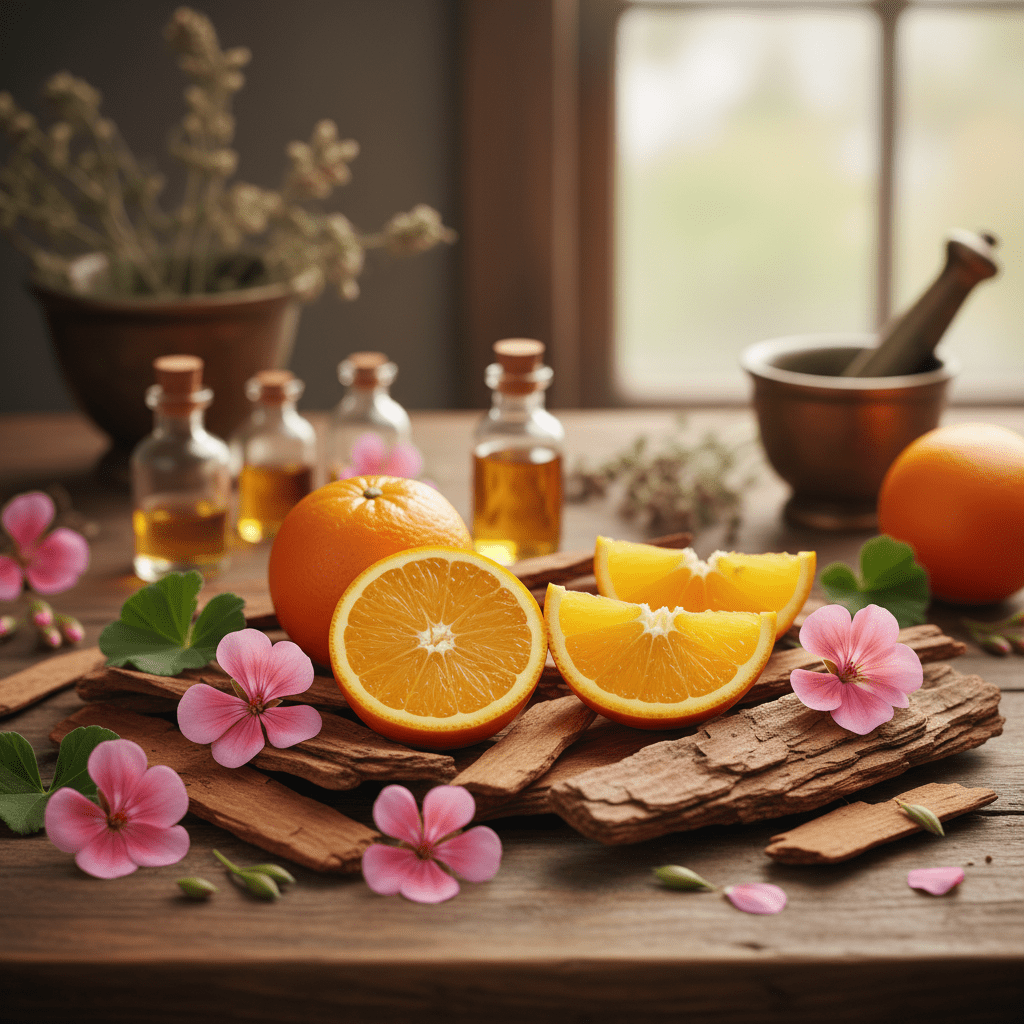
Tired of Synthetic Scents? Discover the Joy of Creating Your Own Essential Oil Perfume
You know that instant headache you get walking through the perfume aisle at a department store?
Yeah. That.
It’s overwhelming. And it turns out, there’s a reason your nose wants to run away. Most bottles on the shelf list “fragrance” as a single ingredient. But here’s the secret they don’t tell you: that one word can hide hundreds of secret chemicals.
Actually, the Environmental Working Group found that many commercial perfumes contain stuff you really don’t want on your skin, like aromatic amines that are linked to serious health problems.
Scary, right?
But there is a better way. A fun way. You can make an essential oil perfume right at home. It’s safer, it’s cheaper, and it’s totally unique to you.
When you craft a DIY perfume recipe, you know exactly what is in the bottle. No hidden nasties. Just plants. Plus, making natural perfume with essential oils does more than just make you smell good. It can actually change how you feel.
Take citrus oils, for example. We love them for this.
Studies show that the main component in citrus oils, called limonene, can actually help lower physical stress levels. So your perfume doesn’t just smell like summer—it acts like a little stress-relief shield against a busy day.
Ready to ditch the chemicals? Let’s learn how to make perfume with essential oils that smells like pure sunshine.
Understanding Perfume Structure: The Magic of Top, Middle, and Base Notes
So, here’s the deal. You can’t just dump ten random oils into a bottle and pray it smells good. (I’ve tried. It usually ends up smelling like a confused cleaning supply closet.)
To make a natural perfume with essential oils that actually works, you have to think like a musician. You need a melody, a harmony, and a bass line. In perfumery, we call these top, middle, and base notes.
It’s all about volatility—which is just a fancy word for “how fast does this stuff disappear?”
The Top Notes: The Hello
This is the very first thing you smell. It’s the splash. The sparkle. But because the molecules are tiny, they evaporate super fast—usually within 15 to 30 minutes.
Most citrus oils—like Bergamot, Lemon, and that Sweet Orange we talked about—live here. They are the hook that grabs your attention. If you don’t have them, the scent can feel heavy or flat right out of the bottle.
The Middle Notes: The Heart
Once the citrus waves goodbye, the middle notes show up. These make up about 50% of your blend and give the perfume its true personality. They stick around for 2 to 4 hours.
Think of florals like lavender or geranium. Actually, lavender is a great bridge here because it connects the zesty top to the deeper smells below.
The Base Notes: The Anchor
These are the heavy lifters. They might smell subtle at first, maybe even shy, but they last for 6 hours or more. They hold the whole scent together so it doesn’t just float away.
We’re talking rich, deep scents like Cedarwood, Vetiver, or Sandalwood.
When you’re buying oils—especially if you plan to make this a regular hobby or a business—purity matters a ton here. If an oil is cut with cheap fillers, the evaporation timing gets all weird. That’s why pros usually stick to verified sources like Aroma Monk to ensure the “notes” actually play the right song.
So, for your essential oil perfume, you aren’t just mixing smells. You’re building a timeline of scent that changes while you wear it. Pretty cool, right?

Why Citrus? The Aromatic Benefits and Characteristics of Uplifting Oils
You know that feeling when you peel a fresh orange? That little spray of zest hits the air, and suddenly, you feel a bit lighter?
That isn’t just in your head.
Citrus oils are basically happiness in a bottle. They are the go-to ingredients for any DIY perfume recipe because they are impossible to hate. They smell clean, bright, and sunny.
But here is where it gets cool.
Science actually backs this up. Most citrus peels are packed with something called limonene. Studies show that this component can help physical stress levels drop down a notch. So when we say a citrus essential oil blend is “uplifting,” we aren’t just using a fancy marketing word. It really works.
Here are the big players you will likely use:
- Sweet Orange: It’s sweet (obviously) and sugary. It smells like a summer morning.
- Grapefruit: This one is tangy and juicy. It wakes you up fast.
- Bergamot: This is the fancy one. If you like Earl Grey tea, you like Bergamot. It’s fresh but has a little floral kick to it.
In your perfume, these guys play the role of “Top Notes.”
Remember the music analogy? These are the opening drums. They are the very first thing you smell when you spray your natural perfume with essential oils. They introduce the scent to your nose.
They don’t stick around long—maybe 20 minutes tops—but they set the mood for everything else. Without them, your perfume might smell too heavy or “muddy” right away.
Just a quick heads-up though. Because these are the first oils you smell, quality is a big deal. If you use fake stuff, it smells like floor cleaner. I usually grab my citrus oils from places like Aroma Monk because they test for purity, so you know you’re getting actual fruit extract, not lab experiments.
Now that we have our happy top notes sorted, let’s look at what comes next.
Safety First: Crucial Precautions for Your Essential Oil Perfume
Okay, we need to have a little “real talk” before we start mixing.
I know you are excited to start your DIY perfume recipe. But we have to cover safety first.
Here is the thing. Just because something is “natural” doesn’t mean it is harmless. Poison ivy is natural, right? But you definitely wouldn’t want to rub that on your neck.
When you are learning how to make perfume with essential oils, reliable safety info is your best friend.
The Sun is Not Your Friend (Sometimes)
This is the big one.
Some citrus oils hate the sun. Well, actually, they react with UV rays. It is called phototoxicity.
Basically, if you put these oils on your skin and then go outside, they act like a magnifying glass. You can get a really bad sunburn, blisters, or dark spots in minutes. It hurts, and it lasts a long time.
The main oils you have to watch out for are:
- Angelica Root
- Bergamot (the cold-pressed kind)
- Lemon (cold-pressed)
- Lime (cold-pressed)
- Grapefruit (mildly, but still be careful)
So, does this mean you can’t use them? Nope. You just have to be smart about it.
If you use these oils, stay out of the sun for 12 to 24 hours after putting them on. Or, here is a pro trick: buy the safe versions.
Look for Bergamot that says “FCF” (furanocoumarin-free). That means the compound that burns you has been taken out. Or, choose steam-distilled Lemon or Lime. The heat from distilling removes the risk, making them much safer for sunny days.
Dilution: Less is More
Here is a golden rule for essential oil perfume safety: Never put straight oil on your skin.
We call this using it “neat.” It is way too strong. Think of essential oils like super-hot sauce. One drop makes your chili taste great. A whole cup? That ruins dinner.
You always need to mix your oils with a base, like alcohol or a carrier oil.
Experts actually have very specific math for this. For example, safe usage rates for regular Bergamot are super low—around 0.4% of your total mix.
If that sounds like too much math, just stick to the steam-distilled or FCF versions I mentioned. It makes life way easier.
The Patch Test
Before you spray your new natural perfume with essential oils all over your body, test it first.
Put a tiny drop of your finished blend on the inside of your elbow. Wait 24 hours. Does it turn red? Does it count itch? If yes, wash it off and don’t use it. If it looks normal, you are probably clear.
Also, knowing what you are buying helps a ton here. I always look for suppliers like Aroma Monk that actually tell you how the oil was made (cold-pressed vs. steam-distilled). If a label doesn’t tell you, assume it’s the risky kind just to be safe.
Get a quote from Aroma Monk.
Essential Oil Supplier – Bulk pricing • Samples • Fast response
Gathering Your Supplies: The Essential Toolkit for a DIY Perfume
You don’t need a fancy chemistry lab to do this. Honestly, you can set up shop right on your kitchen table.
But you do need the right tools. If you use the wrong stuff, your homemade perfume might spoil or just not smell right. Let’s make a shopping list.
1. The Carrier: Alcohol vs. Oil
This is the biggest choice you have to make. Essential oils are too strong to use alone, so they need a “carrier” to dilute them.
Perfumer’s Alcohol: Use this if you want a classic spray perfume. You know, the kind that leaves a scent trail when you walk by? That’s the alcohol working. It pushes the scent into the air.
But here is the catch—you can’t use regular vodka. It has too much water.
You need high-proof alcohol (look for 190 proof) to fully dissolve the oils. It preserves the scent and keeps it clear.
Carrier Oils: If you prefer a rollerball, go with oil. It stays closer to the skin and feels luxurious. My personal favorite is Jojoba oil.
Fun fact: Jojoba isn’t actually an oil. It is a liquid wax that is almost identical to the natural oils your skin produces, so it absorbs super fast without feeling greasy.
Since reliable suppliers like Aroma Monk stock high-quality carrier oils alongside their essential oils, you can usually grab everything in one go.
2. The Bottles (Dark Glass Only)
I know, I know. Those clear, crystal bottles on Pinterest look amazing.
Don’t buy them.
Sunlight is the enemy of your beautiful scent. It breaks down the oils and changes the smell fast. You want dark glass—amber or cobalt blue are the best standard options. They act like sunglasses for your perfume.
3. The Mixing Gear
Keep it simple here. You will need:
Small funnels: Unless you have surgeon hands, you will spill without these.
Pipettes: Use a fresh one for each oil bottle so you don’t accidentally mix the scents before you are ready.
Testing strips: These are just little paper strips to test your blend before you bottle it.
Got your gear? Great. Now the fun part begins.

The ‘Citrus Sunshine’ Recipe: A Step-by-Step Guide to a Radiant Perfume
Okay, lab coat on.
Just kidding. You absolutely do not need a lab coat. But you might want to clear a little space on your kitchen counter because this is the fun part.
We are going to make a 10ml rollerball perfume. It is small, portable, and perfects for carrying a little bit of summer in your pocket.
We will call this blend “Citrus Sunshine.”
It is designed to be bright and happy, but it has a secret weapon—a woody base note that keeps it grounded so you don’t smell like a walking juice box.
What You Need
- 10ml Amber Glass Roller Bottle (Clean and dry)
- Jojoba Oil (This is your carrier)
- Small Funnel
- Label and Pen (Trust me, write it down)
The Ingredients (The “Notes”)
For a 10ml bottle, we are aiming for about 20–25 drops of essential oil total. This keeps it at a safe dilution for most adults to use on pulse points.
- Base Note: Cedarwood (Atlas or Virginian)
- Middle Note: Geranium (or Neroli if you want to be fancy)
- Top Notes: Sweet Orange and Grapefruit
Quick tip: Quality really matters here. Since this sits on your skin all day, using pure, lab-tested oils from a supplier like Aroma Monk makes a huge difference in how the scent develops. You want the real plant profile, not a synthetic copy.
The Step-by-Step Method
There is actually a specific order to this. We build the perfume from the bottom up.
1. Add the Base
Drop 4 drops of Cedarwood into your empty glass bottle. This is your anchor. It catches the lighter scents and holds onto them.
2. Add the Heart
Add 6 drops of Geranium. This is the bridge. It connects the deep wood smell with the bright citrus we are about to add. Without this, the perfume would feel like it has a hole in the middle.
3. Add the Top
Now for the sparkle.
Add 8 drops of Sweet Orange.
Add 4 drops of Grapefruit.

See what we did there? We used more top notes because they evaporate the fastest. We want a big burst of energy right when you apply it.
4. The Swirl
Put the cap on (just for a second) and roll the bottle between your palms. Don’t shake it like a maraca. Just a gentle swirl to introduce the oils to each other.
5. Top with Carrier
Use your funnel to fill the rest of the bottle with Jojoba oil. Stop just before the neck of the bottle so you have room to put the rollerball insert back in.
6. Cap and Label
Pop the rollerball in. Screw the lid on tight. Write “Citrus Sunshine” and today’s date on the label. You think you will remember what is in there, but you won’t. Label it.
The Hardest Part: Waiting
Here is the secret nobody tells you. You can use it right away, but it won’t smell its best yet.
Perfume needs to rest. We call this maceration.
It is basically like making a stew—it tastes better the next day. Ideally, let your bottle sit in a cool, dark place for at least 48 hours. If you have the patience of a saint, give it a week. The sharp edges smooth out, and the scents meld into one beautiful aroma.
Give it a sniff after a few days. You will notice the difference instantly.
Beyond the Blend: How to Cure, Store, and Customize Your Perfume
You made it. You have a bottle of “Citrus Sunshine” in your hand.
But don’t spray it just yet.
Okay, you can, but it won’t be quite right. This is where patience comes in. We call it curing or maceration.
Think of your perfume like a pot of chili. It tastes good when you cook it, but it tastes amazing the next day, right? The flavors need time to get friendly.
It’s the same with scent.
When you first mix your essential oil perfume, the molecules are distinct. The orange is shouting over the cedarwood. The geranium is trying too hard.
But if you let them sit for a week or two, something cool happens. The harsh edges smooth out. The scent becomes one whole “thing” rather than just a list of ingredients.
For a light, citrusy blend like this, 1 to 2 weeks is usually the sweet spot. If you used heavier resins, you might wait a month.
Keep It Safe (and Dark)
You bought high-quality oils—maybe you grabbed some pure extract from Aroma Monk—so you want them to last.
Light and heat are the enemies here.
If you leave your bottle on a sunny windowsill, UV rays will break down the oil. The scent will change, and not in a good way. It might even spoil.
The best place for your homemade perfume? A cool, dark drawer. Or a cabinet. Basically, treat your perfume like a vampire. It wants to stay out of the sun.
If you store it right, an oil-based perfume can last a year or more. Alcohol-based ones last even longer.
Make It Yours
Once you get comfortable with the basics, you can start playing around. The “Citrus Sunshine” recipe is just a starting point.
Want to change the vibe? Try these simple twists:
- Want more spice? Add a drop of Cardamom. It adds a warm, exotic kick that pairs perfectly with orange.
- Want it deeper? Swap the headache-inducing synthetic florals for Jasmine Absolute. It’s rich, heavy, and smells expensive.
- Want it greener? Add Petitgrain. It smells like crushed leaves and twigs. It makes the scent feel like walking through an actual orchard.
This is the best part of DIY. You aren’t stuck with what’s on the shelf. You are the boss of the bottle.
So go ahead. Mix, match, and see what happens. Your nose will tell you what works.
Embrace Your Inner Perfumer: The Lasting Beauty of Natural Scent
Making your own perfume feels like a secret superpower.
You aren’t just grabbing a random bottle off a shelf anymore. You are crafting something that is totally you. No hidden chemicals, no headaches. Just pure plants.
Remember, the magic is in the mix. You have those bright, happy citrus tops, the floral heart, and the deep woody base. It really is like writing music for your nose.
And yeah, keep it safe. Watch out for the sun with those citrus oils, and always dilute them. Your skin will thank you.
The hardest part? Waiting for that bottle to cure. I know you want to wear your essential oil perfume right now, but give it a week. The scent gets so much smoother.
Actually, this is more than just a craft project. As Christian Dior once said, a perfume tells more about a person than their handwriting. It’s your personal signature.
If you catch the bug—and you probably will—try swapping things up. Trade the orange for Bergamot or add a drop of Jasmine. Since you are the boss, you make the rules. Just make sure you start with the good stuff. Using pure, tested oils from places like Aroma Monk means your masterpiece actually smells like nature, not a chem lab.
So, go ahead. Create a scent that makes you smile every time you catch a whiff. You are a perfumer now.
Get a quote from Aroma Monk.
Essential Oil Supplier – Bulk pricing • Samples • Fast response