
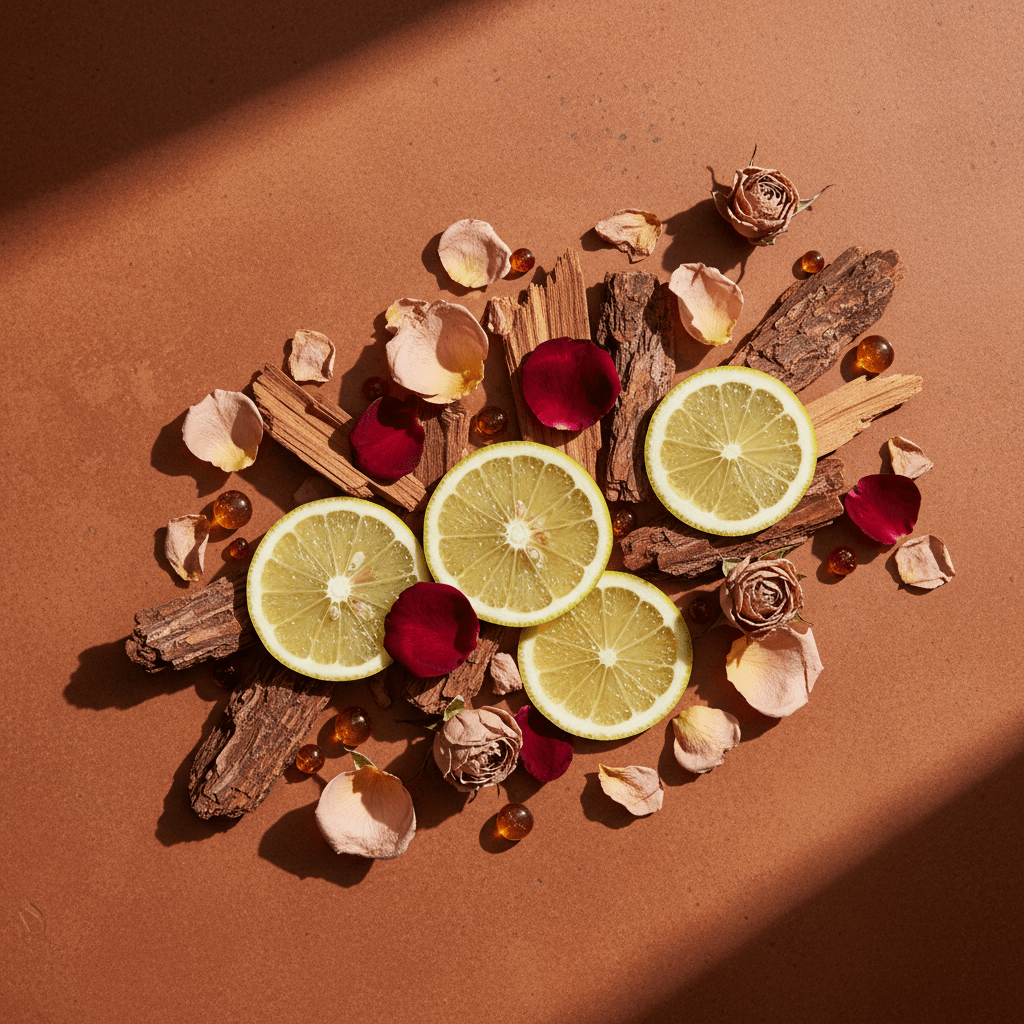
The Art of Natural Perfumery: Why Create a Fragrance with Essential Oils?
Have you ever caught a whiff of something—maybe fresh pine or peeling an orange—and felt instantly transported? That is the power of scent. But here’s the thing about those fancy bottles at the department store: they are often static. They smell exactly the same from the moment you spray them until you scrub them off.
A botanical fragrance is different. It’s alive. Because it comes from real plants, it changes on your skin throughout the day. It interacts with your own chemistry in a way that synthetic chemicals just can’t mimic.
Actually, that’s a big reason why so many people are diving into natural perfume making. We are all becoming a bit more careful about what we put on our bodies. The shift toward clean beauty is huge right now because, let’s be honest, who wants to spray mystery ingredients on their neck? You want a scent that is personal, safe, and clean.
At Aroma Monk, we see this shift firsthand. Our partners—from indie beauty creators to wellness brands—come to us for 100% pure, lab-tested oils because they know that great aromatic perfumery starts with pure ingredients. If you use low-quality oils, your perfume won’t just smell off; it won’t last.
So, are you ready to try your hand at a DIY essential oil perfume?
It might seem tricky at first, but we are going to break it down together. In this guide, we will cover everything from understanding top, middle, and base notes essential oils to mastering the art of essential oil blending for fragrance. We will even share some simple essential oil perfume recipes to get you started.
Let’s figure out how to make fragrance with essential oils that is uniquely yours.

The Perfumer’s Pyramid: Understanding Top, Middle, and Base Notes
Think of a perfume like your favorite song. It has an intro that grabs you, a chorus that tells the story, and a finale that sticks in your head. Perfumers call this the “olfactory pyramid.”
It sounds technical, but it’s actually pretty simple. It just means that different smells fade at different speeds.
If you threw all your oils together without a plan, you might end up with a scent that smells great for five minutes and then disappears. Or worse, a muddy mess. To build a scent that lasts and evolves, you need to understand the three layers.
The Top Notes: The Hello
These are the first thing you smell. They are the “handshake” of the fragrance. They are usually light, fresh, and sharp. Think of peeling a lemon or crushing fresh basil.
But here is the catch—they don’t last long. Top notes are highly volatile. That’s just a science word meaning they evaporate fast. Usually, they fade within 15 minutes to an hour fragrance longevity. Common choices here are citrus oils like bergamot or sweet orange.
The Middle Notes: The Heart
Once the intro fades, you meet the heart of the perfume. These notes usually show up after about 20 minutes. They are smoother and rounder. They really define what the perfume is about.
This is where you often find florals like lavender, geranium, or the more expensive jasmine. They bridge the gap between the flashy intro and the heavy finale.
The Base Notes: The Anchor
Finally, you have the base. These are the heavy lifters. They hang onto your skin for hours, sometimes even days. Ingredients like cedarwood, patchouli, or frankincense live here.
Actually, they do more than just smell good. On a molecular level, these heavy oils help “fix” the lighter scents so they don’t fly off your skin so fast fragrance fixatives. They ground the whole blend.
The Science of Evaporation
So why does this happen? It all comes down to the size of the molecules. Top notes are tiny and light, so they fly into the air (and your nose) quickly evaporation rate table. Base notes are big and heavy, so they sit tight.
When we source oils at Aroma Monk, we look for purity because real plant molecules behave differently than synthetic ones. You need distinct oils for each part of this pyramid to make it work.
The Golden Ratio for Beginners
Okay, so how do you mix them?
If you are just starting out, don’t overthink it. There is a simple formula that works for almost everyone. It’s called the 30-50-20 rule for making perfume:
- 30% Top Notes
- 50% Middle Notes
- 20% Base Notes
So, if you are using 10 drops of oil total, that would be 3 drops for the top, 5 drops for the middle, and 2 drops for the base. Easy, right?
This balance gives you a fresh start, a strong character, and a lasting finish.
Top Notes: The Bright, Fleeting Introduction to Your Fragrance
You know that immediate burst of scent you get when you first pull the cap off a bottle? That exhilarating, fresh moment? That is the top note doing its job.
In the world of natural perfume making, these oils are the optimists of the group. They are light, energetic, and impossible to ignore. But they are also the first to leave the party.
Because their molecules are so small and light, they evaporate quickly off your skin. We are talking about the first 15 minutes to maybe two hours, depending on your body heat and skin type. Oily skin, for example, tends to hold onto these notes a little longer than dry skin does skin chemistry and fragrance.
If you skipped them, your DIY essential oil perfume would feel heavy and flat right out of the bottle. You need that initial lift to pull the nose in.
The Citrus Heavyweights
When we talk about top middle base notes essential oils, the top category is almost always dominated by citrus. It is the gold standard for that “fresh/clean” feeling.
Think about the scents that make you feel awake:
- Bergamot: This is the sophisticated cousin of the orange. It’s floral, spicy, and the key ingredient in Earl Grey tea.
- Grapefruit: Sharp and tangy. It cuts through sweetness.
- Lemon & Lime: The classic refreshers.
- Sweet Orange: A bit softer and happier than the others.
But citrus isn’t the only player here. You also have the herbal and camphorous group. Oils like Basil, Spearmint, Eucalyptus, or even Peppermint can act as top notes. They add a green, snapping crispness that works amazing in men’s fragrances or gender-neutral scents.
A Serious Note on Safety (Please Read This)
Now, here is something a lot of blogs won’t tell you about essential oil blending for fragrance.
Citrus oils love the sun. But sometimes, they love it too much.
Many cold-pressed citrus oils are phototoxic. That means if you put them on your skin and then go out in the sun, you could get a nasty burn or discoloration. Not fun.
This happens because of natural compounds called furanocoumarins.
At Aroma Monk, we often work with product makers who need to navigate this safety hurdle. The solution? Look for steam-distilled citrus oils or specific versions labeled “FCF” (furocoumarin-free). Bergamot FCF, for instance, has had that reactive compound removed.
It smells the same, but it’s much safer for your skin.
If you are using standard cold-pressed oils, you just need to keep the percentage very low. But if you are new to how to make fragrance with essential oils, sticking to the safe versions is a smarter move.
The “Lift” Effect
Think of top notes like the helium in a balloon.
Without them, your heart and base notes (which we will get to in a second) just sort of sit there. Top notes provide the “lift.” They volatilize quickly, and as they rise into the air, they drag bits of the heart notes up with them.
It creates a seamless transition.
A great botanical fragrance startles you with a bright top note, then slowly morphs into something deeper. If you only used heavy oils like Patchouli, the scent would stick close to the skin and feel a bit muddy.
So, even if you love deep, musky scents, don’t skip the top notes. You need that brightness to make the darkness shine.
Middle (Heart) Notes: The Core Character of Your Essential Oil Perfume
So, the lemon zest has faded. The initial burst of energy is gone. Now what?
This is when your perfume really starts talking.
We call this the “heart” note for a reason. It is the core of the fragrance. In natural perfume making, this layer makes up about 50% to 70% of your total blend. While top notes are flashy and exciting, heart notes are the ones that stick around for the long conversation—usually lasting anywhere from 20 minutes to four hours.
If the top note is the handshake, the heart note is the personality.
These oils are heavier and more complex. They don’t just evaporate into thin air immediately. They bridge the gap, smoothing out the transition so your scent doesn’t just drop off a cliff after the citrus is gone.
The Floral Powerhouses
When people think of perfume, they usually think of flowers. This is where the heavy hitters live.
Oils like Rose, Jasmine, Ylang-Ylang, and Geranium are the stars here. But there is a catch—especially if you are sourcing ingredients for a business or a special DIY essential oil perfume.
Real floral oils are incredibly precious.
Take Jasmine, for example. It is often solvent-extracted to create what we call an “absolute” because the flowers are too delicate for high-heat steam distillation. It takes millions of hand-picked flowers just to make a single kilogram of oil. That is why the price tag is so high compared to something like Orange oil.
Actually, the extraction method changes the smell completely. Steam-distilled Rose (Rose Otto) smells fresh and dewy, while solvent-extracted Rose Absolute is deep, honey-like, and rich extraction methods.
At Aroma Monk, we often tell our partners: you don’t need a lot of these expensive absolutes. A tiny drop of pure Jasmine can dominate an entire blend. It’s potent stuff.

Typical Heart Note Families
It’s not just about flowers though. Heart notes usually fall into three main buckets:
- Florals: Romantic and classic. Lavender also sits here (though it has some top note qualities too).
- Spices: Think Cinnamon, Clove, Nutmeg, and Cardamom. These add warmth and kick.
- Greens: Oils like Pine, Rosemary, or Violet Leaf. They smell like crushed leaves or a forest floor.
A Warning on Spices (Don’t Burn Your Skin)
We need to have a serious talk about the spicy oils.
I love the smell of cinnamon. It feels like a warm hug. But if you put cinnamon bark oil directly on your skin? It will feel like a chemical burn.
Spices like Clove and Cinnamon are incredibly strong sensitizers.
Safety guidelines from organizations like IFRA (International Fragrance Association) are very strict here. For example, Clove Bud oil is high in a compound called eugenol. To keep it safe for skin, you usually have to keep it below 2.5% of your final product. Cinnamon is even lower—often less than 0.5%.
If you use these in your essential oil blending for fragrance, less is definitely more. You want the warmth, not the fire.
The Functional Bridge
Here is a little secret about top middle base notes essential oils.
Heart notes have a job to do that isn’t just about smelling good. They are there to hide the base notes.
Base notes (which we will cover next) can smell a little heavy, earthy, or even unpleasant when you first put them on. They need time to warm up on the skin. The heart notes cover up that initial heaviness. They keep the scent smelling rounded and full while the deep base notes wake up.
If you skip the heart, your perfume might smell thin and disjointed.
So, when you are mixing, give the heart plenty of space. It’s the story you are trying to tell.
Base Notes: The Enduring Foundation and Natural Fixatives
So, the lemon has flown off. The rose is starting to fade. What is left on your skin five, six, or ten hours later?
That is the job of the base notes.
In natural perfume making, these are the heavy hitters. They are the oils that don’t want to leave. While top notes are like a text message—quick and fun—base notes are like a handwritten letter. They stick around.
Without them, your fragrance with essential oils would just disappear.
The Anchor (Or Why Scent Stays)
Perfumers call these oils “fixatives.”
It sounds fancy, but the concept is actually pretty grounded. Think of your perfume blend like a net. Top notes are tiny and slip through the holes easily. Base notes possess large, heavy molecules. They act like a trap.
When you mix a heavy oil like Vetiver with a light oil like Bergamot, the heavy molecules actually grab onto the lighter ones. They physically weigh them down. This slows the evaporation process, meaning your citrus smell might last for an hour instead of just 15 minutes fragrance fixatives science.
It isn’t magic. It’s molecular weight.
The Three Pillars of the Base
When we are teaching people how to make fragrance with essential oils, we usually group base notes into three families. You generally want at least one of these to ground your blend.
1. The Woods
These are dry, warm, and sturdy.
- Cedarwood: It smells like a pencil shaving or a dry sauna. It is reliable and blends with almost anything.
- Sandalwood: The king of woods. It is creamy, soft, and milky. It doesn’t smell “woody” like a pine tree; it smells like smooth skin.
2. The Resins
These come from tree sap. They are sticky, rich, and ancient.
- Frankincense: It has a spicy, balsamic smell. It adds a sense of mystery.
- Myrrh: A bit earthier and medicinal, but very warm.
- Benzoin: actually, this one smells like vanilla. It is incredibly comforting and sweet.
3. The Earth
These oils smell like the ground itself.
- Vetiver: Imagine fresh grass that has been smoked over a fire. It is deep and rooty.
- Patchouli: You probably know this one. It is sweet, dark, and musky. Love it or hate it, it is one of the best fixatives in the world.
- Oakmoss: This smells like a damp forest floor. It creates a category of perfume called “Chypre.”

The Truth About Musk and Animals
Here is something we need to talk about.
Historically, the best base notes came from animals. Musk deer, civet cats, and whales. It was cruel, and thankfully, it is mostly illegal or banned now.
But if you want that sexy, skin-like smell in a botanical fragrance, what do you do? Synthetics are one option, but we prefer plants.
Nature gave us Ambrette Seed. It comes from a hibiscus plant, and it smells incredibly close to real musk. It is warm, nutty, and soft. It connects with your skin chemistry perfectly without harming any animals plant-based musk alternatives.
A Serious Note on Sustainability
Base notes come from the oldest parts of the plant—the wood, the roots, the resin. That means you often have to kill the tree to get the oil.
This causes big problems.
Indian Sandalwood and Frankincense are being over-harvested. It is a crisis. Trees are disappearing faster than they can grow back.
At Aroma Monk, this keeps us up at night. We verify our sources because buying cheap Sandalwood often means you are supporting illegal poaching. It is better to pay more for Australian Sandalwood (which is grown on plantations) or ethically tapped Frankincense than to be part of the problem.
When you build your DIY essential oil perfume, you are making a choice. Choose ingredients that leave the planet standing.
So now you have your pyramid: Top, Middle, Base. But how do you actually put them together without making a mess?# Beyond Notes: Blending Your Fragrance with Essential Oil Families
So, you understand the pyramid. You know your top notes from your base notes. But why do some blends smell like a warm hug, while others smell a bit like… floor cleaner?
It usually comes down to “Fragrance Families.”
Think of this like a color wheel for your nose. Just like blue and orange pop when they are next to each other, certain scent families create magic when they meet. If you just throw random oils together without knowing their family address, you usually end up with a muddy confusion.
In aromatic perfumery, we generally group essential oils into four big neighborhoods:
- Fresh: This is your citrus, herbs, and leafy greens. It is zesty, snappy, and energetic.
- Floral: The romantic stuff. Rose, Jasmine, Ylang-Ylang.
- Woody: The grounding, earthy scents. Cedarwood, Vetiver, Sandalwood.
- Amber (often called Oriental): These are warm, spicy, and sweet. Think Vanilla, Benzoin, and Clove.
How to Mix Families Without Making a Mess
If you are just figuring out how to make fragrance with essential oils, picking a lane helps.
You can stay in one family for something simple. But the real fun happens when you start crossing the lines. Actually, most famous perfumes you know and love are hybrids.
Here are two classic combos that professional perfumers use all the time.
1. The Floriental (Floral + Amber)
This is probably the most popular style for evening perfumes. You take the romance of flowers and ground them with warm spices or resins.
- Try this: Mix a heart of Jasmine (Floral) with a base of Vanilla or Benzoin (Amber).
- The result: It is sweet, creamy, and undeniably seductive. It stops the flowers from feeling too “garden-party” and makes them feel more “night-out.”
2. The Chypre (Fresh + Woody)
Okay, this one is fancy. Pronounced “sheep-ra,” this family is arguably the most sophisticated in perfume history. It relies on contrast. You need a bright top note clashing against a dark, mossy base.
- The classic structure: Bergamot (Fresh) + Oakmoss & Patchouli (Woody).
- The vibe: It feels professional, dry, and earthy. It isn’t sweet at all, which makes it perfect for gender-neutral scent profiles.
For our Aroma Monk partners who are building product lines, we often suggest starting with these classic structures. It reduces the trial and error. You know a Floriental is going to work before you even open the bottle.
But here is the thing about essential oil blending for fragrance—the quality of that “Woody” or “Floral” note dictates the whole vibe. If you buy a cheap Cedarwood that smells like pencil shavings and chemicals, it won’t anchor your Fresh notes. It will just overpower them.
Mixing families is about balance. You are trying to get the fresh notes to get along with the woody notes. And when they do? That is when you get a botanical fragrance that feels like a masterpiece.
The Responsible Perfumer: Safety, Dilution, and Quality Sourcing
Let’s get real for a second. Just because something is “natural” doesn’t mean it’s harmless. Poison ivy is natural, but you wouldn’t rub it on your neck.
When you start mixing your own fragrance with essential oils, you are basically doing chemistry. Powerful chemistry.
The “Fragrance Oil” Trap
First, take a hard look at your bottle. Does it say “Fragrance Oil” or “Perfume Oil”? If so, put it back. These are usually synthetic knock-offs made in a lab. They might smell like a rose, but they have zero therapeutic value and often contain hidden chemicals.
At Aroma Monk, we are obsessed with the real thing. We talk about GC/MS reports—basically a chemical fingerprint test for oil—because that is the only way to know you are getting 100% pure plant extract. If a supplier can’t show you the test results, you should probably look elsewhere. Impurities don’t just ruin your scent; they can actually irritate your skin verifying essential oil quality.
The Magic of Carrier Oils
You never want to apply pure essential oil directly to your skin. It is way too concentrated. You need a vehicle to carry it.
We call these “carrier oils.” The gold standard for perfume? Jojoba Oil.
Actually, Jojoba isn’t really an oil. It is a liquid wax that closely mimics your skin’s natural sebum. It doesn’t go rancid quickly, and it doesn’t have a strong smell of its own, so it won’t mess up your beautiful blend. Fractionated Coconut Oil (FCO) is another solid choice because it stays liquid and is totally clear.
Doing the Math: Dilution Guidelines
So, how much essential oil do you actually put in the bottle? It depends on how strong you want it. Here is a simple breakdown:
- Eau de Toilette (Light): 5% to 10% essential oils.
- Eau de Parfum (Strong): 15% to 20% essential oils.
If you have a standard 10ml roller bottle, that holds about 200 drops of liquid total. Multiplied out, for a strong perfume (20%), you would use about 40 drops of essential oils and fill the rest with Jojoba dilution guidelines.
Red Flags: Phototoxicity and Sensitizers
Here is where beginners often get burned—literally.
The Sun Warning:
Citrus oils like Lemon, Lime, and cold-pressed Bergamot are phototoxic. If you spray them on your neck and go to the beach, the UV rays react with the oil and can cause blisters or dark spots. Always look for “FCF” (Furocoumarin-free) versions or steam-distilled citrus oils to stay safe citrus safety.
The Spice Warning:
Cinnamon and Clove smell cozy, but they are serious skin irritants.
Safety standards suggest keeping Cinnamon Bark oil extremely low—often below 0.5% of your total recipe. That is less than one drop in a regular bottle. If you use too much, your perfume will sting. It is safer to rely on base notes like Cedarwood for depth and just use a tiny hint of spice.
Safety isn’t boring. It is how you make sure your signature scent is a pleasure, not a pain.
Your Olfactory Journey Begins: Start Crafting Your Signature Scent
So, you have the map. You understand the pyramid and the families. But actually making the perfume? That is where the real fun starts.
Don’t feel like you need to buy the whole store at once. Seriously, keep it simple.
Start with just three oils. Maybe grab a bright Bergamot for the top, a calming Lavender for the heart, and a sturdy Cedarwood for the base. Mix them up using that 30-50-20 rule we talked about earlier. It probably won’t be perfect the first time, and that is totally okay. You are learning a new language.
And please, keep it safe. These are powerful tools. Always dilute your oils and respect the chemistry. If you get stuck or want to geek out, there are great communities out there like Basenotes where people help each other figure this stuff out online communities.
Helen Keller once said, “Smell is a potent wizard that transports you across thousands of miles and all the years you have lived.”
She was right. The scent you create today might remind you of this moment ten years from now.
So, go ahead to the Aroma Monk shop and pick your ingredients. Open a bottle. Trust your nose. Your signature scent is waiting for you to find it.