
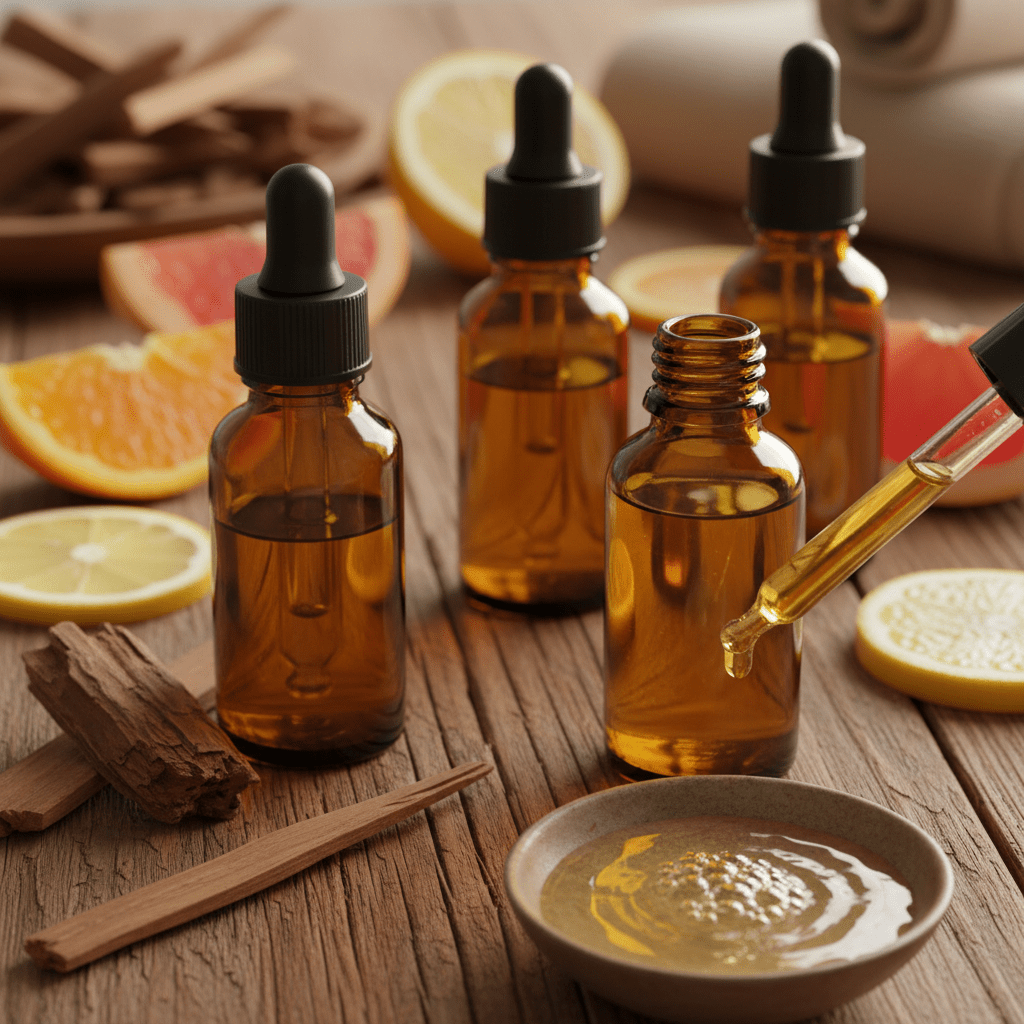
The Allure and Frustration of DIY Perfumery
Who doesn’t want their own signature scent? The idea of mixing bottles like a mad scientist, or maybe a wizard, is pretty appealing. Plus, with everyone shifting toward cleaner, green living, DIY perfume making is catching on fast. We all want to know exactly what we’re putting on our skin.
But here’s the harsh reality nobody talks about at first.
You spend good money on oils, mix a bunch of drops, and it smells like distinct dirt. Or worse, you create something that smells amazing for exactly four minutes, and then?
Poof. Gone.
We’ve all been there. You try to figure out how to make essential oil perfume, only to end up with a muddy mess or a scent that just won’t stick. It’s super frustrating to watch expensive ingredients go down the drain.
That’s exactly why grabbing a solid essential oil perfume kit is often better than buying random bottles. It gives you a roadmap. But even with a kit, things can go sideways if you don’t know the rules.
So, let’s fix that. In this guide, we’ll walk through the big mistakes—the ones that turn a fun project into a headache—so you can skip the failures and get straight to the good stuff.
Mistake #1: Ignoring the Science of Perfume Notes
Imagine trying to build a house starting with the roof. It would crash down immediately, right? Well, that is exactly what happens when you ignore the structure of your scent.
Most beginners grab the best essential oils for perfume—maybe some sweet orange and lavender—and just mix them up. It smells great for about ten minutes. Then? It disappears. Or it turns into something that smells weirdly flat.
Here is the secret: Oils are not created equal. They have different “weights.”
To fix this, you have to think of your perfume like a pyramid. This is what the pros call the “Fragrance Pyramid.” It has three parts based on how fast the oils evaporate:
- Top Notes (The Handshake): These are the light molecules. They are the first thing you smell, but they burn off fast—usually in 5 to 15 minutes. Think citrus oils like lemon or bergamot.
- Middle Notes (The Heart): Once the top notes fade, these take over. They are the main character of your story and last for a couple of hours. Lavender and Rose are classic examples here.
- Base Notes (The Anchor): These are the heavy lifters. They hang around for hours (or even days) and hold the whole blend together. We’re talking about rich scents like Sandalwood, Patchouli, or Vetiver.

If you skip this structure, you run into trouble.
If you use too many top notes, your scent is fleeting. If you use too many base notes, it feels heavy and “muddy”—like a blanket that’s too thick. A good essential oil perfume kit will usually label these for you, which is a huge help.
The Golden Ratio
So, how do you balance it? You don’t need a chemistry degree. You just need a simple rule of thumb for essential oil blending for beginners.
Try the 30-50-20 Rule:
| Note Type | Percentage | Drops (per 10 drops) |
|---|---|---|
| Top | 30% | 3 Drops |
| Middle | 50% | 5 Drops |
| Base | 20% | 2 Drops |
This isn’t a hard law you can’t break. But when you are starting out, this ratio saves you from wasting your precious oils on blends that don’t work. It gives your perfume a bright opening, a solid heart, and a lasting finish.
Once you master this, you can start breaking the rules. But for now? Stick to the pyramid.
Mistake #2: Getting Dilution Ratios Wrong (Or Skipping Carrier Oils)
It’s tempting, right? You want your scent to be strong, so you think, “I’ll just skip the boring stuff and use the essential oils straight.”
Please don’t do that.
Putting undiluted essential oils directly on your skin is a recipe for disaster. We’re talking about redness, itching, and in some cases, nasty chemical burns. There is even something called “sensitization,” where you develop an allergy to an oil forever just because you used too much of it once.
That is where carrier oils come in.
Think of carrier oils as the vehicle that drives the scent into your skin. Without them, those volatile top notes just flash off into thin air. A good carrier oil anchors the scent so it actually lasts longer than a commercial break.
Picking Your Carrier
Not all oils work for perfume. You definitely don’t want to smell like a salad, so skip the Olive Oil.
- Jojoba Oil: This is a favorite for
DIY perfume making. It mimics your skin’s natural sebum, so it absorbs perfectly. Plus, it has a shelf life of several years, meaning your perfume won’t go rancid next month. - Fractionated Coconut Oil: It’s super light, has zero smell, and stays liquid. This is great if you want the scent to be the only thing people notice.
- Sweet Almond Oil: Great for dry skin, though it can sometimes add a tiny nutty scent.
If you are sourcing ingredients for a business or a big project, finding verified pure carrier oils is a big deal—places like Aroma Monk specialize in these bulk basics so you aren’t guessing about purity. But even for a home project, quality matters.
The Magic Number
So, how much should you use?
For a standard essential oil perfume roller recipe, you generally want a concentration between 5% and 10%.
If you are filling a standard 10ml roller bottle, the math looks like this:
- Carrier Oil: Fill almost to the top.
- Essential Oils: Add about 15 to 30 drops total.
Safety experts warn that ignoring dilution guidelines is one of the most common causes of adverse reactions. Therapeutic blends for massages are usually much weaker (like 2%). But for perfume? You can bump it up a little—just don’t go neat.
Mistake #3: Forgetting the ‘Why’ — Choosing Oils Based on Scent Alone
Okay, raise your hand if you’ve done this.
You love the smell of Peppermint. You also really love the rich, sweet smell of Ylang Ylang. So, you figure, “Hey, I’ll just mix them together and it’ll be double the awesome.”
But then you take a sniff. And honestly? It smells confusing. Maybe like a toothpaste factory exploded inside a flower shop.
This is a classic rookie move. We tend to pick oils just because we like them individually. But in DIY perfume making, you have to look at the bigger picture. You have to look at the vibe.
Oils Have Personalities
Think of your essential oils like people at a party.
Some are loud and energetic (like Lemon or Eucalyptus). They want to dance on the tables. Others are quiet, chill, and grounding (like Cedarwood or Vetiver). They want to sit in the corner and have a deep conversation.

If you throw a bunch of loud oils in a room with quiet ones without a plan, the party gets awkward fast. The scents clash. They fight for attention instead of working together.
The Fix: Stick to the Family
When you are learning how to make essential oil perfume, the easiest way to avoid this clash is to stick to “scent families.”
Families are groups of scents that naturally get along.
- Florals (Rose, Jasmine) love hanging out with Citrus (Orange, Bergamot).
- Woods (Sandalwood, Pine) are best friends with Spices (Clove, Cinnamon).
It’s about creating synergy. That’s just a fancy word for when two oils mix together to create a third, better scent that is totally unique. For example, mixing Lavender and Roman Chamomile isn’t just “lavender plus chamomile”—it becomes a calming, spa-like escape.
Purity Matters Here
One quick side note—this “personality” thing only works if the oils differ. Or rather, if they are real.
If you are using cheap, synthetic knock-offs, they won’t have the same depth or connection. They just smell like chemicals. That’s why sourcing from places that verify 100% purity, like Aroma Monk, is a big deal if you want your blend to actually feel right, not just smell strong. You need that authentic plant energy for the families to bond properly.
So before you add that next drop, ask yourself: “Do these two actually like each other?”
If the answer is no, put the bottle down.
Mistake #4: The Impatience Problem – Skipping the Maturation Process
You just finished your first blend. It looks beautiful in the bottle. Naturally, you want to slather it on immediately and show off your new signature scent.
Stop. Put the bottle down.
If you smell your creation right now, you might be disappointed. It probably smells sharp, a little like rubbing alcohol, or just… disjointed. Like the lemon is shouting over here and the cedarwood is grumbling over there.
This is where many beginners panic and think they messed up the recipe. You didn’t. You just didn’t let it cook.
In the perfume world, this is called maturation (or maceration).
Think of it like making a big pot of chili or spaghetti sauce. You know how it always tastes better the next day? That’s because the flavors need time to meld together. Perfume is arguably the same way. The molecular chains in the oils need time to bond with the alcohol or carrier oil to create something smoother.
The Waiting Game
If you buy a high-quality essential oil perfume kit, the instructions usually hide this step in fine print. But it’s the difference between a scent that smells “homemade” (in a bad way) and one that smells professional.
Here is the timeline you need to follow according to perfumery standards:
- The Minimum: Let your blend rest for at least 48 hours. This gets rid of that harsh alcohol blast.
- The Sweet Spot: Ideally, leave it alone for 2 to 4 weeks.
I know, that sounds like forever. But during this time, the scent changes completely. The sharp edges smooth out. The top, middle, and base notes stop fighting and start dancing together.
Where to Hide It
Don’t leave your bottle on a sunny windowsill. Light and heat are the enemies of DIY perfume making. They break down those delicate oils you spent good money on.
Instead, stick your new perfume in a cool, dark cupboard. Shake it gently once every few days to help things mix.
And look, even if you source the absolutely best ingredients—like standard-setting pure oils from Aroma Monk—patience is still the secret ingredient you can’t buy. So, label it with a date, hide it behind your towels, and try to forget about it for a month.
Trust me, it’s worth the wait.
Mistake #5: Starting Blind — Skipping a Blending Strategy
You know that feeling when you get a new gadget and immediately throw the instructions in the trash? We all do it.
With DIY perfume making, it is super tempting to just grab a bottle and start dripping oils in. You feel like a wizard mixing potions. A little bit of this, a dash of that. It’s fun… until it isn’t.
Here is the problem. You can’t “undrop” an essential oil.
Once that heavy drop of Patchouli lands in your delicate floral blend, there is no going back. You have to live with it, or dump the whole thing down the sink. That is a lot of wasted money (and precious oil).
The Paper Strip Trick
Professional perfumers never—and I mean never—mix directly in the bottle first. They use “blotter strips.”
These are just thin strips of absorbent paper. You can buy them, or honest, you can cut up unbleached coffee filters if you are in a pinch. Here is how you use them to avoid common perfume making mistakes:
- Dip: Put a tiny bit of Oil A on one strip. Put Oil B on a separate strip.
- The Fan: Hold the two strips together in your hand like a fan.
- Waft: Wave them under your nose.

Don’t like the combo? Move the strips apart. Move one closer and one further away to test different strengths. This lets you “preview” the scent without wasting a single drop of your actual supply. It’s a huge money saver.
Write It Down (Seriously)
I can’t tell you how many times I’ve made a natural perfume recipe that smelled incredible, only to realize I had no idea how I did it. Was it 3 drops of Bergamot or 4?
If you don’t write it down, it didn’t happen.
Keep a simple journal. Track every drop. Even the failures (especially the failures). When you finally create that perfect scent using the best essential oils for perfume, you want to be able to make it again.
Plus, seeing your formulas on paper helps you spot patterns in what you like. It turns a guessing game into actual skill.
So, get some paper strips and test before you pour. Your nose will thank you.
The Solution: How a Quality Essential Oil Perfume Kit Prevents These Errors
If reading about all those potential disasters made you sweat a little, take a breath. It sounds like a lot of chemistry, right?
That is exactly why picking up a pre-made essential oil perfume kit is the smartest move for a beginner.
Think of a kit as training wheels for your nose. Instead of staring at hundreds of random bottles online and guessing which best essential oils for perfume might work together, a kit does the hard work for you.
Instant Structure
Remember the fragrance pyramid we talked about? A good kit doesn’t just throw random scents at you. It typically includes a curated selection of oils that are specifically chosen to blend well.
You get your bright citrus tops, your floral hearts, and your woody bases all in one box. It basically forces you to follow the top middle base notes chart without even trying. You don’t have to worry if the scents clash because they were picked to be friends.
The Right Tools Included
Mistakes often happen when you try to eyeball measurements. “Is that 5ml or 10ml?” Who knows?
Most quality kits solve this by including:
- Pipettes or Droppers: These let you count exact drops so you can follow a
natural perfume recipeeffectively. - Proper Bottles: Whether it’s a roller bottle or a spray vial, you get the right container for the job.
- Carrier Oils: Usually pre-measured or clearly labeled.
This solves the dilution drama immediately. You don’t have to hunt for safe bottles or wonder if your carrier oil is fresh.
Building Confidence First
The market for natural, personal care is exploding right now because we all want safer, cleaner options than mass-produced chemical sprays. But nothing kills that excitement faster than spending fifty bucks on ingredients just to make “eau de wet dog.”
A kit gives you a quick win. You create something that smells good on day one.
Once you master the basics with a kit, you can branch out. That is when you start sourcing bigger bottles of certified pure oils from professional suppliers like Aroma Monk to build your own custom library. But to start? Keep it simple. Get a kit, follow the map, and enjoy the process.
Begin Your Fragrance Journey with Confidence
It feels like a lot to remember, doesn’t it? We talked about pyramids, dilution math, and waiting weeks for a scent to “cook.” You might be thinking it’s easier to just buy a bottle from the store.
But don’t give up yet. These rules aren’t here to stop you; they are here to keep your skin safe and make your hard work actually last. Once you get it right, there is nothing like someone asking, “What are you wearing?” and telling them you made it yourself.
Here is the quick cheat sheet to stay on track:
- Mind the Gap: Don’t skip the carrier oils.
- Watch the Clock: Let your blend rest (yes, really).
- Build the Pyramid: Top, Middle, and Base notes are your best friends.
To skip the headaches, starting with a curated essential oil perfume kit is honestly the smartest move. It removes the guesswork. You get the right notes that already play nice together, and you don’t have to worry about buying expensive ingredients before you know what you like.
Start there. Experiment with the pre-set paths. Then, when you are ready to scale up—maybe creating gifts for friends or even launching a side hustle—you can graduate to sourcing pure, bulk ingredients from professional suppliers like Aroma Monk. But for now? Just have fun with it. Grab a kit, trust your nose, and start mixing.