
Introduction: The Quest for a Natural Clean & The Power of Pine
You know that smell. The sharp, woodsy scent instantly makes a room feel scrubbed clean. For many of us, it brings back memories of Saturday morning chores at Grandma’s house. But lately, things have changed. We’re looking closer at the labels on our cleaning bottles. We’re asking harder questions. Are we actually cleaning our homes, or are we just filling them with harsh chemicals that give us headaches?
You aren’t the only one wondering this. Actually, it’s a massive shift. In 2024 alone, the world spent over $12 billion on eco-friendly cleaning products Eco-friendly Cleaning Products Market Analysis. We all want a natural disinfectant cleaner that actually works, without the scary warning labels found on bleach or synthetic fluids.
This is where pine oil disinfectant comes back into the picture. It’s not just a nice smell from a car air freshener. It is a plant-derived powerhouse that has been used since the 1920s. But let’s be honest—there is a lot of confusion out there. Is it a sanitizer? Does it kill viruses? Or is it just perfume?
In this guide, we are going to look at the facts. No marketing fluff. We will break down the science of pine oil benefits, exactly what it can clean, and how to use it safely without ruining your floors.
What Exactly is Pine Oil? From Pine Tree to Cleaning Bottle
Okay, let’s start with the basics. Where does this powerful liquid actually come from?
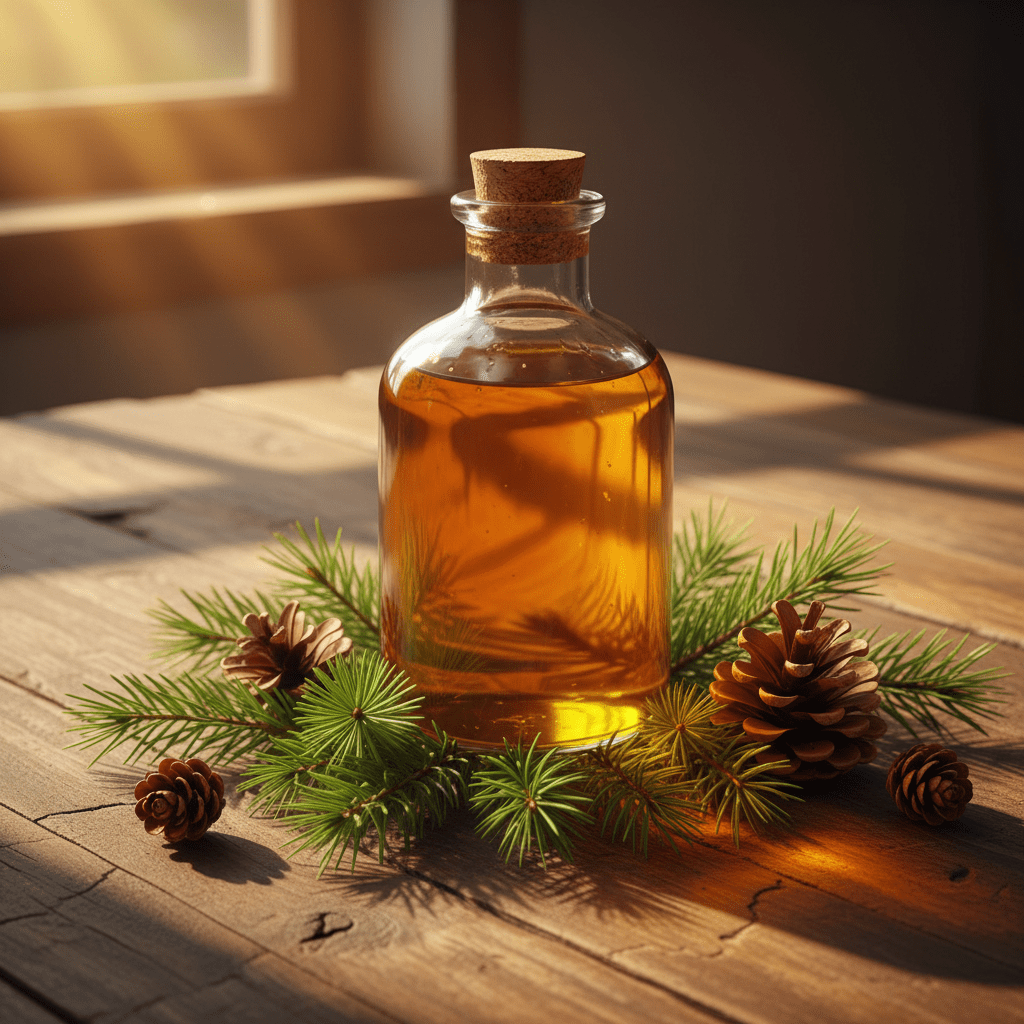
It isn’t cooked up in a chemical factory. True pine oil comes directly from nature. It is made from pine trees (specifically the Pinus family). Makers take the needles, twigs, cones, and sometimes even old pine stumps, and put them through a process called steam distillation. This steam pulls out the intense oils hiding inside the wood.
The result is a strong, golden liquid that smells like a dense forest. But here is the thing—what you buy in the store might not be what you think it is.
Pure Oil vs. “Pine” Cleaners
When you are looking for a natural disinfectant cleaner, you will usually see two different types of products. It can get confusing.

- Pure Pine Essential Oil: This is the real deal. It is 100% oil. It is incredibly strong. You usually buy this in smaller bottles only (like the pure, lab-tested ones we handle at Aroma Monk). You absolutely cannot pour this straight on your floor. It is too strong. You have to mix it with water or soap first.
- Commercial Pine Cleaners: These are the big jugs. They are mixtures. They might have soap, water, alcohol, and some pine oil mixed in.
The “Pine-Sol” Confusion
We have to talk about the big yellow bottle. For a long time, Pine-Sol was the most famous cleaner around. It worked so well because it was packed with real pine oil—up to 12% of the bottle was the real stuff!
But lately, that changed.
If you buy the standard bottle at a regular grocery store today, you might be surprised. Around 2014, the formula for the main retail version changed to cut costs and supply issues. Now, many of those bottles don’t use pine oil as the main cleaner anymore Pine-Sol Formulation History. They often use other chemical cleaners and just add a pine scent.
This is why understanding pine sol vs pine oil is so important. If you want the actual pine oil benefits, you need to check the label. You are looking for “pine oil” listed as an active ingredient.
Why Real Oil Matters
Why do we care if it’s real? It’s not just about the smell. Real pine oil is rich in a compound called alpha-terpineol. This is the secret weapon. It is what actually breaks down grease and fights germs. A fake pine perfume can’t do that.
So, if you want a pine essential oil for cleaning that actually works, you have to make sure you are getting the oil that came from a tree, not just a scent that came from a lab.
The Science of Disinfection: How Terpineol Makes Pine Oil a Germ Killer
So, how does liquid from a tree actually kill germs?
It isn’t magic. It’s actually pretty simple chemistry. You don’t need a white lab coat to understand it.
Inside that golden oil, there is a specific natural chemical. It is called alpha-terpineol. If pine oil was a sports team, terpineol would be the captain. It does the heavy lifting. While the other parts of the oil add that nice smell or help lift dirt, the terpineol disinfectant power is what fights the bad guys.
How It Popped the Balloon
Think of a nasty virus or bacteria. Many of them are wrapped in a little skin made of fat. Scientists call this a “lipid membrane.”
Here is what happens when pine oil attacks:
- The Approach: You wipe the surface with your pine cleaner.
- The Contact: The alpha-terpineol touches the germ.
- The Melt: Because terpineol is a type of natural alcohol/solvent, it dissolves that fatty skin instantly.
- The Pop: Without its skin, the germ falls apart and dies.
It’s basically like popping a water balloon. Once the rubber breaks, the water goes everywhere and the balloon is gone. This happens fast, too. Some tests show it can kill germs in just a minute or two.
The Hit List: What Does It Kill?
So, who is on the hit list? A good natural disinfectant cleaner needs to be tough on the usual suspects.
Science shows pine oil is effective against some pretty scary stuff. It works well on Gram-negative bacteria like E. coli and Salmonella. We all worry about those in our kitchens. It helps fight them off. It also handles fungi, like Candida (which causes yeast infections).
Plus, it knocks out “enveloped viruses.” These are the viruses with that fatty shell I mentioned. The big one? Influenza A. Yes, the flu.
Managing Expectations (It’s Not a Miracle)
But wait. I have to be real with you.
Pine oil is strong, but it isn’t a miracle cure for everything. Remember that balloon analogy? Well, some viruses don’t have a balloon. They are like rocks. They don’t have a fatty shell to melt.
These are called “non-enveloped” viruses. Nasty bugs like Norovirus (the stomach flu) fall into this category. Pine oil struggles to kill them because there is no shell to dissolve. That is why knowing is pine oil a sanitizer or disinfectant helps. It disinfects specific types of germs very well, but not every single germ on earth.
This is also why the quality matters. A cheap cleaner with only 1% pine oil won’t have enough alpha-terpineol to pop those balloons. You need the pure stuff—like the lab-tested oils we verify at Aroma Monk—to get the real cleaning power.
Disinfectant vs. Sanitizer vs. Cleaner: Where Does Pine Oil Fit In?
We often use these words like they mean the exact same thing. I do it too. “I’m going to disinfect the kitchen,” usually just means I’m going to wipe down the counters.
But if you are serious about pine oil uses for health, the difference is actually a big deal. The EPA (Environmental Protection Agency) even has strict legal definitions for them. Knowing the difference changes how you mix your solution and what you expect it to do.
Let’s break it down simply:
- Cleaning: This is just removing dirt, dust, and crumbs. You are physically wiping germs away, but you aren’t necessarily killing them chemically. Soap and water are cleaners.
- Sanitizing: This sounds strong, but it’s the middle ground. It lowers the number of germs to a safe level. Think of it like a quick safety check.
- Disinfecting: This is the heavy lifter. To be a true disinfectant, a product has to kill nearly everything on the list—usually 99.9% of germs—within a specific time limit (often 5 to 10 minutes).
The Legal Side of “Killing Germs”
Here is something wild. In the United States, you can’t just slap the word “disinfectant” on a bottle because you feel like it. It is illegal.
Because disinfectants kill living things (bacteria are alive, after all), the government classifies them as pesticides. To be sold as a disinfectant, a product has to pass rigorous lab tests and get a registration number EPA on Disinfectants vs Sanitizers. If a bottle of pine cleaner promises to kill the flu virus but doesn’t have that tiny EPA number on the back, be careful. It might just be soap with a nice smell.
So, Is Pine Oil a Sanitizer or Disinfectant?
This is the most common question we get. The answer? It depends on the bottle.
It comes down to concentration.
If you have a bottle of commercial cleaner that only has 1% pine oil? That is a cleaner. It smells great and lifts dirt, but it won’t pop those virus balloons we talked about earlier.
But if you have a product with high concentrations—we’re talking 20% to 80% pine oil—that is a legitimate disinfectant. In fact, heavy-duty products with 80% pine oil are often registered to kill Salmonella and other nasty bugs, provided you let them sit on the surface for about 10 minutes.
This is why many people prefer buying pure pine essential oil (like the kind we supply for product makers) or highly concentrated commercial blends. It gives you control. You can mix it weak for a daily floor wash, or mix it strong when you really need to deep clean the bathroom.
Get a quote from Aroma Monk.
Essential Oil Supplier – Bulk pricing • Samples • Fast response
Your Practical Guide to Using Pine Oil as a Natural Disinfectant
So, you have a bottle of pure oil. Now what?
This is the fun part. You get to play chemist in your own kitchen. Making your own DIY pine oil cleaner is usually cheaper than buying the yellow bottles, plus you know exactly what is inside. No mystery ingredients.
But before you start pouring, we have to talk about oil and water. They hate each other. If you dump pine oil into a bucket of water, it just floats on top. That means one wipe gets plain water, and the next wipe gets pure, burning oil. Not good.
You need a peacemaker. A little bit of soap (we use Castile soap) helps the oil and water mix together.
The “Do-It-All” Spray Recipe
Here is a simple recipe we use. It works great for counters, doorknobs, and bathroom sinks.
- The Mixer: 1 teaspoon of unscented liquid Castile soap.
- The Power: 15 to 20 drops of pure pine essential oil for cleaning.
- The Base: 1 cup of warm water.
- The Bottle: A glass spray bottle (essential oils can sometimes eat handy-dandy plastic bottles over time).
How to make it:
- Pour the soap into the bottle first.
- Add the pine oil. Swirl them together.
- Add the water last. You will see it turn milky white. That is called the “bloom.” It’s actually a good sign—it means you have high-quality oil.

The Floor Master Recipe
Need to mop the whole house? This is where pine oil uses really shine.
- 1 gallon of hot water.
- ¼ cup of white vinegar (helps cut grease).
- 1 tablespoon of Castile soap.
- 1 teaspoon of pine oil disinfectant (about 50-60 drops).
Mix it up in a bucket. It cuts through scuff marks like crazy.
Where is it Safe?
Pine oil is tough, but it isn’t safe for everything.
- Green Light (Safe): Ceramic tile, linoleum, sealed wood floors, toilets, stainless steel, and garbage cans.
- Red Light (Stop): Unsealed wood (it soaks in and can stain), unsealed stone, and certain soft plastics.
Also, be careful with pets. Cats can be very sensitive to essential oils. It is best to keep them out of the room until the floors are totally dry.
The “Pre-Clean” Rule
Here is a secret that cleaning pros know: You cannot disinfect a dirty surface.
If your counter has crumbs, grease, and coffee spills on it, the pine oil can’t reach the germs hiding underneath. You have to wipe away the physical dirt first.
Once it looks clean, then you spray your pine mixture. And here is the trick—let it sit. Don’t wipe it instantly. To get the full pine oil benefits, the liquid needs time to pop those virus balloons we talked about. Give it 5 or 10 minutes, then wipe it dry.
One last thing. Because this is powerful stuff, don’t sniff the bottle directly. It can sting your nose. Open a window when you clean. And since you are making this from scratch, quality matters. You want real oil, not perfume. That’s why makers trust sources like Aroma Monk for the raw, lab-tested ingredients that actually get the job done.
You are basically making a professional-grade cleaner at home. Pretty cool, right?
More Than a Disinfectant: The Deodorizing & Degreasing Power of Pine Oil
We have talked a lot about killing germs. And that is important. But let’s be honest for a second.
Most of the time, I am not scrubbing my counter because I am worried about microscopic bacteria. I am scrubbing it because there is a sticky ring from a juice cup. Or because I fried bacon and the stove is covered in little grease dots.
This is where pine oil uses go way beyond just being a disinfectant. It is actually one of the strongest natural degreasers on the planet.
The Sticky Sticker Test
You know that frustration? You buy a new glass jar or a vase. You try to peel the price tag off. It rips. Now you are left with that gray, sticky gunk that refuses to leave. You scrub it with soap. Nothing. You scrape it with your fingernail. Still there.
Here is a trick I use all the time: Put a drop of undiluted pine essential oil for cleaning right on that sticker residue.
Wait thirty seconds. Then wipe it with a paper towel. It usually slides right off like melted butter.
Why? Because pine oil is a solvent. In the industrial world, they actually use it to separate minerals from ore and clean heavy machinery. It naturally dissolves fats, gum, and resins. If it can clean factory gears, it can definitely handle the grease on your oven hood.
Deodorizing: Why Masking Smells Doesn’t Work
There is a big difference between “smelling nice” and “removing odor.”
A lot of cheap air fresheners catch heat for this. You spray them in a stinky bathroom, and suddenly it smells like… well, a stinky bathroom plus fake lavender. That is called “masking.” You are just putting a perfume blanket over the bad smell.
Natural disinfectant cleaner made from pine works differently. It neutralizes the source.
Most bad smells in our homes (garbage cans, diaper pails, sweaty gym bags) come from bacteria eating away at organic stuff. Since we know pine oil kills those bacteria, it stops the smell from being created in the first place.
So, when you wash out your trash can with a pine mix, you aren’t just covering up the smell of old banana peels. You are actually fixing the problem.
The “Feeling” of Clean
Lastly, we have to talk about the vibe.
Is there any scent that feels cleaner than pine? I don’t think so. There is something about that sharp, woodsy aroma that tells our brains, “Okay, this room is fresh.”
It changes the mood. While we don’t have a ton of fancy psychological studies proving it, almost everyone admits that the smell of a pine forest feels less stressful than the smell of bleach. Bleach smells like a hospital. Pine smells like the outdoors.
This is actually a huge reason why businesses (the ones we supply at Aroma Monk, for example) are switching back to real pine oil. Customers know the difference. When you walk into a room that smells like a real forest, it feels safer and calmer.

Just remember the pine sol vs pine oil rule: If you want that stress-relieving scent and the grease-cutting power, you need the oil from the tree, not the synthetic scent from a lab.
Smart Shopping: How to Read Labels and Choose an Effective Pine Oil Cleaner
Have you ever stood in the cleaning aisle at the grocery store? You know the feeling. You are staring at fifty different bottles. They are all green. They all have pictures of leaves or forests on them. And they all promise to make your house smell amazing.
It is enough to make your head spin.
But here is the hard truth: A picture of a pine cone does not mean there is any actual pine oil inside. In the industry, we call this “greenwashing.” Companies know that we want natural products, so they dress up harsh chemicals in eco-friendly packaging. In fact, the market for green cleaning products is booming—it’s expected to hit nearly $38 billion in 2024 alone.
So, how do you spot the real deal? You have to ignore the pretty pictures and look at the fine print.
The “Imposter” vs. The Real Deal
The biggest trap is the phrase “Pine Scented.”
If you see those two words, put the bottle back. “Pine Scented” is usually code for “Artificial Fragrance.” It means a chemist in a lab mixed some chemicals together to mimic the smell of a tree. It might smell nice, but it won’t have the pine oil benefits for killing germs or cutting grease.
You want to look for the words “Pine Oil” listed under the Active Ingredients or strictly in the ingredient list. If it is just listed under “Fragrance” or “Parfum,” it is likely a tiny amount just for show.
The EPA Registration Number: The “Driver’s License”
Here is the pro tip that changes everything.
Remember how we said that disinfectants are legally classified as pesticides? Because of that, the EPA (Environmental Protection Agency) tracks them. If a product legally claims to kill germs, it must have an EPA Registration Number on the back.
It usually looks like this: EPA Reg. No. 12345-12.
Think of it like a driver’s license. If the bottle doesn’t have that number, it isn’t licensed to kill bacteria. It is just a soap.
The Comparison Chart
To make this easier, here is a cheat sheet for your next shopping trip:
| Feature | The “Imposter” Cleaner | The Effective Pine Disinfectant |
|---|---|---|
| Front Label | Says “Pine Scent” or “Fresh Scent” | Says “Contains Pine Oil” |
| Ingredient List | Lists “Fragrance” or “Parfum” | Lists “Pine Oil” (often with a % like 8-20%) |
| The Fine Print | No EPA Number | Has an EPA Reg. No. on the back |
| The Liquid | Often clear or dyed bright green | Usually turns milky white when mixed with water |
For the serious makers out there—the businesses creating their own lines of natural cleaners—this is why sourcing matters so much. At Aroma Monk, we see this constantly. Manufacturers switch to buying bulk, lab-tested oils because they can’t risk their reputation on “fragrance oils” that don’t actually work.
So, next time you are shopping for a natural disinfectant cleaner, flip the bottle over. If you don’t see the EPA number or real pine oil listed, you are probably just buying expensive perfume.
Conclusion: Harness the Power of Pine Oil with Confidence
So, where does this leave us?
We started this guide looking for a natural disinfectant cleaner that could replace the harsh chemical smells in our cabinets. And we found it. But we also learned that pine oil benefits go way beyond just a fresh scent. It is a legitimate, science-backed weapon against grease and germs—thanks to our friend alpha-terpineol.
The key is simply knowing what you are buying.
As we saw, the store shelves are packed with “pine-scented” fakes. It is widely known that the market for green cleaners is huge right now, so everyone wants a piece of the action. But now you know better than to grab the first green bottle you see. You know to check the ingredients list for real oil. You know to look for that EPA number if you want a true pine oil disinfectant.
Whether you are mixing up a DIY pine oil cleaner for your kitchen floor or you are a business sourcing bulk oils from Aroma Monk to create the next big eco-friendly product, the rule is the same: Quality is everything.
You don’t need a chemistry degree to have a clean, safe home. You just need the right ingredients. So go ahead. Mop those floors, scrub that sticky grease, and enjoy a home that smells like a real forest, not a chemical factory.
Get a quote from Aroma Monk.
Essential Oil Supplier – Bulk pricing • Samples • Fast response