
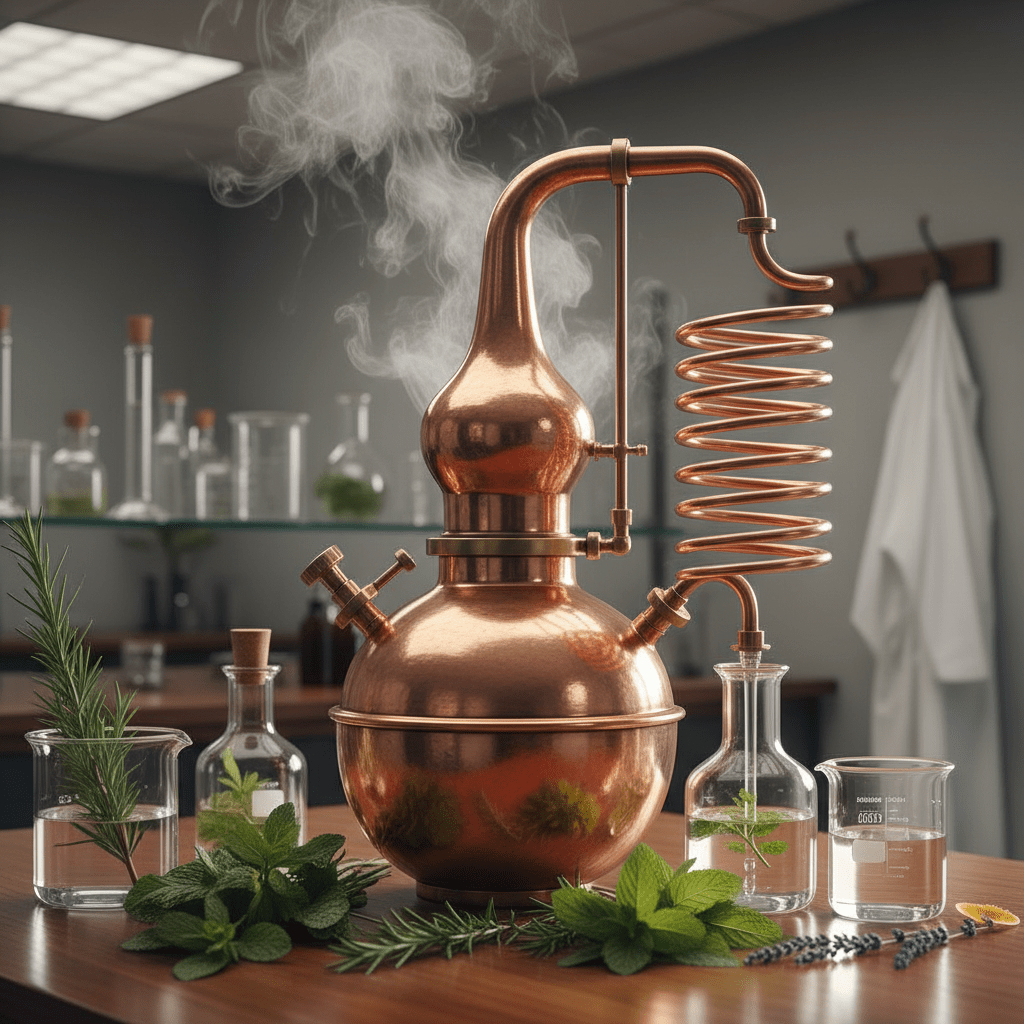
What Truly Defines a ‘Pure’ Essential Oil? More Than Just a Label
Ever stood in an aisle staring at two bottles of Lavender oil? One is $5, the other is $25. Both say “100% Pure” on the label.
It’s confusing, right?
Here’s the deal with pure essential oils. The label usually tells you what wasn’t added to the bottle—like cheap fillers or fake smells. But it rarely tells you how the oil got there in the first place. And that matters. A lot.
Actually, the method used to pull these natural aromatic compounds out of the plant structure changes everything. It affects the smell, the safety, and whether the oil actually works for what you need.
Sadly, looking for flashy terms like “Therapeutic Grade” usually won’t help. It turns out, that is synonymous with a marketing term and has no official rules behind it source: Wholesale Botanics. Anyone can print that on a sticker.
Real high-quality essential oils are defined by chemistry, not slogans. This is why verifying essential oil purity often requires looking at detailed lab tests (called GC/MS reports) that transparent suppliers—like the team at Aroma Monk—provide for every batch.
We aren’t just looking at labels today. We are going to walk through the complete journey from plant to bottle. We will break down:
- Steam distillation (the classic way)
- Cold pressing (mostly for citrus)
- Solvent methods (for delicate flowers)
- CO2 extraction (the high-tech stuff)
Let’s figure out what is really inside that amber bottle.
1. Steam Distillation: The Time-Honored Gold Standard
If you picked a random bottle of Peppermint or Eucalyptus oil off a shelf, chances are it was made using steam distillation. This method has been around for centuries, and truthfully, it’s still the most popular way to get those natural aromatic compounds out of a plant and into your home.
Think of it like a high-tech pressure cooker.

Here is how it actually works. Plant material—usually leaves, stems, or roots—is loaded into a large tank. Then, hot steam is pumped through the bottom. And we are talking hot, usually between 140°F and 212°F source: Wholesale Botanics.
that steam does something pretty cool. It breaks open the tiny oil sacs inside the plant structure. Once those sacs burst, the volatile essential oils evaporate and hitch a ride with the steam, traveling up into a cooling tube.
The Separation
Once that steam-and-oil mixture hits the cold condenser, it turns back into liquid. This drips into a separator vessel.
Since oil and water don’t mix (and oil is usually lighter), the pure essential oil floats right to the top. It gets skimmed off and filtered. That checks the box for how essential oils are made in the most traditional sense.
But wait—what happens to the water left behind?
It doesn’t just get tossed out. That water is infused with a tiny bit of the plant’s essence. It’s called a hydrosol, or floral water. (If you’ve ever used Rose Water for your skin, that’s exactly what this is).
Why It’s The Go-To Method
Steam distillation is fantastic for tough, robust plants. We’re talking about:
- Lavender
- Tea Tree
- Peppermint
- Eucalyptus
It produces steam distilled essential oils that are incredibly pure and stable. Plus, because water is the only solvent used, you don’t have to worry about weird chemical residues left in your bottle.
The Catch: It’s Getting Hot in Here
There is a downside, though.
The heat.
Some delicate flowers, like Jasmine or Tuberose, just can’t handle temperatures up to 212°F. The heat destroys their fragile scent molecules, leaving you with a smell that… well, let’s just say it doesn’t smell like the fresh flower anymore. For those sensitive plants, steam is a no-go.
Also, because this method relies on heat and pressure, getting the timing right is an art form. Cook it too long? You get a “burnt” note. Not long enough? You miss out on the heavier therapeutic compounds.
This is why sourcing matters. A supplier like Aroma Monk doesn’t just trust the process blindly; they use verifying essential oil purity protocols (like GC/MS reports) to make sure the heat didn’t damage the oil’s chemical profile.
So, if steam is great for leaves and herbs, what happens when we need oil from a fruit peel? You can’t boil an orange and expect it to smell fresh.
That brings us to the kitchen counter favorite: Cold Pressing.
2. Cold Pressing (Expression): Capturing the Bright Essence of Citrus
You know that moment when you start peeling a fresh orange, and a tiny mist sprays into the air? And suddenly the whole kitchen smells amazing?
Congratulations. You just extracted essential oil.
Cold pressing—sometimes called expression—is basically just a giant, industrial version of peeling an orange in your kitchen. It is the only method on this list that doesn’t rely on heat to do the heavy lifting.
And for good reason.
Why We Don’t Boil Lemons
Remember how we said steam distillation is like a pressure cooker? Well, if you put lemon or grapefruit peels in a pressure cooker, you wouldn’t get that bright, zesty smell we all love. You’d get something that smells like cooked marmalade.
The “top notes” of citrus fruits are incredibly wimpy. They can’t handle the heat. High temperatures destroy the delicate chemical structures that make citrus oils smell fresh and crisp.
To keep that “just picked” scent, we have to treat them gently.
How It Works
Instead of steam, this method uses raw mechanical power.
- The Prick: The fruit rolls down a conveyor belt where a machine with sharp spikes pricks the surface of the rinds. This punctures the tiny oil sacs.
- The Squeeze: The fruit is pressed (squished) to release the juices and oils.
- The Spin: Finally, a centrifuge spins the mixture around to separate the oil from the fruit juice.

The result is cold pressed essential oils that smell virtually identical to the fresh fruit. This is the standard for Lemon, Lime, Wild Orange, Grapefruit, and Bergamot.
The Trade-Off: Freshness Has a Clock
Because these oils are so fresh and haven’t been “sterilized” by steam heat, they act a little differently than your bottle of Lavender.
First, they don’t last as long. While a steam-distilled oil might last 5-10 years, citrus oils usually start to degrade after just 1-2 years source: New Directions Aromatics.
Second, they are sunshine haters. Most cold-pressed citrus oils are photosensitive. That means if you put them on your skin and go out in the sun, you can get a nasty burn.
Because these oils are so fragile, verifying essential oil purity helps ensure they haven’t gone bad before they even reach you. Transparent suppliers (yup, like Aroma Monk) will check the chemical profile to make sure that “fresh” smell is actually fresh, not just covering up oxidation.
So, cold pressing works for peels. But what about flowers that are too delicate for steam but don’t have a rind to press?
That is where things get scientific. Let’s talk about solvents.
3. Solvent Extraction: For the Most Delicate and Precious Botanicals
Imagine trying to squeeze juice out of a rose petal.
It doesn’t really work, does it?
Or think about boiling Jasmine flowers in a steam distiller at 200 degrees. You wouldn’t get that lovely, intoxicating floral scent. You’d probably get something that smells like cooked vegetables.
Some plants are just too fragile for heat and too delicate to be pressed. Their natural aromatic compounds are locked deep inside, and they refuse to come out without a little chemical coaxing.
This is where solvent extraction saves the day. It is the primary method used for delicate florals like Rose, Jasmine, and Tuberose.
The Two-Step Dance: Concrete to Absolute
Unlike the other essential oil extraction methods we talked about, this one is a bit of a chemistry experiment. It happens in two main stages.
Step 1: Making the Concrete
First, the flower petals are submerged in a liquid solvent—often hexane or ethanol. This solvent bathes the plant material and dissolves the aromatic oils, waxes, and pigments.
Once the solvent is removed (evaporated), you are left with a thick, waxy, solid substance. This is called a “concrete.”
Step 2: The Alcohol Wash
The concrete smells good, but you can’t exactly put a chunk of wax in your diffuser. So, the concrete is washed with alcohol. The alcohol dissolves the aromatic oils but leaves the heavy waxes behind.
Finally, the alcohol is evaporated off, leaving behind a thick, highly concentrated liquid.
This final product is known as an essential oil absolute.
Wait, Is It Actually “Pure”?
This is the big question.
If you are a stickler for labels, you might notice that bottles created this way are usually labeled “Jasmine Absolute” or “Rose Absolute” rather than “Essential Oil.”
That distinction matters.
Because a chemical solvent was used to start the process, there is always a tiny, tiny risk that trace amounts remain in the final bottle.
Now, don’t panic. The industry has strict safety standards for this.
Regulations typically limit residual solvents to very low levels, often under 50 parts per million (ppm) to ensure they are safe for use in perfumes and cosmetics source: Stellarix.
Plus, technology is getting better every day. We are seeing a shift toward “green solvents” like lactate esters, which are biodegradable and safer for the environment source: Technavio.
Why We Still Use It
So why use solvents at all if there’s a risk of residue?
Simple. It creates a scent that is unmatched.
Solvent extraction captures the heavier, deeper notes of a flower that steam distillation often leaves behind. It creates a scent profile that is almost identical to the live flower. These extracts are often called the “soul” of fine perfumery source: Credence Research.
If you want high-quality essential oils that capture the true essence of delicate flowers, an absolute is often your best option. Just ensure your supplier—like Aroma Monk—is transparent about the difference between an oil and an absolute so you know exactly what you are buying.
But what if you want the purity of steam distillation and the richness of solvent extraction, without the heat or the chemicals?
Well, that technology actually exists. And it involves using the same gas that makes soda fizzy.
Get a quote from Aroma Monk.
Essential Oil Supplier – Bulk pricing • Samples • Fast response
4. CO2 Extraction: The Modern, Ultra-Pure Method
Okay, now we are entering science fiction territory.
Well, almost. This method is the new kid on the block, and technically it’s called “Supercritical Fluid Extraction.” But everyone just calls it CO2 extraction.
Imagine you could get the purity of steam distillation and the richness of solvent extraction, but without the high heat or the chemical residue.
That sounds impossible, right?
It’s not. It just requires some heavy-duty machinery and the same gas that makes soda fizzy.
How It Works (Simply)
Carbon dioxide (CO2) is normally a gas. You are breathing it out right now. But if you put it under extreme pressure, it turns into something weird. It becomes a “supercritical fluid.”
In this state, it acts like a liquid solvent. It can wash through plant material and dissolve the essential oils. But here is the magic trick: as soon as you release the pressure, the CO2 turns back into a gas and completely evaporates.
It leaves absolutely nothing behind but the oil.
The result? CO2 extracted essential oils are incredibly pure. They smell exactly—and I mean exactly—like the living plant.
The “Select” vs. “Total” Difference
Because this method is so high-tech, operators can actually tune the pressure dial to decide exactly what they want to pull out of the plant.
- CO2 Selects: These use lower pressure. They grab only the lighter aromatic compounds, similar to steam distillation but without the heat damage.
- CO2 Totals: These use higher pressure. They grab everything—the smells, the waxes, the resins, and the color. These oils are often thicker and richer.
Why It Is Winning Fans
The biggest win here is temperature.
Remember how steam hits 212°F? CO2 extraction usually happens around 95°F to 100°F—basically human body temperature source: CO2 Extraction Machine.
This means delicate chemical compounds, like the matricine in German Chamomile, stay intact. If you steam distill German Chamomile, it turns blue solely because the heat changes its chemistry. If you CO2 extract it? It stays green and smells closer to the fresh flower.
It’s also surprisingly efficient. Some studies show it can get significantly more oil out of the plant compared to traditional methods source: Reliant Bev Carb.
The only downside? It’s expensive. The equipment costs 3-5 times more than steam distillers, which is why you don’t see CO2 oils everywhere just yet.
So, Which Method is Best?
Honest answer? It depends on the plant.
You wouldn’t use a hammer to peel an egg, right? The same logic applies here. Different plants need different tools.
Here is a quick cheat sheet to help you compare what’s in your bottle:
Quick Comparison Guide
| Method | Purity / Residue | Heat Level | Best For… |
|---|---|---|---|
| Steam Distillation | High Purity (Water-based) | High (140-212°F) | Tough herbs (Lavender, Tea Tree, Peppermint) |
| Cold Pressing | High Purity (Mechanical) | None (Room Temp) | Citrus peels (Lemon, Orange, Bergamot) |
| Solvent Extraction | Risk of trace residue | Low | Delicate flowers (Jasmine, Rose Absolutes) |
| CO2 Extraction | Ultra High Purity | Very Low (95-100°F) | Resinous plants & spices (Ginger, Frankincense) |
Think of it this way:
- Steam Distillation is like boiling sturdy vegetables to make broth.
- Cold Pressing is like squeezing fresh juice.
- Solvent Extraction is like marinating herbs in oil to soak up the flavor.
- CO2 Extraction is like using a sci-fi magnet that pulls out flavor without touching it.
Final Thoughts: Trust Your Nose (And Your Supplier)
It takes roughly 4,000 pounds of Bulgarian roses to produce just one pound of oil source: Bulk Apothecary.
Take a second to let that sink in. 4,000 pounds.
When you understand the effort, science, and raw material that goes into how essential oils are made, you start to realize why that $5 bottle at the gas station probably isn’t the real deal.
If you are building your collection, keep these tips in mind:
- Check the specifics: Does the label just say “Oil”? Or does it list the Latin name and extraction method?
- Look for testing: We mentioned this earlier, but it’s vital. Verification via GC/MS reports is the only way to know the chemistry inside is safe. Suppliers who care about quality—like Aroma Monk—make this data accessible.
- Storage matters: Light and heat are enemies. Keep those bottles in dark glass and away from your windowsill.
At the end of the day, whether it’s steam-distilled Lavender for sleep or CO2-extracted Ginger for a massage, pure oils are powerful tools. Knowing how they were made just helps you use them better.
5. Comparing Extraction Methods: A Practical Guide for Buyers
If you feel like you need a chemistry degree just to buy a bottle of “pure” oil, you aren’t alone. It gets complicated fast.
But here is the simple truth: There is no such thing as the “best” method.
It’s all about using the right tool for the job. You wouldn’t use a sledgehammer to crack a walnut, right? In the same way, you wouldn’t use high-heat steam on a fragile Jasmine flower unless you wanted it to smell like burnt tea.
Verifying essential oil purity isn’t just about checking for chemicals; it’s about understanding if the extraction method matches the plant.
Here is a quick cheat sheet to help you compare what is actually in your bottle.
The Extraction Breakdown
| Extraction Method | Heat Level | Purity Note | Best Used For… |
|---|---|---|---|
| Steam Distillation | High (140-212°F) | Water-based (No chemical residue) | Tough herbs like Peppermint, Tea Tree, Lavender |
| Cold Pressing | None (Room Temp) | Mechanical (Very fresh/raw) | Citrus peels (Lemon, Orange, Bergamot) |
| Solvent Extraction | Low | Trace residue risk (Standard: <50ppm) | Delicate florals like Rose & Jasmine |
| CO2 Extraction | Low (95-100°F) | Ultra-pure (No residue) | Spices & Resins (Ginger, Frankincense) |
A Note on Cost
You might wonder, “If CO2 extraction is so pure and uses low heat, why isn’t everything made that way?”
Money.
The equipment for CO2 extraction costs about 3 to 5 times more than traditional steam setups source: CO2 Extraction Machine. That drives up the price of the final oil. So, while it’s amazing technology, it usually isn’t cost-effective for cheap, abundant plants like Orange or Eucalyptus.
Also, safety standards have come a long way. For solvent extracts, industry regulations now strictly limit residual solvents (like hexane) to under 50 parts per million (ppm) to ensure they are safe for cosmetics source: Stellarix.
So, don’t fear the method. Just make sure it makes sense for the plant.
Final Thoughts: Trust Your Nose (And the Data)
Here is a wild fact to leave you with.
It takes roughly 4,000 pounds of Bulgarian roses to produce just one pound of rose oil source: Bulk Apothecary.
That is an entire truckload of petals for a bottle you can hold in your hand. When you realize the sheer amount of plant material that goes into how essential oils are made, you start to understand why real, pure essential oils can’t be sold for $5 at a gas station.
Whether you are a small business owner making soaps or just someone who loves a good smelling home, here are three rules to live by:
- Darkness is your friend: Light destroys oil. Always store your collection in dark glass (amber or cobalt) and keep them cool. Citrus oils specifically have a shorter clock—usually 1-2 years before they oxidize.
- Check the Latin: A label that just says “Lavender” isn’t enough. You want to see Lavandula angustifolia. This tells you exactly what plant species is in there.
- Demand the paperwork: This is non-negotiable.
If you are buying in bulk or for a business, you need a partner who puts everything on the table.
Transparent suppliers—like the team at Aroma Monk—will provide GC/MS reports for every batch. These tests are the only way to scientifically prove that what is in the bottle matches the label. No guessing games.
At the end of the day, these oils are powerful tools. Knowing how they dragged that scent out of the plant structure just helps you respect the drop a little bit more.
6. How to Read the Label: Decoding Clues to Find High-Quality Essential Oils
Okay, so you know how the oil is made. But when you are standing in the store (or scrolling online), how do you know what you are actually buying?
Here is the harsh truth: The essential oil industry is bit like the Wild West.
The term “100% Pure” isn’t strictly regulated in many places. A company can put a drop of real lavender in a bottle of synthetic filler and technically get away with some pretty vague labeling.
And don’t even get me started on “Therapeutic Grade.”
It sounds official, right? Like a doctor signed off on it? Actually, “Therapeutic Grade” is just a marketing term. There is no agency that hands out this title. Anyone can print it on a sticker source: Wholesale Botanics.
So, if we can’t trust the slogans, what should we look for?
The 3 Things That Must Be on the Label
If you want high-quality essential oils, ignore the fancy gold seals and look for these three facts:
- The Latin Name: If a bottle just says “Lavender,” put it back. You need to know the species. Lavandula angustifolia is true lavender. Lavandula hybrida is lavandin (a cheaper cousin that smells different). The label needs to be specific.
- Country of Origin: Soil changes the scent. A lemon grown in Sicily smells different than one grown in California. Good brands tell you where it came from.
- Extraction Method: By now, you know why this matters. You want to know if it was steam distilled or cold pressed.
The Ultimate Truth Detector: GC/MS Testing
This is the big one.
Since you can’t see chemistry with your naked eye, you need a lab report. This is called a Gas Chromatography-Mass Spectrometry (GC/MS) test.
It sounds super technical, but it’s basically a fingerprint of the oil. It tells you exactly what chemical compounds are inside and proves there are no fake fillers.

Transparent suppliers—like the team at Aroma Monk—don’t hide this stuff. They provide these reports for every batch because they know that verifying essential oil purity is the only way to build trust. If a brand won’t show you their test results? That’s a red flag.
Final Thoughts: Respect the Drop
Here is one last fact that always blows my mind.
It takes roughly 4,000 pounds of Bulgarian roses to produce just one pound of rose essential oil source: Bulk Apothecary.
That is an entire truckload of petals. For a bottle you can hold in your hand.
When you realize the massive amount of plant material and hard work that goes into how essential oils are made, you start to understand why real oils aren’t cheap. If you see a bottle of “Rose Oil” for $10 at a gas station, run away. It’s definitely fake.
Here are three quick tips to keep your collection safe:
- Keep it Dark: Light kills oil. Always buy brands that use dark amber or cobalt glass. Clear glass is a rookie mistake.
- Watch the Clock: Most oils last 5-10 years, but citrus oils (like Lemon and Orange) start to go bad after just 1-2 years. Use them up fast.
- Dilute, Dilute, Dilute: These are potent concentrates. Never put them straight on your skin without a carrier oil (like Jojoba or Almond oil).
At the end of the day, whether you are a business sourcing ingredients or just someone making a nice room spray, quality wins.
Don’t settle for mystery liquids. Look for the Latin name, ask for the paperwork, and find a supplier who respects the process as much as you do.
Your Journey to Choosing Truly Pure Essential Oils
We’ve covered a massive amount of ground together—from the classic “pressure cooker” mechanics of steam distillation to the sci-fi precision of CO2 extraction.
And honestly? It’s a lot to take in.
But here is the main takeaway: Pure essential oils aren’t defined by a shiny gold sticker or a marketing slogan like “Therapeutic Grade.” They are defined by the journey they took to get into that amber bottle.
Real quality comes from matching the method to the plant. It’s understanding that a delicate Jasmine flower needs the gentle touch of a solvent/absolute process, while robust Peppermint leaves can handle the heat of a steam bath. When that process is done right, the result is effective, safe, and powerful.
As you go forward—whether you are sourcing bulk ingredients for a new cosmetic line or just trying to find a safe Lavender for your family—don’t be afraid to be a little suspicious.
Verifying essential oil purity is your right as a buyer.
So, ask the hard questions. Demand to see the GC/MS reports (that chemical “fingerprint” we talked about). If a supplier hesitates or hides the paperwork? Walk away.
Transparent partners like the team at Aroma Monk make this easy because they have nothing to hide. They know that when you have the data, you can build your own products with total confidence.
You know the science now. Trust your nose, check the papers, and enjoy the real deal.
Get a quote from Aroma Monk.
Essential Oil Supplier – Bulk pricing • Samples • Fast response