
Why You Should Never Use Tea Tree Oil ‘Neat’
We all know that panic. You wake up, look in the mirror, and see a huge, angry pimple staring back at you. Your first instinct? Grab the tea tree oil and zap it.
But hold on a second.
While tea tree oil is amazing for fighting bacteria and calming swelling, putting it directly on your skin—what experts call using it “neat”—is actually risky. It feels like it’s working because it tingles, but that tingle can quickly turn into a nasty burn.
Here is the thing. Tea tree oil is super strong. It contains a powerful ingredient called terpinen-4-ol. This stuff is great for killing germs, but in high amounts, it can hurt your skin barrier. In fact, recent safety reports from 2023-2024 show that people are still getting bad rashes and skin irritation because they use it undiluted.
If you keep doing it, your body might even develop an allergy to it. Once that happens, you might never be able to use it again. This is why safely using tea tree oil is a skill you need to learn.
So, how do we fix this? You need a “carrier oil.” Think of it like a friendly vehicle. It picks up the tea tree oil and drives it safely into your skin. Plus, these oils have their own special powers to help your face glow.
Let’s look at the best ones to use.
1. Fractionated Coconut Oil: The Versatile All-Rounder
You know how regular coconut oil gets rock hard in the jar when it’s cold? Digging that stuff out is a total pain.
That’s exactly why fractionated coconut oil is such a huge favorite. Unlike the stuff you might cook with, this oil stays liquid all the time. It never turns into a solid brick on your bathroom shelf.
Think of it as the lightweight, invisible cousin of regular coconut oil. It has no smell—so you won’t walk around smelling like a tropical smoothie—and your skin drinks it up instantly. It doesn’t leave that heavy, greasy slick that ruins your sheets.
Here is why it is arguably the best oil to mix with tea tree oil for beginners.
Regular “virgin” coconut oil is heavy and can actually clog pores for a lot of people. But fractionated oil is different. It goes through a process that removes the heavy long-chain fatty acids, leaving only the light stuff (medium-chain triglycerides).
This makes it super gentle. It rarely causes breakouts. In fact, most skincare experts give it a “comedogenic rating” of roughly 0 to 2, which is just a fancy way of saying it probably won’t clog your pores.
If you are dealing with body acne—like pesky spots on your back or chest—this is your go-to. It spreads easily over large areas. Plus, because it’s so stable, it has a really long shelf life. At Aroma Monk, we actually see a lot of skincare makers buying this in bulk because it doesn’t go rancid quickly like other delicate oils do.
Best For:
- Body acne and large areas (back, legs)
- Anyone who hates feeling greasy
- Beginners just learning how to dilute tea tree oil
2. Jojoba Oil: The Ultimate Skin Balancer
Here is something that might blow your mind. Jojoba isn’t actually an oil at all. It is a liquid wax.
Why does that matter? Well, it is a huge deal for your face.
Structurally, Jojoba is almost identical to the oil your own skin naturally produces (sebum). This makes it one of the absolute best carrier oils for oily skin.
If you have acne or greasy skin, putting more oil on your face probably sounds like a nightmare. You might think it will just make the shine worse.
But actually, the opposite happens.
Because jojoba oil with tea tree oil mimics your skin’s natural moisture, it tricks your body. Your skin senses the jojoba and thinks, “Oh, looks like we have enough oil here.” So, it stops producing so much of its own grease. It balances you out.
It is like a smart thermostat for your face. If you are dry, it locks in moisture. If you are oily, it tells your pores to chill out.
This makes it the perfect partner for tea tree oil. While the tea tree fights the bacteria causing the pimple, the jojoba soothes the skin without clogging your pores. In fact, dermatologists often suggest it because it helps calm the redness and swelling that comes with breakouts supporting skin balance.
It absorbs fast, too. You won’t feel like a greaseball after using it, which is a win in my book.
Best For:
- Face application (it is light and gentle)
- Acne-prone skin that needs balancing
- Anyone afraid that oil will cause more breakouts
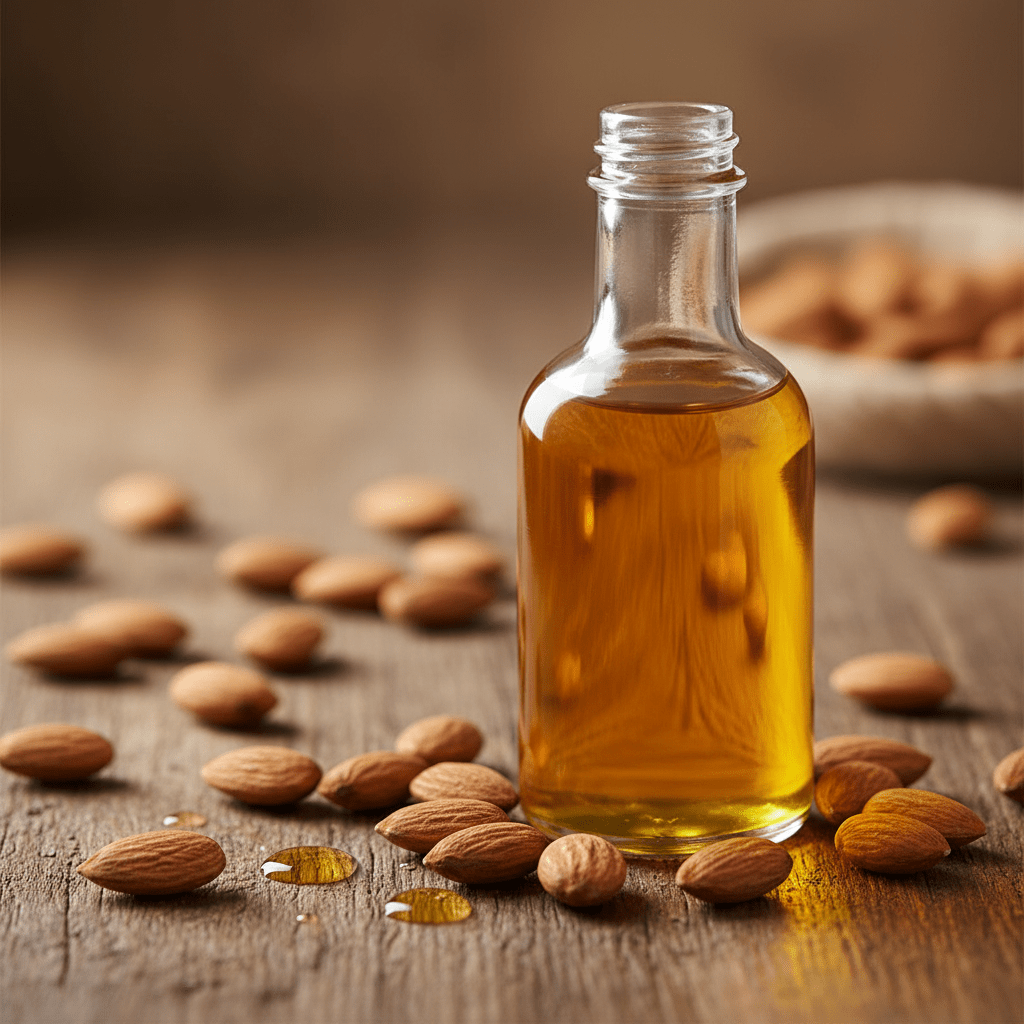
3. Sweet Almond Oil: The Gentle Moisturizer for Dry Skin
If your skin ever feels like sandpaper—tight, flaky, or just plain thirsty—this is the oil you want.
Sweet Almond Oil is a classic for a reason. While Jojoba is great for balancing oil, almond oil is all about deep hydration. It acts like a big drink of water for your face.

Here is why it works so well. It is packed with Vitamin E and heavy-duty moisture.
Actually, the science backs this up. Analyses show that this oil is mostly made of oleic acid, a healthy fat that is famous for sinking deep into the skin to fix dryness. It doesn’t just sit on top; it softens the rough patches.
This makes it an amazing partner for tea tree oil.
Since tea tree oil can be a bit drying on its own, mixing it with sweet almond oil creates the perfect balance. The tea tree zaps the germs, and the almond oil makes sure your skin stays soft and smooth. It is gentle enough that we often suggest it for sensitive skin types, too.
But wait, I need to give you a serious heads-up.
Since this comes from actual almonds, please do not use it if you have a tree nut allergy. It sounds obvious, but you would be surprised how often people forget. If you are allergic to nuts, stick to jojoba or coconut oil just to be safe.
Best For:
- Dry, flaky, or sensitive skin
- Full body massages (it stays slippery longer than other oils)
- Mixing your own hydrating face serums
4. Grapeseed Oil: The Lightweight Choice for Oily & Acne-Prone Skin
If Sweet Almond Oil is the heavy hitter for dry skin, grapeseed oil is the exact opposite.
I know what you’re thinking. “My skin is already oily. Why would I add more?”
Trust me on this one. Grapeseed oil is famous for being a “dry oil.” That means it absorbs into your skin lightning-fast. You can rub it on, wait thirty seconds, and touch your face without getting that gross, sticky feeling on your fingers.
Here is why it works so well for breakouts.
Science tells us that acne-prone skin is often low in something called linoleic acid. When you lack this healthy fat, your natural skin oils get thick and sticky, which clogs your pores.
Grapeseed oil fixes this problem. It is around 70% linoleic acid.
Because it replaces what your skin is missing, it helps thin out that sticky sebum. In fact, data suggests that high-linoleic oils are key for balancing the skin barrier and reducing breakouts rather than clogging pores.
It also acts as a mild astringent. This essentially means it helps tighten up your skin and makes large pores look smaller. If you are looking for what to mix with tea tree oil for acne treatments, this is usually the best base to start with.
At Aroma Monk, we love seeing customers use this for lightweight serums. It sits well under makeup, too.
Best For:
- Carrier oils for oily skin types
- People who hate the feeling of heavy lotions
- Mixing lighter acne treatments
5. Argan Oil: The ‘Liquid Gold’ for Hair and Mature Skin
People often call this “liquid gold.” Usually, nicknames like that are just marketing fluff.
But with Argan oil? The name actually fits.
It is definitely pricier than coconut or almond oil. But there is a reason the global market for this stuff is absolutely exploding—reports show it is worth hundreds of millions of dollars right now growing simply because it works.

Here is the deal. Argan oil is strictly for those who want premium results. It is absolutely packed with Vitamin E and special antioxidants that fight off skin damage.
If you are starting to notice fine lines or your skin just feels a bit “tired,” this is your best friend. It helps your skin bounce back. It feels rich coming out of the bottle, yet somehow your skin drinks it right up without leaving a mess.
But actually, my favorite way to use this isn’t just on my face. It is a total lifesaver for hair.
I’d argue this is the best oil to mix with tea tree oil if you are dealing with a flaky, itchy scalp.
We all hate dandruff. It’s annoying. But tea tree oil can be tough on the scalp if used alone. Argan oil balances that out perfectly. It moisturizes the skin on your head while the tea tree cleans things up. This combination is one of the smartest ways for safely using tea tree oil on sensitive areas.
If you want to try this, mix a tablespoon of Argan oil with about 3 to 5 drops of tea tree. Massage it in, let it sit under a warm towel for twenty minutes, then wash. It’s a luxury spa treatment at home.
Comparing the price tags, Argan is an investment. But at Aroma Monk, we see cosmetic brands scrambling to get the pure stuff because a little bit goes such a long way.
Best For:
- Mature skin that needs extra love
- Dry, damaged hair
- Treating scalp issues without drying out your skin
6. Rosehip Oil: The Regenerative Oil for Scars and Hyperpigmentation
You know that sinking feeling? You finally get rid of a huge pimple, but then a dark red spot stays behind. And it stays there for weeks.
It is super frustrating. Sometimes the mark is worse than the breakout itself.
This is where Rosehip Seed Oil saves the day. While tea tree oil fights the active fire (the bacteria), Rosehip oil is basically the construction crew that rebuilds the house afterwards.
Here is why it works so well. It is naturally packed with Vitamin C and trans-retinoic acid, which is a natural form of Vitamin A. These ingredients tell your skin cells to turnover faster.
It isn’t just marketing fluff, either. Clinical trials have actually found that applying this oil improves the appearance of scars by reducing redness and discoloration. It helps smooth out the texture so your skin looks even again.
If you are wondering what to mix with tea tree oil for acne marks that just won’t go away, this is your answer.
But I have to give you a quick warning. This oil is fragile.
Because it is so fresh and natural, it can go bad (oxidize) really fast if it sits in the sun or heat. At Aroma Monk, we always advise our buyers to keep this stock in a cool place—maybe even the fridge—to protect those delicate vitamins.
Also, since it contains natural Vitamin A, it is best to use this blend at night. Let it work its magic while you sleep.
Best For:
- Fading old acne scars and dark spots
- Evening out skin tone
- Nighttime repair treatments
7. Castor Oil: The Thick, Potent Oil for Targeted Treatments
Okay, let’s talk about the heavy lifter of the group.
Castor oil is… thick. I mean, really thick. Unlike water-like oils such as grapeseed, this stuff feels almost like honey or syrup.
So, why on earth would you want to put something that sticky on your skin?
Because it is incredibly powerful.
It is packed with something called ricinoleic acid. This isn’t just a random ingredient; it makes up almost 90% of the oil. Science shows that this specific acid is amazing at fighting bacteria and calming down inflammation.
But here is the catch.
You probably shouldn’t smear this all over your face like a regular lotion. It is just too heavy. It sits on top of the skin and can feel pretty gross if you use too much.
Instead, think of this as your secret weapon for “spot treatments.”
I like to mix a tiny drop of tea tree oil with a dab of castor oil and place it right on a stubborn pimple. Because the oil is so thick, it stays put. It doesn’t run down your face. It holds the tea tree oil right where it needs to work.
It is also a game changer for scalp masks. If you have a dry, itchy scalp but want to use tea tree to clean it, castor oil buffers the harshness. At Aroma Monk, we often suggest mixing it with a thinner oil, like jojoba, to make it easier to wash out later.
Best For:
- Targeted “spot treatments” for big pimples
- Deep conditioning scalp masks (when mixed with lighter oils)
- Locking in moisture on very rough patches (like elbows or heels)
8. Tamanu Oil: The Healing Powerhouse for Inflamed Skin
Okay, I have to be honest with you right off the bat.
This oil has a smell.
It doesn’t smell like flowers or coconuts. It has a heavy, earthy scent—some people say it reminds them of walnuts, while others think it smells a bit like curry powder.
But if you have angry, painful acne, you should ignore your nose and use it anyway. Because this stuff works like nothing else.
Tamanu oil isn’t just a moisturizer; it is a healer. While other oils nourish healthy skin, Tamanu is famous for helping damaged skin fix itself.
Here is the secret. It contains a rare ingredient called calophyllolide.
That is a big word, but here is what it means for your face: it cuts down inflammation fast. Even cooler, it is scientifically proven to help form new skin tissue—a fancy process called “cicatrization.” Studies show this ingredient actively speeds up wound closure and healing, which is exactly what you need when a pimple has caused a wound on your face.
This makes it the perfect partner for tea tree oil when dealing with those deep, painful cystic bumps that just won’t go away.
The tea tree oil fights the infection deep inside the pore. Then, the Tamanu oil steps in to soothe the redness and help the skin close back up. It is like a construction crew coming in to fix the road after an accident.
One quick tip: Color matters here.
Real, potent Tamanu oil is dark green and thick. If you buy one that looks clear or pale yellow, it has probably been stripped of its nutrients. At Aroma Monk, we keep ours thick and green because that resinous part is where the antibacterial power lives. In fact, research suggests that the antimicrobial activity is concentrated right in that sticky resin.
Best For:
- Deep, painful cystic acne
- Healing spots that you accidentally popped
- Reducing the redness of angry blemishes
Quick Comparison: Which Carrier Oil Is Right for You?
That was a lot of information. I get it.
Trying to remember exactly which oil is best for dry skin versus which one helps with scars can give you a headache. You just want to know the best oil to mix with tea tree oil for your specific situation without re-reading everything.
So, let’s make this simple.
I put together this quick cheat sheet. It breaks down how likely an oil is to clog your pores (that is the “Comedogenic Rating”) and how fast it sinks into your skin.
| Carrier Oil | Pore Clogging Risk (0-5) | Absorption Speed | Best For |
| Fractionated Coconut | ~0-2 (Very Low) | Fast | Body acne & large areas |
| Jojoba Oil | ~2 (Low-Medium) | Medium | Balancing oily faces |
| Sweet Almond | ~2 (Low-Medium) | Medium-Slow | Dry, flaky skin |
| Grapeseed Oil | ~1 (Very Low) | Very Fast | Carrier oils for oily skin |
| Argan Oil | ~0 (Very Low) | Medium | Anti-aging & hair |
| Rosehip Oil | ~1 (Very Low) | Fast | Scars & dark spots |
| Castor Oil | ~1 (Low but thick) | Very Slow | Spot treatments |
| Tamanu Oil | ~2 (Low-Medium) | Slow | Deep, painful cystic acne |
If you are still feeling stuck, jojoba oil with tea tree oil is usually the safest bet for beginners. It works for almost everyone. But if you have really specific needs, like old acne scars or super dry patches, keeping this table handy will help you pick the right tool for the job.
Your Practical Guide: How to Properly Dilute Tea Tree Oil
Okay, you picked your oil. Maybe you went with Jojoba, or maybe sticking with Fractionated Coconut oil sounded easier.
Now comes the part that usually trips people up.
The math.
I hate doing math in the bathroom when I’m just trying to wash my face. But getting the ratio right is a big deal. Too little? It won’t work. Too much? You’re entering the “ouch” zone.
Here is the thing. Essential oils are super concentrated. At Aroma Monk, we often remind our wholesale partners that pure oil isn’t like a lotion you can just slather on. It commands respect.

So, I made this simple cheat sheet for you. No calculator needed. These numbers assume you are using a standard 1-ounce (30ml) bottle of carrier oil.
| What You Are Treating | Safe Strength | Drops of Tea Tree per 1 oz (30ml) Carrier |
| Face (Daily Use) | ~1% | 6 Drops |
| Body (Lotions/Oils) | ~2-3% | 12 to 18 Drops |
| Foot Soak / Nails | ~5% | 30 Drops |
| Kids / Sensitive Skin | ~0.5% | 3 Drops |
See? Way easier than guessing.
If you are mixing a smaller amount—like just in the palm of your hand—keep it simple. Start with one drop of tea tree oil to one teaspoon of carrier oil. That is usually safe for the body.
The “Patch Test” Rule
Before you go all in, you need to do a test run.
I know, I know. It’s boring. You just want to put it on the pimple and go to bed. But remember those safety reports I mentioned earlier? Reactions happen.
Even with safe dilution, your skin might just hate tea tree oil. It happens. It protects you from waking up with a swollen face.
Here is how to do it in 2 minutes:
- Mix the oils at the ratio you plan to use (start with the 1% mix).
- Put a tiny dab on the inside of your forearm. The skin there is delicate, like your face.
- Put a band-aid over it if you want, and wait.
Ideally? You wait 24 hours. If it gets red, itchy, or bumpy, wash it off immediately and don’t use it on your face. This step is backed by safety standards from groups like the National Association for Holistic Aromatherapy, and it saves a lot of tears later.
If the skin looks normal the next day, you are good to go.
Unlock Tea Tree Oil’s Full Potential, Safely
Finding the perfect carrier oil isn’t a one-size-fits-all thing. It is personal. What works for your best friend’s dry skin might be a disaster for your oily forehead.
But here is the one rule that never changes: please, never use tea tree oil neat.
I know it is tempting to just dab it on, but remember that strong ingredient, terpinen-4-ol? It is powerful stuff. Using it undiluted is actually the quickest way to turn a small pimple into a big, red rash according to recent safety assessments.
Mixing it doesn’t make it weak. Actually, it makes it smarter. The carrier oil drives the germ-fighting power deep into your skin where the problem lives, rather than just sitting on top and burning you.
So, pick your match from the list above. If you represent a brand looking to create safe, effective blends for your customers, getting these ratios right is the first step up. Go do a simple patch test tonight. Your skin will thank you tomorrow.